
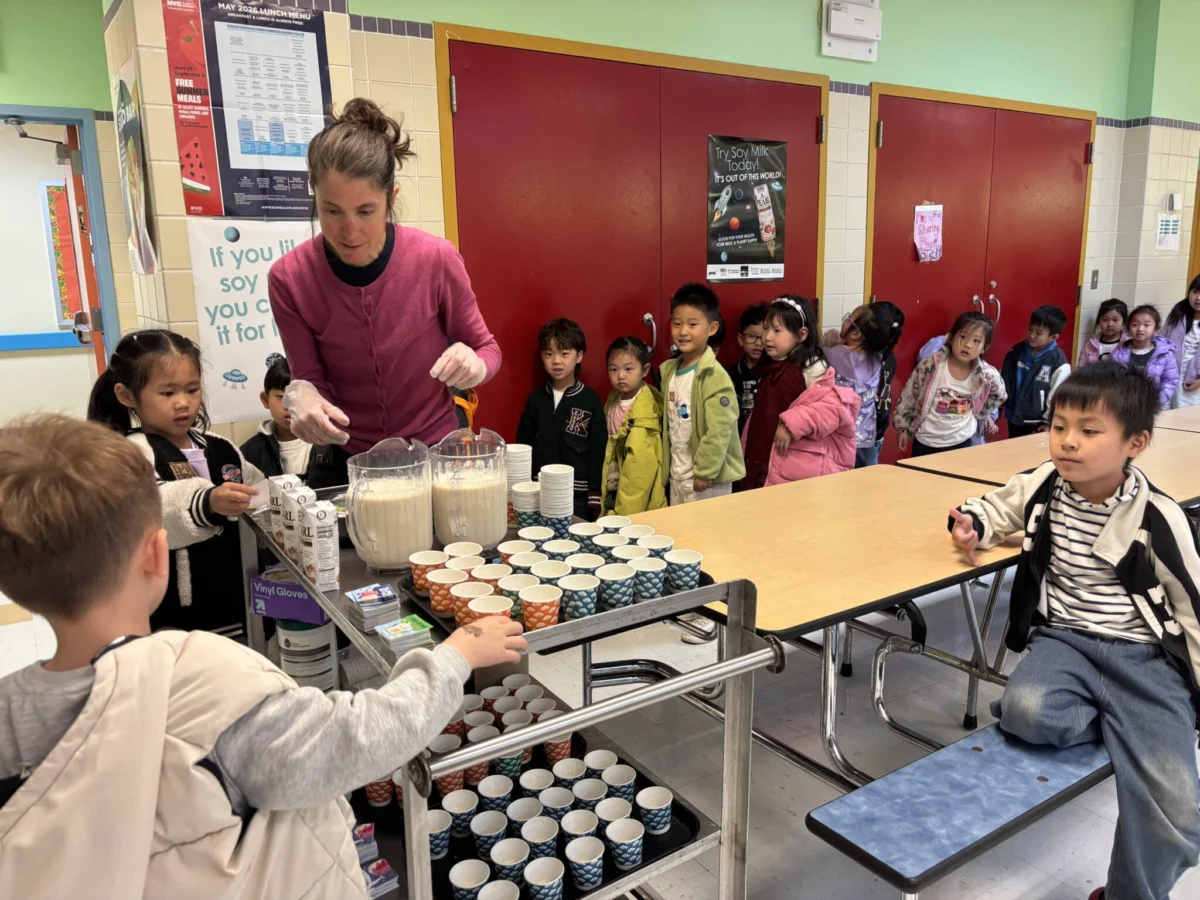
New York City’s ongoing push to green its public school cafeterias has yielded significant environmental and nutritional returns. A pioneering pilot program introducing organic soy milk to select school lunch lines has successfully lowered milk-related greenhouse gas emissions by 17.4%, even as overall student participation and milk consumption rose. Spearheaded by the Office of Food & Nutrition Services and the Mayor’s Office of Food Policy, the initiative has demonstrated that expanding plant-based alternatives in institutional settings can simultaneously achieve nutritional equity, climate mitigation, and student satisfaction.
Following the success of the initial trial—which ran in five diverse public schools during the spring semester—the administration of Mayor Zohran Mamdani has confirmed plans to expand the soy milk initiative to 12 schools this coming fall. This scaling up reflects a broader municipal strategy to reform school food systems, aligning with national shifts in federal policy and positioning New York City as a leading metropolis in urban food sustainability.
Origins and Chronology of the Pilot Initiative
The groundwork for New York City’s school soy milk pilot was laid earlier in the year, capitalized by a crucial shift in federal legislation. Historically, federal guidelines governed the National School Lunch Program in a manner that restricted schools from offering non-dairy milk substitutes to students unless a formal medical note documenting a disability or milk allergy was provided by a physician. However, following federal legislative updates—specifically provisions integrated into law under the Whole Milk for Healthy Kids Act, which incorporated elements from the Plant Powered School Meals Pilot Act—the regulatory landscape shifted.
Under the updated framework, school districts gained authorization to offer nutritionally equivalent, plant-based milk alternatives to any student at the parent’s request, removing administrative and medical barriers that previously complicated access for lactose-intolerant children or families adhering to plant-based diets.
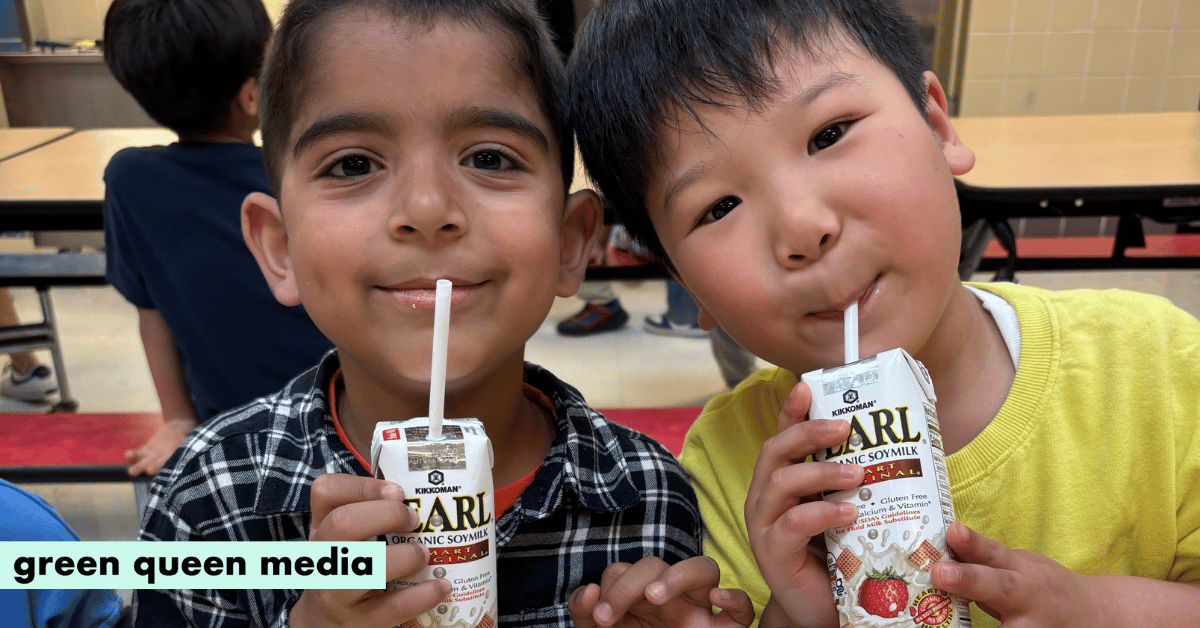
Seizing upon this regulatory opening, the Office of Food & Nutrition Services and the Mayor’s Office of Food Policy collaborated with the Plant Powered School Meals Coalition to design a localized rollout. Launched in May, the pilot was implemented across five distinct educational institutions: Beacon High School, Maspeth High School, Public School 244 in Queens, Vertex Partnership Academies, and Public School 369. The coalition responsible for executing the trial brought together several advocacy and health organizations, including Friends of the Earth, Chilis on Wheels, the Coalition for Healthy School Food, and the Physicians Committee for Responsible Medicine (PCRM).
Data and Environmental Impact
Despite initial questions regarding how students would respond to a non-dairy alternative on the traditional lunch line, the response proved overwhelmingly positive. Data collected from the pilot revealed that among the three schools with established baseline measurements, average milk selection jumped by 18.6%, representing roughly 126 additional milk servings per day.
Crucially, this surge in consumption did not translate to a heavier carbon footprint. Across the five participating institutions, 35.6% of all milk selected by students was soy milk. Because the environmental cost of producing soy milk is drastically lower than that of bovine dairy, greenhouse gas emissions per 100 milk servings plummeted by 30.4%. When averaged across the pilot parameters, overall emissions tied to school milk consumption at the participating sites dropped by 17.4%.
Comprehensive life-cycle analyses underpinning these figures highlight the stark ecological contrast between dairy and plant-based alternatives. Industrial dairy production demands extensive land use and water resources while generating substantial methane and other greenhouse gases. By comparison, organic soy milk generates less than a third of the greenhouse gases produced by standard cow’s milk, while consuming approximately 93% less land and 96% less water.
Beyond its climate credentials, the product utilized in the trial—produced by Kikkoman under the Pearl brand—offered strong nutritional parity. Each 240-milliliter carton matches the protein content of dairy milk with eight grams of protein per serving, matches equivalent calcium levels, and introduces two grams of dietary fiber while containing zero saturated fat.
Stakeholder and Community Responses
The operational success of the pilot garnered praise from both educational administrators and health advocates, who pointed to the initiative as a model for public health innovation.
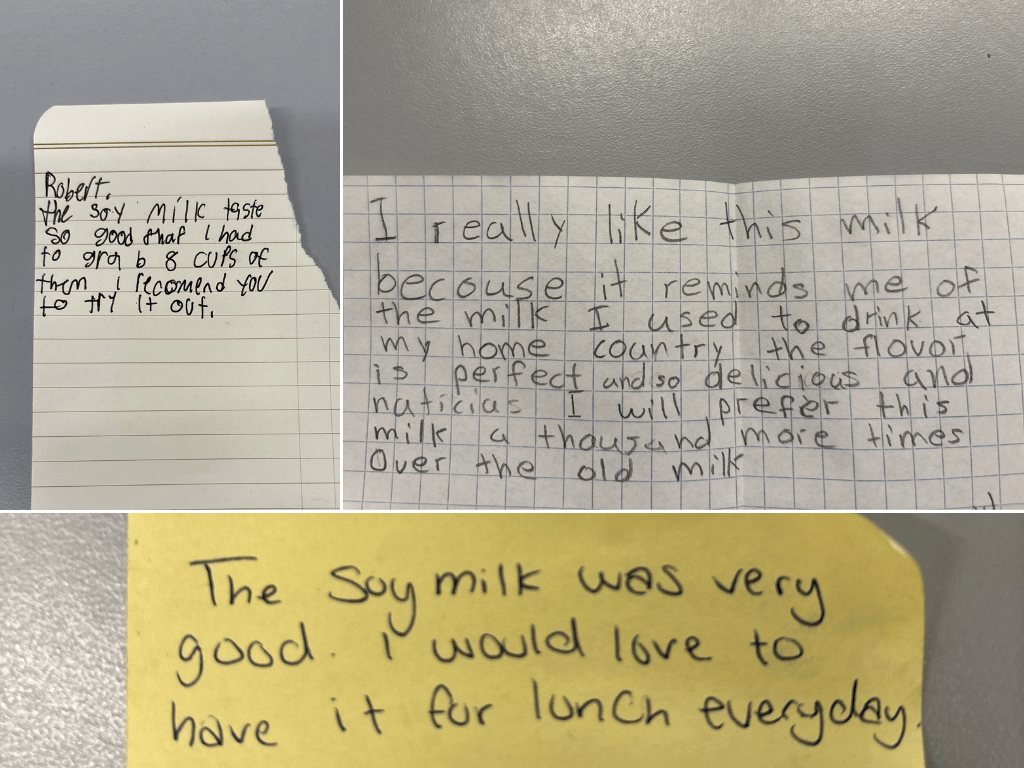
“We were really excited to participate in the pilot in the spring. More than half of our students chose soy milk during the time it was available,” noted Bob Groff, principal of PS 244 in Queens. “We feel it is important for our students to be exposed to a variety of milk alternative options.”
Public health experts emphasized the intersection of environmental sustainability and dietary inclusivity. Lactose intolerance presents a major nutritional hurdle within American public schools, disproportionately affecting minority populations. Epidemiological data indicates that lactose malabsorption impacts roughly half of the nearly 30 million children who rely on the National School Lunch Program. The condition affects approximately 65% of Hispanic Americans and 75% of Black Americans, with rates climbing to 90% among Asian Americans and 95% among Native Americans.
“Offering soy milk at school gives students with lactose intolerance, dairy allergies, or a preference for plant-based options easier access to a nutritious and tasty choice,” stated Emily Perryman, a registered dietitian with the Physicians Committee for Responsible Medicine. “We look forward to continued partnership with the New York City Office of Food & Nutrition Services to highlight soy milk as a healthy substitute for dairy.”
Chloé Waterman, deputy director at Friends of the Earth, echoed these sentiments, describing the program as an intersectional victory. “We commend New York City for its leadership in building a school food programme that is better for students and the planet. These results show that expanding plant-based offerings is a triple win for nutritional equity, student choice, and climate change.”
Broader Municipal Context and Future Implications
The success of the soy milk pilot does not stand in isolation; rather, it represents the latest milestone in New York City’s aggressive, multi-year campaign to green its public institutional food supply.
Recent municipal data indicates that New York City reduced the carbon footprint of its overall school meal program by 59% between 2019 and 2025. Over the same timeframe, land use associated with school food procurement dropped by 71%, and the water footprint decreased by 40%. These metrics have been driven primarily by structural shifts toward plant-forward menus across the public education system.
The municipal government’s wider procurement footprint has experienced similar transformation. Across all city agencies, food-related greenhouse gas emissions fell by 36% between 2019 and 2025, enabling the city to comfortably surpass its 2030 emissions reduction target of 33% well ahead of schedule. This reduction was fueled by a 130% increase in municipal purchases of plant-based proteins—such as legumes, nuts, and seeds—alongside a 46% rise in purchases of fresh fruits and vegetables. Concurrently, city agencies scaled back procurement of dairy products by 21% and ruminant meats by 67%.
Furthermore, New York City has completely eliminated processed meats from meals and snacks across 11 municipal agencies. To institutionalize these practices beyond government walls, the city launched the Plant-Powered Carbon Challenge last year. This initiative assists high-profile partners—including Columbia University, The Rockefeller Foundation, catering giant Aramark, and the US Open—in tracking their carbon footprints, implementing sustainable food metrics, and designing plant-forward dining options.
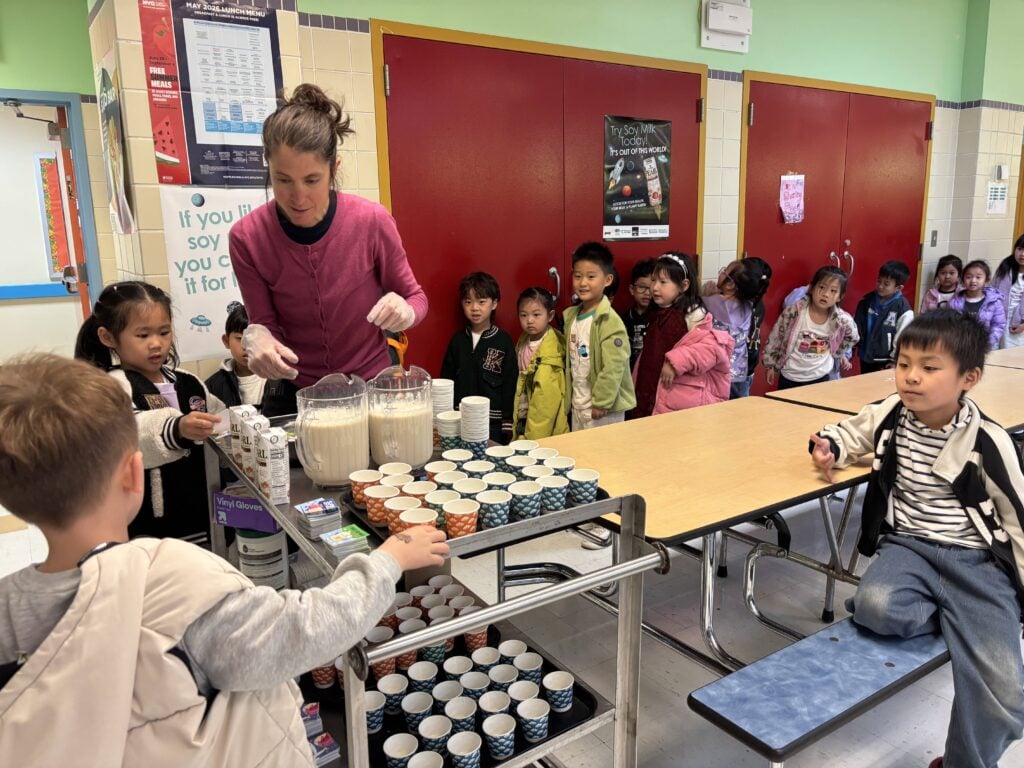
With the upcoming expansion of the soy milk pilot from five schools to 12 this fall, municipal officials plan to closely monitor consumption patterns and logistical scalability. As urban centers search for scalable, practical interventions to meet climate action targets while addressing public health disparities, New York City’s integrated approach to school nutrition offers a blueprint for systemic change across the broader domestic landscape.
