
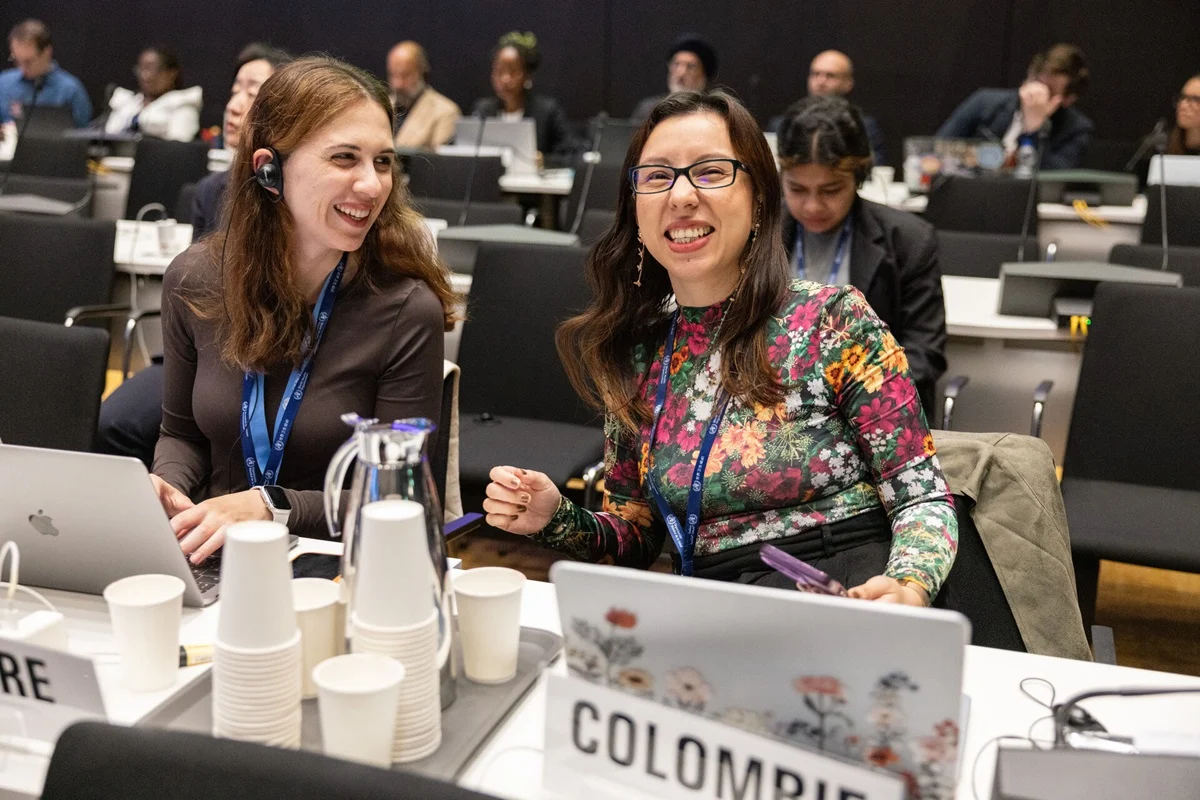
The Seventy-ninth World Health Assembly (WHA79) concluded its high-level proceedings in Geneva this week, marking a transformative period for international public health governance as Member States adopted more than 20 decisions and 13 resolutions. These outcomes address a broad spectrum of critical health challenges, including stroke, liver disease, tuberculosis, antimicrobial resistance (AMR), diagnostic imaging, emergency care, haemophilia, precision medicine, and radiation protection. Beyond technical health interventions, the Assembly served as a forum for significant political and administrative shifts, most notably an agreement to reform the global health architecture through a Member State-led, WHO-hosted joint process designed to ensure the world is better prepared for future health emergencies.
At the closing ceremony, WHO Director-General Dr. Tedros Adhanom Ghebreyesus underscored the practical necessity of these diplomatic achievements. In a symbolic gesture of appreciation, Dr. Tedros presented ceremonial gavels to the President of the Seventy-ninth World Health Assembly, Dr. Víctor Atallah Lajam, Minister of Health of the Dominican Republic, as well as the Chairs of the two main working committees: Dr. Timur Sultangaziyev, Deputy Minister of Health of Kazakhstan (Committee A), and Dr. Kwabena Mintah Akandoh, Minister of Health of Ghana (Committee B). Dr. Tedros reminded the delegates that the true measure of the Assembly’s success lies not in the halls of Geneva, but in the tangible improvements seen in local clinics and households worldwide. "Every resolution you adopt, every agreement you reach, only has value when it changes what happens in a clinic, in a community, or in a household," Dr. Tedros stated. He emphasized that the subsequent task involves political commitment and sustained financing to ensure vaccines reach children, mothers survive childbirth, and outbreaks are contained before they escalate into pandemics.
Reforming the Ethical Recruitment of Global Health Workers
One of the most significant outcomes of the Assembly was the approval of a resolution to amend the WHO Global Code of Practice on the International Recruitment of Health Personnel. This update, the first in 16 years, reflects the changing landscape of global migration and the increasing pressures on health systems following the COVID-19 pandemic. The Code was originally adopted in 2010 to discourage the "brain drain" of medical professionals from low-income countries to wealthier nations, but the new amendments broaden its scope significantly.
A key revision includes the incorporation of provisions for health personnel recruited internationally as care workers, a sector that has seen explosive growth due to aging populations in high-income countries. The updated Code also clarifies how its recommendations should be applied during public health emergencies, ensuring that the movement of health workers does not jeopardize the response efforts of source countries. Furthermore, the resolution encourages "co-investment," suggesting that destination countries should provide financial or technical support to the health systems of source countries to offset the loss of trained personnel.
The amendments were driven by the recommendations of an Expert Advisory Group (EAG), which highlighted that while progress has been made in data availability and migrant worker rights, significant gaps remain. The EAG’s final report noted that ethical recruitment principles must be more deeply integrated into national policies to ensure that international mobility generates proportional benefits for both the exporting and importing nations. With the global health workforce facing a projected shortfall of millions of workers by 2030, these ethical safeguards are viewed by Member States as foundational for achieving universal health coverage and maintaining global health security.
A New Economic Paradigm: The Strategy on the Economics of Health for All
In a move that signals a departure from traditional fiscal policy, the Assembly adopted the "Strategy on the Economics of Health for All (2026–2030)." This decision acknowledges that health and economic prosperity are not competing interests but are deeply interconnected. The strategy aims to realign global and national economic systems to prioritize human well-being and equity over short-term financial metrics.
Delegates at the Assembly emphasized that the current global health financing environment is in a state of emergency. The new strategy provides a framework for "well-being-oriented economies," where health is systematically integrated into fiscal, industrial, and social policies. By strengthening the evidence base for health investments, the WHO aims to equip health ministries with the technical capacity to engage more effectively with ministries of finance and international financial institutions.
The strategy outlines several key actions, including the promotion of sustainable financing for universal health coverage and the creation of resilient health systems capable of withstanding economic shocks. Supporting countries expressed that the strategy is essential for moving away from the perception of health spending as a "cost" and toward viewing it as a "foundational investment" for sustainable development. This shift is particularly relevant as nations navigate the post-pandemic recovery phase, where many governments face pressure to implement austerity measures that could undermine public health.
Tackling the "Silent Pandemic" of Antimicrobial Resistance
Addressing one of the most dire threats to modern medicine, Member States approved the updated Global Action Plan on Antimicrobial Resistance (GAP-AMR) for 2026–2036. The urgency of this plan is supported by alarming data from the WHO’s Global Antimicrobial Resistance and Use Surveillance System (GLASS), which revealed that in 2023, one in six common bacterial infections showed resistance to standard antibiotic treatments.
The human cost of AMR is staggering. Recent studies estimate that 4.71 million deaths were associated with bacterial AMR in 2021 alone. Projections shared during the Assembly suggest that without drastic intervention, AMR could cause up to 39 million deaths by 2050. The new 10-year plan sets an ambitious target to reduce bacterial AMR-associated deaths by 10% by 2030, a goal aligned with the 2024 UN General Assembly targets.
The GAP-AMR 2026–2036 employs a "One Health" approach, which recognizes that the health of humans, animals, and the environment are inextricably linked. The plan calls for reducing antimicrobial use in agrifood systems and minimizing environmental pollution from resistant microbes and antimicrobial residues. To date, over 170 countries have developed national action plans, but the WHO stressed that sustainable action requires strengthened governance and accountability. The Quadripartite partners—including the FAO, UNEP, and WOAH—will work alongside the WHO to provide technical support, ensuring that interventions are tailored to national contexts while maintaining a unified global front against drug-resistant "superbugs."
First-Ever Resolution on Radiation and Health
The Seventy-ninth World Health Assembly also made history by approving the first comprehensive resolution on radiation and health. This landmark agreement covers both ionizing radiation (such as X-rays and nuclear sources) and non-ionizing radiation (such as ultraviolet rays and electromagnetic fields). The resolution recognizes that radiation exposure is a widespread global issue arising from medical, occupational, and environmental sources.
Member States committed to strengthening national radiation protection systems, with a particular focus on the vulnerability of children and pregnant women. The resolution emphasizes the need for better monitoring of exposure levels and the integration of radiation risk management into broader public health programs. This is particularly vital in the context of medical imaging and radiotherapy, where the safe and equitable use of radiation is essential for diagnosing and treating diseases like cancer.
Additionally, the Assembly agreed to scale up prevention and awareness efforts regarding natural radiation sources, such as radon gas and ultraviolet (UV) radiation, which are significant contributors to the global cancer burden. The resolution requests the WHO to conduct a global mapping of existing initiatives to identify gaps in radiation protection. A progress report on these efforts is scheduled to be presented to the World Health Assembly in 2028.
Chronology and Context: The Path to the 79th Assembly
The decisions reached during this Assembly were the result of months, and in some cases years, of diplomatic negotiations. The process began with Member State-led consultations in late 2023 and early 2024, focusing on areas where the COVID-19 pandemic exposed systemic weaknesses. The timeline for implementation for many of these resolutions stretches toward 2030, aligning with the United Nations Sustainable Development Goals (SDGs).
The 79th Assembly took place against a backdrop of geopolitical tension and economic uncertainty, yet the high level of consensus on technical health issues suggests a continued global commitment to multilateralism in the health sector. The administrative reforms agreed upon during the week are intended to streamline the WHO’s operations, making it more agile in its response to emergencies while maintaining its role as the world’s leading evidence-based health authority.
Implications for Global Health Governance
The outcomes of the Seventy-ninth World Health Assembly represent a significant expansion of the WHO’s mandate and the responsibilities of its Member States. By linking health to economic policy and ethical labor practices, the Assembly has acknowledged that public health cannot be separated from the broader structures of global society.
For low- and middle-income countries, the emphasis on co-investment in the health workforce and the One Health approach to AMR offers a pathway toward more resilient domestic health systems. For high-income countries, the resolutions provide a framework for more sustainable and ethical engagement with the global community. As Dr. Tedros noted in his closing remarks, the success of these resolutions will be measured by their impact on the ground. The coming years will require not only the "political commitment" mentioned by the Director-General but also a radical shift in how nations finance and prioritize the health of their citizens in an increasingly interconnected world.
As the delegates depart Geneva, the focus shifts to the national level, where these global agreements must be translated into domestic laws, budgets, and clinical practices. The 2028 and 2030 milestones will serve as critical checkpoints for a world attempting to heal from a global pandemic while preparing for the complex health challenges of the mid-21st century.
