
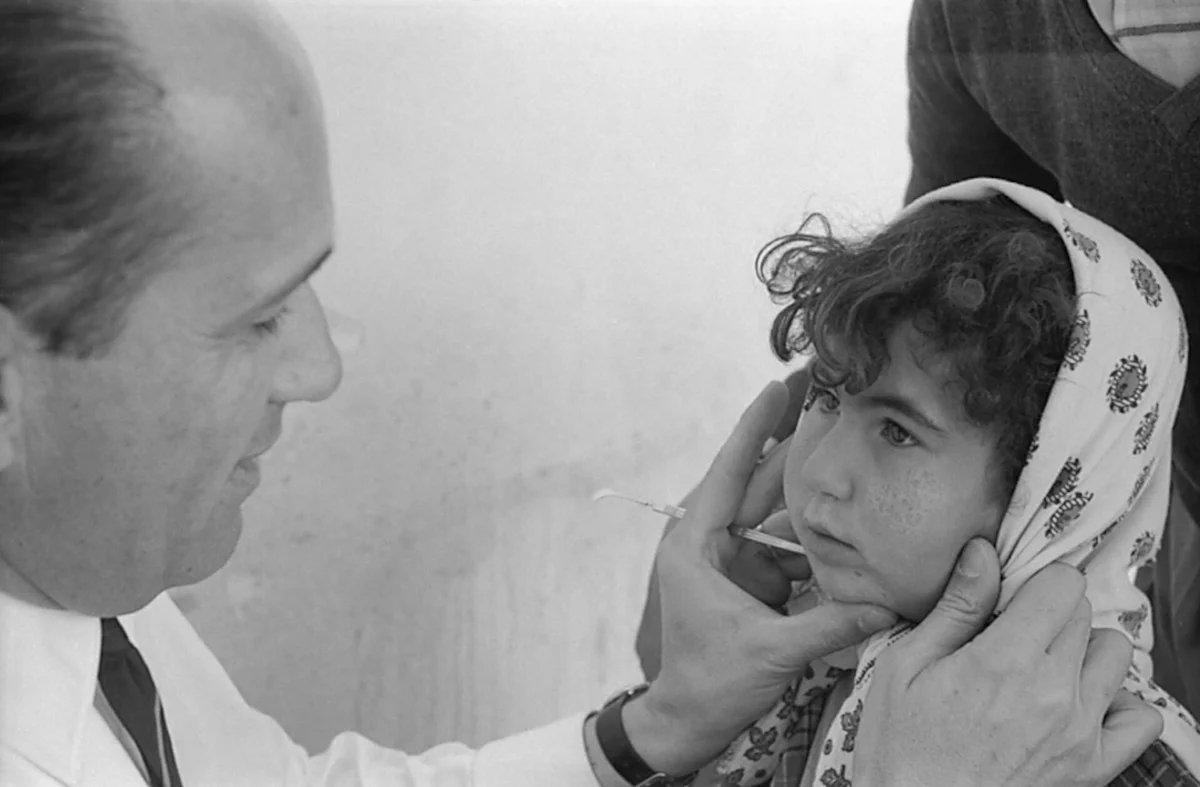
The World Health Organization (WHO) has officially recognized Tunisia for its successful elimination of trachoma as a public health problem, marking a definitive victory in a decades-long struggle against the world’s leading infectious cause of blindness. This validation serves as a testament to Tunisia’s persistent commitment to public health, highlighting a transition from a period where the disease was endemic across half the population to a modern era of comprehensive eye care and robust sanitary infrastructure. Tunisia now stands as the 31st country globally to receive this validation and the 14th in the WHO Eastern Mediterranean Region to eliminate at least one neglected tropical disease (NTD).
The announcement, confirmed by WHO Director-General Dr. Tedros Adhanom Ghebreyesus, underscores the efficacy of long-term political will and the integration of specialized disease control into the broader framework of primary healthcare. Trachoma, a bacterial infection that disproportionately affects the most impoverished and marginalized communities, had long been a shadow over Tunisia’s southern regions. Its removal from the public health landscape is viewed not only as a medical triumph but also as a significant indicator of the country’s socioeconomic development and improved living standards.
Understanding the Burden of Trachoma
Trachoma is an eye disease caused by infection with the bacterium Chlamydia trachomatis. It is transmitted through direct or indirect transfer of eye and nose discharges from infected people, particularly young children who serve as the principal reservoir of infection. These discharges are spread by fingers, on clothing, or by eye-seeking flies. If left untreated, repeated infections lead to a condition known as trachomatous trichiasis, where the eyelids scar and turn inward, causing the eyelashes to rub against the eyeball. This results in intense pain, corneal scarring, and irreversible blindness.
For Tunisia, the historical burden was immense. In the early to mid-20th century, the disease was ubiquitous. Epidemiological records from that era suggest that in certain southern provinces, prevalence rates were staggering, often exceeding 50% of the local population. The disease was inextricably linked to poverty, overcrowding, and a lack of access to clean water and basic sanitation—conditions that allowed the bacteria to thrive and circulate unchecked. The social and economic consequences were profound, as blindness often removed productive members from the workforce and placed additional burdens on families and the state.
The Strategy for Success: The SAFE Framework
Tunisia’s path to elimination was built upon the WHO-recommended SAFE strategy, a comprehensive public health approach that addresses both the immediate medical needs of patients and the underlying environmental factors that facilitate transmission. The implementation of this strategy required a multi-sectoral effort involving health professionals, educators, and infrastructure engineers.
Surgery for Advanced Cases (S)
To address the existing backlog of patients suffering from trachomatous trichiasis, Tunisia established specialized surgical units. Surgeons were trained in corrective eyelid procedures to prevent the onset of blindness in those already scarred by repeated infections. By integrating these services into local hospitals and mobile clinics, the Ministry of Health ensured that even the most remote populations had access to sight-saving interventions.
Antibiotics to Treat Infection (A)
Mass drug administration (MDA) played a pivotal role in reducing the reservoir of Chlamydia trachomatis. Tunisia utilized targeted antibiotic distribution, primarily using azithromycin, to clear active infections within communities. These campaigns were often conducted in schools and through community health centers, ensuring high coverage rates that disrupted the cycle of transmission.
Facial Cleanliness (F)
Recognizing that behavioral change is essential for long-term prevention, Tunisia launched extensive public health campaigns focused on hygiene. Educational programs in schools taught children the importance of regular face-washing, while community leaders promoted the practice as a primary defense against eye infections. This component of the strategy was vital in reducing the frequency of re-infection among children.
Environmental Improvements (E)
Perhaps the most sustainable aspect of Tunisia’s success was its investment in environmental health. The government prioritized the expansion of water and sanitation infrastructure, particularly in the arid southern regions. By increasing access to clean water and improving waste management—thereby reducing fly populations—Tunisia addressed the root causes of trachoma. This shift was supported by national policies aimed at rural development and social equity.
Chronology of the National Effort
The journey toward elimination was not a rapid surge but a steady, deliberate progression over several decades. Following the country’s independence in 1956, the Tunisian government identified eye health as a cornerstone of its national health policy.
In the 1970s and 1980s, the Ministry of Health began integrating trachoma control into the burgeoning primary healthcare system. This era saw the establishment of the National Program for the Fight Against Blindness, which provided the institutional framework for systematic screening and treatment. By the 1990s, Tunisia had significantly reduced the prevalence of active trachoma, shifting the focus toward identifying and operating on remaining cases of trichiasis.
In 1996, the global momentum shifted with the launch of the WHO Alliance for the Global Elimination of Trachoma by 2020 (GET2020). Tunisia aligned its national goals with this international initiative, strengthening its surveillance and reporting mechanisms. By the early 2000s, surveys indicated that the prevalence of the disease had dropped below the threshold for a public health problem in most districts. The final decade was defined by rigorous documentation, "unknown to the health system" case finding, and the preparation of the comprehensive dossier required for WHO validation.
Official Responses and Global Recognition
The validation has drawn praise from international health leaders who view Tunisia’s success as a blueprint for other nations. Dr. Tedros Adhanom Ghebreyesus emphasized that Tunisia has proven that even the world’s leading infectious cause of blindness can be overcome through dedication and teamwork. "I congratulate Tunisia on this historic public health achievement," Dr. Tedros stated. "Eliminating trachoma shows what long-term political commitment and strong primary health care can do."
Dr. Hanan Balkhy, WHO Regional Director for the Eastern Mediterranean, highlighted the consistency of the effort. "This is a major achievement that reflects sustained and consistent national commitment over many years and shows what is possible when a country remains focused on addressing preventable causes of blindness," she remarked.
From the national perspective, Dr. Mustapha Ferjani, Tunisia’s Minister of Health, characterized the milestone as a victory for equity and prevention. He noted that the achievement was the result of "generations of health-care professionals and local communities who worked tirelessly to expand access to care." He further asserted that Tunisia remains committed to protecting these gains for future generations.
Supporting Data and Validation Criteria
To be validated by the WHO, a country must provide evidence meeting three specific criteria:
- A prevalence of trachomatous trichiasis (TT) "unknown to the health system" of less than 0.2% in adults aged 15 years and older.
- A prevalence of trachomatous inflammation—follicular (TF) in children aged 1–9 years of less than 5% in each formerly endemic district.
- The existence of a robust system to identify and manage incident cases of TT to ensure that the disease does not re-emerge as a public health threat.
Tunisia’s dossier provided exhaustive data from across its governorates, demonstrating that these benchmarks had been consistently met. The country’s ability to maintain these low levels of prevalence, even during periods of regional instability or economic fluctuation, was a key factor in the WHO’s decision.
Broader Impact and Future Surveillance
The elimination of trachoma in Tunisia is the first time the country has eliminated a neglected tropical disease, setting a precedent for the management of other conditions such as leishmaniasis and rabies. It also contributes significantly to the health-related Sustainable Development Goals (SDGs), which aim to end the epidemics of NTDs by 2030.
However, the validation of elimination does not mean the work is finished. Tunisia has implemented a post-validation surveillance system designed to detect any potential resurgence. This involves ongoing training for primary healthcare workers to recognize the signs of trachoma and maintaining the capacity to perform eyelid surgeries if new cases of trichiasis are identified. By keeping eye care integrated within the general health system, Tunisia ensures that surveillance is both cost-effective and comprehensive.
The Global Context of Trachoma Elimination
Tunisia joins an elite group of nations—including Morocco, Oman, Saudi Arabia, and most recently, Pakistan and Iraq—within the Eastern Mediterranean region to have reached this goal. Globally, the list includes diverse nations such as Mexico, China, Ghana, and Vanuatu. Each success story adds to the collective knowledge of the GET2020 alliance, now working toward the revised 2030 target.
The success in Tunisia provides critical lessons for other endemic countries, particularly regarding the importance of the "E" in the SAFE strategy. While antibiotics and surgery provide immediate relief, it is the fundamental improvement in water, sanitation, and hygiene (WASH) that ensures the disease does not return. Tunisia’s investment in its people’s living conditions has paid dividends not just in eye health, but in overall public health resilience.
As the global health community looks toward the 2030 roadmap for neglected tropical diseases, Tunisia’s achievement serves as a beacon of hope. It demonstrates that with a combination of scientific evidence, community engagement, and unwavering political support, even the most entrenched public health challenges can be relegated to the history books. Tunisia’s journey from a 50% infection rate to total elimination stands as one of the great success stories of modern public health in the Mediterranean.
