
Popular haircare advice, often centered on the elusive concept of "hair porosity," is facing rigorous scientific scrutiny, revealing that many widely adopted diagnostic tests are fundamentally flawed. While some consumers may coincidentally find suitable products through these methods, the underlying scientific premises of tests like the "float test" and "drop test" are largely inaccurate, failing to measure actual hair porosity and instead indicating surface damage. This revelation, highlighted in recent scientific discourse, underscores the critical need for a more nuanced and evidence-based approach to hair health, impacting both consumer understanding and professional haircare practices.
The term "hair porosity" itself is complex and multifaceted, interpreted differently across scientific, cosmetic, and consumer contexts. In its simplest form, it refers to hair’s ability to absorb and retain moisture. However, the prevailing popular understanding, heavily influenced by DIY tests, often misrepresents the physical and chemical interactions between hair and water. The misconception that undamaged hair is inherently "waterproof" or that conditioners create an impermeable seal is a significant driver of these flawed diagnostic methods. Scientific research consistently demonstrates that even healthy, unconditioned hair possesses a remarkable capacity to absorb a substantial amount of water, challenging the core premise of these common tests.
The Rise of Porosity in Haircare Discourse
Over the past decade, particularly with the growth of natural hair movements and online beauty communities, "hair porosity" has surged in popularity as a key determinant for personalized haircare routines. Enthusiasts and beauty bloggers often categorize hair into "low," "medium," and "high" porosity, recommending specific product types, ingredients, and application methods based on these classifications. The allure of porosity-based advice lies in its promise of tailored solutions for common hair concerns such as dryness, frizz, and breakage. Consumers, eager for effective strategies, readily adopted simple at-home tests, believing they offered reliable insights into their hair’s internal structure and hydration needs. This grassroots adoption has, in turn, influenced product development and marketing strategies within the beauty industry, with many brands now offering lines specifically targeted at different porosity levels. However, this popular narrative often diverges significantly from established dermatological and trichological science.
Deconstructing the "Waterproof Hair" Myth
A central tenet of the misleading porosity narrative is the belief that healthy hair, with its intact cuticle layer, should repel water, making it "waterproof." Conversely, damaged hair is presumed to have "open" cuticles that readily absorb water, leading to "high porosity." This notion suggests that conditioners function by sealing these cuticles, preventing water ingress. Scientific data, however, paints a different picture.
Research indicates that even undamaged human hair is far from waterproof. Hair is a hygroscopic material, meaning it readily absorbs moisture from its environment. Studies, such as those detailed in Robbins CR’s "Chemical and Physical Behavior of Human Hair," confirm that undamaged hair can absorb nearly one-third (approximately 30%) of its own weight in water within minutes. Furthermore, the water content of hair rapidly adjusts in response to ambient humidity, demonstrating its inherent capacity for moisture exchange.
| Table: Weight of Water Absorbed by Hair at Various Relative Humidities | Relative Humidity (%) | Weight of Water Absorbed (%) |
|---|---|---|
| 0 | 0 | |
| 8 | 3.9 | |
| 40 | 10.2 | |
| 63 | 14.8 | |
| 86 | 22.6 | |
| 100 | 31.2 |
Source: Robbins CR. Chemical and Physical Behavior of Human Hair. Springer Berlin Heidelberg 2012.
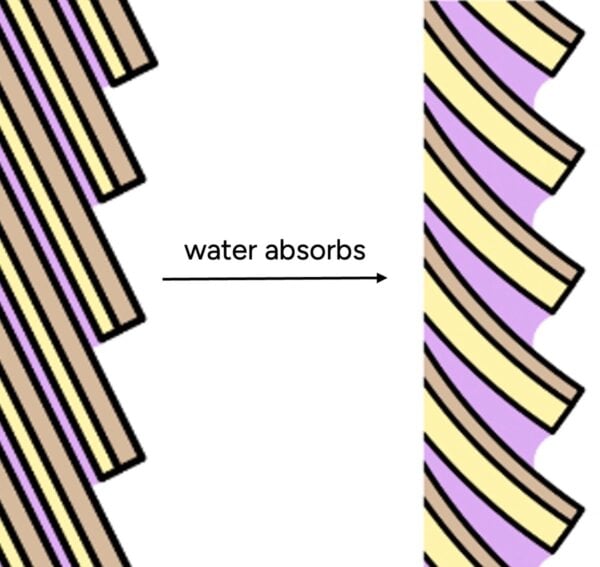
This table clearly illustrates hair’s natural affinity for water, even at moderate humidity levels. The idea that intact cuticles form an impenetrable barrier is inconsistent with these findings. Hair’s outermost layer, the cuticle, is composed of overlapping scales, much like shingles on a roof or scales on a pinecone. While these scales provide a protective barrier, they are not hermetically sealed. There are microscopic gaps and interfaces where water molecules can penetrate the hair shaft, particularly when present in vapor form.
Hair’s Microscopic Architecture and Conditioner Interaction
The hair’s natural conditioning layer, known as the F-layer (or covalently bound lipids), resides on the surface of each cuticle scale. This layer is primarily hydrophobic, helping to reduce friction and provide a smooth feel. However, it is not a continuous, impenetrable film. Its fragmented nature means there are numerous points of entry for water.
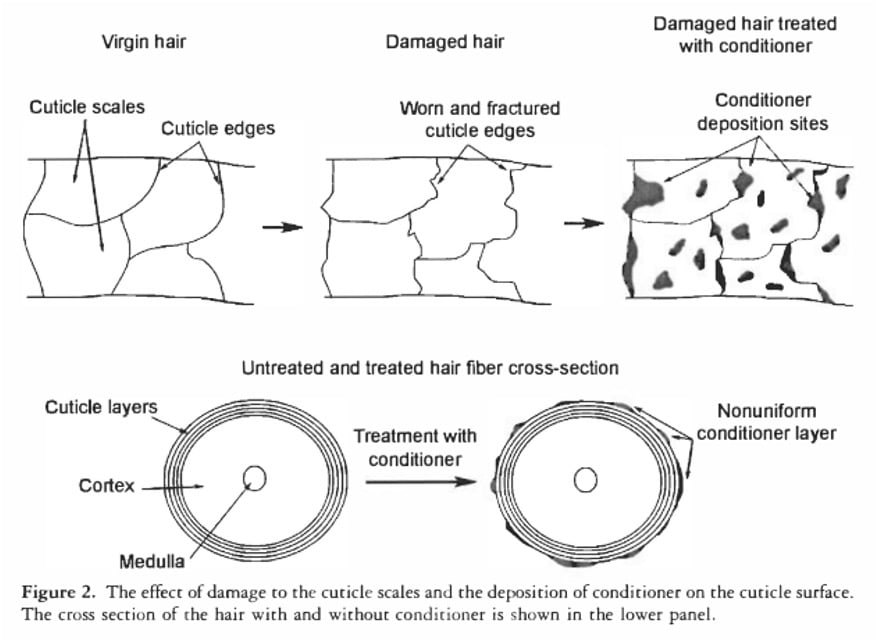
Similarly, the perception that conditioners create a continuous, water-sealing layer is also inaccurate. Microscopic analyses, such as those conducted by La Torre C and Bhushan B, reveal that conditioning agents, typically cationic surfactants and silicones, deposit on the hair surface in discrete "blobs" or patches, rather than forming a seamless, uniform coating. While these deposits are effective at smoothing the cuticle scales, reducing frizz, and enhancing softness—the tactile benefits consumers seek—they are not designed to render the hair waterproof. Individual water molecules are infinitesimally small, allowing them to navigate around these conditioning deposits and enter the hair shaft. The primary function of conditioners is to improve the surface properties of hair, making it smoother, easier to detangle, and more manageable, not to block water absorption.
The Flawed Foundations: Float and Drop Tests Under Scrutiny
The two most popular DIY hair porosity tests—the float test and the drop test—are predicated on the "waterproof hair" myth. When analyzed through a scientific lens, their results are attributed not to internal porosity, but to the interaction of water with the hair’s surface chemistry.
The Float Test: Misinterpreting Density and Surface Interaction
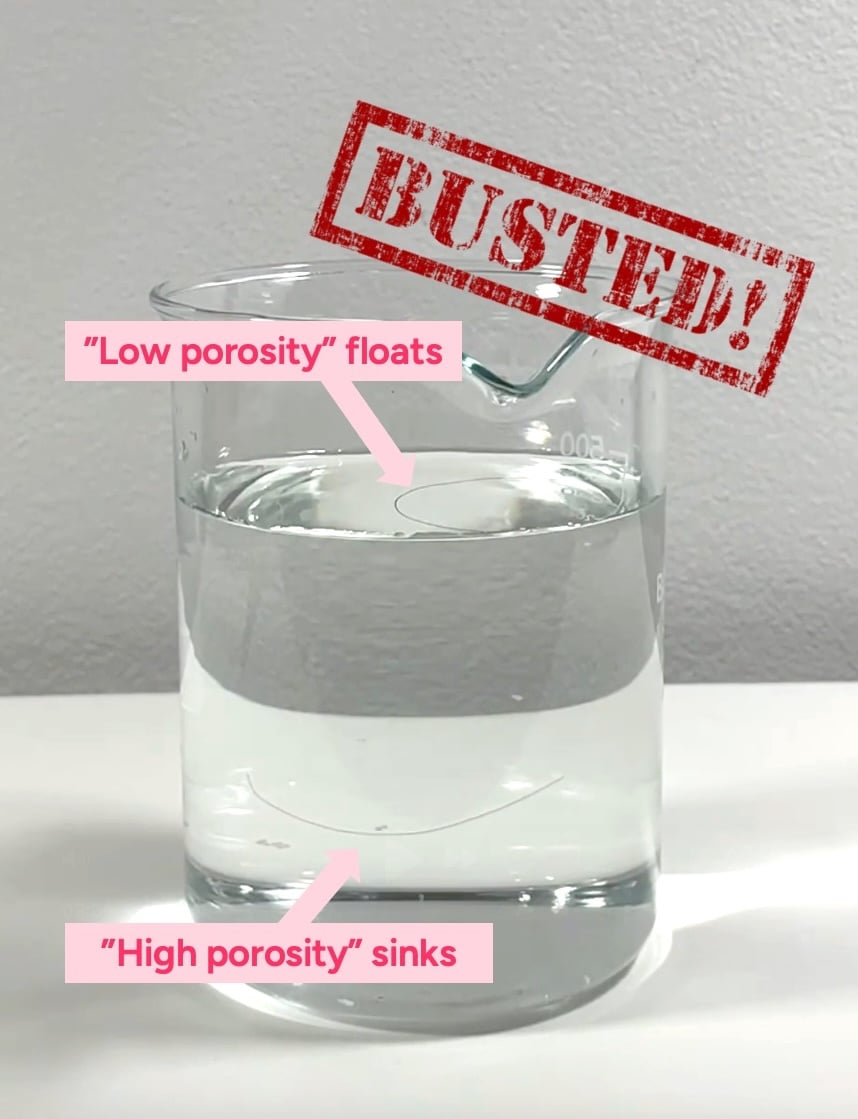
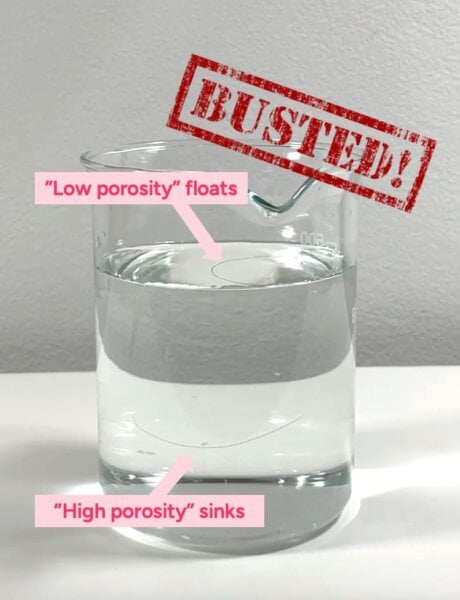
The float test instructs individuals to place a single strand of hair into a glass of water. The observation that "damaged" hair sinks while "less damaged" hair floats is then erroneously attributed to "high porosity" hair rapidly absorbing water and becoming dense enough to sink. However, human hair, regardless of its damage level, is inherently denser than water. A typical hair fiber has a density of approximately 1.3 g/cm³, while water is 1.0 g/cm³. By density alone, hair should sink.
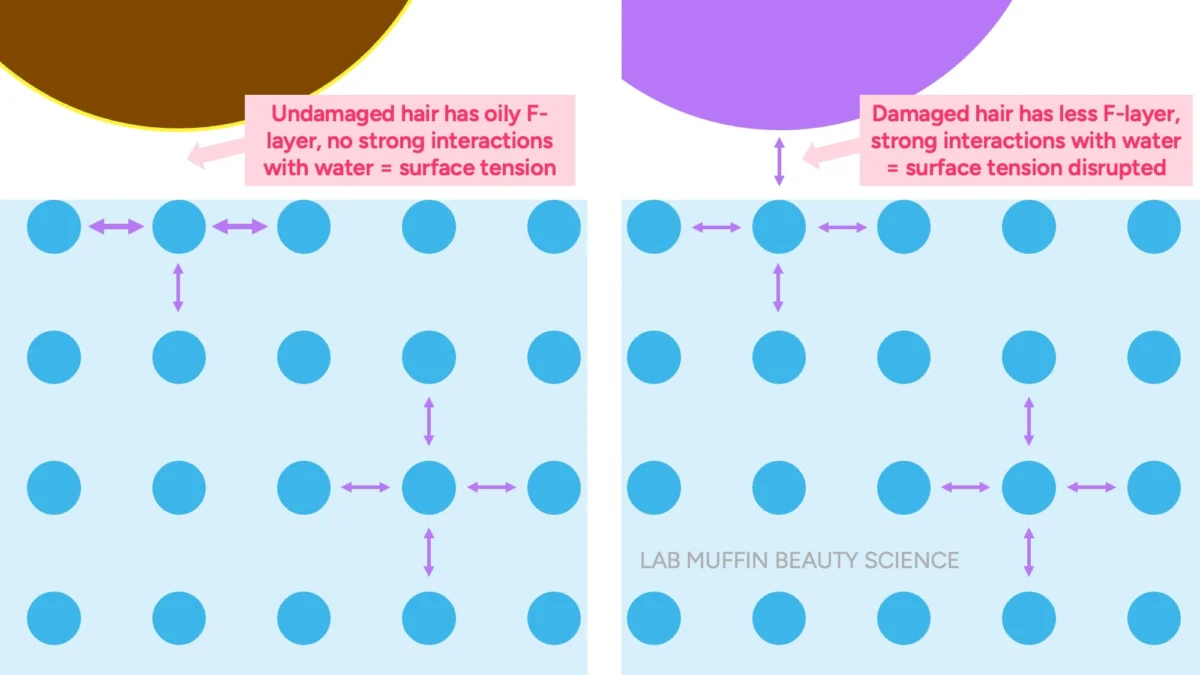
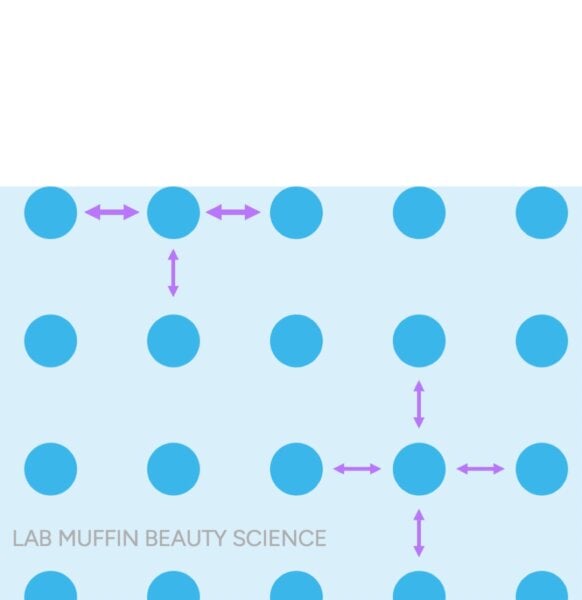
The reason hair often floats initially, even for prolonged periods, is due to surface tension. Undamaged hair, with its intact and hydrophobic F-layer, does not readily "break" the water’s surface tension. The water molecules at the surface of the glass form a strong cohesive "skin" due due to strong intermolecular hydrogen bonds. This "skin" can support objects denser than water, such as insects, paperclips, and indeed, hair strands, as long as the object doesn’t disrupt this surface film. When hair is undamaged, its slightly oily, hydrophobic surface resists wetting, allowing it to rest on this surface tension "skin."
Damaged hair, conversely, has a compromised F-layer. Chemical treatments (like coloring, perming, relaxing), heat styling, and mechanical abrasion can strip away these protective lipids, exposing a more hydrophilic (water-loving) surface. When this damaged, hydrophilic hair encounters water, it readily forms hydrogen bonds with the water molecules at the surface. This interaction disrupts the water’s surface tension, causing the hair to "break through" the film and sink, not because it has instantly absorbed a significant amount of water and become denser, but because its surface properties no longer allow it to be supported by the water’s "skin."
The Drop Test: A Misreading of Wetting and Spreading
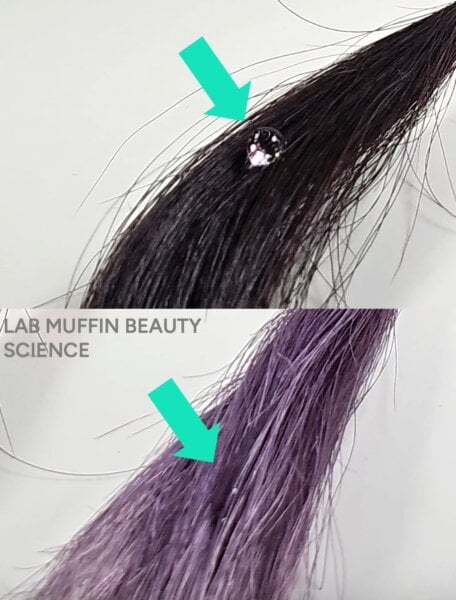
The drop test involves placing a small drop of water onto a section of hair. The observation that water beads up on "undamaged" hair but flattens and spreads on "damaged" hair is similarly attributed to differences in porosity – "high porosity" hair is said to absorb the water quickly because it’s "full of holes." Again, surface tension and surface chemistry are the true explanatory factors.
When water beads on a surface, it indicates poor wetting. The cohesive forces between water molecules are stronger than the adhesive forces between water and the hair surface. This is characteristic of a hydrophobic surface, like that of healthy hair with its intact F-layer. The water drop maintains its spherical shape due to its own surface tension.
When water flattens and spreads, it signifies good wetting. The adhesive forces between the water and the hair surface are stronger than the cohesive forces within the water. This occurs on a hydrophilic surface, such as damaged hair where the F-layer has been compromised. The water quickly spreads across the surface, appearing to be "absorbed," but this is primarily a surface phenomenon—the water is spreading along and between the hair fibers, facilitated by capillary action, rather than rapidly filling the internal structure of the hair shaft. While damaged hair can absorb slightly more water (around 45% of its weight) than undamaged hair, this difference is not as dramatic as the test implies, nor is it the immediate cause of the observed spreading. The primary distinction is how water interacts with the surface, not how quickly it fills the internal cortex.
Beyond Surface Tension: The Role of Humidity and Gas Absorption
The discrepancy between hair’s documented ability to absorb significant amounts of water and the misleading nature of the float and drop tests lies in the form of water being discussed. When scientists refer to hair absorbing up to 30% of its weight in water, they are largely referring to water vapor (humidity) from the air, not liquid water from a glass or a droplet.
In gaseous form, individual water molecules are much smaller and less cohesive than in liquid water. They are not "holding hands" through hydrogen bonds in the same way. These tiny, independent water molecules can easily wiggle between the overlapping cuticle scales and penetrate into the hair’s cortex without encountering the strong surface tension forces that liquid water exhibits. This explains why hair swells and changes its mechanical properties in humid environments, even if it appears to repel liquid water on its surface. The float and drop tests, however, are specifically designed to observe interactions with liquid water, thus making them poor indicators of hair’s overall moisture absorption capacity from the environment.
Why "Porosity" Advice Sometimes Works (By Coincidence)
Despite their scientific inaccuracies, "porosity" tests sometimes lead consumers to products that genuinely improve their hair. This is not due to an accurate diagnosis of internal porosity, but rather a fortunate coincidence: the tests effectively identify surface damage.
Hair that floats (diagnosed as "low porosity") typically has a relatively intact F-layer and cuticle, indicating less surface damage. Such hair may benefit from lighter products that don’t weigh it down. Hair that sinks or spreads water (diagnosed as "high porosity") usually has a compromised F-layer and lifted or eroded cuticles, indicating significant surface damage. This hair often benefits from richer, more occlusive products that can smooth the cuticle, provide lubrication, and reduce moisture loss, which is exactly what products marketed for "high porosity" hair often aim to do.
Thus, the advice often aligns with the needs of damaged versus undamaged hair, but the rationale behind it is flawed. The perceived "porosity" is a proxy for surface integrity, not a direct measure of how easily water permeates the hair shaft’s internal structure in a bulk liquid context.
Implications for Consumers and Professionals
The widespread reliance on inaccurate porosity tests carries several implications for both consumers and professional hairstylists.
For consumers, clinging to these tests can lead to confusion and frustration. They might incorrectly believe their healthy hair is "low porosity" and struggle with products that are too light, or conversely, misdiagnose slightly damaged hair as "high porosity" and over-condition it, leading to build-up. A deeper understanding of hair science empowers consumers to make more informed choices based on actual hair condition, texture, and styling needs, rather than a misconstrued "porosity" label.
For hairdressers and salon professionals, the scientific debunking of these tests is particularly critical. While "porosity" is often taught in cosmetology schools and used in consultations, relying on the float or drop test for crucial decisions, such as chemical processing times, can lead to suboptimal or even damaging results. Chemical treatments like coloring, perming, or relaxing penetrate the hair shaft through a complex series of chemical reactions, not simply by "soaking in" faster due to perceived "holes." The actual speed of chemical uptake depends on numerous factors, including the type and extent of chemical bonds within the hair, prior treatments, and the specific chemical formulation. Applying chemicals based on a float test result, rather than a direct strand test or professional judgment informed by the hair’s history and texture, risks over-processing or under-processing, leading to damage or ineffective results. Expert trichologists consistently advise that the most reliable method for determining chemical processing time is a direct strand test, where a small section of hair is tested with the actual product to observe its reaction.
Expert Perspectives and the Path Forward
Leading hair scientists and trichologists advocate for a shift towards evidence-based understanding in haircare. Instead of "porosity," they emphasize factors such as:
- Hair Damage Level: Assessing the degree of cuticle erosion, breakage, and internal protein loss.
- Hair Type and Texture: Understanding the natural curl pattern, density, and thickness of individual strands.
- Environmental Factors: Considering humidity, sun exposure, and pollution.
- Styling Practices: Evaluating heat styling, chemical treatments, and mechanical manipulation.
Dr. Michelle Wong, a prominent cosmetic chemist and science communicator, has been at the forefront of debunking these myths, urging the beauty industry to adopt more scientifically sound language and diagnostic tools. This move would not only empower consumers with accurate information but also elevate the professional standards within the haircare industry.
The scientific community encourages a move away from simplistic, misleading tests towards a holistic assessment of hair health. This includes visual inspection for signs of damage (split ends, dullness, frizz), tactile assessment for smoothness and elasticity, and consideration of the hair’s history (chemical treatments, heat styling). While the concept of hair porosity remains a valid scientific term in a complex, multi-faceted context, its popular interpretation through DIY tests has been fundamentally flawed. By embracing scientific literacy, both consumers and professionals can navigate the vast world of haircare with greater precision, leading to genuinely healthier and more manageable hair.
