
The pervasive concept of "hair porosity" has become a cornerstone of modern haircare advice, influencing countless product choices and routine recommendations. However, a recent analysis by Lab Muffin Beauty Science, published on January 28, 2026, challenges the scientific validity of popular DIY hair porosity tests, asserting that they fundamentally misinterpret hair behavior. Dr. Michelle Wong, a cosmetic chemist and founder of Lab Muffin Beauty Science, argues that these widely used diagnostics, such as the float test and the drop test, do not accurately measure hair’s internal porosity but rather its surface characteristics and level of damage. This revelation carries significant implications for both consumers seeking effective haircare solutions and professional stylists making critical decisions about chemical treatments.
The Rise and Reach of the Porosity Paradigm
The concept of hair porosity gained widespread traction, particularly within the natural hair community, as a seemingly intuitive way to categorize hair types and tailor product choices. It posits that hair can be classified as low, medium, or high porosity based on how easily it absorbs and retains moisture. Low porosity hair, with its tightly sealed cuticles, is thought to repel water and require lighter products. High porosity hair, characterized by open or damaged cuticles, is believed to absorb water rapidly but also lose it quickly, thus needing heavier, more moisturizing treatments. This framework has led to an entire segment of the haircare industry marketing products specifically for "low porosity" or "high porosity" hair, providing consumers with what appeared to be a scientific basis for their purchasing decisions.
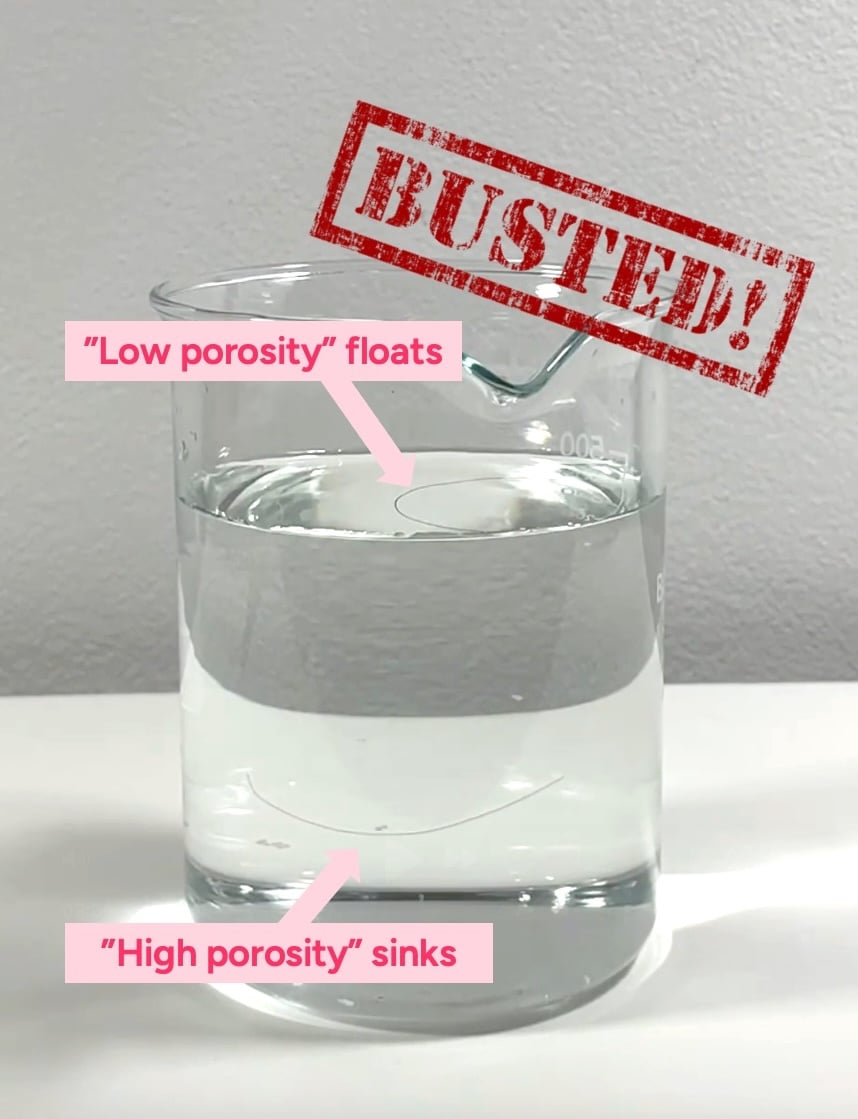
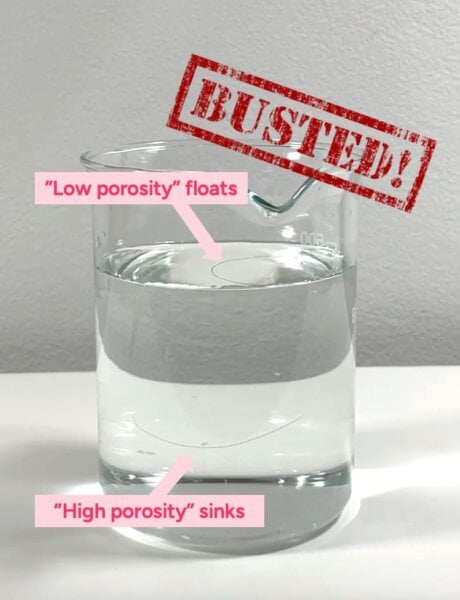
DIY tests quickly emerged as accessible tools for self-diagnosis. The "float test" involves placing a strand of hair in a glass of water, with floating hair indicating low porosity and sinking hair signifying high porosity. The "drop test" suggests that water beading on the hair surface indicates low porosity, while water flattening and absorbing quickly points to high porosity. These tests have been shared extensively across social media platforms and beauty blogs, becoming ingrained in the collective understanding of haircare.
Debunking the Myth: Hair’s Natural Water Absorption
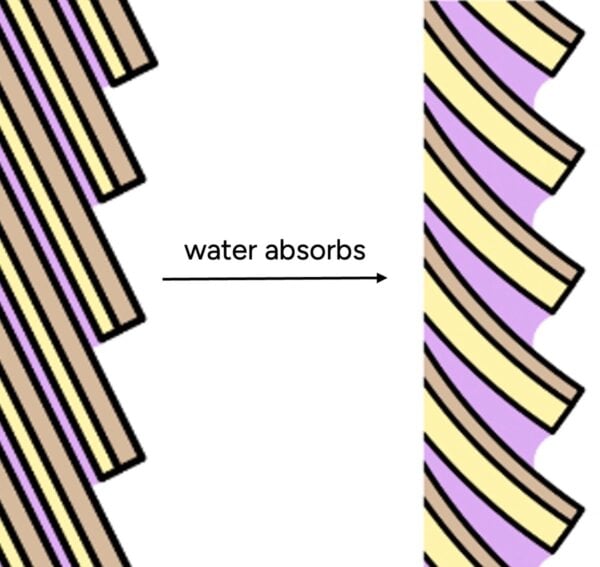
Contrary to the prevailing myth that "undamaged hair is waterproof," scientific literature, including foundational texts like C.R. Robbins’ Chemical and Physical Behavior of Human Hair, clearly demonstrates that human hair naturally absorbs a substantial amount of water. Even healthy, undamaged hair can absorb nearly one-third (approximately 30-31%) of its own weight in water within minutes. This absorption is not a sign of damage but a fundamental characteristic of hair’s hygroscopic nature, meaning it readily interacts with and takes up moisture from its environment.
The rate of water absorption is directly correlated with ambient humidity. Data illustrates this relationship starkly: at 0% relative humidity, hair contains 0% absorbed water by weight. As humidity increases to 8%, water content rises to 3.9%. At 40% humidity, it reaches 10.2%, and at 100% relative humidity, undamaged hair can hold 31.2% of its weight in water. This rapid and significant absorption of water vapor occurs because hair’s structure is not a completely sealed barrier. The cuticle, often visualized as overlapping scales, does not form a perfectly impermeable layer. Instead, like a pinecone, there are microscopic gaps between these scales where water molecules can penetrate.
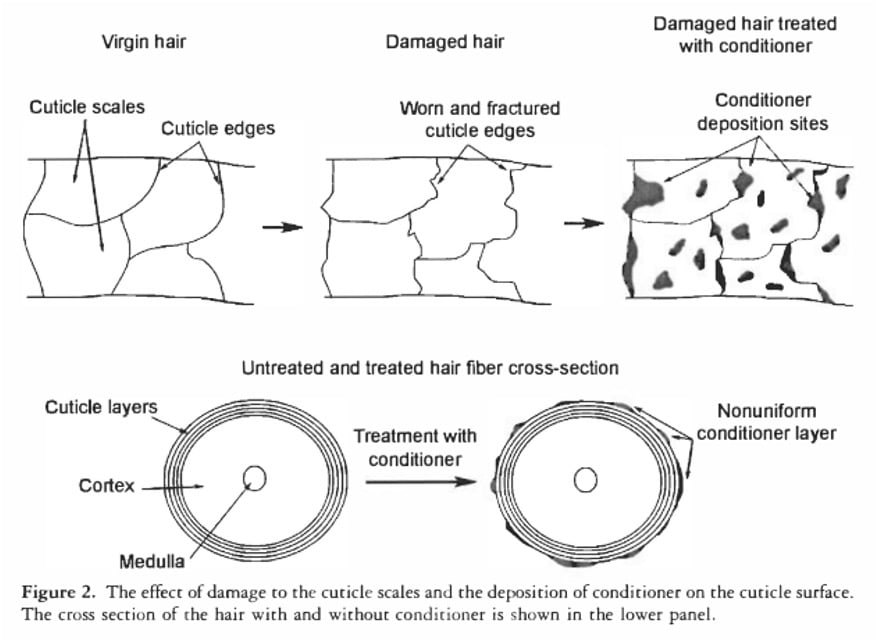
Furthermore, the F-layer, a natural conditioning layer of fatty acids (primarily 18-methyl eicosanoic acid, or 18-MEA) found on the surface of each cuticle scale, provides a degree of hydrophobicity (water-repellency). However, this layer is not continuous or impenetrable. Its function is to provide lubrication and reduce friction, not to seal out all moisture. Similarly, conditioners, which are designed to mimic and augment the F-layer’s function on damaged hair, deposit in "blobs" rather than forming a continuous, waterproof film. While these microscopic deposits are sufficient to smooth the hair’s surface, reduce frizz, and improve manageability, they are ineffective at preventing tiny water molecules from entering the hair shaft. This challenges the notion that conditioners "seal" the hair against water absorption.
Surface Tension: The True Indicator at Play
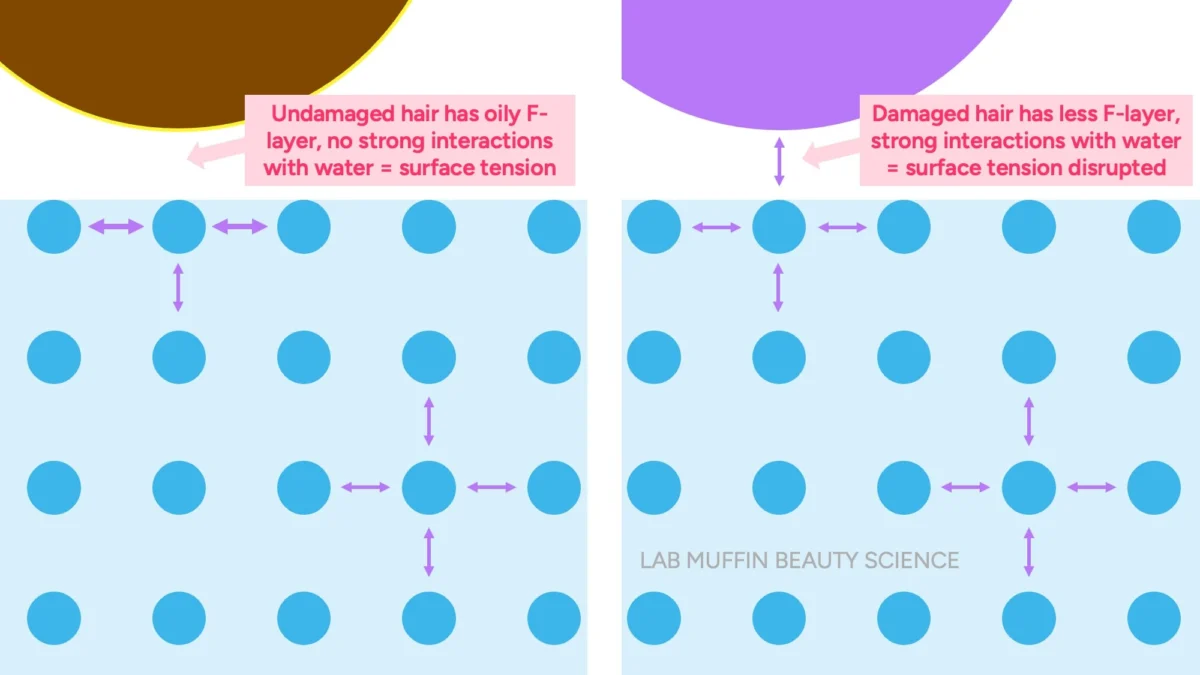
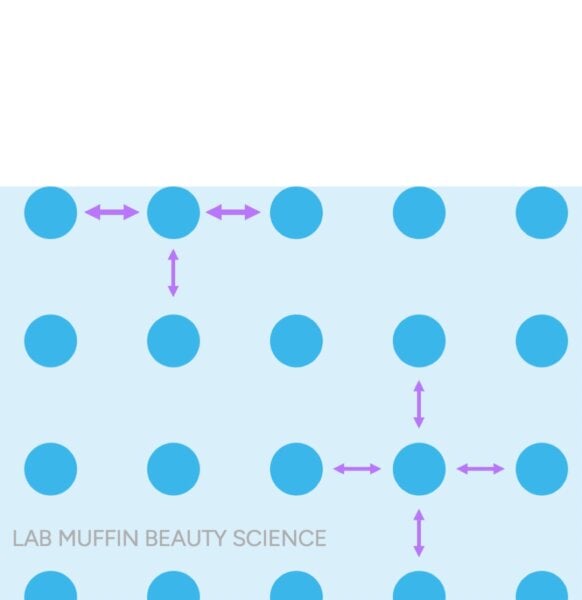
If hair is not waterproof and readily absorbs water, then what explains the observations in the float and drop tests? The scientific answer lies in surface tension, a fundamental property of liquids. Water molecules exhibit strong cohesive forces (hydrogen bonds) with each other. At the surface of a body of water, these molecules are pulled inward by their neighbors, creating a strong, elastic-like "skin." This surface tension is powerful enough to support objects denser than water, such as insects, paperclips, and even individual strands of hair, provided their surface does not disrupt this "skin."
Re-examining the Float Test: The float test does not measure how much water hair absorbs internally but rather how water interacts with the hair’s outermost surface. Undamaged hair, with its intact, naturally hydrophobic F-layer, does not readily disrupt the water’s surface tension. The oily F-layer causes water to bead up on the hair surface, increasing the contact angle and allowing the hair strand to be supported by the water’s "skin," thus floating. Conversely, damaged hair has a compromised F-layer, often stripped away by chemical processes, heat styling, or mechanical abrasion. This exposes a more hydrophilic (water-attracting) surface. When damaged hair comes into contact with water, its surface readily forms hydrogen bonds with the water molecules, effectively weakening and disrupting the water’s surface tension. Once the surface tension is broken, the hair, which is denser than water, will sink. Therefore, the float test primarily serves as an indicator of surface damage, not a measure of how porous the internal structure of the hair is.
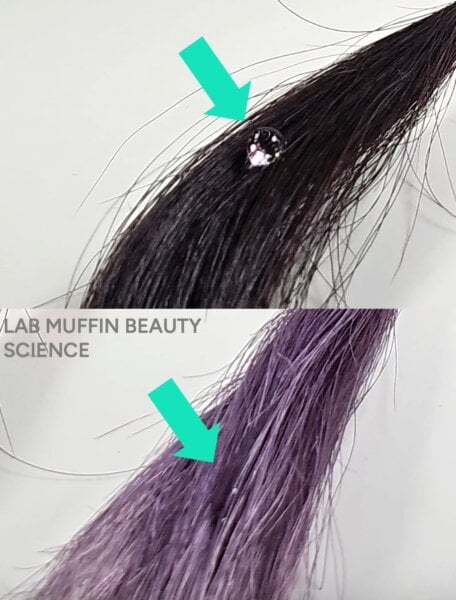
Re-examining the Drop Test: Similarly, the drop test is also governed by surface interactions. On undamaged hair, a drop of water will maintain a high contact angle and bead up due to the hydrophobic F-layer resisting immediate spreading. On damaged hair, where the surface is more hydrophilic, the water drop will have a lower contact angle, spreading out and appearing to "absorb" quickly. This rapid spreading is not necessarily due to immediate internal absorption into the hair cortex but rather the water’s tendency to wet and spread across the damaged, more water-attracting surface of the hair shaft and between individual strands. While damaged hair can absorb slightly more water overall (around 45% of its weight compared to 30% for undamaged hair), the visual difference in the drop test is primarily a surface phenomenon related to wetting properties, not a direct measure of rapid internal absorption or "holes" in the hair. The water molecules that do absorb internally, especially from humidity, are individual gas molecules, small enough to bypass surface tension effects and wiggle into the hair’s structure.
The Disconnect: Damage vs. Porosity
The core issue highlighted by Lab Muffin Beauty Science is the misattribution of surface behavior to internal porosity. While these DIY tests do offer a crude indicator of hair surface health—more surface damage generally corresponds to what is diagnosed as "high porosity"—they fail to accurately reflect the hair’s true internal porosity or its capacity for internal water absorption. This distinction is crucial because the implications for haircare are different.
For example, chemical treatments like bleaching, perming, or coloring indeed increase the hair’s actual porosity by chemically altering the cuticle and sometimes the cortex, creating genuine structural gaps. However, a hair strand that has undergone extensive chemical processing might be inaccurately assessed by the float test if it has been recently coated with heavy oils or silicones, which would temporarily restore a hydrophobic surface and cause it to float, leading to a "low porosity" diagnosis despite significant internal damage. Conversely, naturally fine hair with an intact cuticle might appear to have "low porosity" and float, which is correct in terms of surface integrity, but this doesn’t mean it won’t absorb sufficient moisture or that it needs radically different products than other hair types.
Broader Impact and Implications for Haircare
The debunking of these prevalent porosity tests carries substantial implications across the haircare landscape:
- For Consumers: While the advice derived from "porosity" often coincidentally leads to beneficial product choices (e.g., damaged hair needing richer, protein-heavy products often recommended for "high porosity"), reliance on these flawed tests can lead to misdiagnosis and suboptimal results. Consumers might unnecessarily avoid certain products or apply treatments that don’t align with their hair’s actual needs, potentially leading to buildup, dryness, or inadequate conditioning. Understanding that hair’s surface damage is the primary factor, rather than a mystical "porosity" level, empowers consumers to focus on restorative and protective care.
- For Hairdressers and Professional Stylists: Dr. Wong’s analysis issues a critical warning to haircare professionals. Using these DIY tests to gauge the processing time for chemical treatments (such as coloring, perming, or relaxing) is highly unreliable and potentially detrimental. Chemical treatments require precise timing and formulation based on the hair’s actual structural integrity and history, not its surface tension response to water. The best practice remains a professional strand test using the actual chemical product, along with a thorough assessment of the client’s hair history, texture, and elasticity, to determine appropriate processing times and product concentrations. Relying on superficial "porosity" tests could lead to over-processing, damage, or unsatisfactory results.
- For the Haircare Industry: This scientific clarification presents a challenge and an opportunity for product manufacturers. Brands that currently market products based on "porosity types" may need to re-evaluate their messaging to align with current scientific understanding. The focus should shift from an abstract "porosity" to addressing specific hair concerns like surface damage, dryness, frizz, or lack of elasticity, which are the true indicators of hair health. This encourages a more nuanced and science-backed approach to product development and consumer education.
In conclusion, the scientific community, as highlighted by Lab Muffin Beauty Science, urges a shift away from misleading DIY hair porosity tests. While these tests inadvertently provide some insight into surface damage, they do not accurately measure hair’s internal porosity or its water absorption capabilities. Healthy hair naturally absorbs water, and the phenomena observed in float and drop tests are primarily dictated by surface tension and the integrity of the hair’s F-layer. Embracing this evidence-based understanding will allow consumers and professionals alike to make more informed decisions, moving towards haircare routines that genuinely address the needs of the hair, rather than relying on a widespread, yet scientifically unfounded, paradigm. This emphasis on factual, scientific understanding paves the way for more effective and responsible haircare practices.
References:
Wong M. Hair porosity tests are a lie. Lab Muffin Beauty Science. January 28, 2026. Accessed June 22, 2026. https://labmuffin.com/hair-porosity-tests-are-a-lie/
Robbins CR. Chemical and Physical Behavior of Human Hair. 5th ed. Springer Berlin Heidelberg 2012.
La Torre C, Bhushan B. Nanotribological effects of silicone type, silicone deposition level, and surfactant type on human hair using atomic force microscopy. J Cosmet Sci. 2006;57(1):37-56.
