
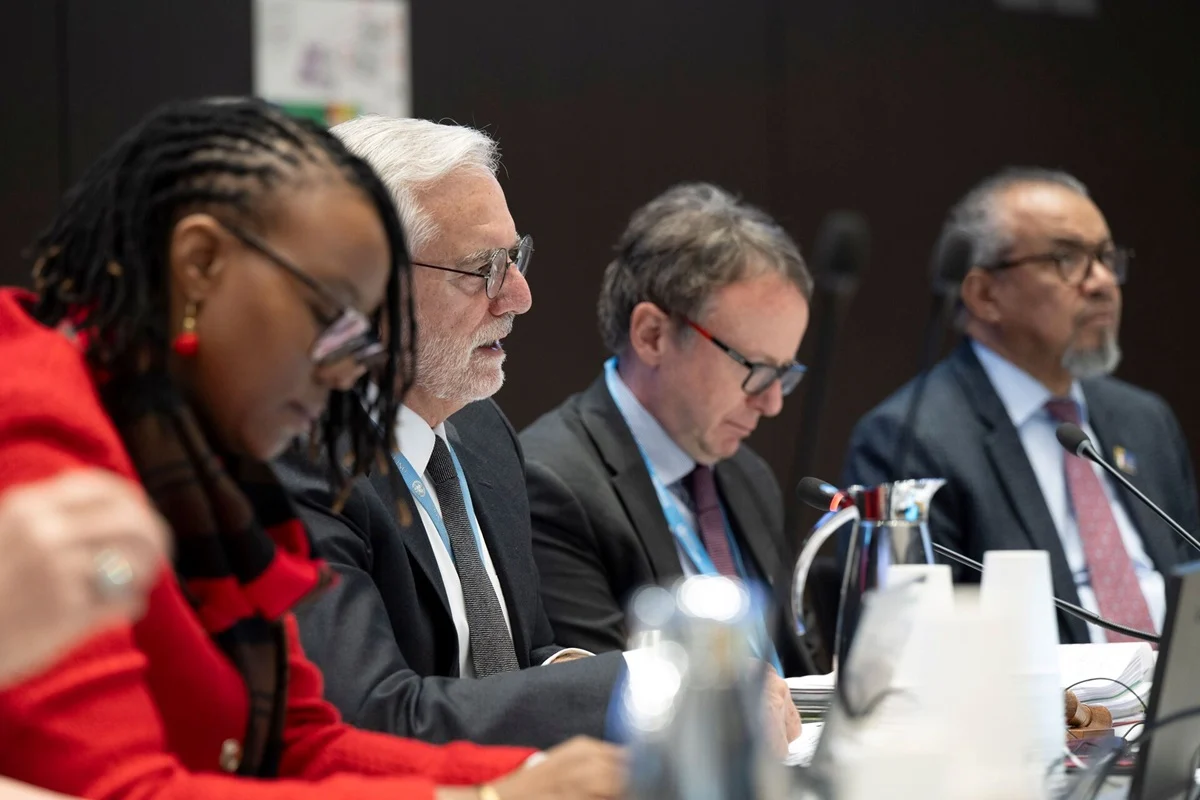
Member States of the World Health Organization (WHO) have concluded a critical session of negotiations regarding the Pathogen Access and Benefit Sharing (PABS) annex, a cornerstone of the broader WHO Pandemic Agreement, ultimately determining that additional time is required to bridge remaining gaps in the framework. The resumed session of the sixth meeting of the Intergovernmental Working Group (IGWG) in Geneva ended with a consensus that while significant progress has been achieved, the technical and political complexities of ensuring equitable responses to future pandemics necessitate an extension of the mandate. This decision underscores the high stakes involved in creating a legally binding system that balances the rapid sharing of biological data with the guaranteed distribution of medical countermeasures to underserved regions.
The outcome of these deliberations is slated for presentation at the Seventy-ninth World Health Assembly (WHA). Given the gravity of the outstanding issues, the Assembly will be formally requested to consider an extension of the IGWG’s work, as originally mandated under Resolution WHA78.1. Under the proposed timeline, the final outcome would be submitted to the World Health Assembly by May 2027 at the latest, though provisions remain for an earlier submission via a special session in 2026 should a breakthrough occur. This move reflects a cautious but committed approach to what many experts describe as the most ambitious overhaul of global health law since the International Health Regulations (IHR) were updated in 2005.
The PABS Annex: The Final Piece of the Global Security Puzzle
The PABS system is designed to rectify the systemic failures witnessed during the COVID-19 pandemic, where the rapid sharing of viral genomic sequences did not always translate into equitable access to the resulting life-saving technologies. At its core, the PABS annex seeks to establish a "level playing field" through two primary mechanisms: the immediate sharing of pathogens with pandemic potential and the fair sharing of benefits derived from those pathogens, such as vaccines, diagnostics, and therapeutics.
Dr. Tedros Adhanom Ghebreyesus, WHO Director-General, emphasized the necessity of this framework during the closing of the Geneva session. He noted that the PABS annex represents the "last piece of the puzzle" for a comprehensive global defense strategy. According to Dr. Tedros, the lessons learned from COVID-19 have already informed various WHO initiatives, but the legal architecture for pathogen sharing remains the final hurdle. He urged Member States to maintain a sense of urgency, reiterating the common public health refrain that the next pandemic is a "matter of when, not if."
The difficulty in finalizing the annex stems from the inherent tension between the "Access" and "Benefit Sharing" components. High-income nations and the pharmaceutical industry generally prioritize the rapid, unhindered access to pathogen samples and digital sequence information (DSI) to begin research and development. Conversely, many low- and middle-income countries (LMICs) argue that such access must be legally contingent upon a guaranteed share of the final products—often citing a proposed 20% allocation of pandemic-related health products to the WHO for distribution based on public health need.
Historical Context and the Road to the Pandemic Agreement
The journey toward a formal Pandemic Agreement began in December 2021, during a rare Special Session of the World Health Assembly. Recognizing that the COVID-19 pandemic had exploited fractures in international cooperation, Member States agreed to draft a new instrument to strengthen pandemic prevention, preparedness, and response. By May 2025, the World Health Assembly successfully adopted the overarching WHO Pandemic Agreement, a landmark treaty intended to provide a unified roadmap for future health crises.
However, the PABS system proved too complex to be fully detailed within the initial treaty text. This led to the establishment of the open-ended IGWG, tasked specifically with negotiating the technicalities of the PABS annex. The group’s work is deeply influenced by previous international frameworks, such as the Pandemic Influenza Preparedness (PIP) Framework, which manages the sharing of influenza viruses with human pandemic potential. While the PIP Framework is considered a success, the PABS annex seeks to expand this model to cover all pathogens with pandemic potential, representing a massive scaling-up of regulatory oversight.
The timeline of the current negotiations reflects the deliberate pace required for international law-making:
- May 2025: Adoption of the WHO Pandemic Agreement and establishment of the IGWG.
- Late 2025 – Early 2026: Successive rounds of IGWG meetings focused on the PABS annex.
- July 2026: The scheduled seventh meeting of the IGWG to refine the draft.
- May 2027: The final deadline for the submission of the PABS annex to the World Health Assembly.
Supporting Data: The Economic and Human Cost of Inequity
The drive for the PABS system is supported by sobering data from the 2020–2023 period. During the height of the COVID-19 pandemic, the "vaccine gap" became a symbol of global health failure. By mid-2022, while nearly 75% of people in high-income countries had received at least one dose of a vaccine, that figure stood at less than 25% in low-income countries. This disparity was not merely a moral issue but an epidemiological one, as unvaccinated populations provided fertile ground for the emergence of new variants like Delta and Omicron.
Economically, the lack of a coordinated response framework carried a staggering price tag. The International Monetary Fund (IMF) estimated that the COVID-19 pandemic would cost the global economy over $12.5 trillion through 2024. Public health analysts argue that a functional PABS system, by accelerating response times and ensuring localized manufacturing and distribution, could reduce the economic impact of future outbreaks by billions of dollars. Furthermore, the sharing of pathogens is vital for the "100-Day Mission"—a global goal to develop vaccines, tests, and treatments within 100 days of a pandemic threat being identified. Without the PABS annex, the legal uncertainty surrounding genetic resources could significantly delay this timeline.
Official Responses and Diplomatic Perspectives
The sentiment among the negotiators in Geneva remains one of cautious optimism. Ambassador Tovar da Silva Nunes of Brazil, who serves as the IGWG Bureau Co-Chair, acknowledged the "technical and legal complexity" of the document. He praised the dedication of Member States, noting that precision in the language is vital to ensure the annex is both enforceable and effective. "We are not there yet, but with an extension of our negotiations, we will get there," he stated, signaling that the delay is viewed as a strategic necessity rather than a failure of diplomacy.
Mr. Matthew Harpur, also an IGWG Co-Chair, reinforced this view, stating that the bureau is confident the negotiations are moving in the right direction. The commitment shown by Member States suggests a shared realization that a weak or rushed agreement would be as detrimental as no agreement at all. The involvement of the IGWG Bureau has been instrumental in navigating the "North-South" divide, attempting to find a middle ground where pharmaceutical companies are incentivized to innovate while ensuring that the fruits of that innovation are accessible to all.
While not present in the inner negotiation circles, representatives from the pharmaceutical industry and civil society have voiced their concerns. Industry groups often emphasize that benefit-sharing requirements must not stifle innovation or infringe upon intellectual property rights. Meanwhile, health equity advocates argue that without "teeth"—such as mandatory contributions or waived patents during emergencies—the PABS system might fail to protect the most vulnerable during the next crisis.
Broader Impact and Global Implications
The successful finalization of the PABS annex will have implications far beyond the walls of the WHO. It will set a precedent for how the world handles "Digital Sequence Information" (DSI). Currently, there is a global debate under the Convention on Biological Diversity (CBD) regarding how countries should be compensated when their genetic resources are used in digital form. The PABS annex could serve as a functional model for other sectors, including agriculture and environmental conservation.
Furthermore, the PABS system is inextricably linked to the concept of "One Health," which recognizes the interconnectedness of human, animal, and environmental health. Many pathogens with pandemic potential are zoonotic, meaning they jump from animals to humans. A robust PABS framework would encourage better surveillance in biodiversity hotspots by reassuring those countries that if they share a discovery of a new virus, they will be among the first to receive the vaccines developed from that data.
The decision to extend the negotiations into 2026 and potentially 2027 reflects a maturing of global health diplomacy. Rather than settling for a non-binding or vague resolution, Member States are opting for a rigorous process to build a framework that can withstand the pressures of a real-world emergency. As the IGWG prepares for its seventh meeting in July 2026, the focus will remain on the fine print: the percentages of production, the legal triggers for "benefit-sharing," and the infrastructure for a global logistics network.
In conclusion, while the delay in finalizing the PABS annex may seem like a setback, it is a reflection of the document’s importance. The international community is attempting to codify a new era of "equitable preparedness." If successful, the PABS annex will not only provide the tools to fight the next pandemic but will also foster a sense of global solidarity that was conspicuously absent during the dark days of 2020. The world now looks toward the 2026 and 2027 Assemblies for the realization of this vision, hoping that the "puzzle" of global health security will finally be completed before the next threat emerges.
