
The multi-billion-dollar global hair care industry has long built its marketing messaging around a simple, intuitive promise: that human hair can and should be “hydrated.” Across countless product labels, consumers are encouraged to drench, infuse, and quench their hair with moisturizing formulas designed to lock in water and restore a supposed state of deep hydration. However, recent insights from cosmetic scientists and trichologists are dismantling these long-held assumptions. According to emerging hair science, the concept of "hydrated hair" is largely a marketing myth, and the actual relationship between water, hair structure, and cosmetic perception is far more complex than product labels suggest.
To understand why the terminology of hydration is fundamentally misleading in hair care, one must examine the molecular architecture of the human hair fiber. Hair is composed primarily of a tough, fibrous protein called keratin. The internal structure of the hair shaft—specifically the cortex, which makes up the vast majority of the fiber’s mass—is extraordinarily sensitive to moisture.
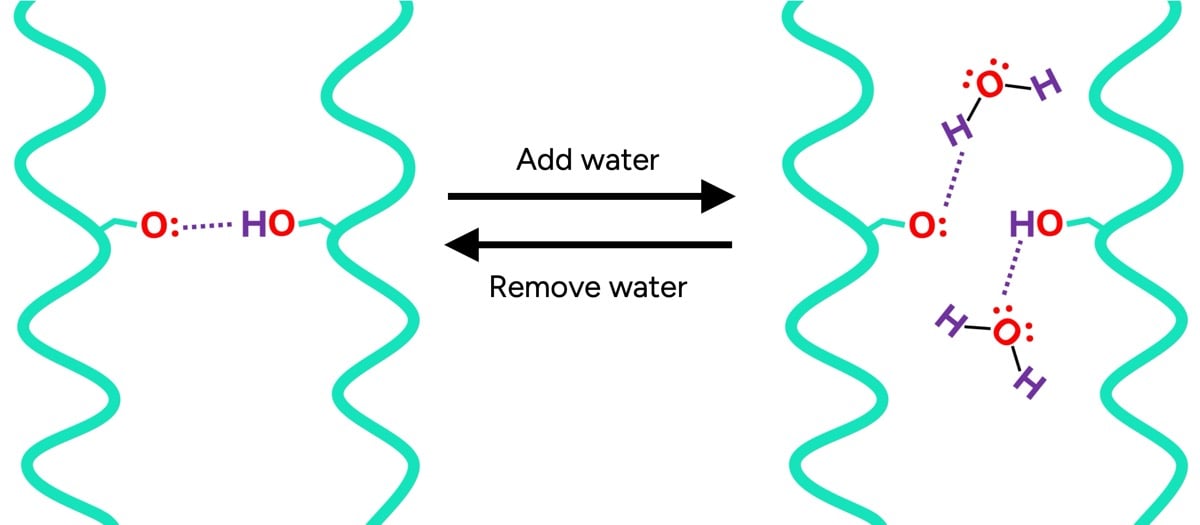
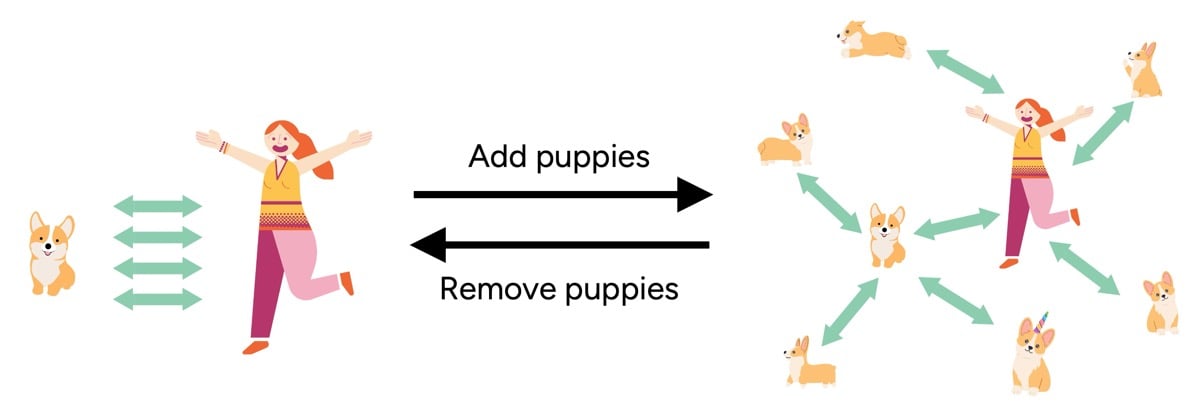
In a dry state, the proteins inside the hair cortex are held together by a dense network of temporary hydrogen bonds. These molecular connections act as a biological glue, binding the protein chains to one another and providing the hair with structural strength and rigidity. When water is introduced to the hair, however, water molecules actively compete with these protein chains. Instead of the proteins holding hands with each other at a molecular level, they form hydrogen bonds with the incoming water molecules. Consequently, wet hair possesses significantly fewer internal protein-to-protein bonds, rendering the fiber temporarily weaker, more elastic, and far more stretchable.
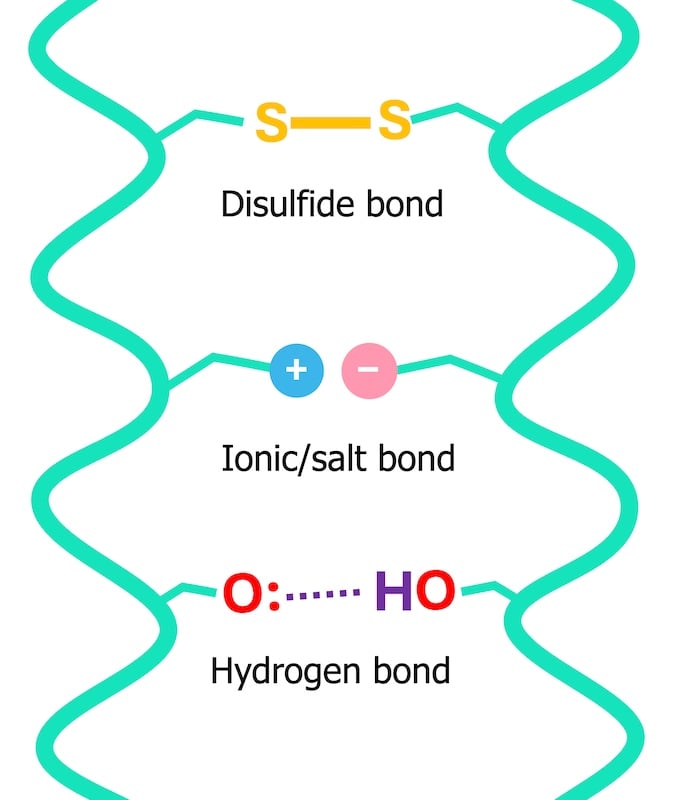
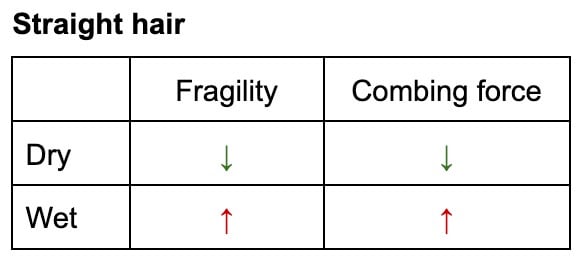
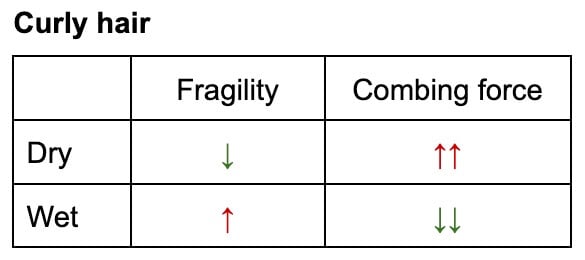
This fundamental biochemical shift explains why wet hair behaves so differently under physical manipulation. Dry hair, fortified by a high density of temporary bonds, is stiffer and more brittle. Wet hair, conversely, is pliable and elastic. This dynamic gives rise to a counterintuitive reality regarding hair detangling and mechanical damage.
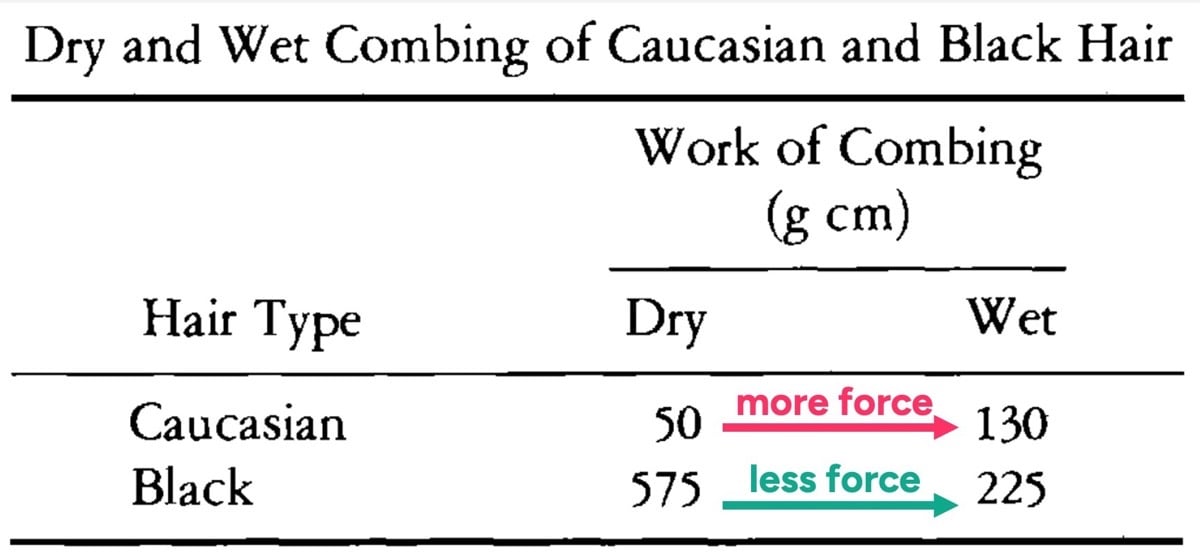
For individuals with straight hair, combing or brushing while wet is significantly more damaging. Because straight hair strands lie parallel and close together, water increases friction by acting as a sticky adhesive between fibers. Combined with the reduced tensile strength caused by broken hydrogen bonds, wet straight hair is highly susceptible to breakage and surface abrasion.
For individuals with curly or coily hair, the mechanical calculus shifts. While curly hair is similarly weakened by moisture, its inherent geometric shape creates natural spacing between strands. When wet, curly hair benefits from surface tension that causes individual fibers to clump together harmoniously, a process known as self-assembly. This alignment drastically reduces the physical resistance and friction encountered during detangling, making the wet state less damaging overall for curls and coils compared to attempting to detangle them dry.
Despite the industry’s insistence that water equates to health and moisture, human sensory perception tells a different story. In controlled laboratory evaluations, when participants are asked to physically assess and rate hair fibers containing varying levels of water, counterintuitive results consistently emerge. Hair that actually contains higher concentrations of water is routinely rated by consumers as feeling rougher, drier, more tangled, and more damaged. Conversely, hair with lower water content often feels smoother, softer, and more conditioned.
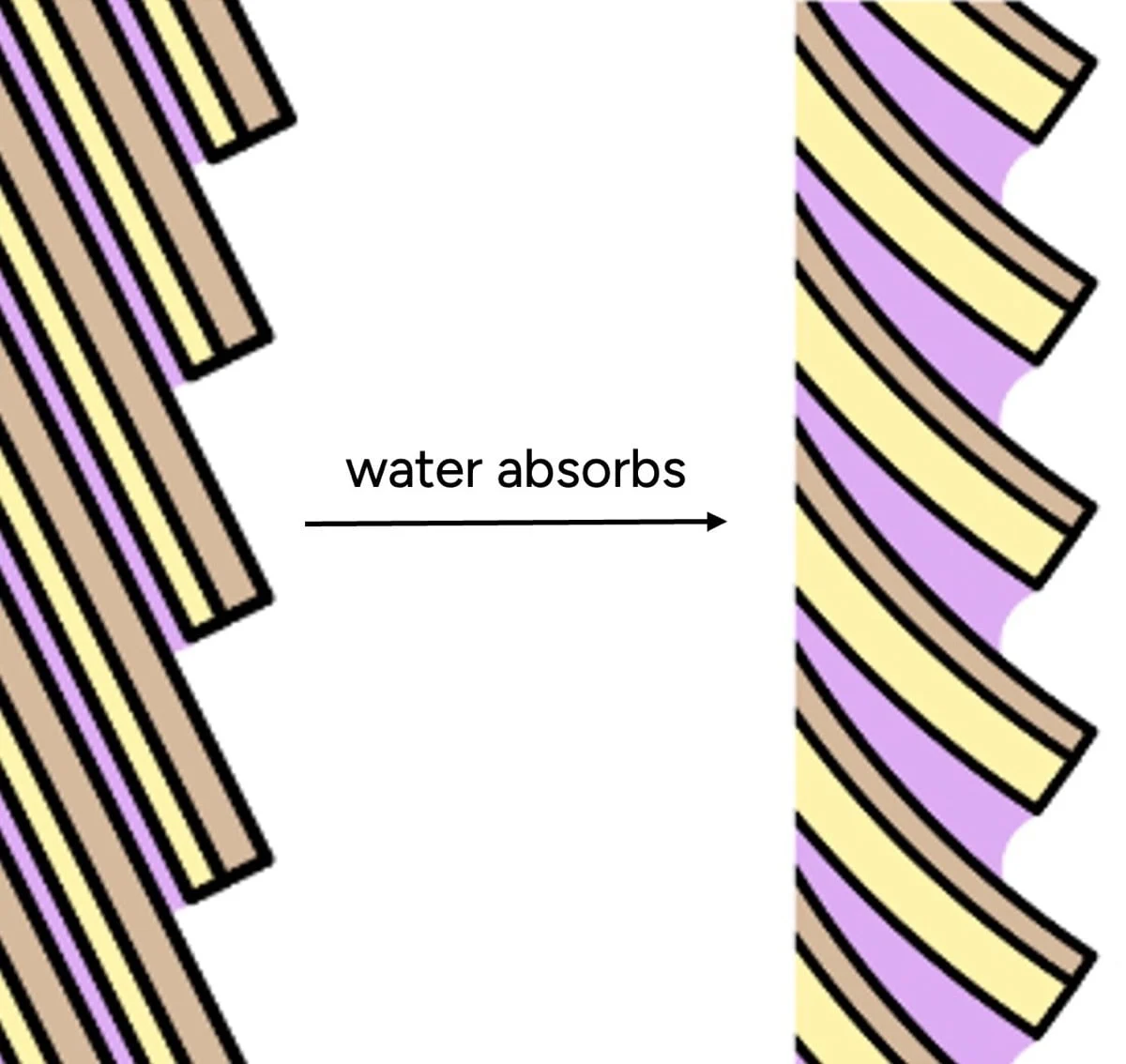
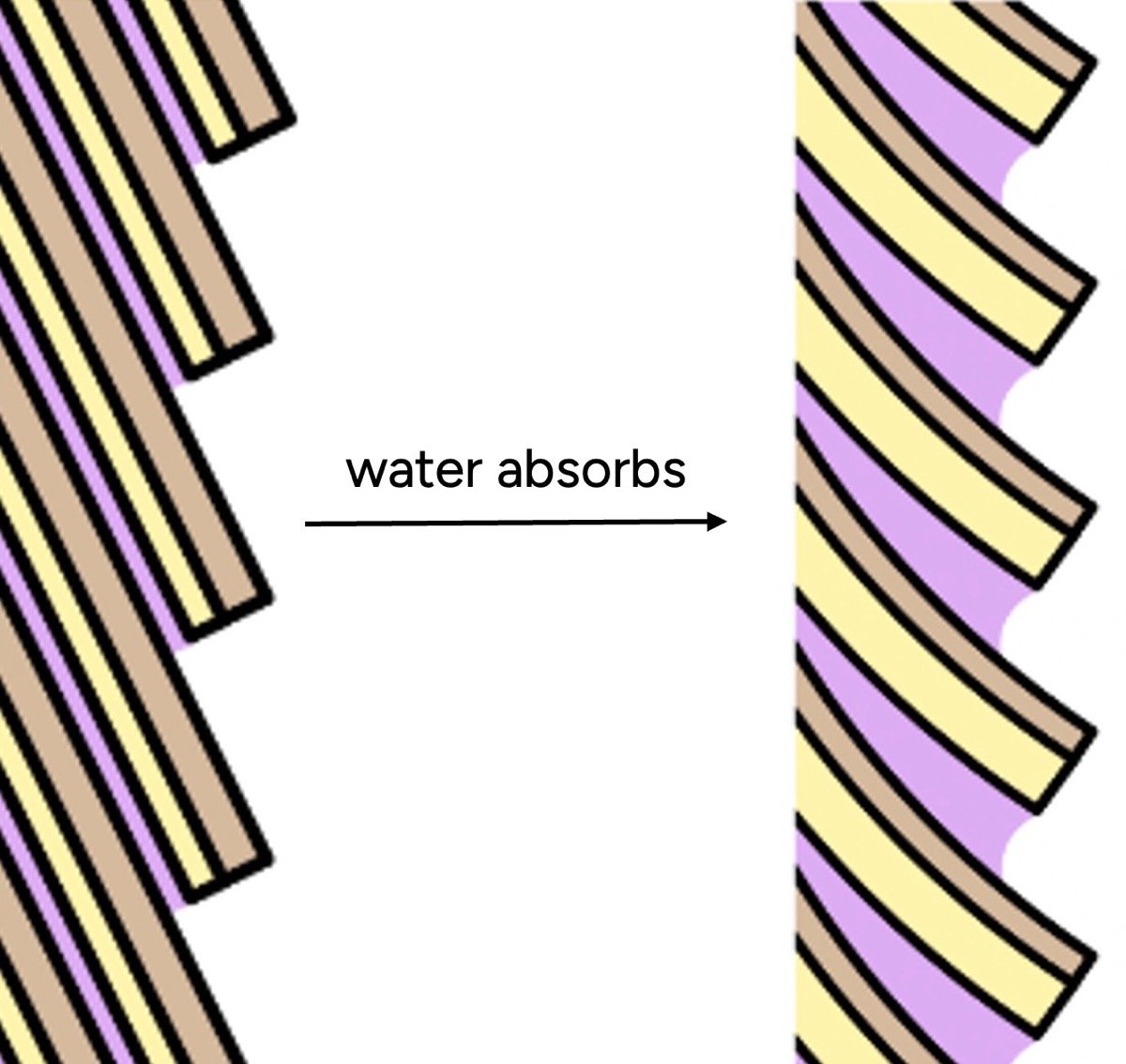
This sensory paradox is rooted in the microscopic anatomy of the cuticle, the outermost layer of the hair shaft. The cuticle consists of overlapping protective scales that lie relatively flat against the cortex in healthy, dry hair. When excess water penetrates the hair fiber, it causes these microscopic scales to swell unevenly. Specifically, the inner structures of the cuticle (the endocuticle) and the cellular membrane complex holding the scales together absorb significantly more water than the exterior surfaces. This uneven swelling causes the cuticle scales to lift outward, creating a microscopic landscape that is remarkably bumpy and rough. Furthermore, water increases surface friction—a physical property that humans instinctively interpret as roughness or dryness.
Because of these physical mechanics, true "hydrating" hair products rarely function by adding water to the core of the hair fiber. Instead, they act as mechanical conditioners. Formulated with hydrophobic ingredients such as silicones, fatty oils, and heavy alcohols, these products deposit microscopic protective films over the cuticle. By smoothing out the lifted scales and reducing surface friction, these formulations mimic the natural lipid barrier of undamaged hair—known scientifically as the F-layer—thereby providing the smooth, soft tactile experience consumers associate with hydration.
The role of water in hair care, therefore, is not to serve as a permanent moisturizing agent, but rather as a temporary structural transformer. Water acts as a reset button for the hair fiber. When a consumer washes their hair, the combination of warm water, thermal energy, and surfactants decreases surface tension, allowing water to deeply penetrate the cortex and break temporary hydrogen bonds. This puts the hair into a highly flexible, pliable state—akin to softened candle wax—which enables individuals to reshape, restyle, or reset curls effectively before thermal or air drying takes place.
Furthermore, proper washing and wetting processes help resolve microscopic structural damage. If hair is dried too rapidly using excessive heat, or if it is subjected to mechanical stretching beyond approximately 15 percent of its resting length, the microscopic cuticle scales can buckle and warp. Soaking the hair in water and allowing it to dry under normal conditions enables these warped structures to relax and reset.
Maintaining optimal hair condition ultimately requires balancing the water content within a narrow, healthy middle ground. Just as human skin can become waterlogged and fragile after prolonged immersion in a bath, or stiff and cracked when severely dehydrated, hair fibers are similarly vulnerable to extremes.
When hair is subjected to extremely low humidity environments—such as inside commercial aircraft cabins—it loses critical moisture. This lack of moisture increases static electricity build-up, causing friction-driven flyaways and leaving the hair brittle and vulnerable to microscopic fracturing during brushing. Conversely, excessive ambient humidity or water absorption leaves the hair structurally weakened and prone to frizz as the cuticle swells unevenly.
In light of these scientific findings, trichologists and cosmetic chemists emphasize that "hygral fatigue"—the long-standing internet myth that frequent wetting and drying permanently damages hair via constant expansion and contraction—is scientifically unfounded. Water itself is neither inherently good nor bad for human hair; it is simply a physical tool that alters hair conformation depending on how it is managed.
Consumers are advised to look past marketing claims centered around nebulous concepts of "hair hydration." Instead, optimal hair care relies on understanding the physical state of the hair fiber at any given moment. Protecting hair from mechanical damage requires treating it with extreme gentleness when it is wet and structurally weakened, utilizing adequate conditioning agents to reduce surface friction, and managing styling practices to prevent thermal trauma. Ultimately, achieving smooth, healthy-looking hair is not about trapping water inside the shaft, but rather about maintaining the structural integrity of the cuticle and protecting the hair’s external lipid barrier.
