
Mondelēz International, the global snacking powerhouse behind iconic brands like Oreo and Cadbury, has announced the third cohort of its CoLab Tech accelerator program, with a significant focus on innovation in ingredient science and protein diversification. Among the nine selected startups, Californian food tech company Alpine Bio stands out for its groundbreaking work in developing fractionated soy protein isolate (FSPI), a novel ingredient poised to address the escalating challenges within the global protein supply chain, particularly the ongoing whey shortage. This strategic partnership underscores Mondelēz International’s commitment to exploring sustainable and high-performance protein alternatives to meet evolving consumer demands and secure its future product development pipeline.
The CoLab Tech accelerator program, now in its 2026 iteration, is designed to foster collaboration between Mondelēz International and cutting-edge startups that are pioneering advancements in sustainability, ingredient science, and food technologies. The selection of Alpine Bio signifies a proactive approach by the snack giant to navigate the complexities of ingredient sourcing and to integrate next-generation protein solutions into its vast product portfolio.
Alpine Bio, founded by CEO Magi Richani, has emerged as a key player in the alternative protein landscape. Originally established as Nobell Foods, a molecular farming venture focused on expressing casein proteins within soybean plants for animal-free cheese production, the company has strategically pivoted and expanded its offerings. Its latest innovation, FSPI, is a highly soluble protein ingredient derived from non-GMO soybean flour. This meticulously engineered ingredient is designed to replicate the functional properties of whey protein, a staple in many protein-fortified foods and beverages, while offering a more sustainable and reliable alternative.
"We couldn’t be more excited about the opportunities ahead and look forward to building on this momentum together," Richani stated in a LinkedIn post, expressing her enthusiasm for the partnership with Mondelēz International. This collaboration is expected to propel the co-development of high-protein snack products, leveraging Alpine Bio’s proprietary FSPI technology.
Alpine Bio’s Fractionated Soy Protein Isolate: A Whey Alternative with Superior Functionality
The core of Alpine Bio’s innovation lies in its FSPI, a plant-based protein isolate engineered to overcome historical limitations of plant proteins in food applications. Historically, the dairy industry has dominated the protein market, with whey protein being a preferred ingredient due to its excellent solubility, complete amino acid profile, and desirable textural properties. However, recent global supply chain disruptions have highlighted the vulnerabilities of this reliance.
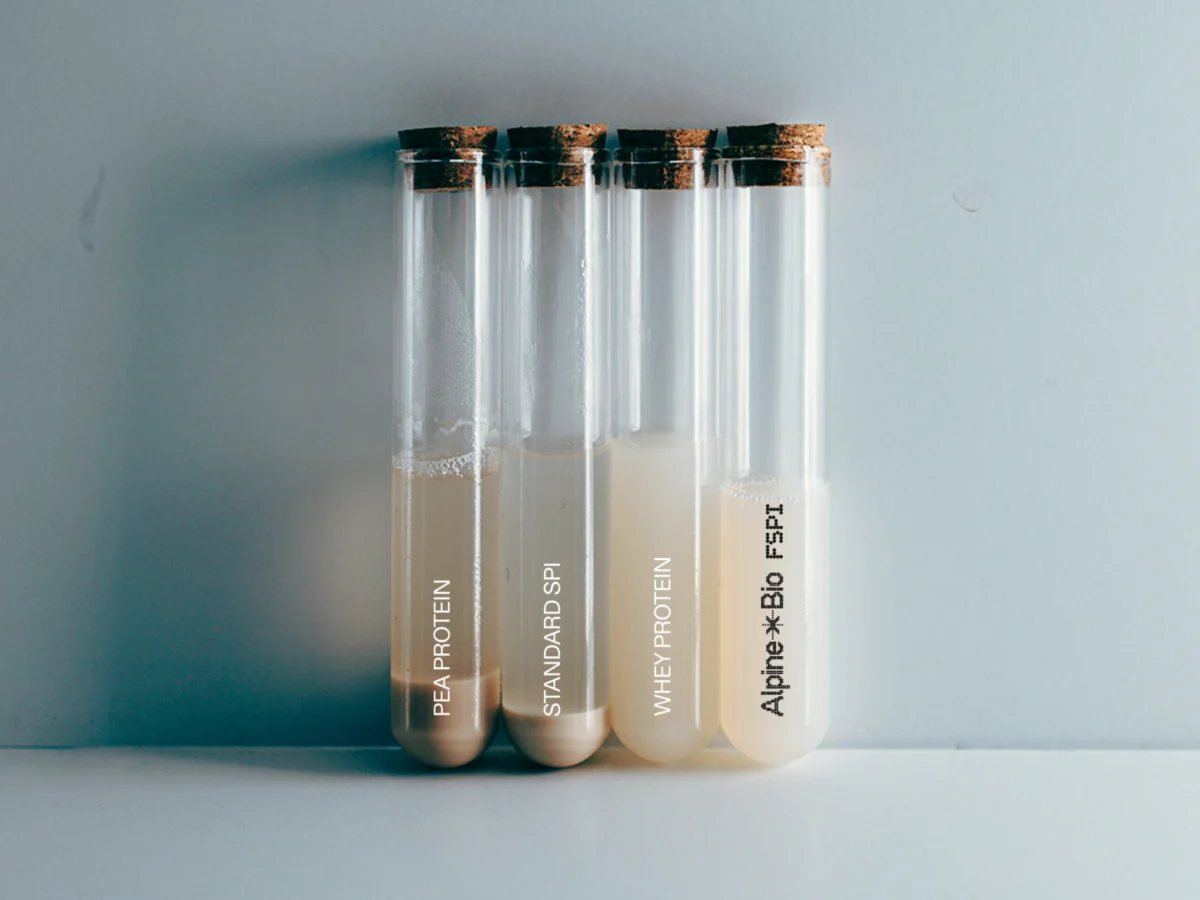
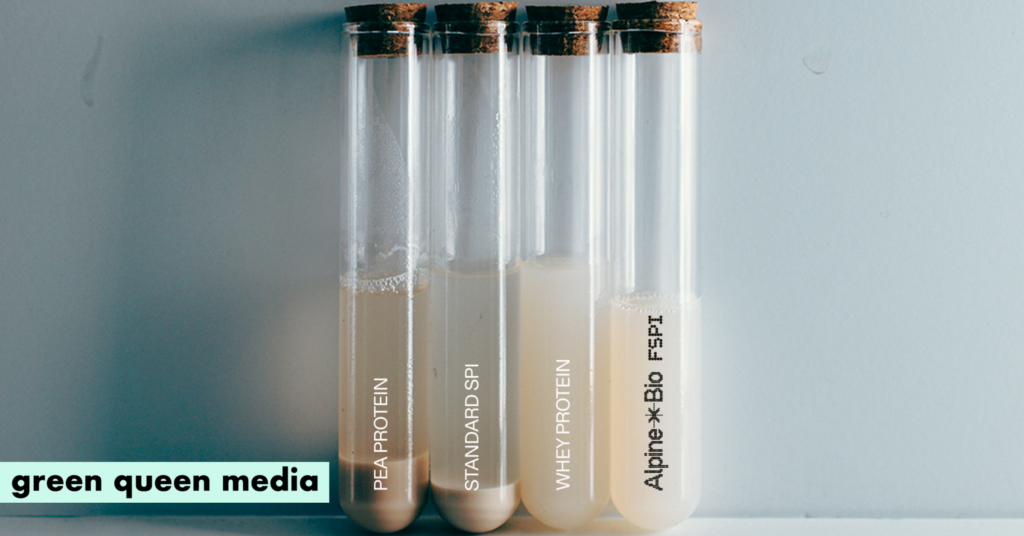
Magi Richani explained to Green Queen that FSPI is specifically designed to "do whey’s job." A critical factor for formulators in the beverage and food industries is protein solubility, which directly impacts texture and mouthfeel. Whey protein’s high solubility has made it a benchmark. FSPI, however, boasts exceptional solubility across a wide pH range, dissolving seamlessly in water, juices, coffee, and other beverages without introducing grittiness, gelling, or sedimentation. This characteristic provides food technologists with greater latitude to increase protein content per serving without compromising the sensory experience of the final product.
Furthermore, FSPI delivers a complete amino acid profile, containing all nine essential amino acids crucial for human health. It also possesses structure-building functionalities that are highly valued in food applications, mimicking the performance of whey protein. A significant challenge with many plant-based proteins has been the presence of off-flavors, often described as "beany," "earthy," or "bitter." These undesirable notes typically necessitate the use of masking agents and excessive sweeteners, adding complexity and cost to product development. Alpine Bio has invested considerable effort in mitigating these flavor profiles.
"We’ve put enormous work into removing that," Richani elaborated. "The most common reaction when customers first evaluate FSPI is genuine surprise at how neutral it is, which lets formulators build flavor on a blank canvas instead of spending money covering one up." This neutral taste profile allows for greater versatility in flavor development, enabling brands to create a wider array of products without being constrained by the inherent taste of the protein source.
Mondelēz International’s interest in FSPI stems from this very functional advantage. "Proteinifying the baking and snacking world demands a protein that actually performs," Richani noted on LinkedIn. She emphasized that FSPI integrates seamlessly into products, offering dairy-like functionality without the associated textural drawbacks often found in other plant proteins.
Beyond performance, the sustainability aspect of FSPI is a major draw. Life-cycle assessments (LCAs) provide compelling data on the environmental impact of protein production. A study conducted by DuPont indicates that soy protein isolate has an environmental footprint of approximately 2.4 kg of CO2 equivalent (CO2e) per kilogram of product. In stark contrast, whey protein concentrate generates around 16 kg of CO2e per kilogram. This nearly seven-fold difference, consistent with broader LCA literature, highlights the significantly lower environmental impact of plant-based proteins compared to dairy-derived proteins. This aligns perfectly with Mondelēz International’s broader corporate sustainability goals and its increasing focus on reducing its carbon footprint.

The Whey Shortage: A Catalyst for Big Food’s Protein Diversification Strategy
The inclusion of Alpine Bio in Mondelēz International’s CoLab Tech program occurs against a backdrop of a severe global whey shortage, a crisis that has sent shockwaves through the food and beverage industry. The sustained and growing consumer demand for high-protein products, driven by health and wellness trends, has placed unprecedented pressure on the whey supply chain.
In the United States, the demand for whey has outstripped supply to such an extent that contracts are being sold well into 2026, with some supplies already depleted for the remainder of the current year. This scarcity has prompted manufacturers to look towards European markets for whey, but the continent’s own production capacity is also stretched thin, offering little relief.
The economic implications of this supply-demand imbalance have been dramatic. Whey prices have consistently broken records, with the cost of whey protein concentrate surging by an alarming 108% over the past two years. Whey protein isolate has experienced a similar price escalation, nearly doubling in cost. This price volatility and uncertainty in availability pose significant challenges for product development, manufacturing costs, and ultimately, consumer pricing.
"The protein boom isn’t slowing down, but the whey supply chain can’t keep up," Richani stated. "FSPI gives the world’s biggest snack makers a way to deliver the protein consumers want: reliably, sustainably, and deliciously." Alpine Bio’s proprietary technology allows it to isolate specific protein fractions from non-GMO soybeans and effectively remove the components that have historically deterred their use in premium food applications.
The shift in how major food companies approach protein sourcing is palpable. "Before, food and nutrition companies came to us because they wanted a plant-derived protein that performed," Richani shared with Green Queen. "Now, they’re coming to us because their whey supply is uncertain, their costs have spiked, and in some cases, they simply can’t secure it." This signifies a move from a preference for plant-based options to a strategic imperative driven by supply chain resilience.

Companies are increasingly viewing the diversification of their protein sources as a critical strategic decision rather than an immediate tactical response to a crisis. The goal is to build a more robust and diversified protein supply chain, mitigating the risk of being overly dependent on any single source. "We originally designed FSPI for sustainability and performance, but the supply crisis has revealed another dimension: it gives formulators a protein that doesn’t sit downstream of dairy production," Richani emphasized. This strategic positioning offers a significant advantage by decoupling protein sourcing from the often-volatile dairy market.
Beyond Alpine Bio, Mondelēz International’s 2026 CoLab Tech cohort includes other promising innovators addressing various aspects of the future food landscape. These include Arkasa Bio, a specialist in GLP-1-targeting prebiotic fibers; Nous, a functional food startup; Ruby Bio, a firm focused on clean-label emulsifiers; and Nourish Ingredients, a producer of precision-fermented animal fats. This diverse group of companies reflects Mondelēz International’s broad vision for innovation, encompassing not only protein but also gut health, functional foods, and sustainable ingredient production.
The partnership between Mondelēz International and Alpine Bio is a clear indicator of a significant trend within the food industry: a strategic pivot towards plant-based proteins that offer both superior functionality and a more secure, sustainable supply chain. As the global demand for protein continues to rise, innovations like Alpine Bio’s FSPI are not just desirable but essential for the continued growth and success of major food manufacturers worldwide. The collaboration is expected to yield tangible results in the form of new, high-protein snack products that cater to health-conscious consumers while addressing critical supply chain vulnerabilities. The success of this venture could pave the way for broader adoption of FSPI across the snack giant’s extensive portfolio and potentially inspire other industry leaders to follow suit.
