
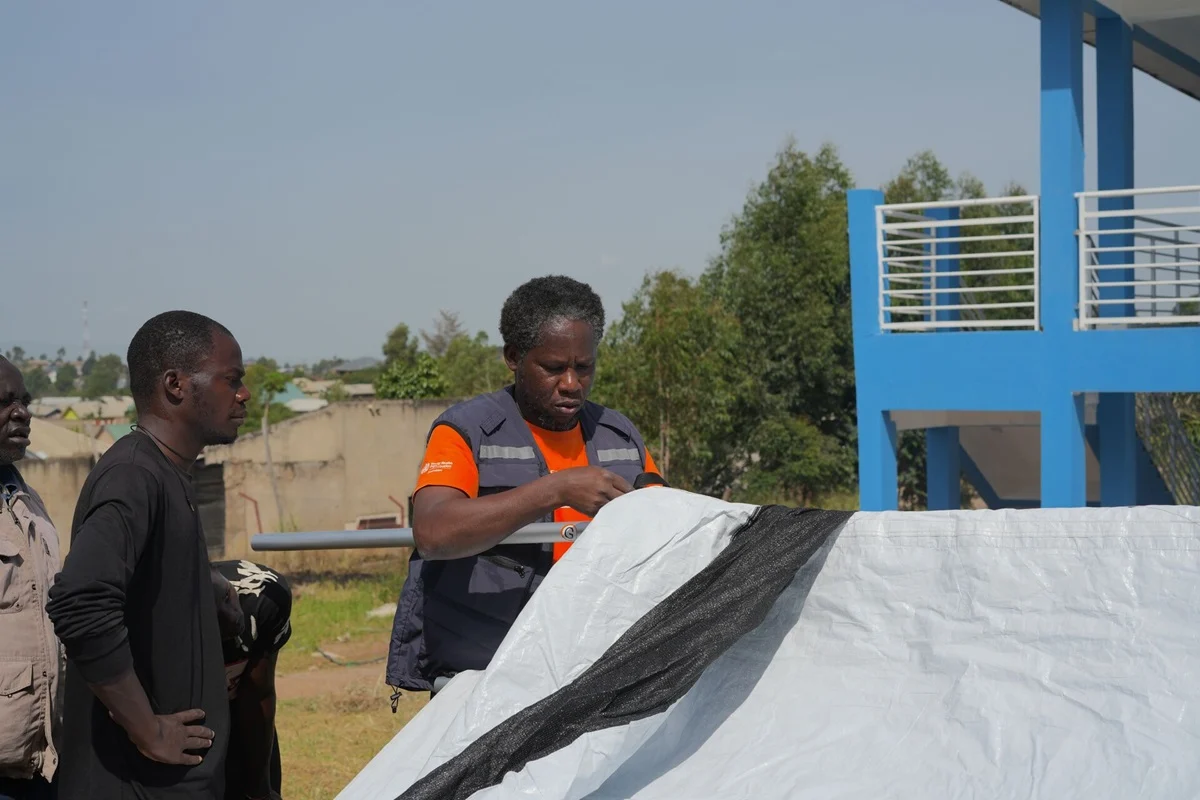
The Director-General of the World Health Organization (WHO), Dr. Tedros Adhanom Ghebreyesus, has issued a high-level appeal to the international community and local warring factions in the Democratic Republic of the Congo (DRC) as the country faces its 17th recorded outbreak of Ebola virus disease. In an unprecedented personal message addressed directly to the residents of Ituri province, Dr. Tedros announced his imminent arrival in the regional capital of Bunia to oversee response efforts. This latest health crisis is compounded by a significant scientific challenge: the current outbreak is caused by the Bundibugyo virus (BDBV), a species of Ebola for which there are currently no approved vaccines or specialized therapeutic treatments, unlike the more common Zaire strain that dominated previous regional outbreaks.
According to the latest epidemiological data, the situation is increasingly concentrated in the northeastern regions of the country. More than 90% of the confirmed and suspected cases are located within Ituri province, with satellite clusters appearing in the neighboring provinces of North Kivu and South Kivu. The WHO leadership emphasized that the response is occurring within a "complex humanitarian emergency," where health workers must navigate active combat zones, mass displacement, and deep-seated community mistrust. Dr. Tedros, who was affectionately named "Dr. Paluku" by local communities during the 2018–2020 outbreak, has called for an immediate, even if temporary, ceasefire among armed groups to allow medical teams to reach isolated populations and establish containment protocols.
The Scientific Challenge: Navigating the Bundibugyo Strain
One of the most critical aspects of the current outbreak is the specific viral etiology. Most recent Ebola interventions in the DRC have benefited from the "ring vaccination" strategy using the Ervebo vaccine and the administration of monoclonal antibody treatments like Ebanga and Inmazeb. However, these tools were developed specifically to target the Zaire ebolavirus (EBOV). The Bundibugyo strain, first identified in 2007 in Uganda, possesses a different genetic profile, rendering the current Zaire-specific vaccines ineffective.
In his address, Dr. Tedros was transparent about this limitation, stating that the absence of a vaccine makes early supportive care the primary tool for survival. Supportive care involves rehydration, maintaining oxygen status, and treating co-infections, which can significantly improve survival rates. The WHO is currently working with the DRC Ministry of Health and international research partners to fast-track clinical trials for candidate vaccines and therapeutics that may show promise against the Bundibugyo species, though these are not yet ready for mass deployment.
A Chronology of Ebola Outbreaks in the Democratic Republic of the Congo
The DRC has a long and arduous history with Ebola, dating back to the virus’s discovery in 1976 near the Ebola River. Understanding the current crisis requires a look at the historical context of the disease in the region:
- 1976 (Yambuku): The first recognized outbreak of Ebola Zaire, resulting in 318 cases and a 88% fatality rate.
- 1995 (Kwit): A major outbreak that highlighted the necessity of specialized isolation units.
- 2007 (Kampungu): The first significant appearance of the Bundibugyo strain in the DRC, following its discovery in Uganda.
- 2018–2020 (North Kivu/Ituri): The 10th outbreak, which became the second-largest in history with 3,481 cases and 2,280 deaths. This was the period during which Dr. Tedros visited the region 14 times, establishing the "Dr. Paluku" persona to build local rapport.
- 2021–2023: Several smaller, sporadic outbreaks of Ebola Zaire were successfully contained using rapid vaccination and localized lockdowns.
- Present Day: The 17th outbreak, centered in Ituri, marking a resurgence of the Bundibugyo strain in a high-conflict environment.
The Intersections of Health Security and Armed Conflict
The primary obstacle to containing the virus in Ituri is not merely biological but logistical and security-related. The province has been a flashpoint for ethnic tensions and militia activity, involving groups such as the Cooperative for the Development of the Congo (CODECO) and the Allied Democratic Forces (ADF). These conflicts have displaced hundreds of thousands of civilians, many of whom are now living in overcrowded camps where sanitation is poor and social distancing is impossible.
Dr. Tedros’s plea for a ceasefire reflects the hard-won lessons of the 2018–2020 outbreak. During that period, health workers were frequently targeted by armed groups who viewed the international medical response with suspicion or as a political tool of the central government. Clinics were burned, and several WHO-affiliated staff lost their lives. The current strategy emphasizes "community-led response" over "top-down intervention." By appealing to the youth and local leaders of Ituri, the WHO aims to integrate health protocols into the existing social fabric rather than imposing them from the outside.
Supporting Data and Economic Impact
The economic vitality of Ituri, particularly the commerce hub of Bunia, is at risk. Ituri is known for its vibrant markets and cross-border trade with Uganda. However, the implementation of health screenings and travel restrictions often leads to a slowdown in trade, exacerbating food insecurity and poverty.
Current data from the WHO and the DRC Ministry of Health indicates:
- Case Distribution: 90% of cases in Ituri; 7% in North Kivu; 3% in South Kivu.
- Demographics: A concerning number of cases involve children under the age of 15, who are more vulnerable to dehydration and rapid viral progression.
- Health Infrastructure: Only about 40% of the affected areas in Ituri have access to functional health centers capable of providing the "early supportive care" required for the Bundibugyo strain.
- Mortality: While the Bundibugyo strain typically has a lower case fatality rate (estimated at 25–50%) compared to the Zaire strain (up to 90%), the lack of specialized treatment in conflict zones could push the current mortality rate toward the higher end of the spectrum.
Official Responses and International Coordination
The response is being spearheaded by the DRC Government’s National Institute for Biomedical Research (INRB) and the Ministry of Health, with technical support from the WHO, Médecins Sans Frontières (MSF), and UNICEF.
In a statement following Dr. Tedros’s letter, local officials in Bunia welcomed the Director-General’s visit, noting that his presence provides a "moral boost" to front-line workers. "The health workers in Ituri are operating under extreme duress," said a spokesperson for the provincial health division. "They are fighting a virus they cannot see while avoiding bullets they can hear. The Director-General’s recognition of their ‘backbone’ role is essential for maintaining morale."
International partners are also mobilizing resources. The United Nations Humanitarian Air Service (UNHAS) has increased flights to Bunia to ferry medical supplies, including personal protective equipment (PPE) and rehydration fluids. However, funding remains a critical bottleneck. The WHO has indicated that the contingency fund for emergencies is being utilized, but a sustained response will require additional contributions from global donors.
Broader Implications and Strategic Analysis
The persistence of Ebola in the DRC highlights a broader systemic issue: the fragility of health systems in conflict-affected states. When a disease like Ebola enters a region plagued by insecurity, it ceases to be a purely medical problem and becomes a geopolitical one.
The WHO’s shift in rhetoric—using personal letters and local names like "Dr. Paluku"—signifies a shift in global health diplomacy. It acknowledges that technical expertise is useless without social capital. If the WHO can successfully negotiate a "humanitarian corridor" or a temporary ceasefire, it could set a precedent for future health crises in other conflict zones, such as Sudan or Yemen.
Furthermore, the focus on the Bundibugyo strain serves as a wake-up call for the pharmaceutical industry and global health funders. The "one-strain-at-a-time" approach to vaccine development leaves populations vulnerable to other species of the virus. There is now an urgent call for "pan-Ebola" vaccines that can provide cross-protection against Zaire, Sudan, and Bundibugyo strains.
Conclusion: A Call to Action
As Dr. Tedros prepares for his visit to Bunia, the message to the world is clear: the people of Ituri are not merely victims of a virus, but a resilient population fighting for survival against overwhelming odds. The success of this intervention depends on three pillars: the cessation of hostilities, the restoration of community trust, and the rapid deployment of supportive medical care.
The WHO has pledged to remain in Ituri long after the headlines fade, promising to help rebuild a health system that can withstand future shocks. For now, the focus remains on the immediate: stopping the transmission of the Bundibugyo virus and ensuring that the courage of the people of Ituri is met with the full support of the global community. The upcoming days in Bunia will be a litmus test for international solidarity in the face of one of the world’s most challenging health and security environments.
