
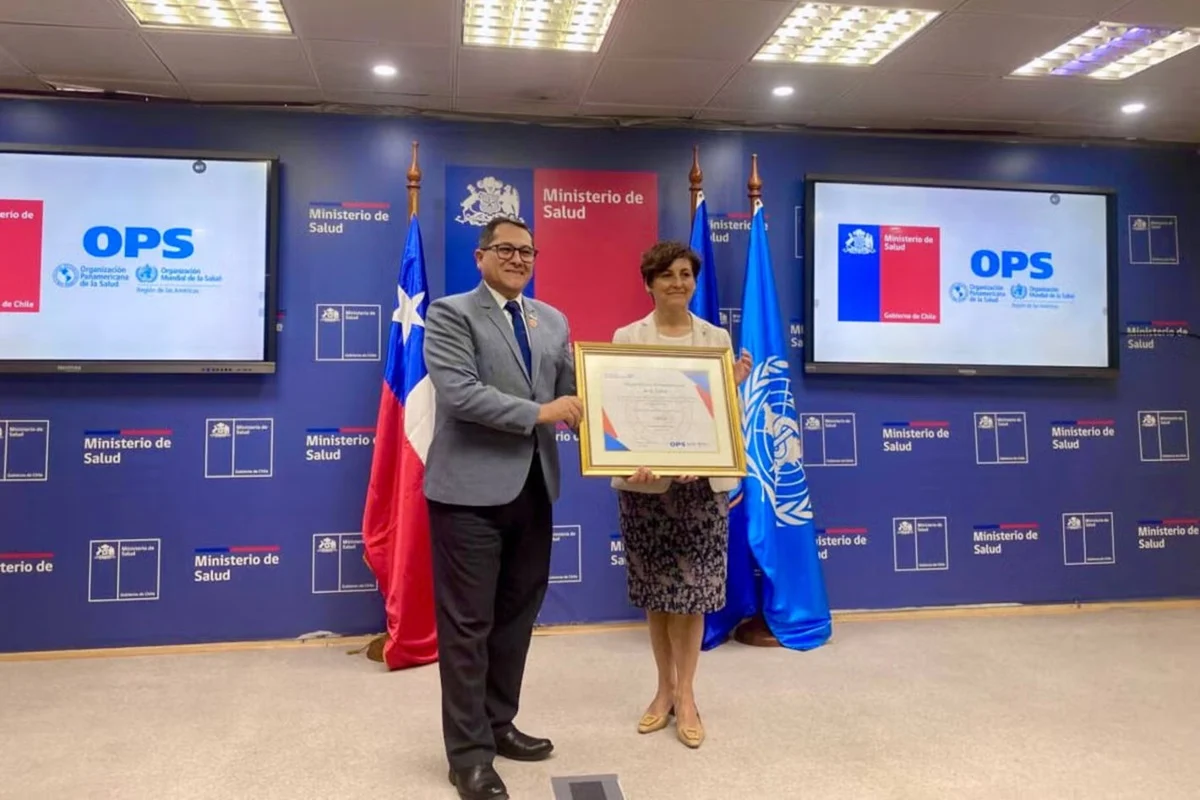
The World Health Organization (WHO), in coordination with the Pan American Health Organization (PAHO), has officially verified Chile as having eliminated leprosy, making it the first nation in the Americas and only the second globally to achieve this significant public health milestone. This recognition follows more than three decades of rigorous surveillance, political commitment, and a robust healthcare strategy that successfully interrupted the transmission of the disease. The announcement marks a transformative moment for the region, signaling that even "ancient" diseases associated with poverty and social vulnerability can be overcome through sustained scientific and medical intervention.
Leprosy, also known as Hansen disease, is a chronic infectious condition caused by the bacterium Mycobacterium leprae. Historically, the disease has been shrouded in stigma, leading to the social exclusion of those affected. In Chile, the history of the disease is inextricably linked to Rapa Nui (Easter Island), where it was first recorded in the late 19th century. For decades, the disease remained largely confined to the island, managed through isolation and eventual treatment protocols. While mainland Chile saw sporadic introductions of the bacteria, the health system’s proactive measures ensured that these cases did not lead to widespread local transmission. The last secondary cases on Rapa Nui were managed in the late 1990s, while the last locally acquired case on the Chilean mainland was detected in 1993.
A Legacy of Surveillance and Political Will
The verification of leprosy elimination is not merely a reflection of the absence of cases but a testament to the resilience of the Chilean public health infrastructure. For over 30 years, Chile has maintained leprosy as a notifiable condition, requiring mandatory reporting and integrated surveillance even when the disease appeared to have vanished from the local population. This "active vigilance" ensured that any imported cases—often resulting from global migration—were identified and treated before they could spark new chains of transmission.
Between 2012 and 2023, Chile reported 47 cases of leprosy nationwide. Crucially, none of these cases were locally acquired; they were all linked to individuals who had contracted the disease outside the country. The ability of the Chilean health system to manage these cases without a single instance of local spread provided the WHO independent expert panel with the evidence required to certify elimination.
Dr. Tedros Adhanom Ghebreyesus, WHO Director-General, hailed the achievement as a "landmark public health achievement" and a "powerful testament to what leadership, science, and solidarity can accomplish." He emphasized that Chile’s success sends a clear message to the international community: with early detection, universal access to care, and integrated strategies, ancient diseases can be consigned to history.
The Role of the WHO Independent Verification Panel
The path to official verification began at the request of Chile’s Ministry of Health. In 2025, PAHO and the WHO convened an independent panel of experts to conduct a comprehensive assessment of the country’s epidemiological landscape. This panel did not simply look at case numbers; it scrutinized the entire machinery of the Chilean health system.
The evaluation included a deep dive into surveillance mechanisms, the accuracy of laboratory diagnostics, case management protocols, and the long-term sustainability of the country’s health programs. The panel validated that Chile possesses the clinical readiness to detect and respond to future cases among non-autochthonous populations. Furthermore, it confirmed that the absence of local transmission was not a result of under-reporting but a genuine interruption of the disease’s lifecycle within the country’s borders.
Ximena Aguilera, Chile’s Minister of Health, expressed immense pride in the recognition, noting that it reflects decades of work by health teams across the nation. "This milestone reaffirms our responsibility to maintain active surveillance and ensure respectful, stigma-free care for all," she stated, highlighting the importance of the human rights aspect of disease management.
Clinical Strategy and the Global Impact of Multidrug Therapy
Chile’s success is built upon a clinical model that prioritizes early intervention and holistic care. Under the "Towards zero leprosy" strategy advocated by the WHO, Chile integrated leprosy care into its primary health services. This ensures that primary care centers act as the first line of defense, identifying suspected cases and referring them to specialized dermatology services for definitive diagnosis and follow-up.
A critical component of this strategy has been the availability of Multidrug Therapy (MDT). Since 1995, PAHO and the WHO have ensured that countries in the Americas have uninterrupted access to MDT, which is the gold standard for curing leprosy and preventing the onset of permanent disabilities. This global supply chain has been supported by significant philanthropic and private sector partnerships. The Nippon Foundation provided MDT free of charge from 1995 to 2000, and since 2000, Novartis has continued this commitment through direct agreements with the WHO.
In Chile, the use of MDT has been supplemented by comprehensive rehabilitation services, including physiotherapy, to support those living with chronic disabilities resulting from past infections. By treating the disease not just as a bacterial infection but as a condition requiring social and physical reintegration, Chile has addressed the "vicious circle" of disease and poverty described by PAHO Director Dr. Jarbas Barbosa.
Leprosy in the Context of Neglected Tropical Diseases (NTDs)
Leprosy is classified as a Neglected Tropical Disease (NTD), a group of 21 conditions that predominantly affect impoverished communities in tropical and subtropical regions. These diseases often lack the high-profile funding of conditions like HIV/AIDS or malaria, yet they affect over one billion people globally. The WHO’s road map for 2021–2030 sets ambitious targets for the control and elimination of these conditions.
Chile’s verification makes it the 61st country globally to eliminate at least one NTD. Within the Americas, it joins a prestigious group including Brazil, Colombia, Ecuador, Guatemala, and Mexico, all of which have achieved elimination targets for various communicable diseases. However, Chile’s specific achievement regarding leprosy is unique in the region. Globally, it follows the Hashemite Kingdom of Jordan, which was the first country to be verified for leprosy elimination.
The elimination of leprosy in Chile serves as a pilot case for other nations in the Americas. It demonstrates that elimination is achievable even in low-incidence settings where health professionals may rarely encounter the disease in their daily practice. To maintain this status, the WHO verification panel recommended that Chile designate a formal referral center for leprosy and utilize the WHO Academy’s online training platforms to keep medical staff informed and prepared.
Addressing Stigma and Ensuring Universal Coverage
One of the most significant hurdles in eliminating leprosy is the social stigma that prevents individuals from seeking treatment. Historically, leprosy patients were often forcibly quarantined, a practice that Chile eventually moved away from in favor of community-based care and social inclusion.
Chile’s current legal and social framework is designed to protect the human rights of all patients. National legislation guarantees equal access to healthcare and social protection, ensuring that migrants and other vulnerable populations—who may be at higher risk for imported cases—can access diagnostic and treatment services without fear of discrimination or deportation. This inclusive approach is a cornerstone of the PAHO Disease Elimination Initiative, which aims to eradicate more than 30 communicable diseases in the Americas by 2030.
Future Outlook: Sustaining the "Zero Leprosy" Status
While the verification is a cause for celebration, the WHO and the Chilean Ministry of Health emphasize that the work is not over. The "post-elimination" phase requires a shift in strategy from active eradication to high-sensitivity monitoring. Because leprosy has a long incubation period—sometimes lasting up to 20 years—the health system must remain capable of identifying sporadic cases that may emerge decades after initial exposure.
The Chilean model of a mixed public-private health system, supported by strong regulatory oversight, provides a stable foundation for this continued vigilance. By maintaining leprosy as a mandatory reportable condition and continuing to participate in global data-sharing with the WHO, Chile ensures that its status remains secure.
As the global health community looks toward the 2030 goals for NTDs, Chile stands as a beacon of possibility. Its journey from the isolated cases on Rapa Nui in the 1800s to being the first in the Americas to eliminate the disease in 2025 provides a roadmap for other nations. It proves that with the right combination of political will, international cooperation, and scientific rigor, even the most ancient and misunderstood diseases can be defeated.
