
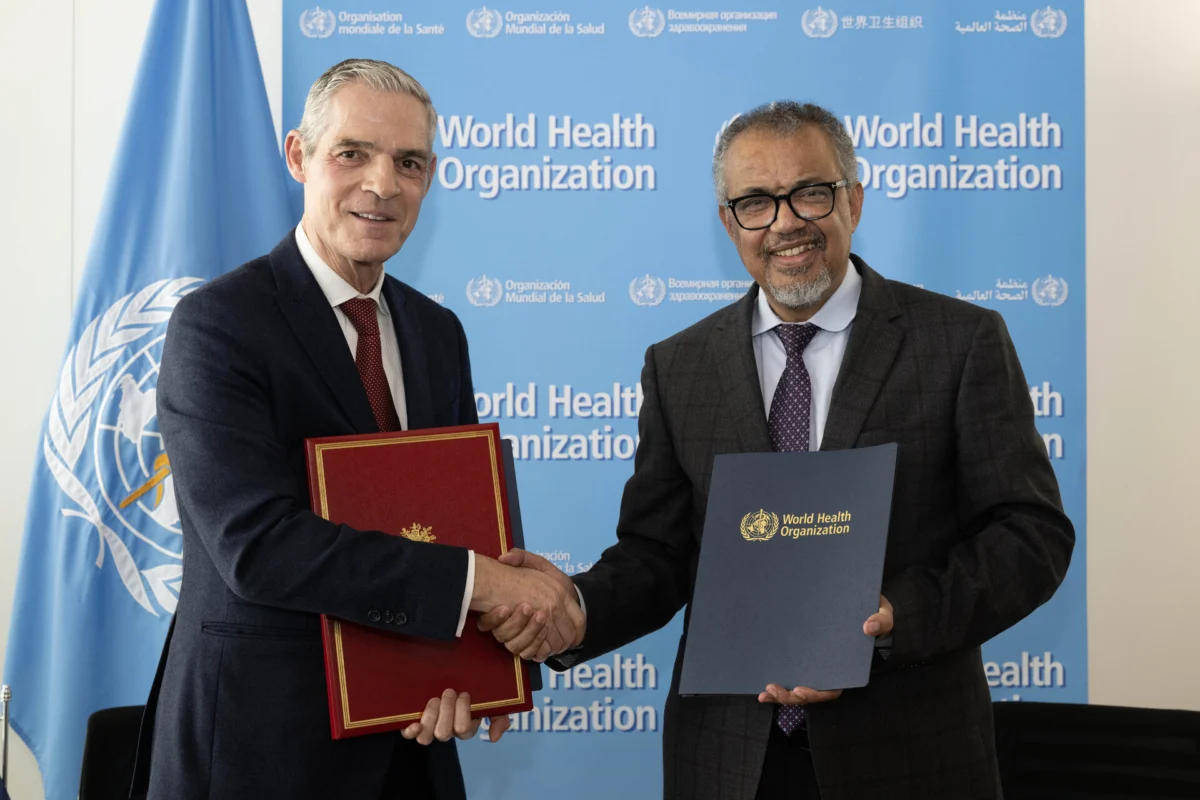
In a high-level diplomatic engagement at the World Health Organization (WHO) headquarters in Geneva on 17 October 2024, the French Republic solidified its commitment to international health security by signing a series of seven contribution agreements totaling 24 million euros. The funding, channeled through the French Ministry of Europe and Foreign Affairs, represents a significant infusion of resources intended to bolster the organization’s operational capacity during a period of unprecedented global health instability. The agreements were formalized by His Excellency Mr. Jérôme Bonnafont, Permanent Representative of France to the United Nations in Geneva, and Dr. Tedros Adhanom Ghebreyesus, the WHO Director-General. This financial injection is strategically aligned with the France–WHO Framework Agreement for 2020–2025, a multi-year cooperation instrument designed to harmonize French diplomatic priorities with the technical mandates of the United Nations health agency.
Chronology of the France-WHO Strategic Partnership
The relationship between France and the WHO has evolved significantly over the past decade, shifting from traditional donor-recipient dynamics toward a more integrated, structural partnership. In 2020, both parties established the current five-year Framework Agreement, which serves as the bedrock for today’s contribution. This document was not merely a financial arrangement but a legal and administrative blueprint that allowed for the rapid deployment of resources during the subsequent COVID-19 pandemic.
Throughout 2021 and 2022, France emerged as a vocal advocate for the "sustainable financing" of the WHO, arguing that the organization’s reliance on tightly earmarked voluntary contributions hindered its ability to respond to emerging threats. By 2023, France played a pivotal role in the diplomatic negotiations leading up to the 77th World Health Assembly. In 2024, this culminated in the approval of the Fourteenth General Programme of Work (GPW 14), which sets the organization’s agenda through 2028. The 17 October signing ceremony serves as a practical demonstration of the commitments made during those legislative milestones, signaling that France remains a primary architect of the WHO’s future financial sustainability.
Breakdown of the 24 Million Euro Contribution
The 24 million euro package is characterized by a balance between core flexibility and targeted intervention. Of particular note is the allocation of 4.5 million euros to the Core Voluntary Contributions Account (CVCA). Unlike restricted funding, which dictates exactly how a donor’s money is spent, the CVCA provides the WHO with the fiscal agility to move resources to where they are most urgently needed—whether that is a sudden disease outbreak, a natural disaster, or a logistical bottleneck in supply chains.

The remaining 19.5 million euros are earmarked for specific, high-impact health sectors that reflect both the technical expertise of French public health institutions and the immediate humanitarian requirements of the global landscape:
- Emergency Preparedness and Response: Continued funding for the WHO emergency centre in Lyon, which has become a cornerstone of global infectious disease surveillance. This facility serves as a primary hub for the coordination of medical logistics and epidemiological training.
- The Contingency Fund for Emergencies (CFE): A critical funding mechanism that allows the WHO to provide "bridge financing" within hours of a crisis, long before standard international aid cycles are triggered.
- Regional and Conflict-Specific Interventions: Financial support has been explicitly set aside for humanitarian health responses in Gaza, cholera outbreak mitigation efforts, and mental health support programs for populations affected by the conflict in Ukraine.
- Strategic Health Pillars: Investments in One Health—an integrated approach that recognizes the interconnection between people, animals, and the environment—as well as initiatives targeting non-communicable diseases (NCDs) and the development of urban health labs.
Official Perspectives on the Partnership
During the signing ceremony, Ambassador Jérôme Bonnafont emphasized that the contribution is a strategic investment in global stability. "France remains deeply committed to supporting the World Health Organization in its efforts to tackle critical global health challenges," Bonnafont stated. "These agreements reflect our shared priorities of promoting health equity, responding to emergencies, and strengthening healthcare systems worldwide."
Dr. Tedros Adhanom Ghebreyesus, in his remarks, noted that the timing of this funding is vital. "We are immensely grateful to the French Government for its steadfast support to WHO, continued partnership, and leadership in global health," he said. "This contribution will enable us to address key health threats, from non-communicable diseases to emergency response, helping to save lives and protect the most vulnerable populations."
Observers of the UN system note that France’s support is not merely financial but also political. By consistently advocating for higher assessed contributions—the mandatory dues paid by member states—France is attempting to lead by example, encouraging other G7 nations to move away from fragmented, short-term funding models toward more predictable, multi-year commitments.
Implications for the Fourteenth General Programme of Work (2025–2028)
The significance of this contribution extends to the WHO’s newly launched Investment Round. This global initiative aims to raise predictable and flexible funding for the GPW 14, which covers the period from 2025 to 2028. The goal of the Investment Round is to ensure that the WHO is not constantly "chasing" funds for its core operations, but rather has a steady stream of resources to implement long-term preventative health strategies.

France’s role as a co-host of this Investment Round signals that the nation is positioning itself as a primary steward of the WHO’s institutional integrity. Analysts suggest that this has two major implications:
- Reduced Dependence on Special Interests: By providing "flexible" voluntary funds, France empowers the WHO Secretariat to set its own research and operational agendas based on scientific data rather than donor-specific interests.
- Standardization of Response: By funding the Lyon emergency centre and the CFE, France is effectively subsidizing the infrastructure required for global health security, essentially paying for the "insurance policy" that protects the international community against the next pandemic.
The Broader Context of Global Health Financing
The global health landscape is currently facing a "polycrisis"—the simultaneous impact of climate change on disease transmission, the prevalence of conflict-induced health emergencies, and the rising burden of chronic, non-communicable diseases. According to data provided by the WHO, the cost of responding to these interconnected threats has increased by approximately 25% over the last four years.
France’s decision to maintain and increase its support, even amidst domestic budgetary pressures, highlights a foreign policy consensus in Paris: that health security is synonymous with national security. The focus on "Urban Health Labs" is particularly forward-looking, acknowledging that as the world becomes increasingly urbanized, the risk of rapid infectious disease transmission in high-density areas requires entirely new models of city-level governance and diagnostic capability.
Conclusion: A Strengthened Multilateralism
The signing ceremony on 17 October is a testament to the enduring relevance of the multilateral system. While the WHO has faced intense scrutiny and reform pressure in the post-pandemic era, the continued, robust support from key member states like France provides the organization with the political capital necessary to navigate the complexities of global health governance.
As the WHO moves into the 2025–2028 cycle, the 24 million euro contribution stands as a practical, actionable endorsement of the organization’s strategic direction. It confirms that despite geopolitical frictions elsewhere, the international community continues to view the WHO as the indispensable coordinator of global health efforts. For the populations served by the WHO—from those currently in conflict zones to those benefiting from long-term disease prevention programs—the partnership between France and the WHO serves as a vital safeguard for the future of global health.
