
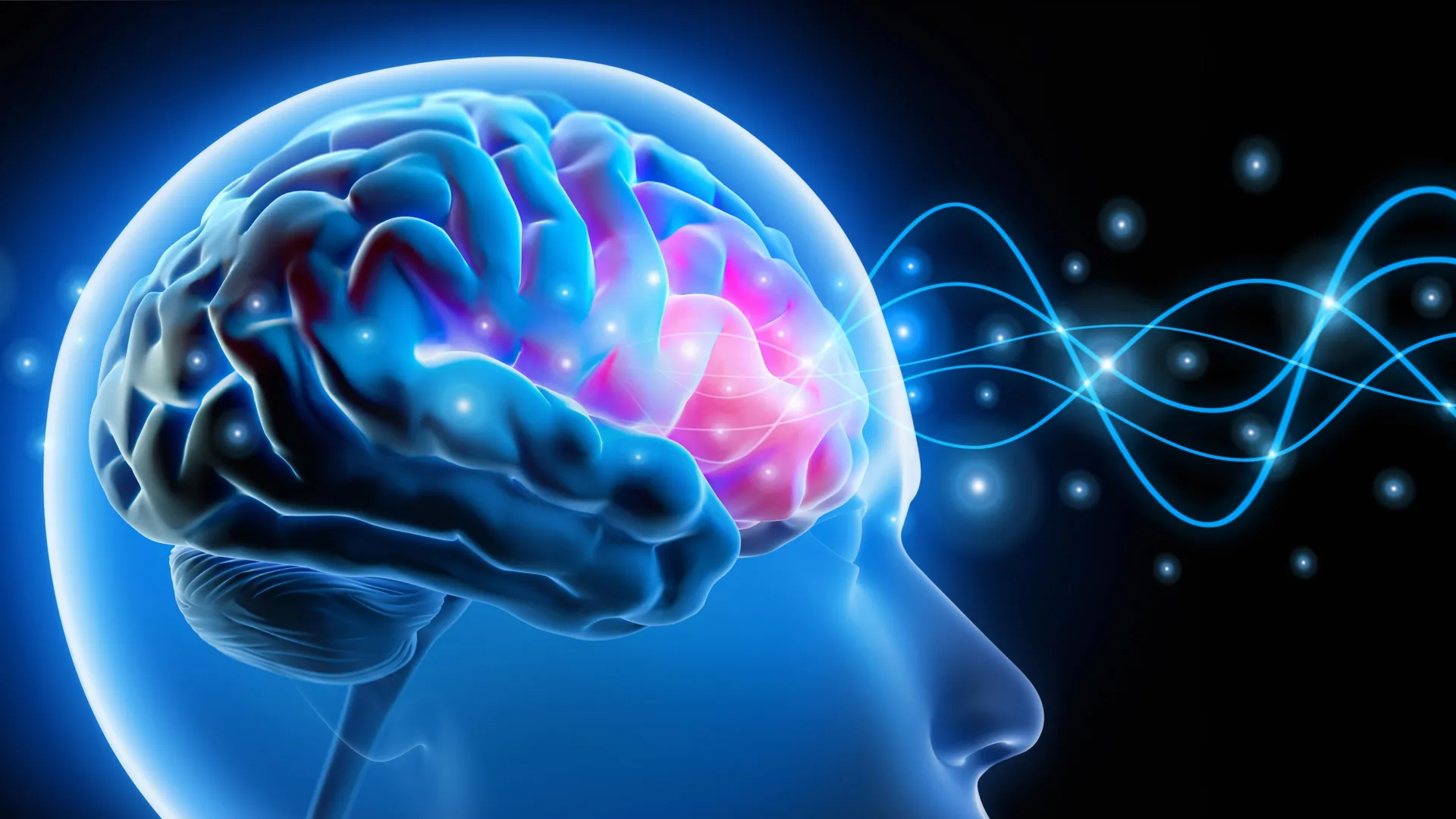
A newly cleared medical technology designed to treat post-traumatic stress disorder (PTSD) is poised to reshape mental healthcare by offering a personalized, drug-free alternative for individuals who have found little to no relief through conventional therapies. Developed through a collaborative effort between California-based Wave Neuroscience and researchers at the Texas A&M Health Institute of Biosciences and Technology, the innovative system utilizes advanced brain activity measurements to guide targeted magnetic stimulation.
The regulatory milestone introduces a fresh paradigm to psychiatric care. By combining electroencephalogram (EEG) data with artificial intelligence-driven algorithms, the technology tailors transcranial magnetic stimulation (TMS) protocols to match the distinct neurological profile of each patient. As healthcare providers look ahead to commercial rollout, the treatment offers renewed hope for millions of Americans, including veterans and survivors of severe trauma, who have struggled within the constraints of traditional trial-and-error medicine.
The Urgency of the PTSD Crisis
The need for advanced, high-efficacy PTSD interventions remains an urgent public health priority in the United States. According to epidemiological data from the Department of Veterans Affairs, approximately 7% of veterans receive a PTSD diagnosis annually. The human cost of the condition is tragically underscored by broader veteran mortality statistics, which indicate that approximately 17.5 veterans die by suicide each day.
Beyond military populations, PTSD affects a significant portion of the civilian public. Traumatic experiences—ranging from military combat and physical assault to severe accidents and natural disasters—can trigger the condition. Epidemiological estimates suggest that roughly 6% of all American adults will experience PTSD at some point during their lifetimes, with notably higher prevalence rates documented among women and military personnel.
For decades, standard-of-care treatments for PTSD have primarily relied on a combination of psychotherapy and psychotropic medications, most notably selective serotonin reuptake inhibitors (SSRIs) such as sertraline and fluoxetine. While these interventions help many patients manage their conditions, a substantial cohort continues to suffer from persistent, treatment-resistant symptoms. A comprehensive 2020 review of PTSD pharmacotherapy revealed that while patients experienced marginal score improvements on symptom assessments, remission rates topped out at a meager 10.9%. Furthermore, standard psychotherapies often require immense emotional engagement, leading to high drop-out rates among patients whose symptoms are aggravated by exposure-based exercises.
Clinical Trials and Measurable Outcomes
Clinical evaluation of the newly cleared system has yielded exceptionally promising preliminary findings. According to data released by Wave Neuroscience, trial participants experienced an average 52% reduction in PTSD symptom severity. Even more remarkably, 68% of patients participating in the clinical trial achieved full remission.
Dr. Erik Won, chief medical officer at Wave Neuroscience, highlighted the stark contrast between these clinical trial findings and historically reported outcomes for traditional pharmacological interventions.
"In comparison to that study, our FDA trial reported a 52% reduction in symptoms, so more than a four-fold increase in efficacy," Won noted. "And more importantly, we saw 68% remission in our clinical trial. So, it’s really a quantum change, an inflection point in what we can offer to patients. From a clinical care perspective, that’s really meaningful."
During the clinical evaluation phase, participants typically underwent intensive treatment schedules, receiving five targeted sessions per week over a span of five to six weeks. Subsequent clinical observations suggested that the therapeutic benefits persisted well beyond the cessation of active stimulation sessions, indicating sustained neurobiological changes rather than transient symptom suppression. While researchers caution that cross-study comparisons must be interpreted carefully due to varying trial designs, the magnitude of the preliminary data has generated considerable enthusiasm within the medical community.
Chronology of an Accelerated Regulatory Pathway
The journey from early-stage conceptualization to official FDA clearance followed an unusually rapid timeline, defying the traditional delays typical of medical device development. Historically, the pipeline from initial laboratory research to commercial market entry for complex neurotechnologies can span approximately a decade. However, the Wave Neuroscience and Texas A&M Health initiative completed the regulatory clearance process in just over two years, an achievement made even more notable given that development began amid the logistical disruptions of the COVID-19 pandemic.
A critical turning point occurred in 2024, when the technology secured an FDA Breakthrough Device designation. Dr. Rick Silva, executive director of clinical trials at the Texas A&M Health Institute of Biosciences and Technology, explained that the designation served to streamline regulatory communications and minimize administrative hurdles without compromising the stringent safety and efficacy standards required by federal regulators.
"I’ve been involved in probably close to 1,000 projects in academic medical centers over the years at varying degrees of depth and detail," Silva reflected. "Patients are why I do what I do. It’s hard, and the failure rate is high, and it’s a lot of work. But when you get to a point where something is going to benefit patients, it’s very professionally gratifying and personally gratifying in many ways as well."
Precision Medicine: How Magnetic e-Resonance Therapy Works
The foundational technology behind the clearance is known as Magnetic e-Resonance Therapy, or MeRT. While conventional transcranial magnetic stimulation (TMS) has long been authorized by the FDA for the management of treatment-resistant depression, standard protocols typically apply uniform, non-personalized stimulation parameters across broad patient populations.
MeRT departs from this generalized approach by integrating electrophysiological diagnostics with advanced computational modeling. First, an EEG records the patient’s spontaneous electrical brain activity, generating a detailed map of neurological function. An AI-assisted multivariate algorithm then analyzes these electrophysiological biomarkers to formulate a customized, patient-specific stimulation protocol.
During the treatment phase, an electromagnetic coil placed against the scalp delivers localized magnetic pulses designed to modulate neural activity in targeted brain regions. Dr. Kenneth S. Ramos, a physician-scientist at Texas A&M Health specializing in precision medicine, compared the precision of this tailored methodology to structural repairs.
Drawing an analogy to a leaking roof, Ramos likened conventional TMS to placing a broad tarp over a roof to manage water damage indiscriminately. In contrast, he described MeRT as an intervention comparable to identifying and replacing the exact compromised shingles responsible for the leak.
"Most clinical interventions for the treatment of PTSD do not work very well," Ramos stated. "So, this is a huge area where identifying interventions that could hopefully add quality of life to the people impacted by this disorder would be tremendously impactful."
Ramos emphasized that while human beings share approximately 99.9% of their genetic material, the remaining 0.1% accounts for critical biological variations that dictate how individuals respond to therapeutic interventions. By capturing these distinct electrophysiological signatures, the MeRT system aligns medical treatment with individual biological realities.
Expert Perspectives and Future Implications
As the medical community digests the implications of the FDA clearance, leading psychiatrists and researchers are evaluating how the technology will fit into existing clinical workflows. Dr. Israel Liberzon, a distinguished professor of psychiatry and behavioral sciences at the Texas A&M Naresh K. Vashisht College of Medicine and the study’s lead psychiatrist for the trial, emphasized the unique position the device will occupy in clinical practice.
"Right now, the FDA has approved only two medications for PTSD," Liberzon noted. "It doesn’t mean that only two of them are used, but both are SSRIs. This is the first time that in addition to the medication, we have a non-medication option. There is psychotherapy that people use for PTSD, but psychotherapies require a lot of effort. People must participate actively, and many drop out because it’s too anxiety provoking. So now we have a unique alternative."
Dr. Leslie S. Prichep, chief scientific officer at Wave Neuroscience, noted that the FDA clearance represents a broader, paradigm-shifting movement toward objective, data-driven mental healthcare. By relying on measurable electrophysiological biomarkers rather than subjective behavioral reporting alone, the technology bridges the gap between neurology and psychiatry.
Wave Neuroscience CEO Fred Walke underscored the cultural and psychological significance of utilizing objective physiological data to diagnose and treat mental health conditions. By providing patients with clear visual and biological insights into their neurological function, the company hopes to dismantle lingering societal stigmas surrounding psychiatric disorders.
"One of the goals of the company is to create a platform for mental healthcare that uses objective imagery to help patients understand why they’re experiencing life the way that they are," Walke said. "That insight, compounded with proven technologies, promises incredibly high efficacy when personalized."
Expanding Access and Market Integration
With regulatory clearance secured, the immediate priority for developers, clinical researchers, and institutional partners shifts toward commercial availability, insurance reimbursement advocacy, and healthcare provider education. Ensuring that patients can afford and access personalized neurostimulation treatments remains a critical frontier for widespread public health impact.
For Texas A&M Health, the successful collaboration holds deep institutional resonance, particularly given the university’s enduring commitment to military service members and veterans.
"Texas A&M has a very rich history of military and veteran priorities," Ramos observed. "It’s a no-brainer that Texas A&M faculty would be interested in and supportive of an initiative that hopefully would bring positive solutions to a big problem. And anything we could do to help alleviate that problem is going to go a long way towards making a difference in the individual’s life as well as the people who are close to them. I feel very fortunate that we at Texas A&M were meaningfully involved in this project."
Looking forward, company executives and researchers anticipate that the underlying personalized MeRT platform could eventually be adapted to address other complex psychiatric and neurological conditions, including major depressive disorder and anxiety syndromes. For millions of individuals caught in the cycle of conventional trial-and-error treatments, the advent of precision-guided brain stimulation signals the dawn of a fundamentally transformed medical landscape.
