
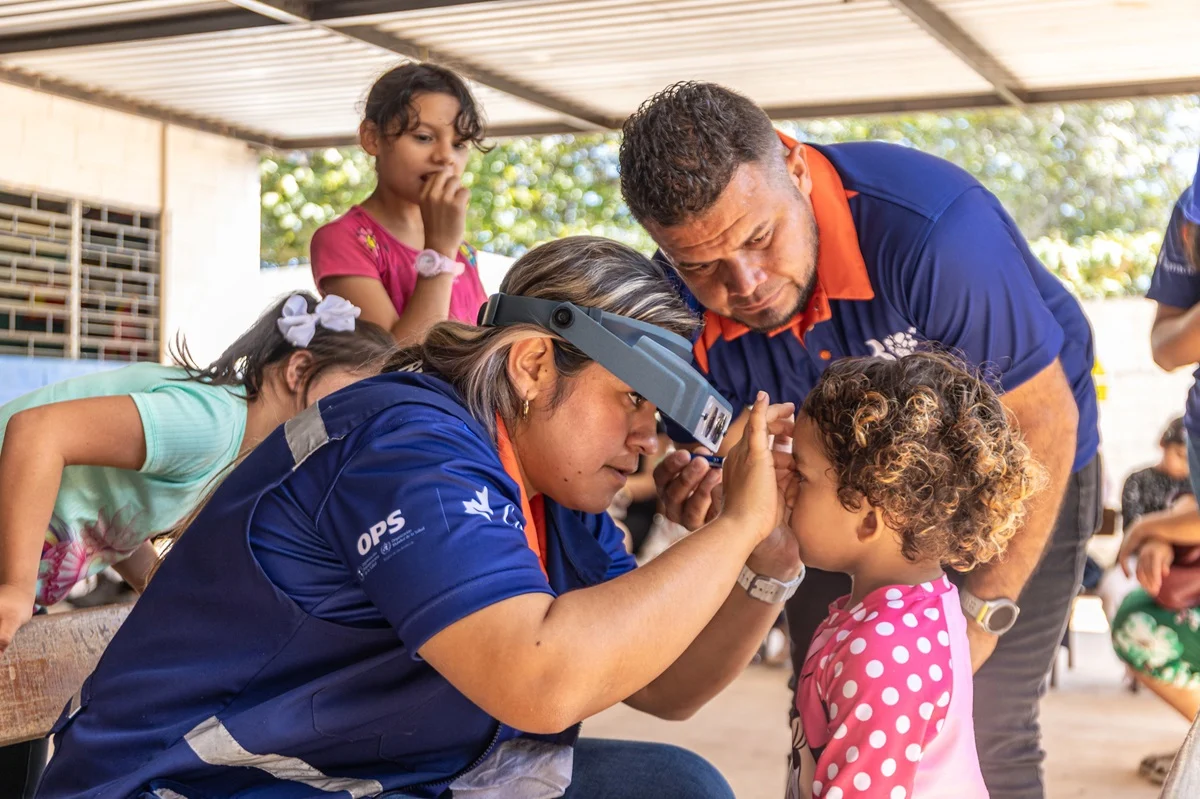
The World Health Organization (WHO) has officially validated El Salvador as having eliminated trachoma as a public health problem, marking a historic achievement for the Central American nation and the global health community. Trachoma, an agonizing and preventable disease, remains the leading infectious cause of blindness worldwide. This validation follows a multi-year, rigorous assessment process that confirmed the absence of active transmission and established the robustness of the country’s healthcare infrastructure to manage any potential future cases. El Salvador now stands as the first country in Central America and the second in the Americas, following Mexico in 2017, to reach this status.
The announcement was met with international acclaim, signaling a major step toward the WHO’s global target of eliminating trachoma in every endemic country by 2030. Dr. Tedros Adhanom Ghebreyesus, WHO Director-General, praised the nation’s resolve, stating that the success is a testament to the power of political commitment, strategic investment, and community engagement. He noted that El Salvador’s progress serves as a vital signal that a healthier and more equitable future is achievable when public health is prioritized.
Understanding the Burden of Trachoma
Trachoma is a neglected tropical disease (NTD) caused by the bacterium Chlamydia trachomatis. The infection is transmitted through direct contact with eye and nasal discharge from infected individuals, as well as through contact with contaminated objects like towels or clothing. In areas with poor sanitation, eye-seeking flies also serve as a primary vector for the disease.
The pathology of trachoma is particularly devastating because it is a disease of repeated infections. While a single bout of conjunctivitis may be mild, frequent reinfections over years lead to severe scarring of the inner eyelid. This scarring causes the eyelashes to turn inward, a painful condition known as trachomatous trichiasis. As the eyelashes rub against the eyeball, they cause constant pain and permanent damage to the cornea, eventually leading to irreversible blindness.
Historically, trachoma has been a marker of poverty. It thrives in overcrowded conditions where access to clean water and basic hygiene is limited. Because it affects the most vulnerable populations, its elimination is considered not just a medical success, but a victory for social justice and economic development.
The Path to Validation: A Chronology of Progress
The journey to El Salvador’s validation was characterized by a systematic, evidence-based approach that began in earnest several years ago. Between 2023 and 2026, the Ministry of Health, supported by the Pan American Health Organization (PAHO) and the Government of Canada, conducted intensive targeted assessments. These evaluations focused on communities identified as high-risk due to environmental and social factors.
The methodology involved two primary indicators required by the WHO for elimination status. First, the prevalence of trachomatous inflammation—follicular (TF) in children aged one to nine years had to be less than 5% in every formerly endemic district. Second, the prevalence of trachomatous trichiasis (TT) "unknown to the health system" had to be less than 0.2% in adults aged 15 and older.
The findings in El Salvador were definitive. The surveillance teams found no evidence of active transmission among children and identified no advanced cases of trichiasis that the national health system was not already prepared to manage. This data provided the "solid evidence" required to demonstrate that the disease is no longer endemic within the country’s borders.
A Multisectoral Strategy for Success
El Salvador’s success was not the result of a single medical intervention but rather a comprehensive multisectoral strategy. This approach aligned with the WHO-recommended "SAFE" strategy, which stands for Surgery for trichiasis, Antibiotics to clear infection, Facial cleanliness, and Environmental improvement.
A cornerstone of the national effort was the strengthening of primary health care services. By integrating eye health into the broader public health framework, El Salvador ensured that visual acuity screenings became a routine part of adult healthcare. Furthermore, significant investments were made in Water, Sanitation, and Hygiene (WASH) initiatives. Improving access to clean water and promoting hand and face washing were essential in breaking the cycle of bacterial transmission.
Dr. Jarbas Barbosa, Director of PAHO, highlighted that the validation reflects a deep commitment to reaching populations in the most vulnerable conditions. He emphasized that the process was about ensuring no one was left behind, requiring health workers to travel to remote and marginalized communities to identify potential cases and provide necessary care.
Official Responses and Regional Impact
The validation has been received with pride by Salvadoran officials. Minister of Health Francisco Alabi credited the achievement to sustained national efforts and the collaborative support of international partners, including the Embassy of Canada. Alabi noted that reaching this milestone in just three years of focused assessment positions El Salvador as a leader in regional health and significantly improves the quality of life for its citizens.
The impact of this achievement extends far beyond El Salvador’s borders. In the Americas, trachoma remains a public health problem in parts of Brazil, Colombia, Guatemala, and Peru. By demonstrating that elimination is possible through political will and strategic planning, El Salvador provides a blueprint for its neighbors.
The regional effort to eliminate trachoma is part of PAHO’s broader "Disease Elimination Initiative," which targets more than 30 communicable diseases for elimination by 2030. El Salvador’s success adds momentum to this initiative, proving that even diseases deeply rooted in socio-economic challenges can be overcome.
Global Context and the 2030 Roadmap
El Salvador now joins an elite group of 64 countries worldwide that have been recognized by the WHO for eliminating at least one neglected tropical disease. In the specific context of trachoma, El Salvador is the 32nd country to be validated globally. Other nations on this list include Mexico, Morocco, Oman, Saudi Arabia, and more recently, India and Pakistan.
The global fight against trachoma is coordinated through the WHO Alliance for the Global Elimination of Trachoma by 2020 (GET2020), which was launched in 1996. While the initial 2020 goal was not met globally, the alliance has seen remarkable progress, reducing the number of people at risk of trachoma by 92% since the early 2000s. The current focus is the "Road map for neglected tropical diseases 2021–2030," which sets ambitious targets for the control, elimination, and eradication of 20 diseases and disease groups.
Sustaining the Achievement
While the validation is a cause for celebration, the WHO emphasizes that the work does not end here. To prevent the re-emergence of the disease, El Salvador must maintain its surveillance systems. This includes the continued training of health personnel to recognize the signs of trachoma and the maintenance of an integrated reporting mechanism within the national health system.
The country has already established the capacity to detect and manage incident cases of trichiasis. This ensures that any person who might develop the condition in the future—perhaps due to infections contracted years ago—will receive the surgical intervention necessary to prevent blindness.
Moreover, the improvements in WASH infrastructure provide a permanent barrier against the return of the disease. By addressing the environmental root causes of trachoma, El Salvador has built a foundation for long-term public health stability.
Analysis of Broader Implications
The elimination of trachoma in El Salvador is a significant indicator of the country’s strengthening healthcare system. It demonstrates a transition from reactive medicine to proactive, community-based health surveillance. The ability to conduct nation-wide assessments and document the results to international standards suggests a high level of institutional maturity.
Economically, the elimination of a disease that causes blindness has profound implications. Blindness often results in the loss of productivity for both the affected individual and their family members, who must step away from work or school to provide care. By preserving the sight of its citizens, El Salvador is safeguarding its human capital and reducing the long-term economic burden on its social safety nets.
As the global community looks toward 2030, El Salvador stands as a beacon of hope. Its journey from an endemic status to WHO validation serves as a reminder that with the right combination of international cooperation, national leadership, and community involvement, even the most ancient and persistent diseases can be relegated to history. The victory over trachoma in El Salvador is not just a win for one nation, but a significant stride toward a world where no one has to lose their sight to a preventable infection.
