
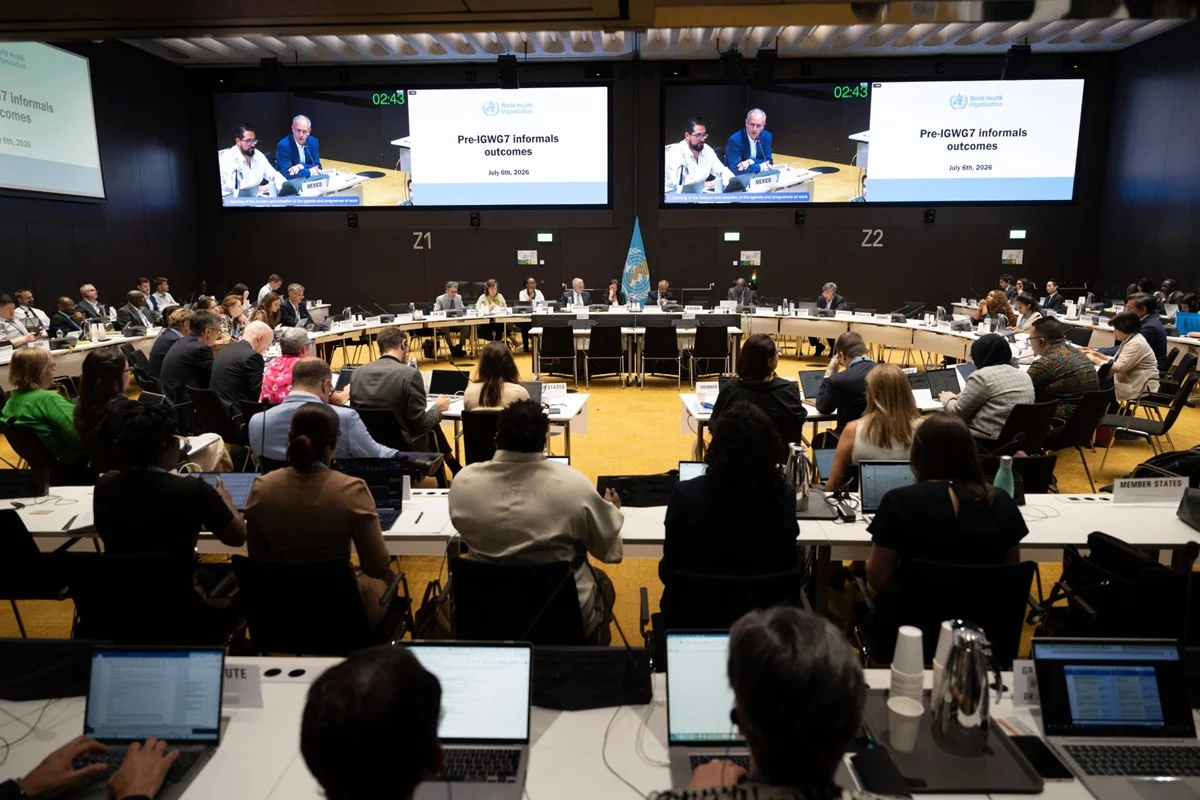
The World Health Organization (WHO) and its 194 Member States have concluded a pivotal round of negotiations in Geneva, marking a significant step forward in the development of the Pathogen Access and Benefit Sharing (PABS) system. This framework serves as a cornerstone of the broader WHO Pandemic Agreement, a landmark international instrument designed to prevent a recurrence of the fragmented and inequitable global response witnessed during the COVID-19 pandemic. The seventh meeting of the Intergovernmental Working Group (IGWG) concluded last Friday, with delegates reaching a tentative consensus on several technical aspects of the PABS annex while acknowledging that substantive work remains to bridge the gap between various national interests.
The PABS system is predicated on a dual mandate: ensuring the rapid, unimpeded sharing of biological materials and genetic sequence data of pathogens with pandemic potential, and guaranteeing the fair and equitable distribution of benefits—such as vaccines, diagnostics, and therapeutics—that result from the use of those materials. For two weeks, negotiators worked to streamline the draft text, focusing on the contractual underpinnings of the system and the architecture of the laboratory networks that will manage these critical resources.
The Architecture of the PABS Framework
The proposed PABS system represents a paradigm shift in how the world manages biological threats. Historically, the sharing of pathogen samples has occurred through a patchwork of informal agreements and the Global Influenza Surveillance and Response System (GISRS). However, the COVID-19 pandemic exposed the limitations of these voluntary mechanisms. During the crisis, many developing nations shared viral samples promptly but found themselves at the back of the queue when life-saving vaccines and treatments became available.
To address this, the PABS annex seeks to codify "Access and Benefit Sharing" (ABS) into a legally binding framework. The negotiations in Geneva focused on three primary pillars:
- Contractual Arrangements: Establishing standardized templates for Material Transfer Agreements (MTAs) and Data Use Agreements. These contracts would legally bind entities that receive pathogen samples from the WHO network to provide specific benefits in return, such as a percentage of their production for global distribution.
- Laboratory Network Structure: Defining the roles of the WHO Coordinated Laboratory Network (CLNs) and the WHO BioHub System. These entities are responsible for the safe handling, characterization, and storage of pathogens, ensuring that scientific data is verified and disseminated rapidly to researchers and manufacturers.
- Definition of Benefits: Determining exactly what constitutes a "benefit." This includes not only physical products like vaccines and antiviral drugs but also technology transfers, capacity building in low- and middle-income countries, and the sharing of intellectual property during emergencies.
Historical Context and the Catalyst for Reform
The impetus for the WHO Pandemic Agreement and the PABS annex stems directly from the systemic failures of 2020–2023. According to data from the International Monetary Fund (IMF), the COVID-19 pandemic cost the global economy an estimated $12.5 trillion through 2024. Beyond the economic toll, the human cost was exacerbated by what many world leaders termed "vaccine apartheid." By the end of 2021, while some high-income nations were administering booster shots, less than 10% of the population in low-income countries had received a single dose.
In May 2025, the World Health Assembly formally adopted the WHO Pandemic Agreement, establishing the IGWG to hammer out the technical details that remained unresolved. The PABS annex is perhaps the most contentious element of this agreement because it sits at the intersection of public health, international law, and commercial interests. It must reconcile the sovereign rights of nations over their biological resources—a principle enshrined in the Nagoya Protocol—with the global need for rapid scientific transparency.
Progress and Persistent Divergences
During the seventh meeting of the IGWG, Member States made notable progress in "cleaning" the draft text—removing redundant language and clarifying technical definitions. However, several "complex issues" remain on the table. One major point of contention involves the sharing of Digital Sequence Information (DSI). While physical samples are essential, modern vaccine development often relies solely on the genetic code of a virus uploaded to digital databases. Some Member States argue that the use of DSI must trigger the same benefit-sharing obligations as physical samples, while others express concern that strict regulations on data could slow down essential research.
Dr. Tedros Adhanom Ghebreyesus, WHO Director-General, praised the commitment of the delegates but emphasized the urgency of the task. "I commend Member States for their continued dedication to multilateralism, dialogue, and to finding common ground," Dr. Tedros stated. "While differences remain, those differences can be bridged if we keep our shared goal in sight: a world where pathogens and scientific information are shared rapidly, and the benefits they generate are shared fairly and equitably. The task is vital, and urgent. The next pandemic will not wait. Neither should we."
Economic and Scientific Data Supporting the PABS Initiative
The necessity of a formalized PABS system is backed by significant data regarding the speed of pathogen evolution and the lag in response times. Research published in the journal Nature indicates that the frequency of zoonotic spillover events—where viruses jump from animals to humans—is increasing due to climate change and habitat loss.
Supporting data highlights the disparity the PABS system aims to fix:
- Production Concentration: Currently, 80% of the world’s vaccine manufacturing capacity is concentrated in just eight countries.
- The 20% Target: Earlier drafts of the PABS annex suggested that the WHO should have access to 20% of the production of pandemic-related health products (10% as a donation and 10% at affordable prices) for equitable distribution. This remains a central point of negotiation with the pharmaceutical industry.
- Economic Benefit: A study by the G20 High-Level Independent Panel estimated that an annual investment of $15 billion in pandemic preparedness could prevent future losses in the trillions, representing a massive return on investment for global stability.
Official Responses and Diplomatic Perspectives
The leadership of the IGWG expressed optimism despite the hurdles. Ambassador Tovar da Silva Nunes of Brazil, the IGWG Bureau Co-Chair, noted that the meeting allowed countries to navigate some of the most "technically and politically complex elements" of the annex. "The remaining issues are challenging, but we have a clear path to completing this important work," he said.
Mr. Matthew Harpur, also a Co-Chair, echoed these sentiments, stating that the progress reflects a "shared determination to deliver an effective, robust, and equitable PABS system."
However, outside the negotiating rooms, civil society organizations and industry groups have offered differing perspectives. Representatives from the pharmaceutical industry have cautioned that overly prescriptive benefit-sharing requirements could disincentivize R&D and hinder the very speed the agreement seeks to achieve. Conversely, advocates for the Global South argue that without "teeth" and legally binding commitments for product sharing, the agreement will fail to protect the world’s most vulnerable populations.
Chronology of the Pandemic Agreement Negotiations
The path to the PABS annex has been a multi-year diplomatic journey:
- December 2021: The World Health Assembly (WHA) holds a Special Session and decides to establish an Intergovernmental Negotiating Body (INB) to draft a pandemic treaty.
- 2022–2024: Multiple rounds of negotiations occur, highlighting deep divides between the Global North and Global South regarding intellectual property and resource sharing.
- May 2025: The 78th World Health Assembly officially adopts the WHO Pandemic Agreement and establishes the IGWG to finalize the PABS system via Resolution WHA78.1.
- June 2025 – Present: The IGWG holds successive meetings to refine the annex, culminating in the recently concluded seventh meeting in Geneva.
- September 2026: The IGWG is scheduled to hold its eighth meeting, which many hope will be the final push toward a completed text.
Implications for Global Health Security
The finalization of the PABS annex is not merely a bureaucratic milestone; it is a critical requirement for the signature and ratification of the WHO Pandemic Agreement by individual nations. Without a clear framework for how pathogens and benefits are shared, many countries may be hesitant to commit to the broader treaty.
If successful, the PABS system will create a predictable legal environment for scientists and manufacturers. It would ensure that the moment a new pathogen with pandemic potential is identified—whether it be a novel avian influenza strain or a "Disease X"—the genetic data is immediately available to the global scientific community. In exchange, the manufacturers who use that data to create profitable products would have a pre-negotiated obligation to contribute to a global pool of resources managed by the WHO.
This "grand bargain" is seen as the only way to move past the "panic and neglect" cycle of pandemic response. By establishing these rules in "peacetime," the WHO aims to ensure that when the next crisis hits, the global community can focus on saving lives rather than debating the ownership of viral samples or the pricing of vaccines.
Conclusion and Next Steps
As the IGWG looks toward its eighth meeting in September 2026, the focus will shift toward the "final mile" of negotiations. This will involve high-level political engagement to resolve the remaining sticking points regarding intellectual property and the specific percentages of product allocations. The stakes remain high; as Dr. Tedros reminded the delegates, the biological clock of the next pandemic is already ticking. The progress made in Geneva provides a foundation, but the ultimate success of the WHO Pandemic Agreement depends on the ability of Member States to translate their reaffirmed commitments into a functional, legally binding reality that prioritizes collective safety over national or commercial interests.
