
The relationship between water and human hair has long been a source of profound confusion, not only for consumers navigating a crowded market of "hydrating" products but also within segments of the cosmetic science community itself. Despite a prevailing industry narrative that champions "hydrated hair" as the pinnacle of health and beauty, a closer examination of scientific principles reveals a far more nuanced and often counter-intuitive reality. This article delves into the intricate molecular interactions between water and hair, dissecting common myths and providing a scientifically grounded understanding that can demystify haircare practices for both individuals and industry professionals.
Debunking the "Hydrated Hair" Myth
For decades, the beauty industry has promoted the concept of "hydrated hair" as synonymous with softness, smoothness, and overall vitality. Products emblazoned with "hydrating" claims line store shelves, leading consumers to believe that adding more water to hair directly translates to improved appearance and texture. However, leading hair scientists and researchers often acknowledge that this popular understanding is a significant oversimplification, if not an outright myth. Many cosmetic scientists, facing commercial pressures, have found it challenging to undo years of ingrained consumer beliefs, often opting to align with market expectations rather than attempting to educate on complex scientific truths. The reality is that the sensory experience commonly associated with "hydration" – hair feeling soft, smooth, and manageable – is typically linked to a lower, rather than higher, water content within the hair fiber. This paradox is a cornerstone of understanding the true science behind hair and water.
The Molecular Architecture of Hair and Water Interactions
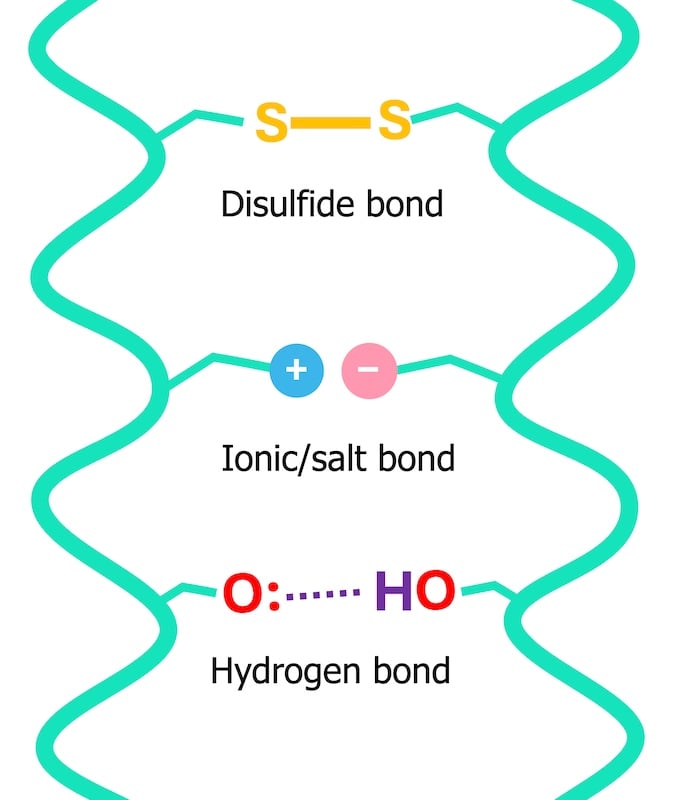
To grasp how water affects hair, one must first understand the fundamental building blocks and bonds that provide hair its structural integrity and shape. Hair is primarily composed of keratin proteins, which are interconnected by various types of chemical bonds. These bonds are broadly categorized into two main types: permanent and temporary.
Permanent bonds, primarily disulfide bonds, are strong covalent linkages that determine the hair’s inherent curl pattern and are only broken by chemical treatments like perms or relaxers. Temporary bonds, conversely, are weaker and more transient, including hydrogen bonds and ionic bonds. These temporary bonds are crucial for hair’s strength and flexibility, acting like molecular "handshakes" between adjacent protein chains, holding them together in a specific configuration.
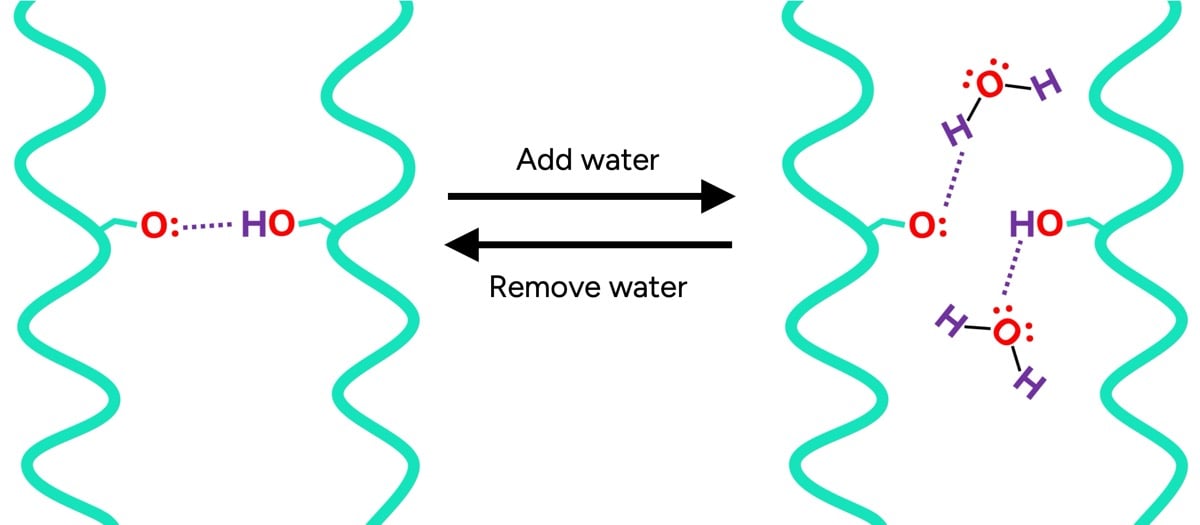
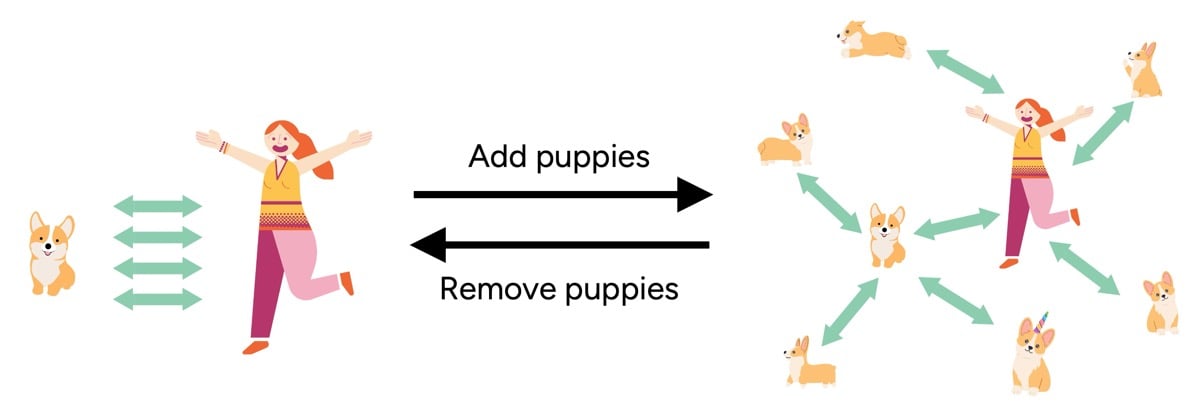
The hair’s inner core, particularly the cortex, is highly susceptible to water absorption. In dry hair, these temporary hydrogen bonds are abundant, creating a stiff and robust structure. When water is introduced, however, water molecules compete with the protein chains for these hydrogen bonding sites. The proteins, which can "hold hands" with either other proteins or water molecules, will readily bond with water. Consequently, wet hair has significantly fewer temporary bonds holding its protein structure together compared to dry hair. This reduction in inter-protein bonding makes the hair fiber weaker and more elastic. This phenomenon can be likened to a group of people holding hands to form a chain; if many new individuals (water molecules) join the group, the original chain members might loosen their grip on each other to interact with the newcomers, weakening their original connection.
Implications for Hair Strength and Detangling Practices
The disruption of temporary bonds by water has profound implications for hair’s mechanical properties. Dry hair, with its numerous temporary bonds, is stiffer and more prone to brittleness. Wet hair, having fewer of these internal connections, becomes stretchier and more elastic. This altered state directly influences the best practices for detangling, which varies significantly depending on hair type.
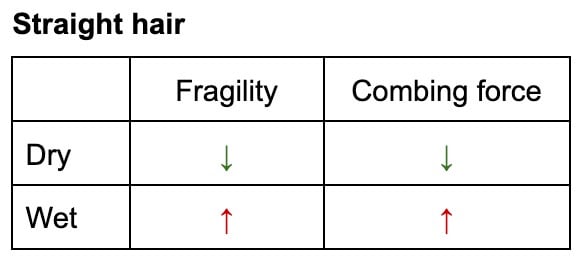
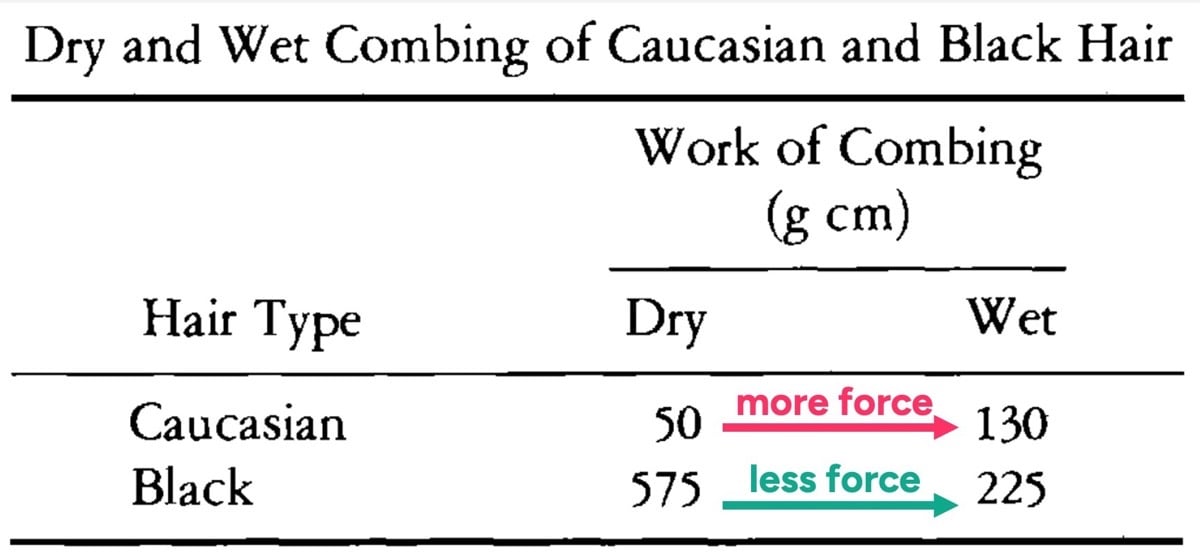
For straight hair, combing or brushing when wet can be more damaging. Although wet straight hair is more elastic, it is also weaker due to the broken temporary bonds. Furthermore, water increases friction between individual strands, causing them to stick together more. The combination of reduced strength and increased friction makes wet detangling for straight hair a high-risk activity for breakage. Scientific studies, such as those by Epps and Wolfram in 1983, have illustrated how the force required to comb hair increases with humidity for straight hair, directly correlating with increased damage.
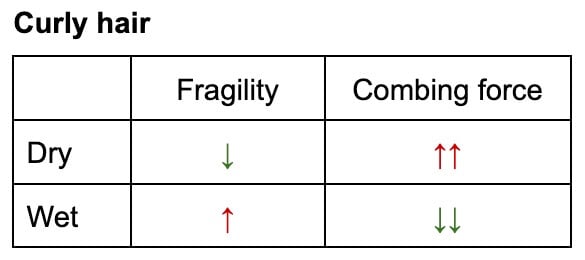
Conversely, for curly and coily hair, wet detangling is often less damaging. While the hair strands are still weaker when wet, the presence of water helps to relax the natural curl pattern. This loosening of the curl reduces the resistance and tangling that typically occurs when dry, offsetting the inherent weakness. The overall force required to detangle wet curly hair is often lower, resulting in less mechanical stress and damage. This "conundrum" highlights that there is no universal rule for wet versus dry detangling; the optimal approach is dictated by the hair’s unique structural characteristics and its interaction with water. Regardless of hair type, the application of conditioner is universally beneficial, as its lubricating properties significantly reduce friction and the force needed for detangling, mitigating potential damage.
The Paradox of "Hydrated Feel": Cuticle Swelling and Surface Texture
Perhaps one of the most counter-intuitive findings in hair science is that hair perceived as "hydrated," "soft," and "healthy" by consumers actually tends to have a lower water content than hair described as "dry" or "damaged." A notable study cited by Evans in Cosmetics & Toiletries (2013) demonstrated this disconnect: when participants were asked to rate hair samples with varying water content, the majority consistently judged hair with less water to feel more moisturized, smoother, and less tangled.
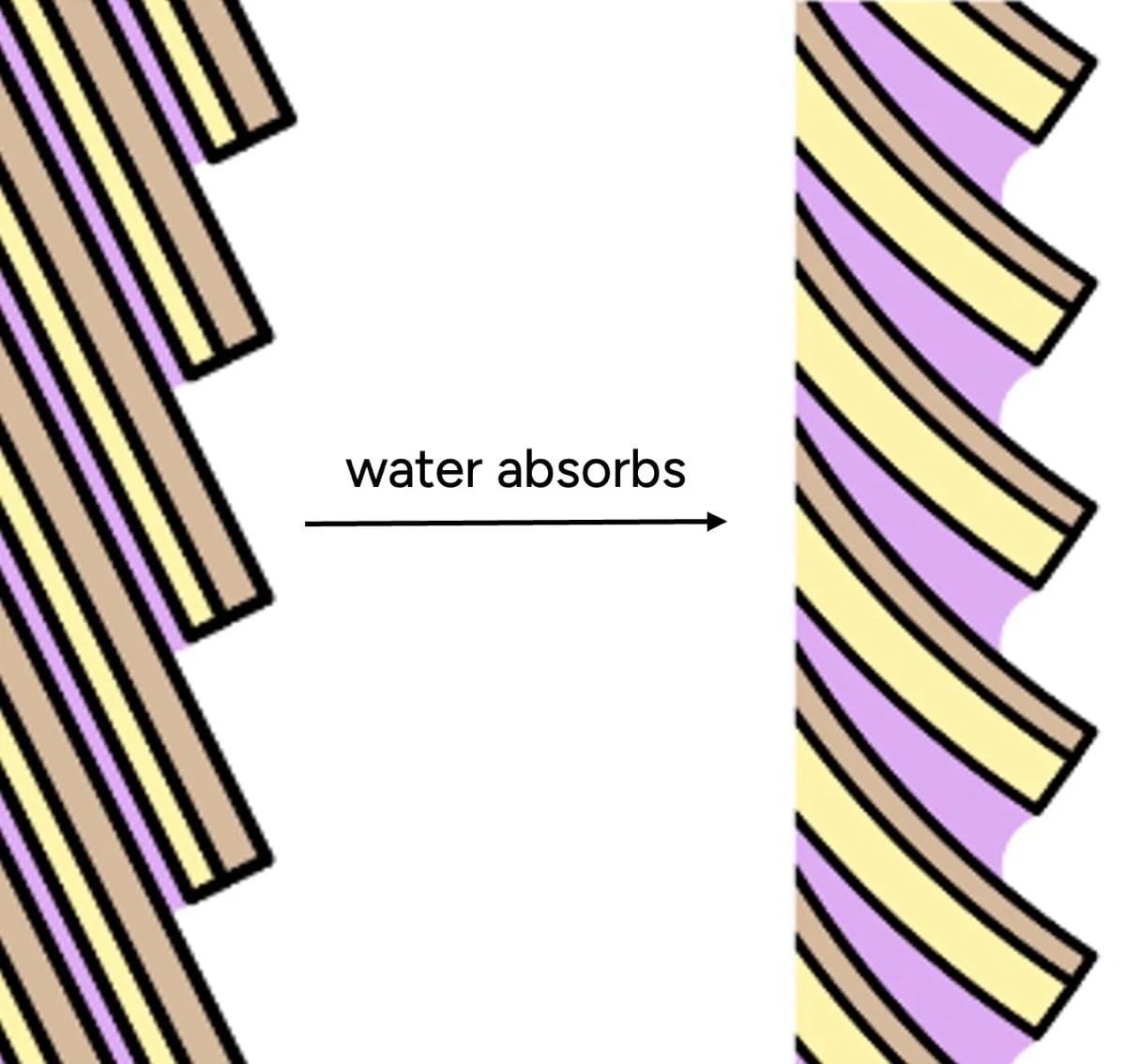
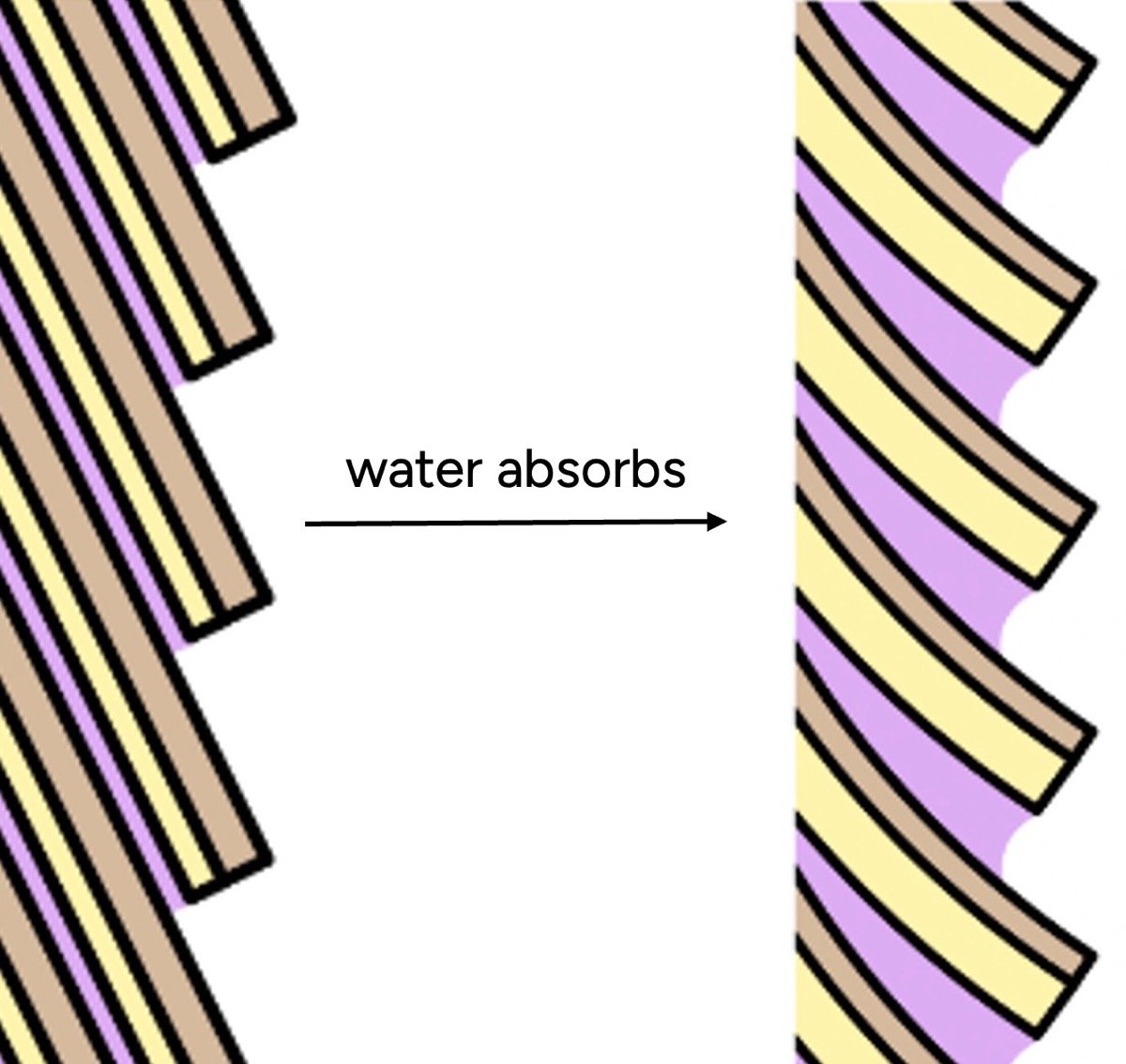
This sensory paradox can be explained by examining the hair’s outermost layer, the cuticle. The cuticle consists of overlapping, scale-like cells that, in healthy, dry hair, lie relatively flat, creating a smooth surface. When hair absorbs water, these cuticle scales swell. Crucially, different parts of the cuticle swell to different extents. The underside of each scale (the endocuticle) and the intercellular glue (the cell membrane complex) absorb significantly more water than the top surface. This differential swelling causes the scales to lift and protrude, creating a microscopically rough and bumpy surface.
Additionally, water itself has inherent stickiness and increases surface friction. This is why we might wet our fingers to get a better grip on objects. When hair is wet, its surface becomes both bumpier and grippier at a microscopic level. To the human touch, this increased roughness and friction are interpreted as "dryness" or "damage," a perception that contrasts sharply with the popular understanding of "hydration." Most materials we encounter become smoother when wet; hair’s unique response to water is a key reason for consumer confusion.
The True Mechanisms of "Hydrating" Products
Given the scientific understanding, how do products marketed as "hydrating" actually work? The reality is that most such products primarily function as conditioners. Conditioners are formulated with ingredients like silicones, fatty alcohols, and various oils that deposit a thin, lubricating film onto the hair’s surface. These ingredients effectively smooth down the raised cuticle scales and reduce friction between strands. By creating a smoother, less grippy surface, conditioners impart the sensory attributes of softness, smoothness, and manageability that consumers associate with "hydration."
Undamaged hair naturally possesses an outer protective layer of lipids called the F-layer, which contributes to its smooth texture and hydrophobicity. Damage from chemical treatments, heat styling, or environmental factors can strip away this natural F-layer. Conditioners, in essence, aim to replicate the function of this natural protective barrier, rather than fundamentally altering the hair’s internal water content to achieve "hydration" in the literal sense.
Why Washing and Conditioning "Resets" Hair
Many people observe that their hair feels significantly better after a full wash and conditioning routine compared to merely applying a leave-in product to dry hair. This improvement is often attributed to "hydration," but the science reveals several distinct mechanisms at play:
- Enhanced Distribution of Conditioning Ingredients: Water acts as an excellent medium for spreading conditioning agents evenly across the entire hair surface. During a rinse-off conditioning process, the abundance of water allows the product to coat each strand more uniformly, leading to more consistent smoothing and friction reduction.
- Resetting Hair Shape: Water is remarkably effective at resetting the hair’s natural shape. This is evident when humidity causes a styled hairstyle to collapse, or when washing hair removes heat styling. When hair is styled using heat or physical manipulation, new temporary bonds are formed, locking the hair into the desired shape. The introduction of water, especially combined with heat from washing, breaks these temporary bonds. This allows the permanent bonds to reassert themselves, returning the hair to its natural, relaxed state. This process makes the hair "floppy" and highly amenable to new styling, much like softening candle wax before molding it.
- Optimizing Curl Formation: For curly and coily hair types, water plays a critical role in facilitating curl clump formation. The surface tension of water causes individual wet strands to adhere to each other when they touch, a phenomenon known as self-assembly. This "zipping together" of strands creates larger, more defined curl patterns. These well-aligned clumps can feel smoother and colder to the touch when dry, as they present a larger, more uniform surface area to the hand, which the brain can misinterpret as "hydration."
- Microscopic Cuticle Reset: Rapid drying, particularly with high heat, or mechanical stretching can cause the cuticle scales to dry unevenly or buckle due to differential shrinkage. This creates a microscopically irregular surface. Soaking hair in water and allowing it to dry naturally can reset these buckled scales, restoring a smoother cuticle surface. It’s important to note that these beneficial effects of water are primarily about its ability to transform and reshape hair’s physical and mechanical properties, rather than simply maintaining a high internal water content.
The Ideal Water Content: A Delicate Balance
Just as with skin, there is an optimal range for hair’s water content. Hair that is excessively wet, though weaker, is not necessarily healthier. Conversely, hair that is too dry suffers from its own set of problems. However, two critical differences exist between hair and skin hydration: hair is biologically dead, meaning it cannot actively regulate its hydration, and hair swells far more dramatically than skin in response to water.
Hair with insufficient water content, often found in very dry environments or in hair that has been overly stripped of its natural lipids, exhibits several negative effects:
- Increased Static Electricity: In low humidity conditions, hair is more prone to static build-up. This occurs because hair readily loses electrons when rubbed against other materials. Water molecules, being polar, can effectively dissipate these static charges, preventing flyaways.
- Brittleness and Reduced Shock Absorbency: Hair that is too dry is rigid and brittle. The excessive number of temporary bonds makes it inflexible, unable to absorb mechanical stress from actions like brushing or styling. This rigidity leads to the formation of microscopic cracks that, over time, propagate and result in breakage. This phenomenon is easily observed with fingernails (which share similar protein composition with hair); dry nails tend to crack and splinter when clipped, while wet, flexible nails yield a clean cut.
Strategies for Managing Hair’s Water Content and Feel
Achieving the "happy medium" of water content and desirable feel in hair involves a combination of practices that address both the internal structure and external surface. These strategies aim to either optimize water interaction or create the sensory experience associated with healthy hair:
- Conditioning Ingredients: As discussed, conditioners with oily ingredients (silicones, fatty alcohols, natural oils) are paramount. They smooth the cuticle, reduce friction, and create a soft, supple feel.
- Humectants: Ingredients like glycerin, hyaluronic acid, and panthenol can attract and hold water from the atmosphere into the hair, which can be beneficial in maintaining flexibility and preventing excessive dryness, particularly in balanced humidity environments. However, in very high humidity, humectants can lead to frizz by drawing in too much water and disrupting cuticle integrity. In very low humidity, they can draw water out of the hair, making it drier.
- Emollients and Occlusives: Ingredients like plant oils, butters, and some silicones act as emollients (softeners) and occlusives (sealants). They help to lock in the hair’s existing moisture and prevent excessive water loss, contributing to a smoother feel and reduced brittleness.
- Gentle Handling: Minimizing mechanical stress, especially when hair is wet and weaker, is crucial. Using wide-tooth combs, detangling with conditioner, and avoiding aggressive brushing can significantly reduce breakage.
- Controlled Drying: Allowing hair to air dry or using low heat with a diffuser can help prevent the rapid, uneven drying that leads to cuticle buckling.
Conclusion: A Scientific Approach to Haircare
The scientific understanding of water and hair reveals a complex interplay where water is neither inherently "good" nor "bad," but rather a powerful tool that significantly alters hair’s physical and mechanical properties. The popular notion of "hydrated hair" is largely a marketing construct that misaligns with the actual physiological response of hair to water. Hair that feels healthy, soft, and smooth is typically hair with a lower internal water content, achieved through effective conditioning and proper styling that minimizes cuticle roughness and friction.
Consumers should therefore prioritize products that deliver a smooth, aligned hair surface and provide adequate lubrication for detangling, irrespective of whether they are labeled "hydrating." The myth of "hygral fatigue"—the idea that water itself causes damage through repeated swelling and shrinking—is largely unsubstantiated by robust scientific evidence. Instead, the focus should be on treating hair gently, especially when wet, as its weakened state makes it more vulnerable to mechanical damage. By embracing a scientific perspective, individuals can make more informed haircare choices, moving beyond marketing hype to achieve truly healthy and manageable hair.
References:
- Robbins CR. Chemical and Physical Behavior of Human Hair. 5th ed. Springer Berlin Heidelberg 2012.
- Evans T. Consumer vs. scientific language: relating in vivo to in vitro. Cosmetics & Toiletries. 2013;128(5):300-304.
- Epps J, Wolfram LJ. Letter to the editor. J Soc Cosmet Chem. 1983;34:213-214.
- Gamez-Garcia M. Moisture in the cuticle sheath: effects on hair mechanical and cosmetic properties. J Cosmet Sci. 2021;72:687-696.
- Kamath YK, Hornby SB. Effect of chemical and humectant treatments on the mechanical and fractographic behavior of Negroid hair. J Soc Cosmet Chem. 1985;36:39-52.
- Kaushik V, Chogale R, Mhaskar S. Single hair fiber assessment techniques to discriminate between mineral oil and coconut oil effect on hair physical properties. J Cosmet Dermatol. 2021;20(4):1306-1317. doi:10.1111/jocd.13724
