
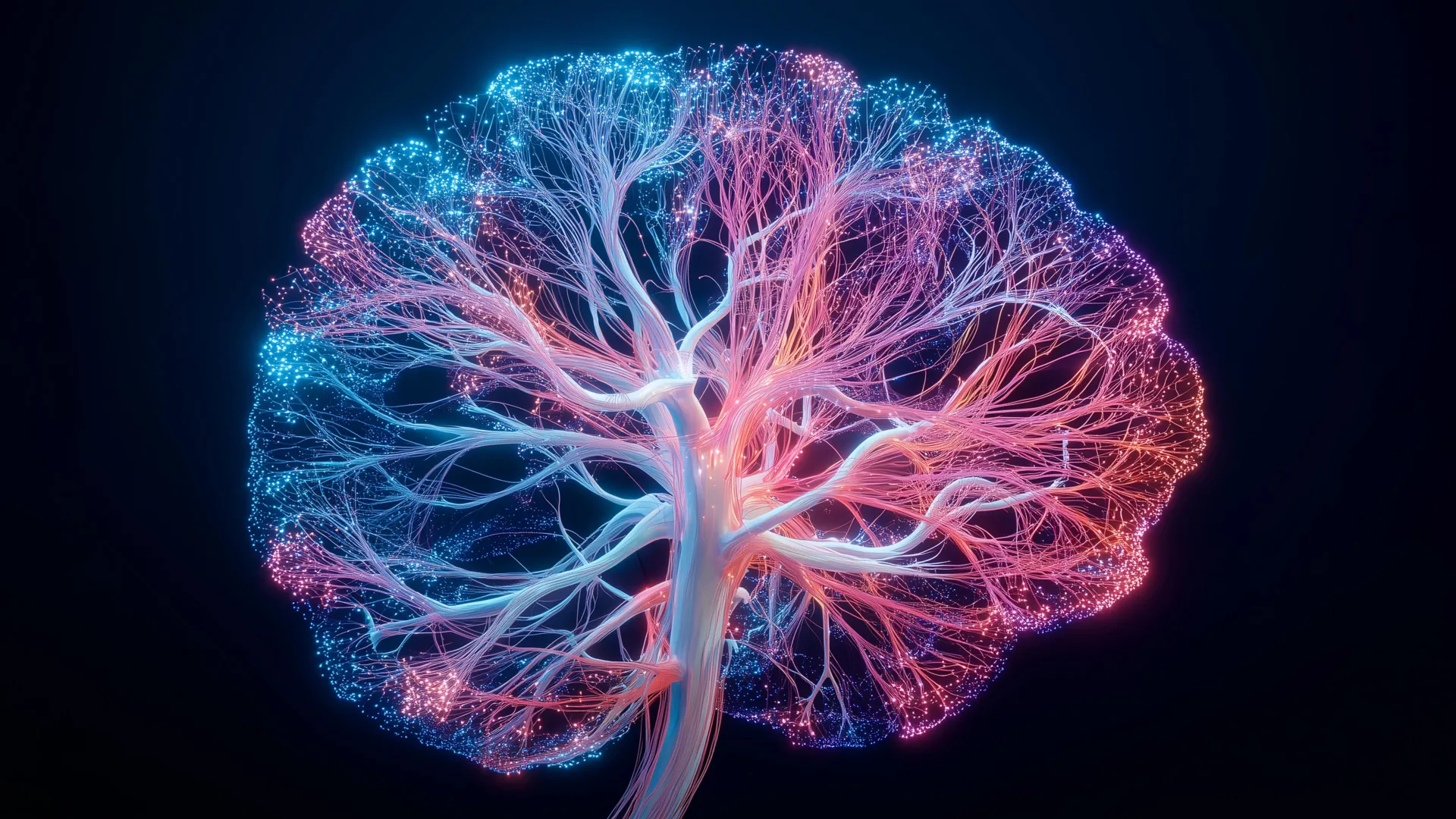
Scientists at the University of Illinois Urbana-Champaign have unveiled groundbreaking research that challenges long-held assumptions about how the human brain processes information and makes decisions. Their findings, published in the prestigious journal Proceedings of the National Academy of Science (PNAS), suggest that critical aspects of decision-making originate in earlier sensory regions of the brain than previously theorized. This paradigm shift not only deepens our understanding of natural intelligence but also offers a compelling new roadmap for the design of more efficient and capable artificial intelligence systems.
The study, spearheaded by Professor Yurii Vlasov of Electrical and Computer Engineering at The Grainger College of Engineering, centers on the intricate interplay between different brain regions during perceptual tasks. For decades, a dominant model in neuroscience and artificial intelligence posited a hierarchical flow of information: sensory input travels upwards through increasingly complex processing centers until it reaches the frontal cortex, the recognized seat of higher cognitive functions, where decisions are ultimately formulated. However, Vlasov and his team’s work introduces a compelling counter-narrative, highlighting the active and early involvement of primary sensory areas in the decision-making process.
Rethinking the Brain’s Decision-Making Architecture
The human brain, often lauded as the most complex entity in the known universe, remains a frontier of scientific exploration. Understanding its mechanisms is so vital that the National Academy of Engineering identified "reverse engineering the brain" as one of its 14 Grand Challenges for Engineering in the 21st century in 2008. This ongoing quest for knowledge is fueled by the brain’s unparalleled ability to perform complex tasks with remarkable energy efficiency, a feat that current artificial intelligence systems, despite their rapid advancements, struggle to emulate.
Traditional artificial intelligence, particularly in the realm of deep learning and convolutional neural networks, has often drawn inspiration from a simplified, unidirectional model of brain function. This approach, while successful in many applications, mirrors the hierarchical processing theory, assuming a sequential ascent of data from sensory organs to executive brain regions. The prevailing thought was that raw sensory data was processed and refined at each successive level, culminating in a final decision made at the highest echelons of the brain.
Professor Vlasov and a growing cohort of researchers, however, have been increasingly vocal in questioning the completeness of this unidirectional model. Their investigations are increasingly leaning towards a more nuanced understanding, one that embraces the principles of natural intelligence honed by hundreds of millions of years of evolutionary refinement. This evolved perspective suggests that the brain is not merely a linear information processor. Instead, it operates through dynamic, interconnected feedback loops, allowing for bidirectional communication between various brain regions. This continuous exchange of information, a hallmark of biological intelligence, allows for a more agile and adaptive response to environmental stimuli.
The implications of this shift in understanding are profound, especially for the field of artificial intelligence. Biological intelligence excels at performing incredibly sophisticated tasks using a fraction of the energy consumed by even the most advanced AI systems. By unraveling the architectural principles that underpin this efficiency, scientists believe they can unlock new avenues for developing AI that is not only more effective but also significantly more energy-efficient.
"We want to learn from a billion years of evolution," Professor Vlasov stated in a press release detailing the findings. "How is that biological intelligence organized architecturally? Can we learn from the architectural side of the brain and emulate that to make AI more effective, less power hungry, and more intelligent than it currently is? In the level of decision-making, that’s where current AI is lacking." This sentiment underscores the aspiration to transcend the limitations of current AI by gleaning insights from the ultimate intelligent system – the human brain.
Early Sensory Regions Exhibit Decision-Making Activity
To empirically test their hypothesis about early involvement in decision-making, Vlasov’s research team meticulously focused on the initial stages of sensory processing within the brain. Their experimental setup involved recording neural activity in laboratory mice as they navigated a virtual reality corridor. This controlled environment allowed researchers to observe and analyze brain responses during specific perceptual decision-making tasks.
The pivotal discovery came with the observation of decision-related neural activity within the primary somatosensory cortex (S1). This region, traditionally understood as a relay station for basic sensory information—touch, temperature, pain—was found to be actively participating in the decision-making process. Rather than simply passing information forward to higher-level areas, S1 exhibited patterns of activity that were indicative of influence from, and interaction with, more advanced brain regions.
This finding strongly suggests a top-down regulatory influence, where feedback loops from higher brain areas modulate the activity in S1. This bidirectional communication challenges the notion of a strict, one-way information flow. Instead, it paints a picture of decision-making as a continuously evolving process, characterized by constant dialogue and coordination across multiple neural networks, rather than a solitary event occurring at a singular decision-making hub.
"The neural code of the brain is still mostly an unknown language," Vlasov commented, underscoring the complexity of the research. "But this systems-level understanding can be viewed as a potential impact on how more efficient artificial neural networks can be built—how the next generation of AI can be thought through. Maybe with these analogies that we learn from real brains, we can improve AI further." This highlights the potential for a "systems-level understanding" to translate into tangible improvements in AI design, moving beyond component-level inspiration to a holistic architectural emulation.
Implications for the Future of Artificial Intelligence
While the University of Illinois Urbana-Champaign study does not present a ready-made blueprint for constructing superior artificial intelligence, it offers invaluable new insights into the brain’s sophisticated decision-making architecture. These insights are poised to inspire novel approaches to AI design, potentially leading to systems that are more akin to biological intelligence in their efficiency and adaptability.
The research team is already charting a course for future investigations. A primary focus will be a more detailed examination of the temporal dynamics of these brain signals. Understanding precisely when these feedback loops engage and how they influence neural processing at different stages is crucial. This temporal dimension is believed to hold significant clues about the underlying mechanisms of decision-making.
Furthermore, the researchers intend to develop and employ advanced technologies for measuring neural activity. This will enable a deeper understanding of how these intricate feedback loops emerge, coordinate, and ultimately shape the multifaceted levels of brain processing involved in decision-making.
"By looking at the fast temporal dynamics of neural activity, maybe we can understand better how these feedback loops are engaged in making decisions," Vlasov elaborated. "Maybe that’s the approach that potentially uncovers these currently unknown mechanisms—how these feedback loops are organized dynamically and how they form and shape different levels of processing. Maybe that can be implemented in new architectures for AI."
Broader Context and Potential Impact
The implications of this research extend far beyond the academic sphere, touching upon critical societal challenges and technological advancements. As artificial intelligence continues to permeate various aspects of our lives, from autonomous vehicles to personalized medicine, the need for more robust, efficient, and ethically sound AI becomes paramount.
The current reliance on energy-intensive data centers for AI computations contributes significantly to global carbon emissions. A shift towards bio-inspired, energy-efficient AI architectures could alleviate this environmental burden. Imagine AI systems that can perform complex analyses and make critical decisions with the energy footprint of a biological organism, rather than a supercomputer. This is the promise held by understanding and emulating natural intelligence.
Moreover, the current limitations of AI in areas like common-sense reasoning and nuanced decision-making can be traced, in part, to their often rigid, hierarchical processing structures. The discovery of early decision-making involvement in the brain suggests that AI systems might benefit from incorporating similar feedback mechanisms, allowing for more flexible, context-aware, and adaptable decision-making capabilities. This could lead to AI that is better equipped to handle novel situations, exhibit more human-like learning, and ultimately, be more reliable in critical applications.
The historical trajectory of AI development has often been characterized by iterative improvements on existing paradigms. However, breakthroughs like the one from the University of Illinois Urbana-Champaign signal a potential paradigm shift, moving from simply mimicking specific neural functions to understanding and replicating the fundamental architectural principles that govern intelligent behavior. This move towards a deeper, systems-level understanding is what many researchers believe is necessary to unlock the next era of artificial intelligence.
This research also has implications for neuroscience itself. By providing experimental evidence for early sensory regions’ involvement in decision-making, it opens new avenues for investigating neurological disorders. Understanding the precise mechanisms of feedback loops and their disruption could lead to novel diagnostic tools and therapeutic interventions for conditions affecting cognitive function and decision-making.
The scientific community has long recognized the brain as the ultimate benchmark for intelligence. The work of Professor Vlasov and his team at the University of Illinois Urbana-Champaign represents a significant step forward in deciphering the brain’s intricate workings and translating that knowledge into tangible advancements in artificial intelligence, promising a future where AI is not only more powerful but also more sustainable and intelligent. The journey to fully understand and replicate biological intelligence is long, but this latest discovery illuminates a crucial path forward.
