

The neck is often described as the "neglected area" of the aesthetic journey, frequently revealing a patient’s chronological age even when the face has been meticulously maintained through injectables and skincare. This discrepancy is largely due to the unique anatomical characteristics of the neck, which include thinner dermis, a relative lack of sebaceous glands, and the constant mechanical stress of movement and gravity. As the demand for non-surgical interventions grows, the clinical approach must evolve to integrate advanced injectables, biostimulators, and energy-based devices to provide predictable and natural-looking outcomes.
The Anatomical Complexity of the Cervical Region
To understand the clinical approach to neck rejuvenation, one must first master the underlying anatomy. The neck is a highly mobile structure composed of several layers that age at different rates. The most superficial layer, the skin, is prone to solar elastosis and fine lines, often referred to as "necklace lines" or horizontal cervical rhytids. Beneath the skin lies the platysma muscle, a thin, broad sheet that can become hyperactive over time, leading to the formation of vertical platysmal bands.
Furthermore, the distribution of submental fat and the integrity of the retaining ligaments play a crucial role in the definition of the jawline and the cervicomental angle. Dr. Critchley notes that a successful treatment plan must distinguish between skin laxity, muscular hypertrophy, and adipose accumulation. Treating one without considering the others often leads to suboptimal results or a "heavy" appearance that lacks the grace of a youthful neck contour.
The Evolution of Neck Rejuvenation: A Chronology
The history of neck rejuvenation has transitioned from aggressive surgical interventions to a refined palette of minimally invasive techniques. In the late 20th century, the "gold standard" for neck aging was the surgical neck lift (platysmaplasty). While effective for significant skin redundancy, the downtime and risks associated with surgery created a gap in the market for patients with mild to moderate aging.
In the early 2000s, the introduction of botulinum toxin for aesthetic use paved the way for the "Nefertiti Lift," a technique designed to redefine the jawline and soften platysmal bands. This was followed by the rise of hyaluronic acid (HA) fillers, though early formulations were often too viscous for the thin skin of the neck, leading to Tyndall effects or visible lumps.
The mid-2010s marked a turning point with the arrival of skin boosters and bioremodeling agents, such as Profhilo. These products focused on "skin quality" rather than volume, providing a solution for the crepey texture that fillers could not easily address. By 2020, the "Tech Neck" phenomenon—wrinkles caused by the repetitive motion of looking down at digital devices—accelerated the demand for preventative and corrective neck treatments among younger demographics. Today, the clinical approach is defined by "stacking" treatments—combining neuromodulators, biostimulators like calcium hydroxylapatite (Radiesse), and energy-based therapies for a 360-degree rejuvenation.
Supporting Data and Market Trends
The drive toward neck rejuvenation is supported by robust market data. According to a 2023 report by the American Society for Aesthetic Plastic Surgery (ASAPS), non-surgical skin tightening and rejuvenation procedures saw a 22% year-on-year increase. Furthermore, consumer surveys indicate that nearly 45% of patients seeking facial aesthetics also express concern regarding their neck and jawline.
Clinical studies have shown that the use of biostimulators in the neck can increase collagen type I and type III production by up to 30% over a six-month period. Research into "micro-tox" techniques—using highly diluted botulinum toxin injected intradermally—has also demonstrated significant improvement in skin texture and a reduction in pore size and fine lines, offering a more nuanced approach than traditional intramuscular injections.
Multi-Modal Treatment Strategies: The Injectable Core
Dr. Critchley’s clinical framework prioritizes a tiered approach to injectables. The first tier involves the use of neuromodulators to address dynamic aging. By relaxing the platysma muscle, practitioners can reduce the downward pull on the lower face, effectively lifting the jawline and smoothing the neck’s vertical profile.
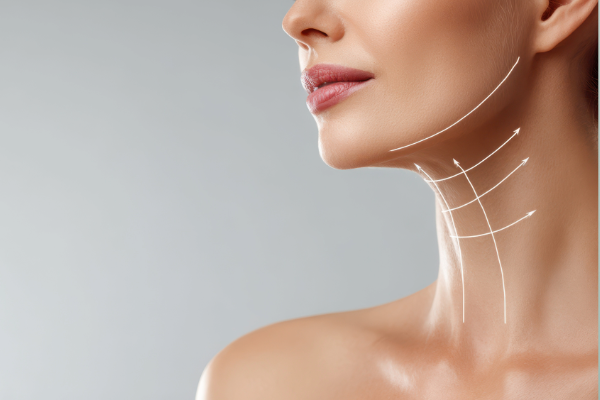
The second tier focuses on structural integrity and hydration. Hyaluronic acid skin boosters are utilized to provide deep hydration and improve the "snap-back" quality of the skin. For deeper horizontal lines, a technique known as "blanching"—where a cohesive polydensified matrix (CPM) filler is injected very superficially—can soften deep creases without adding bulk.
The third tier, and perhaps the most transformative in modern practice, is the use of biostimulators. Unlike traditional fillers that provide immediate volume, biostimulators work by triggering the body’s natural wound-healing response. Calcium hydroxylapatite or Poly-L-lactic acid (PLLA), when hyper-diluted, can be fanned across the neck to thicken the dermis over several months. This approach addresses the root cause of "crepey" skin and provides a long-lasting foundation for other treatments.
Integrating Energy-Based Devices and Skincare
While injectables form the backbone of the clinical approach, they are often supplemented by energy-based devices (EBDs) to maximize results. High-Intensity Focused Ultrasound (HIFU) and Radiofrequency (RF) microneedling are frequently employed to target the deeper SMAS (Superficial Muscular Aponeurotic System) layer and induce thermal coagulation, which leads to further skin tightening.
Practitioners also emphasize the necessity of medical-grade homecare. The neck is highly susceptible to ultraviolet (UV) damage and environmental pollutants. A regimen including antioxidants (Vitamin C), retinoids specifically formulated for the neck’s sensitive skin, and broad-spectrum SPF is considered non-negotiable for maintaining the results of clinical interventions. Dr. Critchley suggests that without proper topical support, the longevity of injectable treatments can be reduced by as much as 40%.
Industry Reactions and Safety Considerations
The aesthetic community has responded positively to this structured clinical approach, noting that it manages patient expectations more effectively than "miracle" single-session treatments. However, experts warn that the neck remains a "high-stakes" zone for complications. The proximity of the thyroid gland, the carotid arteries, and the superficial nature of the nerves requires a high level of anatomical expertise.
Leading aesthetic trainers have voiced the need for specialized cadaver workshops focusing solely on the neck to prevent vascular compromise and nerve damage. There is also a growing consensus that patient selection is paramount; those with excessive skin laxity or significant "turkey neck" may still be better candidates for surgical intervention, and the ethical practitioner must be prepared to refer these cases to a plastic surgeon.
Broader Impact and Future Implications
The shift toward comprehensive neck rejuvenation reflects a broader trend in aesthetic medicine: the move toward "holistic harmony." Patients no longer want a frozen forehead or overfilled cheeks; they desire a cohesive appearance where the face, neck, and hands are in aesthetic alignment.
Looking ahead, the field is moving toward regenerative medicine. Exosomes and platelet-rich plasma (PRP) are being investigated for their ability to accelerate tissue repair and enhance the effects of biostimulators. As the technology evolves, the "clinical approach" will likely become even more personalized, utilizing genetic profiling or high-resolution ultrasound imaging to tailor treatments to the individual’s specific aging pattern.
In conclusion, A Clinical Approach to Neck Rejuvenation represents a vital maturation of the aesthetic industry. By moving away from "spot-treating" wrinkles and toward a layered, scientifically-backed methodology, practitioners can offer patients durable, natural, and transformative results. The neck is no longer an afterthought but a central pillar of the modern aesthetic consultation, requiring the same level of precision, artistry, and clinical rigor as the face. As practitioners like Dr. Rupert Critchley continue to refine these protocols, the "neglected neck" is poised to become a hallmark of successful, comprehensive age management.
