
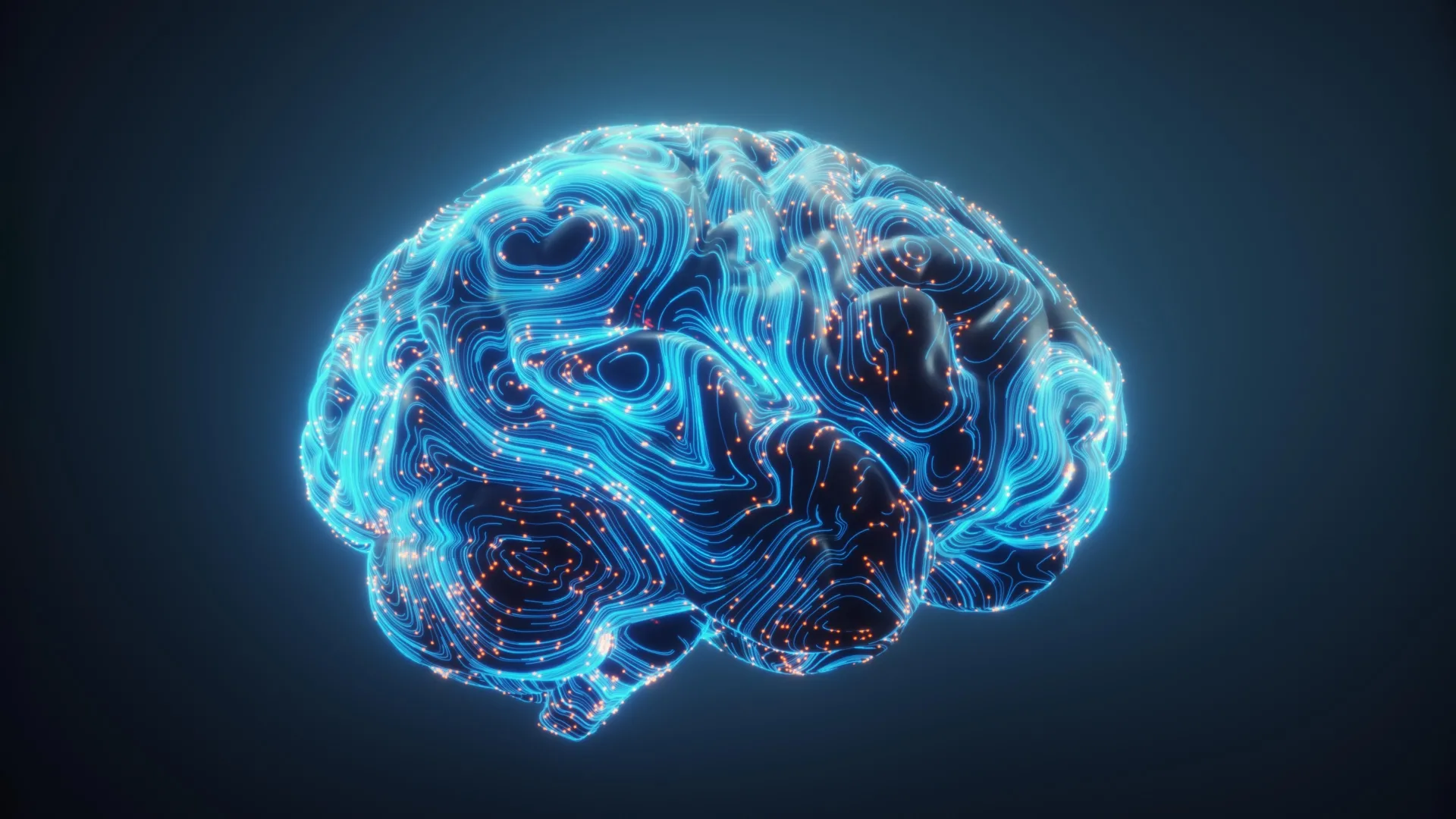
Researchers at Georgetown University have presented compelling new evidence suggesting that the human brain undergoes a profound physical reorganization as individuals acquire mastery over a skill, transforming demanding tasks into automatic processes. This groundbreaking discovery challenges the long-held scientific consensus that true multitasking is a biological impossibility, proposing instead that with sufficient practice, the brain can indeed perform certain activities concurrently, rather than merely rapidly switching attention between them.
The implications of these findings extend far beyond the realm of personal efficiency. Scientists anticipate that this research will offer deeper insights into the fundamental mechanisms of habit formation, illuminate the neurological underpinnings of why certain behaviors prove so resistant to change, and provide a roadmap for developing more sophisticated artificial intelligence systems capable of building new skills upon prior learning.
“We have uncovered another significant stepping stone in our comprehension of how the brain acquires knowledge,” stated senior author Maximilian Riesenhuber, PhD, a distinguished professor of neuroscience at Georgetown University School of Medicine and co-director of the Center for Neuroengineering. “The most encouraging aspect of this research is the confirmation that it is indeed possible to learn to multitask. This study demonstrates a tangible pathway to remodeling our brain architecture and effectively leveraging additional brain regions for concurrent operations.”
The Neurological Pathway to Skill Automation
This latest research builds upon decades of scientific inquiry into the brain’s capacity for acquiring new abilities. While considerable progress has been made in understanding the initial phases of learning, the processes that govern highly practiced skills, those that become nearly effortless with experience, have remained comparatively obscure.
Driving serves as a ubiquitous example. The initial stages of learning to operate a vehicle demand an individual’s complete and undivided attention. However, over years of consistent practice, many drivers find they can simultaneously engage in conversations, listen to music, or contemplate complex problems while maintaining safe control of the car. The fundamental question that has long puzzled neuroscientists is: how does the brain achieve this remarkable feat?
Brain Imaging Reveals a Dynamic Shift in Neural Circuits
To unravel this enigma, the Georgetown research team designed an innovative experiment. Volunteers were tasked with a visually demanding categorization task: sorting morphed images of cars into two distinct groups by identifying subtle visual discrepancies. This rigorous training regimen involved participants completing over 30,000 sorting trials over a concentrated period of five to ten weeks, utilizing a gamified smartphone application engineered to enhance engagement and data collection.
The researchers employed advanced neuroimaging techniques, specifically functional magnetic resonance imaging (fMRI) and electroencephalography (EEG), to capture detailed snapshots of participants’ brain activity. These scans were conducted both before the intensive training commenced and again after the practice period concluded, allowing for a direct comparison of neural patterns.
In the nascent stages of learning, the car categorization task predominantly engaged the prefrontal cortex. This region of the brain is critically involved in executive functions, encompassing planning, reasoning, and conscious decision-making. Historically, the prefrontal cortex has been considered a significant bottleneck for multitasking, as its general operational mode involves processing one demanding task at a time.
However, following weeks of dedicated practice, a striking transformation in brain activity was observed. The identical categorization task, which had initially taxed the prefrontal cortex, was now being primarily managed by the temporal cortex. This area of the brain is intrinsically linked to memory formation and the recognition of complex visual stimuli, such as objects.
“Previous research has indicated that specific regions within the temporal cortex can become highly attuned to particular object categories in individuals with extensive experience, whether it be with birds, cars, or even fictional characters like Pokémon,” explained first author Patrick Cox, PhD. Dr. Cox initiated this study as a graduate student in Professor Riesenhuber’s lab and is now an assistant professor of psychology at Lehigh University. “A critical limitation of all those prior investigations was that they only examined participants after they had achieved expert status. The distinct strength of our study lies in its longitudinal design. By measuring brain activity both before and after the training intervention, we can directly observe how extensive practice effectively cultivates a category-selective area within the temporal lobe that was demonstrably absent prior to the training.”
Dr. Cox further elaborated on the real-world relevance of these findings: “This has profound implications for critical scenarios in professional fields, such as when a radiologist, through years of dedicated training, can accurately and almost automatically classify masses on an X-ray as benign or malignant, often without requiring extensive deliberation.”
How Brain Rewiring Facilitates True Multitasking
A pivotal discovery from the research is the identification of a new pathway. The study revealed that information processed by the newly established, car-selective area in the temporal cortex could bypass the prefrontal cortex entirely and travel directly to brain regions responsible for initiating motor responses.
“Through experience, the brain effectively remodels itself to circumvent that frontal bottleneck,” Professor Riesenhuber elaborated. “This rerouting frees up the prefrontal cortex, allowing it to remain available for other cognitive demands, thereby significantly increasing an individual’s overall processing capacity.”
Crucially, the research team observed a direct correlation: the more effectively the car-sorting task was “offloaded” from the prefrontal cortex to the temporal cortex, the better participants performed on a secondary, concurrent task. This finding directly challenges the long-standing and widely accepted notion that humans are incapable of true multitasking. For decades, the prevailing scientific explanation was that the brain merely alternates attention between tasks with such speed that it creates the illusion of simultaneous processing.
“What our research unequivocally demonstrates is that the underlying neural circuitry actually changes, enabling the brain to perform two distinct operations at once,” Professor Riesenhuber affirmed. “This is, in essence, true multitasking.”
Broader Implications for Habit Formation and Artificial Intelligence
The findings of this study also offer potentially significant insights into the mechanisms underlying compulsive behaviors. Because well-ingrained behaviors become entrenched in neural circuits that operate with less reliance on conscious control, simply attempting to consciously override such a behavior by thinking of something else may prove insufficient.
“The initial and crucial step in unlearning an undesirable behavior is to accurately identify its neurological locus,” Professor Riesenhuber explained. “This research underscores why strategies that merely advise an individual to ‘think of something else’ are often ineffective, as the behavior itself is no longer under direct conscious command.”
Furthermore, the researchers posit that their discoveries could shed light on why humans possess a remarkable lifelong capacity for learning new abilities, while current artificial intelligence systems frequently struggle with continuous learning, often experiencing interference with previously acquired knowledge.
According to Professor Riesenhuber, the ability to transfer a mastered skill into the temporal cortex effectively liberates the prefrontal cortex to engage with novel challenges. This allows existing knowledge to serve as a robust foundation for future learning. In contrast, many contemporary AI systems lack this kind of adaptive and flexible neural architecture.
The research team now intends to delve deeper into the precise signaling mechanisms that govern the transfer of learning between different brain regions. They also aim to identify the specific types of tasks that can ultimately be performed in parallel.
“Another highly compelling question for future research is to determine precisely which kinds of tasks can be learned to a sufficient degree to be executed concurrently,” added Dr. Cox. “We can, for instance, walk and chew gum simultaneously. However, the danger of looking at our phones to text while driving, despite being a physical possibility, is never safe because it necessitates diverting our visual attention from the road. The feasibility of true multitasking ultimately hinges on our ability to train completely separate neural circuits for two distinct tasks in a way that makes them compatible for parallel operation.”
The comprehensive study, titled “Extensive Experience Remodels Neural Task Circuitry to Escape the Frontal Bottleneck and Increase Automaticity of Categorization,” was published on June 4 in the esteemed Journal of Cognitive Neuroscience.
In addition to Professor Riesenhuber and Dr. Cox, the research team comprised Clara A. Scholl, Marissa L. Laws, Nelson E. Jaimes, and Xiong Jiang, all affiliated with Georgetown University. The foundational work for this study was generously supported by grants from the National Science Foundation (BCS-1232530), the ARCS Foundation, and the Army Research Laboratory (W911NF-24-1-0097). The authors have reported no personal financial interests or conflicts of interest related to the conduct or findings of this research.
