
The World Health Organization (WHO) has officially validated Australia for having eliminated trachoma as a public health problem, marking a monumental achievement in the nation’s public health history and a significant step forward in the global campaign against neglected tropical diseases (NTDs). This validation signifies that Australia, once the only developed nation where trachoma remained endemic, has successfully reduced the disease to levels where it no longer poses a threat to the sight of its citizens. The achievement is particularly poignant for Aboriginal and Torres Strait Islander communities, where the disease had persisted for decades despite disappearing from the broader Australian population in the early 20th century. By meeting the rigorous criteria set by the WHO, Australia joins a growing list of nations contributing to the ambitious targets of the WHO road map for neglected tropical diseases 2021–2030.
Trachoma is a devastating but entirely preventable disease caused by the bacterium Chlamydia trachomatis. It is the world’s leading infectious cause of blindness, spreading through direct contact with infected eye and nose secretions, contaminated surfaces, and eye-seeking flies. In its early stages, the infection causes inflammation of the conjunctiva. However, repeated infections over many years lead to scarring of the inner eyelid. This scarring eventually causes the eyelashes to turn inward—a painful condition known as trachomatous trichiasis—where the lashes rub against the cornea with every blink. Without surgical intervention, this process leads to irreversible corneal opacification and total blindness. The elimination of this scourge in Australia represents not only a clinical victory but a triumph over the social and environmental inequities that allowed the disease to linger in remote regions.
The Historical Context of Trachoma in Australia
To understand the magnitude of this achievement, one must look at the history of trachoma within the Australian continent. In the late 19th and early 20th centuries, trachoma was widespread across both Indigenous and non-Indigenous populations in Australia. However, as living standards, housing, and access to clean water improved for the general population, the disease naturally receded from urban and regional centers. By the 1930s, it had largely vanished from the non-Indigenous population.
Despite this progress, trachoma remained a persistent health crisis in remote Aboriginal and Torres Strait Islander communities. For much of the 20th century, the prevalence of the disease in these areas was among the highest in the world, often compared to rates found in the most impoverished regions of sub-Saharan Africa. The disparity became a symbol of broader health inequities facing First Nations Australians. It wasn’t until the 1970s, spurred by the pioneering work of ophthalmologist Professor Fred Hollows and the National Trachoma and Eye Health Program, that a coordinated national effort began to document and treat the disease in the "Outback." While these early efforts made significant strides, it took several more decades of sustained, government-backed intervention and community-led health initiatives to reach the point of elimination.
The Strategic Framework: The SAFE Strategy and Beyond
The turning point in Australia’s journey came with the formalization of the National Trachoma Management Programme in 2006. This program adopted the WHO-recommended SAFE strategy, a comprehensive public health approach designed to address both the immediate medical needs and the underlying environmental causes of the disease. The SAFE strategy consists of four pillars:
- Surgery: Providing surgical intervention for individuals suffering from trichiasis to prevent the onset of blindness.
- Antibiotics: Distributing antibiotics, specifically azithromycin, to treat active infections and reduce the community-wide reservoir of the bacterium.
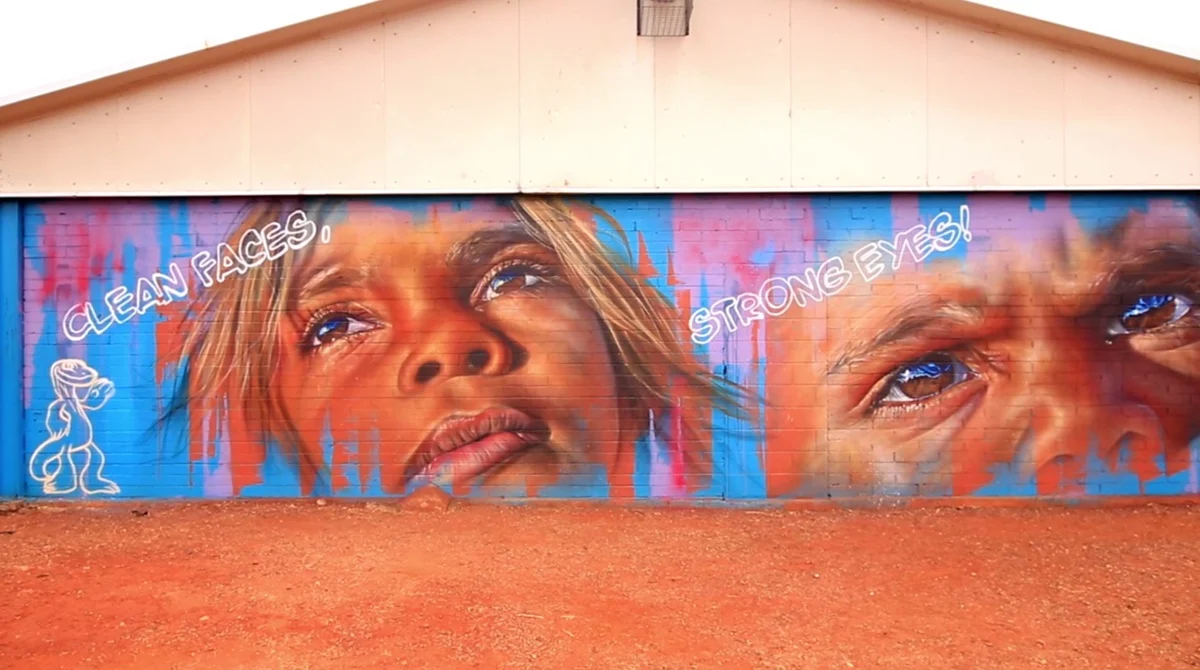
- Facial Cleanliness: Promoting hygiene practices, particularly among children, to interrupt the transmission of the bacteria.
- Environmental Improvement: Enhancing access to clean water, functional sanitation, and improved housing to reduce the factors that facilitate the spread of the disease.
Australia’s implementation of this strategy was unique in its precision. While many countries utilize Mass Drug Administration (MDA)—treating entire populations regardless of individual infection status—Australia focused on a data-driven approach. Teams of qualified health workers conducted regular, systematic screenings in communities identified as at-risk. Treatment was then targeted based on community-level prevalence data, ensuring that resources were directed where they were most needed. Furthermore, the Australian government integrated trachoma control with broader environmental health programs, recognizing that "healthy hardware"—working taps, showers, and toilets—was as essential as medical treatment.
Collaborative Leadership and Community Empowerment
A defining feature of Australia’s success was the central role played by Aboriginal Community Controlled Health Organisations (ACCHOs). These organizations provided the cultural safety and local expertise necessary to engage effectively with remote communities. By ensuring that health interventions were community-led and culturally appropriate, the program overcame historical barriers to healthcare access.
Minister for Indigenous Australians, Malarndirri McCarthy, highlighted this collaborative effort, stating that the recognition from the WHO reflects decades of work led by ACCHOs alongside local health workers. The involvement of these organizations ensured that the screening and treatment processes were not merely clinical exercises but were integrated into the broader fabric of community health and well-being. This model of community-controlled healthcare is now seen as a blueprint for addressing other preventable health conditions in regional and remote Australia.
Mark Butler, the Australian Minister for Health and Ageing, echoed these sentiments, noting that the milestone is a testament to sustained investment and political will. He emphasized that the lessons learned from the trachoma elimination program—particularly regarding the importance of cross-sectoral collaboration between federal, state, and local governments—will inform future efforts to close the gap in health outcomes for Indigenous Australians.
Global Significance and the WHO Road Map
The WHO validation of Australia is a significant contribution to the global "Last Mile" in the fight against neglected tropical diseases. Australia is now the 63rd country globally to have eliminated at least one NTD and the 16th in the WHO Western Pacific Region. This achievement provides a powerful case study for other nations, demonstrating that even in geographically challenging and vast territories, elimination is possible through persistent effort and resource allocation.
Dr. Tedros Adhanom Ghebreyesus, WHO Director-General, congratulated Australia on the achievement, noting that it brings the world closer to the goals set out in the WHO road map for NTDs 2021–2030. The road map aims to reduce the number of people requiring interventions for NTDs by 90% and to eliminate at least one NTD in 100 countries by the end of the decade. Australia’s success provides momentum for these targets, especially within the Western Pacific region, where several countries continue to grapple with the complexities of reaching vulnerable populations in remote areas.
Dr. Saia Ma’u Piukala, WHO Regional Director for the Western Pacific, emphasized the regional importance of the news. Drawing on his own experience as a physician in Tonga, he noted the socioeconomic challenges inherent in tackling NTDs but stressed that Australia’s success proves that strategic commitment and optimal resource management can overcome these hurdles. He urged Australian health authorities to remain vigilant, maintaining robust surveillance systems to ensure the disease does not return.
Technical Criteria for Elimination
The WHO’s validation process is rigorous and based on specific epidemiological thresholds. For a country to be validated for the elimination of trachoma as a public health problem, it must demonstrate:
- A prevalence of trachomatous trichiasis (TT) "unknown to the health system" of less than 0.2% in adults aged 15 years and older.
- A prevalence of trachomatous inflammation—follicular (TF) in children aged 1 to 9 years of less than 5% in every formerly endemic district.
- The existence of a comprehensive system to identify and manage new incident cases of trichiasis.
Australia’s ability to meet these metrics in some of the most remote inhabited places on Earth is a feat of logistics and public health surveillance. The transition from active intervention to a surveillance phase is critical, as it ensures that any localized outbreaks are detected and suppressed before they can lead to widespread transmission.
Broader Implications for Neglected Tropical Diseases
While the elimination of trachoma is a cause for celebration, it also shines a light on the remaining NTDs that persist in Australia and the wider region. Diseases such as scabies, Buruli ulcer, and leprosy remain endemic in certain parts of the country. The infrastructure and partnerships developed during the trachoma program are expected to be leveraged to tackle these conditions. For instance, the improvements in environmental health and housing that were essential for trachoma elimination also play a direct role in reducing the prevalence of scabies and associated skin infections.
Furthermore, the Australian achievement underscores the importance of addressing the "social determinants of health." Trachoma is often described as a "disease of poverty," but in Australia’s case, it was more accurately a disease of inequity and inadequate infrastructure. The success of the program confirms that medical interventions alone are insufficient; they must be accompanied by improvements in the living conditions of the most vulnerable populations.
Conclusion and Future Outlook
The World Health Organization’s validation of Australia marks the end of an era for a disease that once caused widespread suffering and preventable blindness. However, the work does not end with validation. The Australian government has committed to ongoing monitoring and the integration of trachoma surveillance into national health systems. This ensures that the gains made over the last two decades are permanent.
As Australia celebrates this milestone, it joins the ranks of other nations such as Cambodia, China, Mexico, and Morocco, which have also been validated for eliminating trachoma. Each success story adds to the global knowledge base, providing new strategies and hope for the millions of people still at risk of NTDs worldwide. The Australian journey serves as a reminder that with political will, community leadership, and a focus on equity, even the most entrenched public health challenges can be overcome.
