
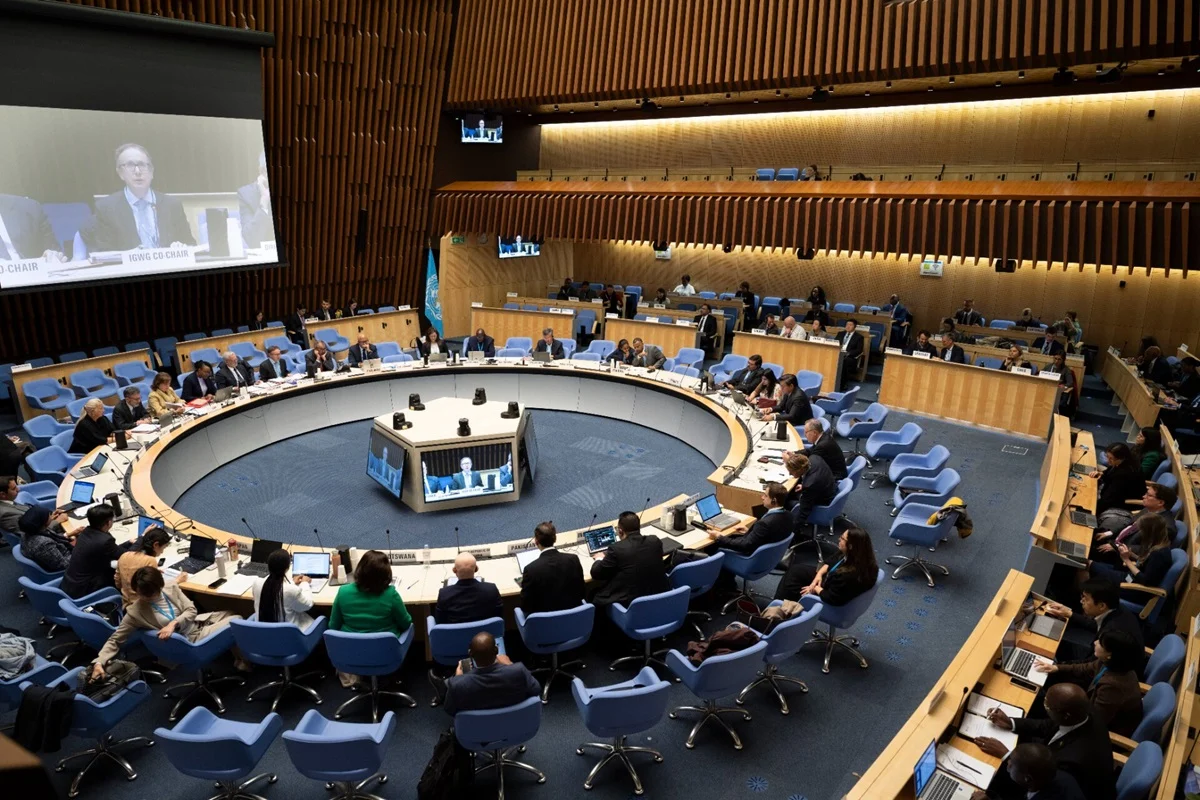
Member States of the World Health Organization (WHO) have concluded a pivotal weeklong round of negotiations in Geneva, focusing on the draft annex for Pathogen Access and Benefit Sharing (PABS). This system represents a cornerstone of the broader WHO Pandemic Agreement, a legally binding international instrument designed to prevent a repeat of the inequities and delays that characterized the global response to COVID-19. The fifth meeting of the Intergovernmental Working Group on the WHO Pandemic Agreement (IGWG), which took place from February 9 to 14, 2026, marked a significant milestone in the effort to codify how the world shares biological materials and the rewards of scientific discovery. As the international community moves toward a final deadline in May 2026, the discussions underscored a collective recognition that global health security depends on a delicate balance between rapid scientific transparency and the equitable distribution of life-saving medical countermeasures.
The Core Mandate: Balancing Access and Equity
The PABS system is designed to address a fundamental flaw in global health governance: the "decoupling" of pathogen sharing from the benefits derived from that sharing. In previous health crises, countries—often in the Global South—shared viral samples and genetic data with the international community, only to find themselves at the back of the queue when vaccines and treatments were developed using that very data. The current negotiations aim to rectify this by creating a structured, legally binding framework where the sharing of pathogen materials and Genetic Sequence Information (GSI) is met with a reciprocal commitment to provide fair and equitable access to the resulting products.
To ensure the world can respond swiftly to emerging threats, the PABS annex emphasizes the need for countries to rapidly detect pathogens with pandemic potential. By facilitating the immediate upload of genetic sequences to public and semi-public databases, the system enables scientists worldwide to begin work on diagnostic tests, antiviral treatments, and vaccines within hours of a new threat being identified. However, the "Benefit Sharing" aspect remains the most complex element of the negotiation. It involves establishing a system where manufacturers who utilize the PABS materials contribute a portion of their production—often discussed as a percentage of real-time output—to a global pool managed by the WHO for distribution based on public health need rather than purchasing power.
Chronology of the Pandemic Agreement and the IGWG
The journey toward the PABS annex began in the wake of the devastating COVID-19 pandemic, which exposed deep-seated vulnerabilities in international coordination. In December 2021, during a rare Special Session of the World Health Assembly, Member States agreed to establish an Intergovernmental Negotiating Body (INB) to draft and negotiate a WHO convention, agreement, or other international instrument on pandemic prevention, preparedness, and response.
By mid-2024, while much of the overarching Pandemic Agreement had taken shape, the specific technicalities of Pathogen Access and Benefit Sharing required a more focused approach. This led to the creation of the Intergovernmental Working Group (IGWG) specifically for the PABS annex. The timeline of the IGWG has been intensive:
- Initial Sessions (2024–2025): Early meetings focused on defining the scope of "pathogens with pandemic potential" and determining whether the system would cover seasonal influenza or be restricted to novel threats.
- The Fourth Meeting (Late 2025): This session saw the emergence of the "Bureau’s Text," a consolidated draft intended to bridge the gap between high-income nations prioritizing rapid access and developing nations prioritizing guaranteed benefits.
- The Fifth Meeting (February 9–14, 2026): The most recent session focused on streamlining the legal language and addressing the "contentious elements" cited by the Bureau, such as the specific percentages of vaccine production to be reserved for global equity.
- The Road Ahead (March–May 2026): Negotiations are set to resume in March to finalize the text before the 79th World Health Assembly in May, where the final annex is expected to be presented for adoption.
Supporting Data: The Economic and Human Cost of Inequity
The urgency driving the IGWG negotiations is supported by stark data from the COVID-19 era. According to various economic analyses, the pandemic cost the global economy an estimated $12.5 trillion through 2024. Furthermore, studies on vaccine equity revealed a harrowing "vaccine gap." By the end of 2021, while many high-income countries had achieved vaccination rates of over 70%, fewer than 10% of people in low-income countries had received a single dose.
The PABS system seeks to prevent a recurrence of these statistics by institutionalizing "pre-event" agreements. Current proposals under discussion include a requirement for manufacturers to provide 20% of pandemic-related health products to the WHO—10% as a donation and 10% at affordable, non-profit prices. Proponents argue that such a mechanism would have saved millions of lives if it had been in place in 2020. Data from the WHO’s Access to COVID-19 Tools (ACT) Accelerator suggests that a coordinated global allocation system could have reduced the duration of the pandemic’s peak by several months, significantly mitigating both human loss and economic disruption.
Official Responses and Diplomatic Perspectives
The conclusion of the fifth meeting brought a mix of cautious optimism and a sober assessment of the work remaining. Ambassador Tovar da Silva Nunes of Brazil, serving as the IGWG Bureau co-chair, highlighted the progress made in refining the draft. "Countries this week have again shown their steadfast commitment to getting the Pathogen Access and Benefit Sharing annex done," he stated. He noted that the group now possesses a "clear vision" for streamlining the text, though he acknowledged that consultations are still required for the most sensitive issues, likely referring to intellectual property rights and the mandatory nature of benefit-sharing contributions.
Mr. Matthew Harpur of the United Kingdom, also a co-chair, emphasized the gravity of the mission. "It is clear that important differences remain, but there is a shared recognition of what is at stake," Harpur said. He stressed that with the May deadline approaching, the coming weeks are "critical in bridging the remaining gaps" to ensure the annex is "fair, effective, and fit for purpose."
WHO Director-General Dr. Tedros Adhanom Ghebreyesus reiterated the importance of multilateralism in the face of biological threats. "Adopting the Pandemic Agreement last year was a huge testament to global cooperation, and we need to build on that momentum," Dr. Tedros said. He expressed confidence that Member States would reach a consensus in time for the World Health Assembly, noting that future pandemics are a "collective" challenge that no single nation can manage in isolation.
Stakeholder Engagement and Technical Challenges
The February negotiations were not limited to government delegations. The IGWG engaged in extensive dialogues with relevant stakeholders, including the pharmaceutical industry, academic researchers, and managers of sequence information databases like GISAID.
One of the primary technical hurdles remains the status of Digital Sequence Information (DSI). In the modern era, physical samples of a virus are often less critical than the digital code of its genome. Once a sequence is uploaded to the cloud, researchers can synthesize the virus or its components in a lab thousands of miles away. Ensuring that the "Benefit Sharing" obligations follow the digital data as strictly as they follow physical samples is a point of significant debate. Industry representatives have expressed concerns that overly restrictive data-sharing rules could slow down innovation, while developing nations argue that excluding DSI from the PABS framework would create a massive loophole that renders the entire agreement ineffective.
Furthermore, the role of laboratories and sequence databases is under scrutiny. The PABS system aims to create a "WHO Pathogen Access and Benefit-Sharing Network," a web of recognized laboratories that adhere to standardized protocols for sharing and biosafety. This network would serve as the backbone for the rapid response mechanism, ensuring that data is not only shared quickly but also verified and made available to all Member States simultaneously.
Broader Impact and Global Implications
The successful implementation of the PABS annex would represent a paradigm shift in international law and global health. For decades, the sharing of biological resources was governed largely by the Nagoya Protocol, which focuses on bilateral agreements between countries. However, the PABS system moves toward a multilateral approach, recognizing that pathogens do not respect borders and that a global threat requires a globalized solution.
The implications of this agreement extend beyond health. It is a test of the "One Health" approach, which recognizes the interconnection between people, animals, and the environment. By creating a robust system for pathogen monitoring and sharing, the WHO is also strengthening the world’s ability to monitor zoonotic spillovers—diseases that jump from animals to humans—which are the source of most emerging infectious diseases.
Moreover, the PABS annex serves as a model for how the international community might handle other shared global challenges. If nations can agree on a binding framework for sharing sensitive genetic data and life-saving technology, it sets a precedent for cooperation on climate change, food security, and biotechnology regulation.
As the delegations prepare for the final stretch of negotiations in March and April, the eyes of the global health community remain fixed on Geneva. The goal is no longer just to respond to the next pandemic, but to build a system where the response is automated, equitable, and grounded in the principle that health is a global public good. The May deadline represents more than a bureaucratic cutoff; it is a deadline for the world to prove that it has learned the lessons of the past six years.
