
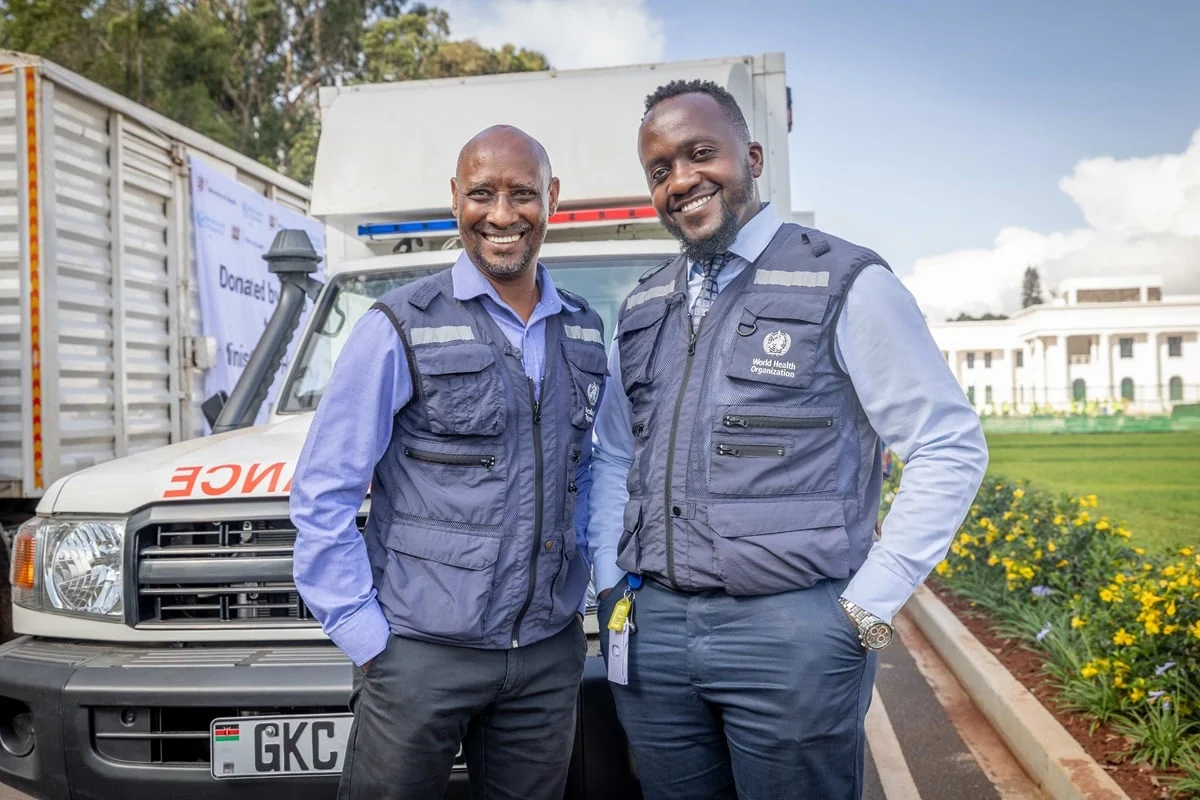
The World Health Organization (WHO) has officially released its comprehensive Results Report for 2025, offering a detailed assessment of global health trajectories at a time of significant transition for the international community. The document, published ahead of the Seventy-ninth World Health Assembly scheduled for May 2026, presents a complex picture of the world’s health landscape. While the organization reports measurable improvements in several key health indicators, it simultaneously warns that severe funding cuts and systemic resource constraints are threatening the long-term sustainability of these gains. As the final evaluation under the Thirteenth General Programme of Work (GPW13), which spanned from 2019 to 2025, the report serves as both a testament to international cooperation and a stark warning about the widening gap between global health ambitions and the financial realities required to achieve them.
The Triple Billion Framework: A Final Assessment of GPW13
The 2025 Results Report centers on the "Triple Billion" targets, a strategic framework established in 2018 to drive measurable impact in three primary areas: ensuring one billion more people benefit from universal health coverage (UHC); ensuring one billion more people are better protected from health emergencies; and ensuring one billion more people enjoy better health and well-being. According to the WHO Secretariat, progress was registered across all three targets, though the degree of success varied significantly depending on regional stability and resource availability.
Under the GPW13 period, the WHO leveraged its technical leadership to standardize health protocols and provide guidance that influenced national policies in nearly every Member State. However, the report’s data-driven analysis shows that approximately half of the 121 specific output indicators—which measure the Secretariat’s performance—were not fully achieved. This shortfall was most pronounced in "emergency-prone and resource-constrained settings," where the dual pressures of local instability and global funding volatility created a "perfect storm" that hampered service delivery.
Universal Health Coverage: Successes in Communicable Diseases vs. NCD Gaps
The push for Universal Health Coverage (UHC) saw its most significant advancements in the management and prevention of communicable diseases. The WHO highlights that expanded access to antiretroviral therapies for HIV and more robust diagnostic and treatment pathways for tuberculosis (TB) saved millions of lives over the 2019–2025 cycle. Furthermore, investments in the health workforce and improvements in basic sanitation helped stem the spread of bacterial infections in several developing economies.
Despite these successes, the report identifies critical "blind spots" in the UHC agenda. Progress in managing non-communicable diseases (NCDs), particularly diabetes and hypertension, has lagged behind. Many health systems remain ill-equipped to handle the chronic, long-term care required for NCDs, which now account for the majority of deaths globally. Additionally, the report notes a troubling decline in measles surveillance and a stagnation in "financial protection"—a metric that tracks how many individuals face catastrophic out-of-pocket health expenditures. As of 2025, millions of people remain one medical emergency away from poverty, suggesting that the "universal" aspect of UHC remains an elusive goal for a significant portion of the global population.
Health Emergencies and the Legacy of the Pandemic Agreement
Protection from health emergencies emerged as a top priority during the GPW13 period, largely due to the unprecedented impact of the COVID-19 pandemic. The 2025 report indicates that global preparedness has improved through the implementation of early warning systems and enhanced laboratory capacities. A pivotal factor in this progress was the adoption of the Pandemic Agreement and the targeted revisions to the International Health Regulations (IHR). These legal frameworks have provided a more structured approach to cross-border health threats, facilitating faster data sharing and more equitable resource distribution.
However, the report cautions that the "last mile" of emergency response remains fraught with difficulty. Polio eradication efforts, particularly in the remaining endemic regions, continue to face operational and security challenges. Moreover, the "polio transition"—the process of integrating polio-funded infrastructure into broader national health systems—has been slowed by financing gaps. The WHO Secretariat noted that while the world is better prepared for a generic pandemic than it was in 2019, specific disease detection and rapid response in conflict zones remain dangerously underfunded.
Better Health and Well-being: Environmental and Behavioral Shifts
The third pillar of the Triple Billion targets, focusing on health and well-being, recorded notable achievements driven by environmental and behavioral interventions. The WHO credits its global guidance and technical tools for assisting Member States in reducing tobacco use and alcohol consumption through stricter regulation and taxation.
On the environmental front, improvements in access to clean household energy, safe water, and improved hygiene (WASH) protocols have contributed to a decline in preventable respiratory and waterborne illnesses. The report also highlights a growing global consensus on air pollution, with more cities adopting WHO-recommended air quality standards. These gains demonstrate the WHO’s "convening power"—its ability to bring together scientists, policymakers, and civil society to address the social and environmental determinants of health.
A Chronology of Global Health: 2019–2025
The timeline of the Thirteenth General Programme of Work (GPW13) reflects one of the most turbulent periods in modern public health history:
- 2019: Launch of GPW13 with a focus on the Triple Billion targets. WHO emphasizes a shift toward "measurable impact" at the country level.
- 2020–2021: The COVID-19 pandemic forces a massive redirection of resources. WHO leads the global response, launching the ACT-Accelerator and COVAX, while maintaining routine health services under extreme pressure.
- 2022: The World Health Assembly agrees to a historic increase in assessed contributions, signaling a commitment to more sustainable financing for the WHO.
- 2023: WHO declares the end of COVID-19 and Mpox as Public Health Emergencies of International Concern (PHEIC), shifting focus toward long-term recovery and pandemic preparedness.
- 2024: Intense negotiations culminate in the adoption of the Pandemic Agreement, aimed at ensuring more equitable responses to future outbreaks.
- 2025: Final year of GPW13. The Results Report confirms that while billions more benefit from health services, the world remains off track for the 2030 Sustainable Development Goals (SDGs).
The Funding Crisis and the Problem of Earmarking
One of the most sobering sections of the 2025 Results Report addresses the WHO’s financial health. While the organization’s total budget has seen nominal increases, a "large share" of this funding remains highly earmarked. Earmarked funds are restricted by donors for specific projects or diseases, leaving the WHO Secretariat with limited flexibility to move resources to where they are most urgently needed or to fund core functions like emergency response and technical standard-setting.
"The global financial landscape is becoming increasingly constrained," the report states. Funding cuts affecting both the WHO and the broader global health sector have led to reduced human resource capacity and a slowing of programme implementation. The WHO Secretariat warned that without "sustained and flexible financing," the gains made over the last six years could easily be reversed. The report advocates for a shift toward "unearmarked" or "thematic" funding, which would allow the organization to allocate resources in alignment with its strategic priorities rather than the specific interests of individual donors.
Official Responses and Director-General’s Statement
Dr. Tedros Adhanom Ghebreyesus, WHO Director-General, emphasized the human impact of the report’s findings while acknowledging the steep climb ahead.
"The Results Report 2025 shows that with support from WHO and partners, countries have delivered tangible benefits for millions of people," Dr. Tedros stated. "At the same time, these gains cannot be taken for granted. Protecting and expanding them will require sustained support and investment, so that together we can continue advancing the vision set out in WHO’s Constitution: the highest attainable standard of health as a right for all."
Diplomatic sources suggest that several Member States from the Global South have expressed concern over the report’s findings regarding the 2030 SDGs. Many of these nations argue that without a significant overhaul of the global financial architecture—including debt relief and increased health aid—the goal of "Health for All" by 2030 will remain out of reach. Conversely, some donor nations have called for even greater transparency and "evidence-based reporting" before committing to further increases in flexible funding.
Implications for the 2030 Agenda
The 2025 Results Report serves as a final "snapshot" before the world enters the final five-year stretch toward the 2030 Sustainable Development Goals. The finding that the world is "off track" for health-related SDGs is a significant admission. It suggests that while the Triple Billion targets provided a useful framework for the WHO’s internal operations, they were insufficient to overcome the broader systemic barriers to global health equity, such as climate change, conflict, and economic instability.
The report’s data-driven approach, featuring clearer prioritization across country, regional, and global levels, is intended to provide a roadmap for the Fourteenth General Programme of Work (GPW14). This next phase will likely focus on "resilient health systems" capable of withstanding both climate-related disasters and future pandemics.
As the Director-General prepares to present the full report to the Seventy-ninth World Health Assembly in May 2026, the international community faces a choice: either commit to the "sustained and flexible financing" the WHO identifies as essential, or accept a world where health gains are fragmented, inequitable, and increasingly vulnerable to the next global crisis. The 2025 Results Report makes it clear that while technical expertise and international agreements are vital, they cannot substitute for the political will and financial investment required to safeguard the health of eight billion people.
