
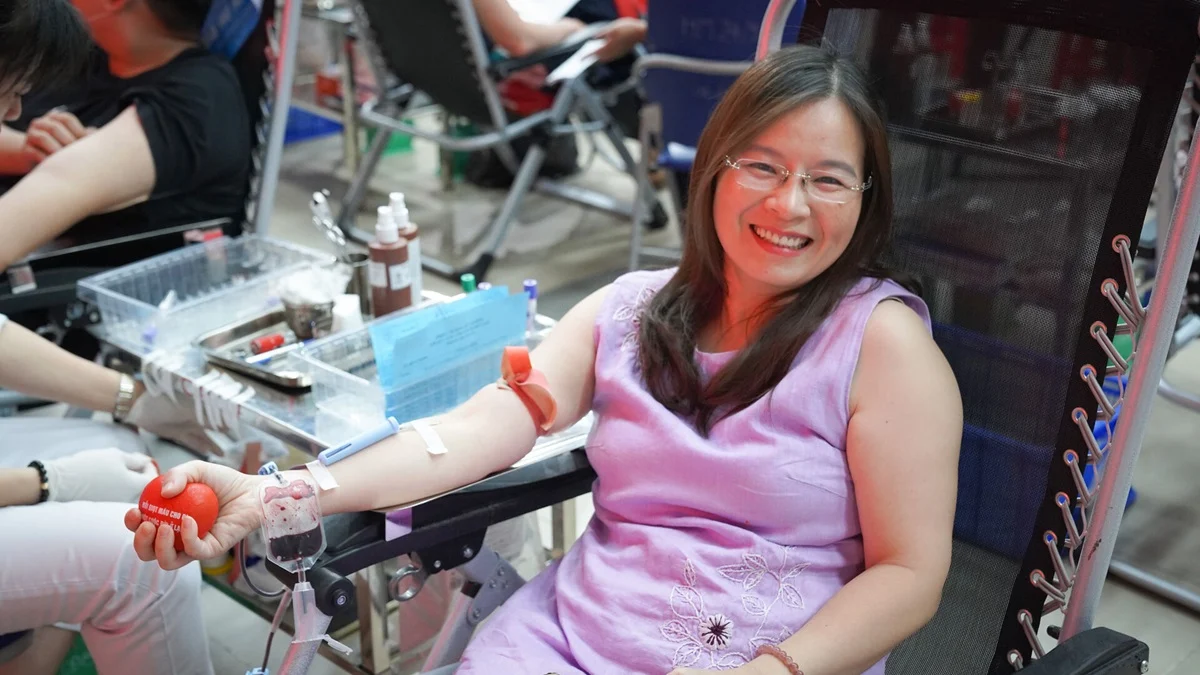
New data released by the World Health Organization (WHO) indicates a decade of sustained progress in the global effort to secure safer blood supplies, yet the findings simultaneously expose a widening chasm in access between high-income and low-income nations. According to the Global Status Report on Blood Safety and Availability 2025, which draws on data from 168 countries covering 97% of the world’s population, global blood collections have surged by nearly 19% between 2013 and 2023. While this growth signals a strengthening of health systems in many regions, the report warns that weaknesses in governance, financing, and regulation continue to leave millions of patients at risk, particularly in the Global South.
The data reveals that voluntary, unpaid donors remain the backbone of the global supply, accounting for more than 85% of the estimated 120 million blood donations recorded in 2023. This shift toward altruistic donation is a critical marker of safety, as voluntary donors are statistically less likely to carry transfusion-transmissible infections compared to family-replacement or paid donors. However, the WHO emphasizes that the "geography of health" remains a primary determinant of survival; where a patient is born often dictates whether they will receive a life-saving transfusion during a medical emergency.
A Decade of Expansion: The Global Chronology of Blood Safety
The period between 2013 and 2023 represents a pivotal era in international health policy regarding blood products. Following the 2013 baseline report, the WHO and its member states intensified efforts to transition away from paid donation systems, which were often linked to higher rates of HIV, Hepatitis B, and Hepatitis C. Over the last ten years, the global community has focused on professionalizing blood services and integrating them into broader Universal Health Coverage (UHC) frameworks.
By 2023, the total volume of blood collected globally reached an all-time high. This expansion was driven by improved donor recruitment strategies and a better understanding of clinical transfusion needs. Despite these logistical victories, the timeline of progress has been uneven. While high-income nations have refined their systems to include advanced pathogen reduction technologies and sophisticated inventory management, many low-income countries are still struggling to establish basic regulatory oversight. The 2025 report serves as a decadal checkpoint, highlighting that while the volume of blood is increasing, the infrastructure required to ensure its safety and equitable distribution has not kept pace in many regions.
The Persistence of Global Inequalities
The most striking revelation in the WHO data is the disproportionate distribution of the global blood supply. High-income countries, which represent only 15% of the global population, currently account for 36% of all blood donations. This disparity creates a "blood-gap" that directly impacts mortality rates for some of the world’s most vulnerable populations.
In low-income countries, blood donation rates remain critically low, with twenty-four nations reporting fewer than 5 donations per 1,000 people. In contrast, the highest-performing nations report up to 53 donations per 1,000 people. This scarcity has dire consequences for maternal and child health. Hemorrhage remains the leading cause of maternal death globally; in many sub-Saharan African and South Asian countries, a lack of available blood products means that a manageable complication during childbirth can quickly become a fatal event. Similarly, children suffering from severe anemia—often a result of malaria or malnutrition—and patients with hemoglobin disorders like sickle-cell disease and thalassaemia face life-threatening shortages.
The report also highlights a socioeconomic divide in donor motivation. In high-income countries, voluntary unpaid donations account for 98.4% of the supply. However, in low-income countries, this figure drops to 63.4%. Many of these nations still rely heavily on "family replacement" donation, where a patient’s relatives are required to provide blood before a procedure can take place. This system is often inefficient and places an undue burden on families during times of medical crisis.
Governance and Regulatory Fragility
Beyond the physical availability of blood, the WHO report raises urgent concerns regarding the legal and regulatory frameworks governing blood systems. Safe blood is not merely a matter of collection; it requires a sophisticated "vein-to-vein" chain of safety that includes screening, processing, storage, and clinical application.
Currently, nearly one-third of the countries surveyed lack specific national legislation to ensure the safety and quality of blood and blood products. This legislative vacuum often leads to a lack of standardization in screening protocols. Furthermore, the report notes that only 64% of countries have systems in place for the regular inspection of blood services, and only 40% have accredited transfusion services. This means that in a significant portion of the world, there is no independent oversight to guarantee that the blood being transfused is free from pathogens or has been stored at the correct temperature.
Sustainability is another major hurdle. More than 14% of countries (1 in 7) reported having no dedicated government budget for blood services or any cost-recovery mechanisms. Without a stable financial foundation, national blood systems remain dependent on erratic donor funding or out-of-pocket payments from patients, the latter of which can lead to catastrophic health expenditures for impoverished families.
Clinical Impact and the Burden of Disease
The lack of a safe and reliable blood supply exacerbates the burden of several chronic and acute conditions. The WHO identifies several key patient groups whose survival is tethered to the efficiency of blood systems:
- Maternal Health: Women experiencing postpartum hemorrhage require immediate access to safe blood. In regions with weak blood systems, maternal mortality remains unacceptably high.
- Pediatrics: Severe childhood anemia, often caused by malaria, is a leading cause of pediatric hospitalizations in the tropics. Rapid transfusion is frequently the only intervention that can prevent death.
- Trauma and Surgery: As road traffic accidents and surgical interventions increase in developing economies, the demand for blood in trauma centers has skyrocketed.
- Chronic Disorders: Patients with sickle-cell disease, thalassaemia, and hemophilia require regular, lifelong transfusions. In many low-income countries, these patients suffer from reduced quality of life and shortened lifespans due to intermittent blood availability.
- Oncology: Modern cancer treatments, including chemotherapy, often suppress bone marrow function, making blood and platelet transfusions essential components of oncological care.
Official Responses and Policy Recommendations
Dr. Tedros Adhanom Ghebreyesus, WHO Director-General, emphasized that the current disparities are a matter of global injustice. "No one should die because safe blood is unavailable when it is needed," Dr. Tedros stated. He lauded the generosity of voluntary donors but called on governments to treat blood systems as a core component of national health security rather than a peripheral service.
In response to the findings, the WHO has outlined a series of urgent recommendations for member states and international partners. The organization calls for the immediate strengthening of national regulatory authorities to oversee blood safety. It also advocates for the expansion of Quality Assurance (QA) programs and the implementation of hemovigilance systems—surveillance tools that track adverse reactions and errors throughout the transfusion process.
Experts in the field of transfusion medicine suggest that the path forward must involve the integration of blood services into national health insurance schemes to ensure financial sustainability. There is also a growing push for the development of local capacity to produce Plasma-Derived Medicinal Products (PDMPs), such as immunoglobulins and clotting factors, which are currently almost exclusively produced in high-income countries and are prohibitively expensive for much of the world.
Looking Ahead: World Blood Donor Day and Beyond
The release of this dataset serves as a prelude to World Blood Donor Day on June 14. The 2024-2025 campaign, themed "One Drop of Humanity. Give Blood. Save Lives," aims to revitalize global interest in voluntary donation. The campaign serves as a reminder that blood is a finite, perishable resource that cannot be manufactured; it can only come from the generosity of another human being.
As the global health community looks toward 2026—which the WHO has designated as a year to highlight science as the foundation of health—the focus on blood safety will likely shift toward technological innovation. This includes the use of digital tools for donor recruitment and retention, as well as the implementation of more efficient cold-chain logistics to prevent wastage.
However, the WHO’s message remains clear: technology and science can only go so far without political will. The "One Drop of Humanity" campaign is not just a call to donors, but a call to leaders to invest in the infrastructure that makes those donations meaningful. To achieve universal access to safe blood, the world must address the structural inequalities that currently allow a person’s zip code to determine their access to the "gift of life." The progress of the last decade proves that improvement is possible, but the gaps remaining in 2025 demonstrate that the journey toward global health equity is far from over.
