
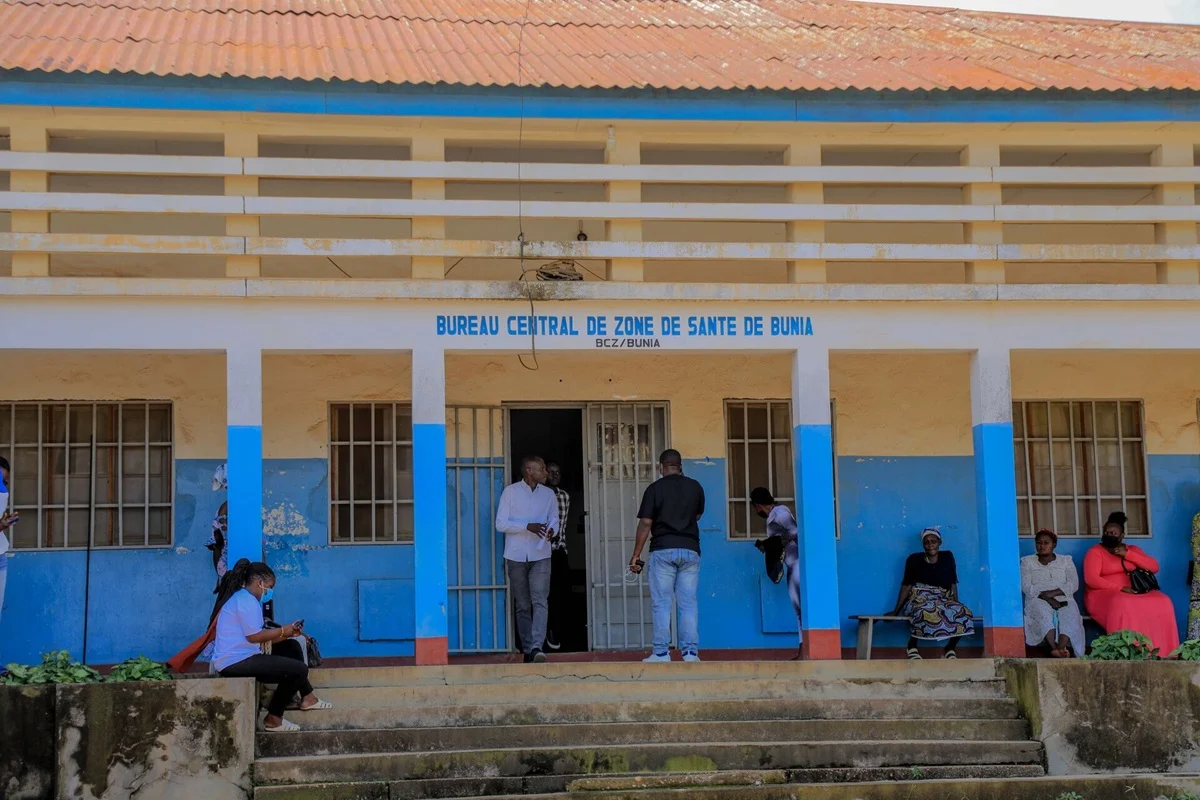
The World Health Organization (WHO) has officially released its first comprehensive set of clinical guidelines for the management of filovirus diseases, marking a pivotal moment in the global response to some of the world’s most virulent pathogens. This landmark document arrives as the Democratic Republic of the Congo (DRC) continues to grapple with a new outbreak of Ebola disease specifically caused by the Bundibugyo virus. By synthesizing decades of clinical data and lessons learned from past emergencies, the WHO aims to standardize care across the globe, focusing on early intervention and holistic patient support to drastically reduce the high mortality rates historically associated with these viruses.
Filoviruses, which include the various strains of Ebola and Marburg, represent a significant threat to global health security. These diseases are characterized by high transmissibility in healthcare and community settings and have case fatality rates (CFR) that can soar as high as 90% in the absence of rapid medical intervention. The new guidelines, which outline 16 specific evidence-based recommendations, emphasize that while specialized treatments and vaccines are critical, the foundation of survival lies in optimized supportive care. This approach is particularly vital for strains like Bundibugyo and Marburg, for which there are currently no widely licensed vaccines or specific antiviral therapeutics.
The Current Landscape: The Bundibugyo Outbreak in the DRC
The timing of this release is directly influenced by the ongoing epidemiological situation in the Democratic Republic of the Congo. The DRC is a region that has become tragically familiar with filovirus outbreaks, having faced more Ebola events than any other nation. The current emergence of the Bundibugyo virus—a relatively rarer strain of Ebola—highlights the unpredictable nature of these pathogens. Unlike the Zaire ebolavirus, which saw the development of effective vaccines (such as Ervebo) and monoclonal antibody treatments (like Inmazeb and Ebanga) during the 2014–2016 and 2018–2020 outbreaks, the Bundibugyo and Sudan strains lack similar pharmaceutical countermeasures.
In such contexts, the WHO’s new guidelines serve as a primary tool for frontline workers. By focusing on "person-focused" medical care, the guidelines aim to preserve human dignity while utilizing aggressive supportive measures to keep patients alive long enough for their own immune systems to fight the virus. The WHO’s intervention in the DRC is not merely about containment but about elevating the standard of clinical practice to ensure that every patient, regardless of the virus strain, receives the best possible chance at recovery.
A Chronology of Filovirus Emergence and Outbreaks
To understand the necessity of these guidelines, one must look at the history of filovirus outbreaks, which have recurred with increasing frequency over the last half-century. Since the discovery of the Marburg virus in 1967, there have been 72 documented outbreaks of Ebola and Marburg diseases across the African continent.
The timeline begins in 1967, when laboratory workers in Marburg and Frankfurt, Germany, as well as in Belgrade, Serbia, were exposed to infected green monkeys imported from Uganda. This led to the identification of the Marburg virus, the first known filovirus. For several years, these diseases were considered rare and isolated incidents. However, in 1976, the world witnessed the simultaneous emergence of the Ebola virus in two distinct locations: Yambuku, in what was then Zaire (now the DRC), and Nzara, in Sudan. These two events identified the Zaire ebolavirus and the Sudan ebolavirus, respectively.
The late 20th and early 21st centuries saw sporadic but deadly outbreaks, including the 1995 Kikwit outbreak in the DRC and the 2000 Gulu outbreak in Uganda. The trajectory of filovirus management changed forever in 2014 with the West African Ebola epidemic. Spanning Guinea, Liberia, and Sierra Leone, this was the largest and most complex Ebola outbreak since the virus was first discovered, resulting in over 11,000 deaths. This crisis accelerated research into vaccines and treatments but also exposed massive gaps in clinical care standards and health system resilience.
More recently, in 2023, Marburg virus outbreaks in Equatorial Guinea and Tanzania further underscored the continental threat. Each of these events has provided a data point that the WHO has now consolidated into the current 16-point clinical framework.
Analyzing the 16 Evidence-Based Recommendations
The core of the new WHO guidelines is a shift from reactive crisis management to a proactive, standardized clinical approach. While the full technical manual covers extensive medical territory, the 16 recommendations focus on several critical pillars of care:
1. Early Recognition and Rapid Referral
The guidelines stress that the window for effective intervention is narrow. Health systems must be trained to recognize the early, non-specific symptoms of filovirus disease—such as fever, fatigue, and muscle pain—to ensure patients are moved to specialized Ebola Treatment Units (ETUs) before they reach the stage of multi-organ failure.
2. Aggressive Fluid Management and Shock Prevention
One of the primary causes of death in Ebola and Marburg patients is hypovolemic shock caused by severe diarrhea, vomiting, and vascular leakage. The WHO now provides standardized protocols for intravenous and oral rehydration, tailored to the patient’s specific level of dehydration and electrolyte imbalance.
3. Monitoring and Managing Clinical Deterioration
The guidelines advocate for the use of systematic monitoring tools to track vital signs and organ function. By identifying signs of clinical deterioration early, such as respiratory distress or neurological changes, healthcare providers can intervene with oxygen therapy or other life-saving measures more effectively.
4. Holistic and Psychological Support
Recognizing that filovirus diseases cause immense psychological trauma and social stigma, the guidelines integrate mental health and psychosocial support as a standard part of clinical care. This includes ensuring patients can communicate with their families and providing counseling for survivors.
5. Post-Recovery Follow-Up
The "post-Ebola syndrome," characterized by joint pain, vision problems, and mental health challenges, is now a recognized clinical entity. The guidelines mandate structured follow-up care for survivors to manage long-term sequelae and monitor for potential viral persistence in certain body fluids.
Supporting Data: The Impact of Standardized Care
Data from recent outbreaks suggest that the implementation of standardized supportive care can have a transformative effect on survival rates. During the 2014–2016 outbreak, CFRs in some rural areas reached 70–90%. However, in settings where "optimized" supportive care was provided—including early fluid resuscitation and electrolyte correction—the CFR was often reduced to below 40%.
The economic data also highlights the necessity of these guidelines. The World Bank estimated that the West African Ebola epidemic resulted in a loss of $2.2 billion in GDP for the three most affected countries. By providing a blueprint for rapid and effective clinical management, the WHO aims to reduce the duration and severity of outbreaks, thereby mitigating the devastating socio-economic disruptions that follow these health emergencies.
Official Responses and Global Leadership
WHO Director-General Dr. Tedros Adhanom Ghebreyesus emphasized that these guidelines represent a synthesis of science and compassion. “These new guidelines are a perfect example of how WHO leverages science to better protect and care for people during outbreaks and health emergencies,” Dr. Tedros stated. He further noted that the current situation in the DRC serves as a “stark reminder” of the need for medical care that is both diligent and human-focused.
The development of these guidelines involved a massive collaborative effort, including global expert consultations in locations like Brazzaville, Congo. This process ensured that the recommendations were not just theoretically sound but practically applicable in the resource-limited settings where filovirus outbreaks most frequently occur.
Health facility administrators and policy makers are being urged to integrate these recommendations into their national preparedness plans. The WHO argues that high-quality care is not a luxury but a fundamental right, even in the midst of a biological crisis.
Broader Implications for Global Health Security
The release of these guidelines has implications that extend beyond the management of Ebola and Marburg. They represent a significant step forward in the global "One Health" strategy, which recognizes the interconnection between human, animal, and environmental health. Since filoviruses are zoonotic—originating in animal populations such as fruit bats—the ability to manage the human spillover effectively is a critical component of preventing future pandemics.
Furthermore, the guidelines establish a "pre-requisite" for clinical research. By standardizing the "background" care that all patients receive, researchers can more accurately measure the efficacy of new antiviral drugs or vaccines during clinical trials. Without a standard baseline of supportive care, it is difficult to determine if a patient survived because of a new drug or simply because they were well-hydrated.
As the world looks toward 2026, the theme of World Health Day—"Together for health. Stand with science"—underscores the WHO’s commitment to using scientific evidence as the shield against global health threats. These guidelines are the embodiment of that mission, providing a clear, actionable path for health workers who find themselves on the front lines of some of the most dangerous outbreaks on earth.
In conclusion, the WHO’s first comprehensive guidelines for filovirus disease management offer more than just medical instructions; they offer a framework for resilience. By prioritizing early supportive care, harmonizing clinical approaches, and addressing the psychological needs of patients, the global health community is now better equipped to turn the tide against Ebola and Marburg, ensuring that an outbreak does not necessarily mean a death sentence for those affected.
