
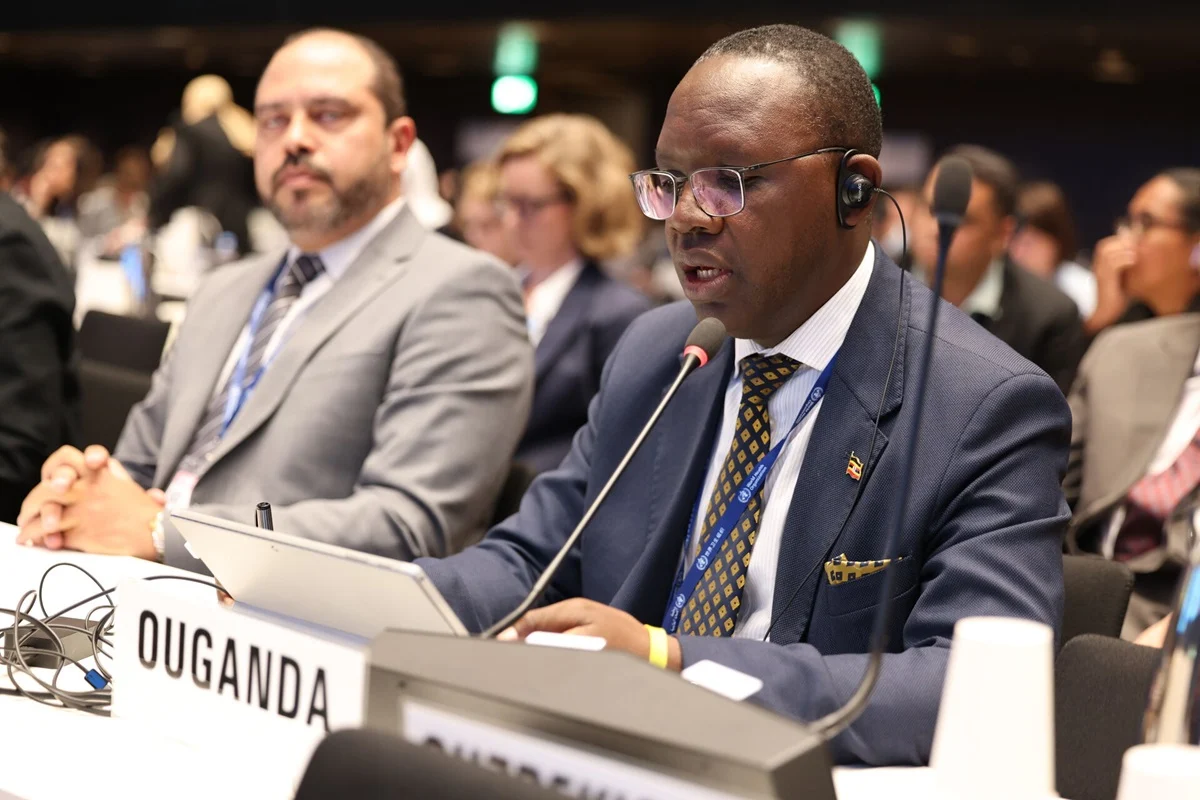
The 79th World Health Assembly (WHA) officially commenced its high-level proceedings in Geneva, centered on the pivotal theme, Reshaping global health: a shared responsibility. The assembly opened with a comprehensive report from Director-General Dr. Tedros Adhanom Ghebreyesus, who outlined the state of global health and the progress of the World Health Organization (WHO) over the past year. However, the defining moment of the early sessions was the formal decision by Member States to extend negotiations on the Pathogen Access and Benefit Sharing (PABS) system, a cornerstone of the proposed WHO Pandemic Agreement. This extension underscores the complexities of balancing equitable access to medical countermeasures with the rapid sharing of pathogen data, a tension that has defined global health diplomacy in the post-COVID-19 era.
The PABS Annex: A Critical Deadline Extended
The World Health Assembly reached a consensus to continue the drafting and negotiation of the Pathogen Access and Benefit Sharing (PABS) Annex under the mandate of the Intergovernmental Working Group (IGWG). Article 12 of the WHO Pandemic Agreement identifies the PABS system as a vital mechanism for ensuring that the global community is better prepared for future pandemics. The goal is to create a legal framework where countries share information about emerging pathogens in exchange for guaranteed, equitable access to the vaccines, diagnostics, and treatments that result from that data.
Despite a year of intensive negotiations, Member States determined that more time is required to finalize the technical and political nuances of the Annex. The Assembly agreed to submit the final outcome for consideration by the 80th World Health Assembly in May 2027. Provisions were also made for a dedicated special session of the Assembly in 2026 should a consensus be reached earlier. This delay is significant because the adoption of the PABS Annex is a prerequisite for the opening of the full WHO Pandemic Agreement for signature. Negotiations are scheduled to resume at the seventh meeting of the IGWG, which will take place from July 6 to July 17, 2026.
Ten Years of the WHO Health Emergencies Programme
On the sidelines of the formal assembly, global health leaders gathered for a strategic roundtable to commemorate the tenth anniversary of the WHO Health Emergencies Programme (WHE). Established in 2016 following the devastating Ebola outbreak in West Africa, the WHE was designed to provide the WHO with operational capabilities to respond rapidly to crises.
Dr. Chikwe Ihekweazu, Executive Director of the WHE, opened the session by noting that the program’s evolution has been a direct response to the lessons learned from successive emergencies. Dr. Tedros Adhanom Ghebreyesus characterized the COVID-19 pandemic as the “ultimate stress test,” one that revealed profound vulnerabilities in global preparedness, particularly regarding equity and the erosion of public trust.
Dr. Mike Ryan, the former Executive Director of the WHE and a veteran of global health crises, provided a historical perspective on the program’s necessity. He argued that for decades, global health systems have been reactive, evolving only after catastrophe strikes—citing SARS in 2003, the H1N1 influenza in 2009, and Ebola in 2014. He emphasized that the current era demands a proactive shift, where systems are built to withstand threats before they escalate into global disasters.
Expert Analysis on Intelligence, Finance, and Access
The strategic roundtable featured contributions from leading global health experts who identified three critical pillars for the next decade of emergency response: epidemic intelligence, sustainable financing, and equitable access to countermeasures.
Professor Johanna Hanefeld of the Robert Koch Institute highlighted the transition into a new era of "epidemic intelligence." She noted that while advanced analytics and Artificial Intelligence (AI) offer unprecedented tools for predicting and monitoring outbreaks, these technologies are ineffective without robust national surveillance systems and, most importantly, public trust. Data, she argued, is only as useful as the community’s willingness to act upon it.
The issue of financing remains a perennial challenge. Dr. Daniela Garone, International Medical Coordinator for Médecins Sans Frontières (MSF), warned that the world remains trapped in a cycle of "panic and neglect." She stressed that relying on reactive, ad-hoc funding during an emergency limits the effectiveness of preparedness. Sustainable, flexible financing mechanisms must be established to ensure that low- and middle-income countries can maintain core health functions during a crisis without diverting funds from routine care.
Furthermore, Dr. John-Arne Røttingen, CEO of the Wellcome Trust, addressed the "end-to-end" approach to medical countermeasures. He pointed out that scientific breakthroughs, such as the rapid development of mRNA vaccines, do not automatically translate into global health security. Without a pre-negotiated framework for equitable distribution—the very core of the PABS negotiations—scientific progress risks benefiting only the wealthiest nations, leaving the rest of the world vulnerable.
Committee A: Conflict, Lebanon, and International Health Regulations
While the roundtable focused on the long-term future, Committee A of the WHA addressed immediate and ongoing crises. Delegates reviewed the implementation of the International Health Regulations (2005), the legal framework that governs how countries must report and respond to public health events of international concern. The Independent Oversight and Advisory Committee for the WHE also presented its report, offering a candid assessment of the WHO’s performance in recent months.
A significant portion of the discussion in Committee A was dedicated to the health impact of the ongoing conflict in the Middle East. Delegates expressed grave concerns regarding the protection of healthcare infrastructure and the safety of health workers in conflict zones. The assembly noted a disturbing trend in the normalization of attacks on hospitals and ambulances, which violates international humanitarian law.
In response to the deteriorating situation in the Levant, the Committee adopted a draft decision specifically addressing the health emergency in Lebanon. This decision calls for increased international support to stabilize the Lebanese healthcare system, which is currently struggling under the weight of economic collapse and the influx of displaced persons, further exacerbated by regional hostilities.
Country Perspectives: Ethiopia and the Central African Republic
The assembly also served as a platform for Member States to share how global policies are being implemented on the ground. Dr. Mekdes Daba Feyssa, Ethiopia’s Minister of Health, detailed how the COVID-19 pandemic served as a catalyst for national health investment. Ethiopia leveraged emergency funding to build a robust network of laboratories and oxygen production systems, which have since been utilized to manage outbreaks of cholera and measles.
In the Central African Republic (CAR), Minister Dr. Pierre Somsé highlighted the importance of the Universal Health and Preparedness Review (UHPR). This mechanism involves a voluntary, peer-led review of a country’s preparedness capacities. Dr. Somsé explained that the UHPR has helped CAR align its technical health goals with political will and community engagement, ensuring that preparedness is not just a top-down government initiative but a collective societal effort.
Chronology of Global Health Governance (2014–2026)
To understand the weight of the decisions made at the 79th WHA, one must look at the timeline of events that led to this moment:
- 2014–2016: The West Africa Ebola outbreak reveals the WHO’s lack of operational capacity, leading to the creation of the WHO Health Emergencies Programme (WHE).
- 2020–2023: The COVID-19 pandemic kills millions and causes global economic upheaval, exposing the "vaccine apartheid" and the failures of the International Health Regulations to ensure rapid data sharing and equitable access.
- December 2021: A Special Session of the World Health Assembly establishes the Intergovernmental Negotiating Body (INB) to draft a global pandemic treaty.
- 2024–2025: Negotiations intensify on the Pandemic Agreement, but deadlocks emerge between the Global North and Global South over intellectual property and pathogen sharing.
- May 19, 2026: The 79th WHA formally decides to extend PABS negotiations to 2027, acknowledging that a "rushed agreement" might fail to provide the equity required for true global security.
Implications and the Road to 2027
The decision to extend the PABS negotiations reflects a cautious but necessary approach to global health governance. While the delay may be seen by some as a setback, proponents argue that it provides a crucial window to resolve the "grand bargain" of the pandemic accord: the exchange of biological data for equitable access to life-saving technology.
The next twelve months will be critical for the IGWG and the WHO Secretariat. The upcoming meeting in July 2026 will need to address the specific language of Article 12, focusing on the percentages of vaccine production to be set aside for the WHO during a pandemic and the legal obligations of pharmaceutical companies that use PABS-derived data.
As the 79th World Health Assembly continues its deliberations, the underlying message remains clear: the lessons of COVID-19 have been learned, but the political and economic structures required to prevent a repeat of that tragedy are still being built. The theme of "shared responsibility" is no longer just a slogan; it is the difficult, ongoing work of nearly 200 nations attempting to forge a safer, more equitable world. The success of the WHE over the past decade provides a blueprint for operational success, but the finalization of the Pandemic Agreement will determine if the world has the collective will to ensure that "never again" becomes a reality.
