
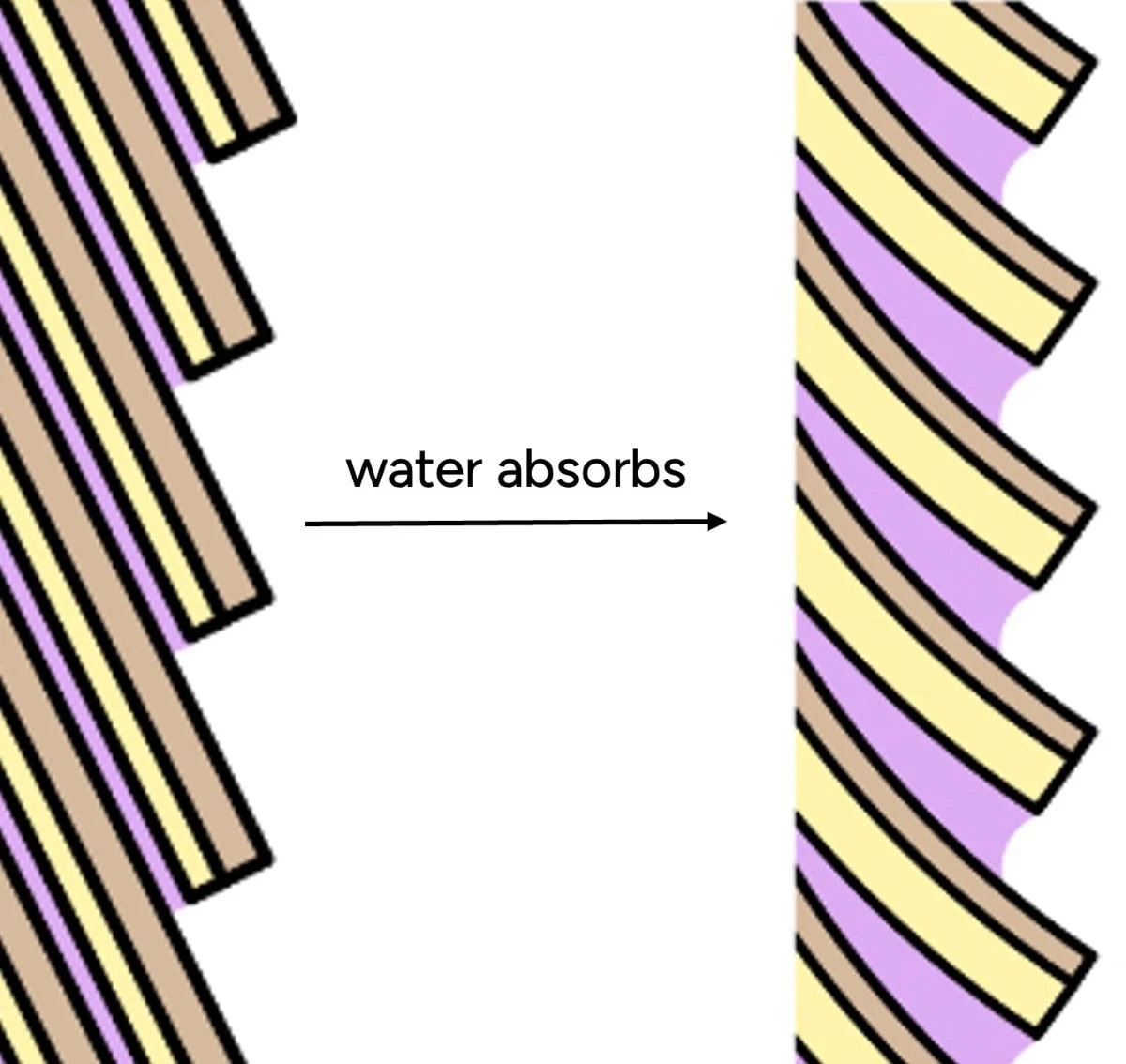
The pervasive notion that "hydrated hair" is inherently desirable, heavily promoted by the global haircare industry, stands in stark contrast to a complex scientific reality. While countless products promise to infuse hair with moisture, a segment of hair experts, including scientists, paradoxically contends that water is detrimental, causing damage. Neither extreme fully encapsulates the intricate relationship between water and hair, a subject riddled with misconceptions stemming from marketing, public perception, and even some within the scientific community. A deeper understanding of this interaction, however, is crucial for effective haircare and informed consumer choices.
The Enduring Myth of "Hydrated Hair" and Industry Context
For decades, the beauty industry has championed "hydration" as the cornerstone of healthy, soft, and smooth hair. This narrative is so deeply entrenched that it has become a universal expectation for haircare products, influencing billions in consumer spending annually. This marketing approach often simplifies the nuanced science, presenting a straightforward solution to perceived "dryness." Industry discussions, as observed in scientific lectures and conferences, reveal a pragmatic approach where the complexity of water’s role is often intentionally obscured to align with consumer beliefs and sales objectives. Reports indicate that cosmetic scientists have, at times, been advised against challenging these ingrained perceptions, fearing that doing so would alienate consumers and drive them towards competitor products that uphold the popular "hydration" myth. This commercial imperative has fostered a widespread misunderstanding that necessitates a thorough scientific debunking, emphasizing the disconnect between consumer language and scientific terminology in the cosmetic sector.
Water’s Interaction with Hair Bonds: The Molecular Foundation
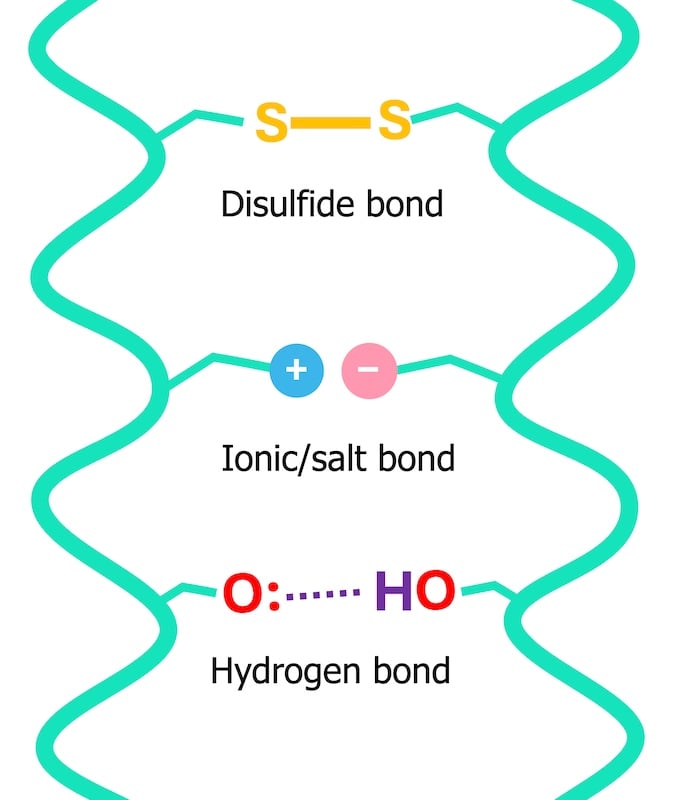
To grasp water’s actual influence on hair, one must first comprehend the fundamental structure of hair and its molecular bonds. Hair fibers are primarily composed of proteins, specifically keratin, which are held together by various types of bonds that dictate hair’s strength and shape. These bonds fall into two main categories:
- Permanent Bonds (Disulfide Bonds): These strong covalent bonds are largely responsible for hair’s inherent strength and natural curl pattern. They are not easily broken by water alone.
- Temporary Bonds (Hydrogen and Ionic Bonds): These weaker, non-covalent bonds form between adjacent protein strands. They are crucial for hair’s flexibility and ability to hold a style, as they are easily broken by water or heat and readily reform as hair dries or cools.
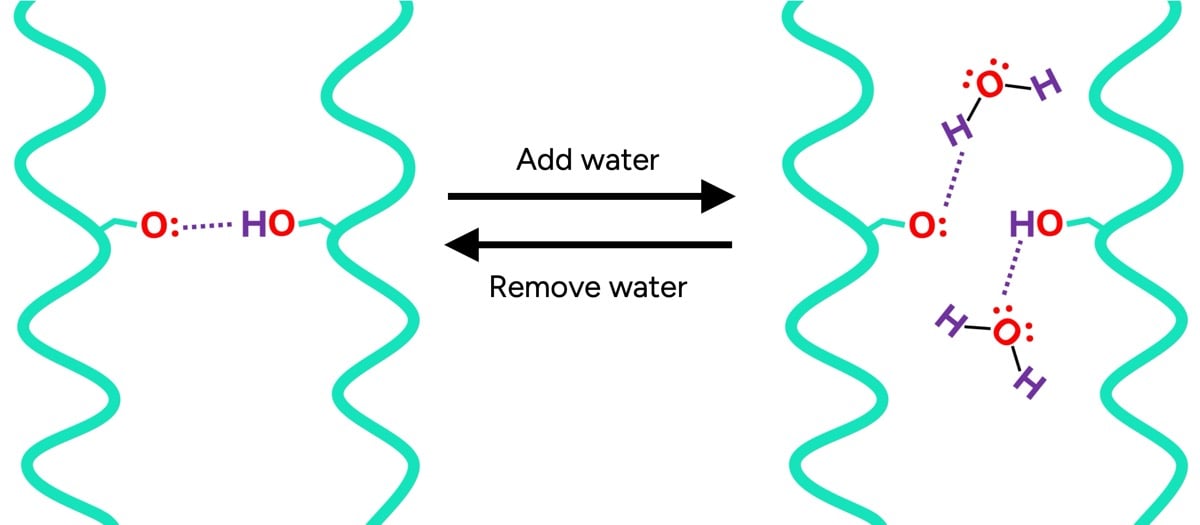
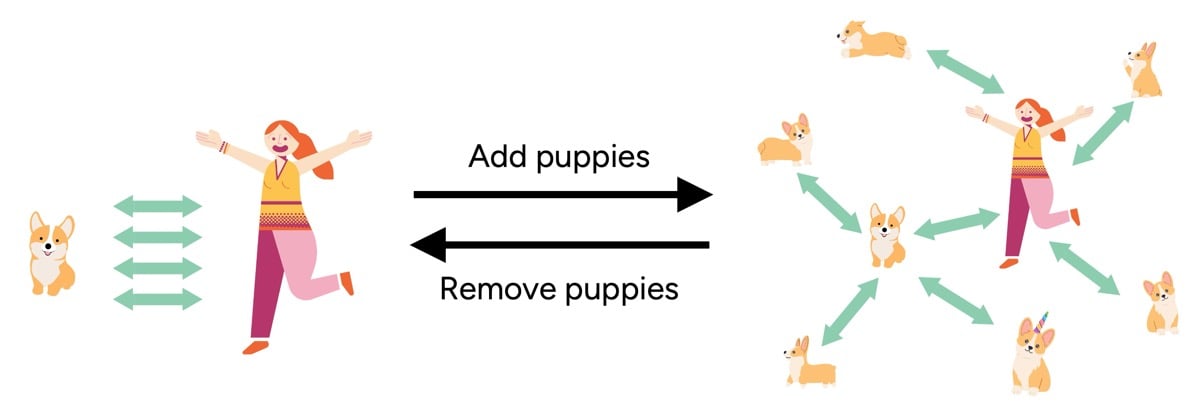
The internal structure of hair, particularly the cortex—the primary bulk of the hair fiber—is highly responsive to water. In dry hair, numerous temporary hydrogen bonds form between adjacent protein strands, effectively "holding hands" at a molecular level, contributing to hair’s rigidity and strength. However, when water is introduced, these protein-protein hydrogen bonds are disrupted. Water molecules, being highly polar, readily form their own hydrogen bonds with the hair proteins. This leads to a scenario where hair proteins begin "holding hands" with water molecules instead of primarily with each other. Consequently, wet hair possesses significantly fewer internal protein-protein bonds, rendering its structure weaker and more pliable. This molecular exchange explains why wet hair can stretch more easily but is also more susceptible to mechanical damage.
The Detangling Conundrum: Hair Type and Mechanical Stress
The differential in temporary bonding due to water content directly impacts hair’s mechanical properties. Dry hair, with its abundant internal bonds, exhibits greater stiffness and is more brittle. Conversely, wet hair, with fewer protein-protein bonds, becomes notably stretchier and more elastic. This increased elasticity, however, comes at the cost of reduced tensile strength—it can stretch further but breaks more easily under tension.
This dual effect leads to a critical distinction in detangling practices based on hair type:
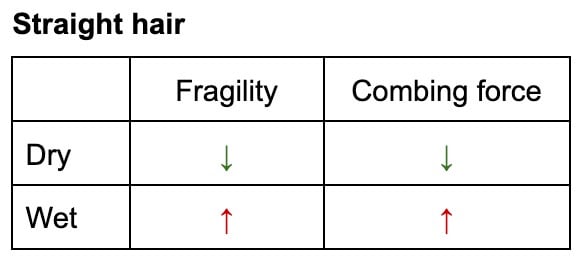
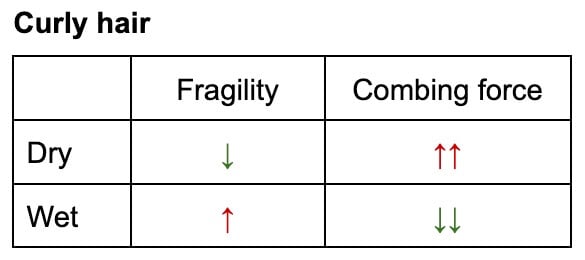
- Straight Hair: For straight hair, detangling when wet is generally more damaging. Although wet hair is more elastic, its reduced tensile strength makes it weaker. Furthermore, water increases friction between individual strands, causing them to adhere more closely. The combination of reduced strength and heightened friction makes wet detangling an abrasive process for straight hair, significantly increasing the likelihood of breakage and cuticle damage.
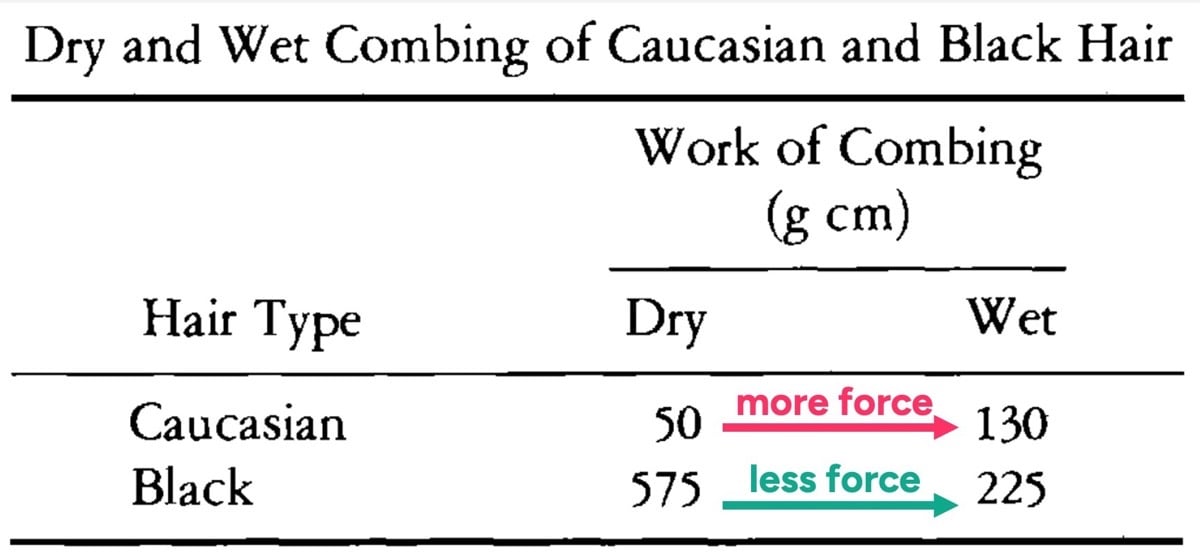
- Curly and Coily Hair: In contrast, wet detangling is often less damaging for curly and coily hair types. While the hair strands are still weaker when wet, the presence of water helps to loosen the hair’s natural curl pattern, reducing the inherent resistance and entanglement common in dry curls. This allows for easier glide during combing, resulting in less overall force and, consequently, less damage to the hair structure.
Research, such as the 1983 study by J. Epps and L.J. Wolfram published in the Journal of the Society of Cosmetic Chemists, illustrated how combing forces differ significantly with hair type and humidity levels. Their findings highlighted that even ambient humidity can influence hair’s susceptibility to damage during mechanical manipulation. The consensus among hair scientists and stylists is that irrespective of whether detangling occurs wet or dry, the application of a high-quality conditioner is paramount. Conditioners create a smoother, more lubricated surface, reducing friction and minimizing the force required to detangle, thereby mitigating potential damage.
Sensory Deception: Why "Dry" Hair Feels "Hydrated"
One of the most counterintuitive aspects of hair science is the disconnect between perceived "hydration" and actual water content. Hair that is perceived by consumers as soft, smooth, and "healthy"—qualities typically associated with "hydrated" hair—actually possesses lower internal water content than hair that feels rough, "dry," and damaged.
A seminal study, reported by T. Evans in Cosmetics & Toiletries (2013), involved 50 participants evaluating hair samples with varying water content. The overwhelming majority perceived the hair with less water as more moisturized, smoother, less tangled, and less damaged. This phenomenon can be explained by examining the hair’s outermost layer: the cuticle.
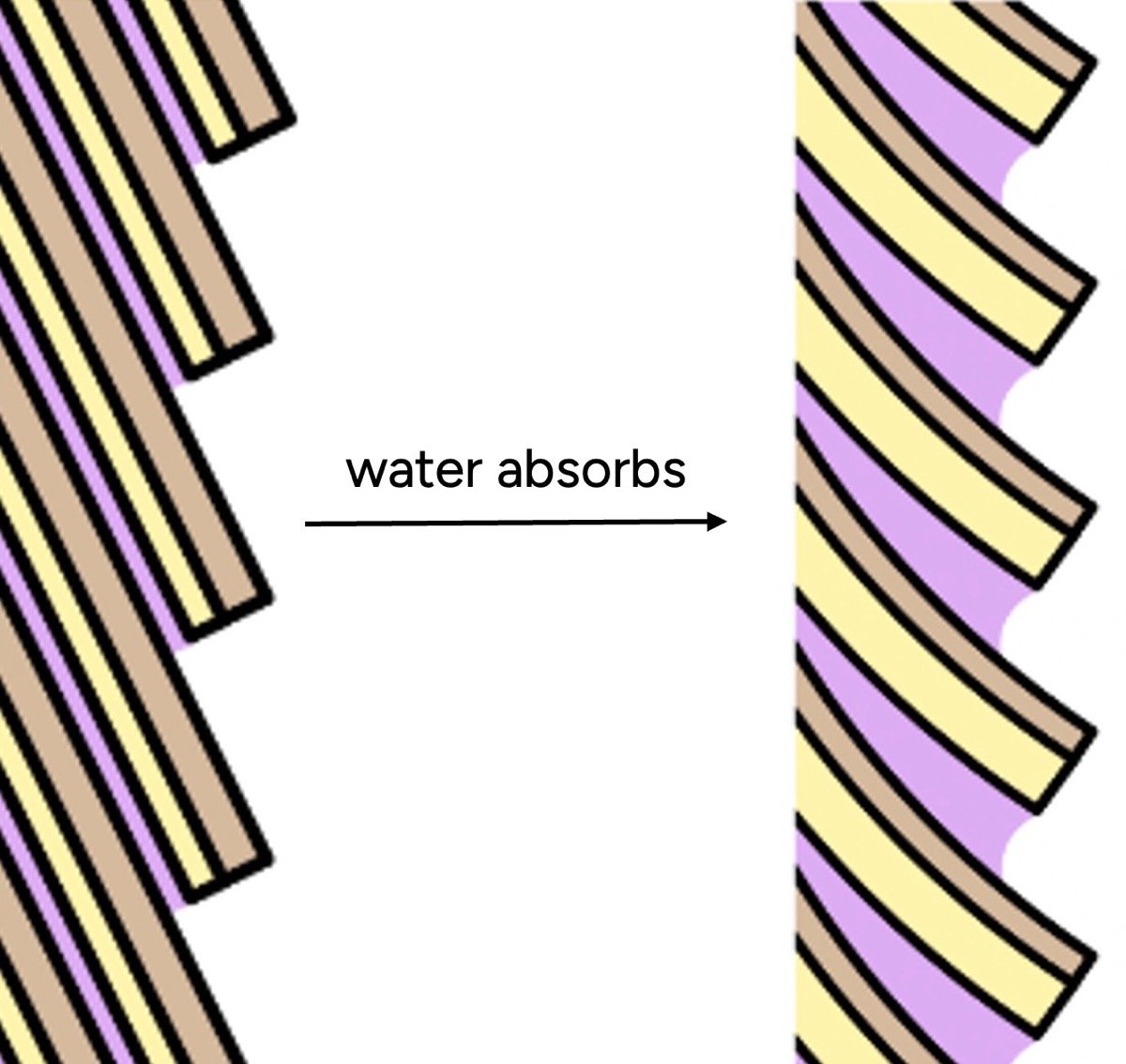
The cuticle consists of overlapping, scale-like cells that, in healthy, dry hair, lie relatively flat, contributing to a smooth, reflective surface. When hair absorbs water, these cuticle scales swell. Crucially, this swelling is uneven. The underside of each scale (the endocuticle) and the intercellular "glue" (the cell membrane complex) absorb significantly more water than the outer, more resilient layers. This differential swelling causes the cuticle scales to lift and protrude, creating a microscopically bumpy and rough surface. Furthermore, water itself is inherently sticky due to surface tension, increasing friction between hair strands (a principle we use when wetting fingers to grip objects more effectively). Therefore, hair with higher water content presents a rougher, grippier surface, which our brains interpret as "dry" or "damaged"—a perception that fundamentally contradicts the conventional understanding of "hydration."
The True Mechanism of "Hydrating" Products
Given this scientific reality, how do products marketed as "hydrating" actually function? Predominantly, these products operate as sophisticated conditioners. Conditioners are formulated with oily ingredients such as silicones, fatty alcohols, emollients, and polymers. These ingredients deposit a thin, lubricating film on the hair cuticle. This film serves to smooth down the raised cuticle scales, creating a flatter, more uniform surface. By reducing microscopic roughness and friction, conditioners make hair feel smooth, soft, and less tangled—the very attributes consumers associate with "hydration."
Undamaged hair naturally possesses a protective outer layer known as the F-layer (18-methyleicosanoic acid), a covalently bonded fatty acid layer that provides natural lubricity and hydrophobicity. Damage to hair, whether from chemical treatments, heat styling, or environmental exposure, often compromises this F-layer. Conditioners effectively work by mimicking and restoring these protective and smoothing properties, rather than by directly "hydrating" the hair in the literal sense of increasing its water content for a beneficial structural effect.
The Post-Wash Refresh: Beyond Simple Hydration
Many consumers observe that their hair feels significantly better, more manageable, and appears healthier after a full wash and conditioning routine compared to merely applying a leave-in product. This improvement, while often attributed to "hydration," is a multifaceted process involving several key mechanisms:
- Enhanced Conditioner Distribution: Water acts as an excellent vehicle for spreading conditioning ingredients evenly across the hair shaft. A thorough rinse-off conditioner, applied to wet hair, can coat the strands more uniformly than a leave-in product applied to partially dry hair, leading to superior smoothing and protection.
- Shape Resetting and Temporary Bond Disruption: Water is remarkably effective at resetting the hair’s shape. This is evident when washing hair removes heat styling or when humidity causes a meticulously styled coiffure to revert. Hair styling, whether with heat or mechanical means, creates new temporary bonds between keratin proteins. Water, through its interaction with these bonds, can break them down, allowing the hair’s permanent disulfide bonds to guide it back to its natural configuration. A complete wash, involving warm water and surfactants (shampoo), maximizes the disruption of these temporary bonds, rendering the hair highly pliable and receptive to new styling.
- Curl Clump Formation (for Curly/Coily Hair): For curly and coily hair, water plays an additional crucial role in facilitating strand alignment and curl definition. The surface tension of water causes individual wet hair strands to adhere to one another, a process known as self-assembly. This "zipping" action helps form larger, more defined curl clumps. These well-aligned clumps, when dry, present a larger, smoother surface area to the touch, transferring heat more efficiently and feeling colder and smoother. This sensory experience is often misconstrued as "hydration," similar to how a smooth, dense fabric like satin feels cooler than rougher cotton.
- Microscopic Cuticle Reset: Rapid or uneven drying, particularly with high heat, can cause the cuticle scales to shrink disproportionately or buckle, leading to a rough, uneven surface. Similarly, mechanical stretching (even as little as 15% elongation) can induce this buckling, as detailed in research by M. Gamez-Garcia (2021). Soaking hair in water and allowing it to dry naturally can help reset these buckled scales, restoring a smoother cuticle surface. This restorative effect contributes to the improved feel after washing.
It is critical to note that none of these beneficial effects are solely about increasing the amount of water retained within the hair for a sustained "hydrated" state. Instead, they highlight water’s dynamic role as a transient agent that facilitates molecular and structural transformations, which then allow for improved conditioning and styling outcomes as the hair dries.
The Ideal Water Content: A Delicate Balance
Much like skin, hair thrives within a specific range of water content—a "sweet spot" that optimizes its physical properties. Skin that is overly saturated, such as after prolonged immersion in a bath, becomes fragile and prone to crumbling. Conversely, excessively dry skin turns stiff and susceptible to cracking. Hair exhibits a similar equilibrium, though with distinct characteristics.
While wet hair is weaker and rougher due as previously described, hair with too little water also suffers adverse effects:
- Increased Static Electricity: In low-humidity environments (e.g., arid climates, airplanes), hair’s ability to conduct and dissipate electrical charges is reduced. This leads to a build-up of static electricity when hair rubs against other materials, resulting in flyaways and frizz. Water, being a polar molecule, helps to spread out and neutralize these static charges.
- Brittleness and Reduced Shock Absorbency: Severely dry hair, characterized by an abundance of internal protein-protein bonds, becomes excessively rigid and brittle. This lack of flexibility compromises its ability to absorb mechanical shocks, such as those from brushing or styling. The consequence is the formation of microscopic cracks that, over time, propagate and lead to hair breakage. This phenomenon is readily observed with fingernails, which are composed of similar keratin proteins. Dry nails tend to splinter and crack extensively when clipped, whereas wet, flexible nails allow for a cleaner cut with less collateral damage. Studies by Kamath and Hornby (1985) on the mechanical behavior of hair confirm that extreme dryness significantly reduces hair’s resilience.
Adjusting Hair’s Water Content and Feel: Practical Strategies
Achieving this optimal "middle ground" of water content, or at least mimicking its beneficial effects, is the practical goal of effective haircare. While the precise mechanisms of some interventions are still under scientific investigation, several strategies are known to help:
- Conditioning Products: As discussed, these products smooth the cuticle, reduce friction, and provide a protective layer, making hair feel smoother and softer regardless of its intrinsic water content.
- Humectants: Ingredients like glycerin, propylene glycol, or hyaluronic acid attract and retain moisture from the environment. They can help hair maintain a more balanced water content, particularly in moderately humid conditions, preventing excessive dryness.
- Occlusives/Emollients: Oils and butters (e.g., coconut oil, argan oil, shea butter) form a physical barrier on the hair surface, reducing transepidermal water loss and helping to seal in moisture. Research by Kaushik et al. (2021) has highlighted the efficacy of certain oils, like coconut oil, in penetrating the hair shaft and reducing protein loss, contributing to overall hair health and flexibility.
- Proper Drying Techniques: Air drying or gentle towel drying, followed by low-heat blow-drying with a diffuser, can prevent the rapid, uneven drying that leads to cuticle buckling and thermal damage.
- Avoiding Over-Washing: While washing is beneficial for resetting hair, excessive washing can strip natural oils and disrupt the hair’s moisture balance, especially if not followed by proper conditioning. The frequency of washing should be tailored to individual hair type and lifestyle.
Key Takeaways for Informed Haircare
The scientific consensus clarifies that water is neither an unequivocal boon nor a villain for hair. Rather, it is a potent tool capable of profoundly altering hair’s structure and behavior. Its effects are context-dependent, varying with hair type, current state, and subsequent treatment.
For consumers seeking hair that is genuinely smooth, soft, and manageable, the focus should shift from the elusive concept of "hydration" to effective conditioning and appropriate styling. The marketing label "hydrating" on a product is less important than its ability to deliver conditioning ingredients that smooth the cuticle, reduce friction, and protect the hair shaft. Understanding the underlying science allows consumers to make more informed choices, looking beyond marketing hype to the functional benefits of ingredients.
Concerns about "hygral fatigue"—a popular myth suggesting water itself causes cumulative damage to hair through repeated swelling and shrinking—are largely unfounded by robust scientific evidence. While hair is indeed weaker when wet, the critical factor is gentle handling. Employing ample conditioner, regardless of whether detangling occurs wet or dry, is crucial to minimize mechanical stress and prevent breakage. Understanding water’s true scientific role empowers individuals to move beyond marketing hype and adopt haircare practices that are genuinely beneficial for their hair’s health and appearance, fostering a more scientific approach to beauty.
