
For years, the concept of "hair porosity" has been a cornerstone of personalized haircare advice, guiding countless individuals in their product choices and routines. While the term itself refers to a complex set of properties regarding how hair absorbs and retains moisture, popular understanding has largely been shaped by accessible, do-it-yourself tests. However, recent scientific analysis, notably highlighted by cosmetic chemist Michelle Wong of Lab Muffin Beauty Science, firmly debunks the efficacy and underlying premises of these widely adopted home porosity tests, asserting that their results are often misinterpreted and misleading.
The prevailing narrative in beauty circles suggests that hair porosity dictates how well hair absorbs and retains moisture, influencing everything from hydration strategies to product ingredient selection. "High porosity" hair is often described as having an open cuticle, rapidly absorbing water but losing it just as quickly, leading to recommendations for heavier, more occlusive products. Conversely, "low porosity" hair is characterized by a tightly sealed cuticle, making it resistant to moisture absorption but excellent at retention once hydrated, often prompting advice for lighter formulas and heat application to open the cuticle. These classifications have driven a significant segment of the haircare market, offering what appears to be a tailored approach to hair health.
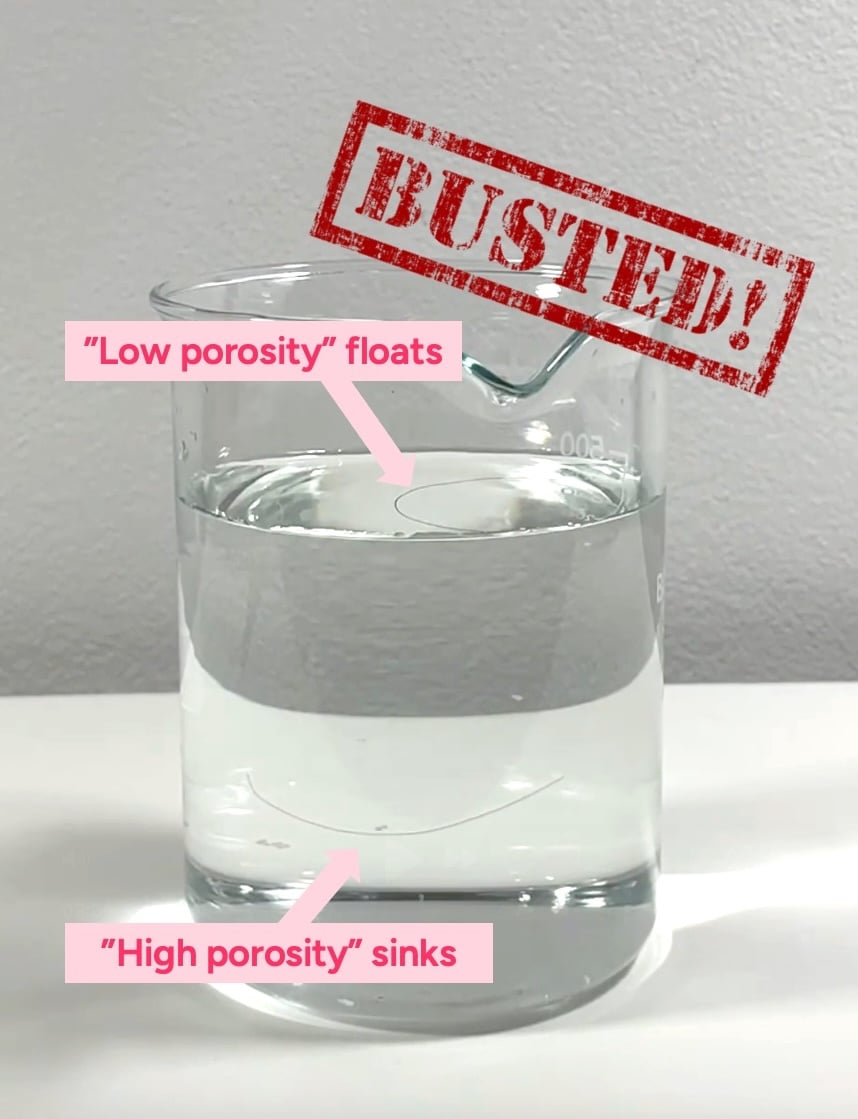
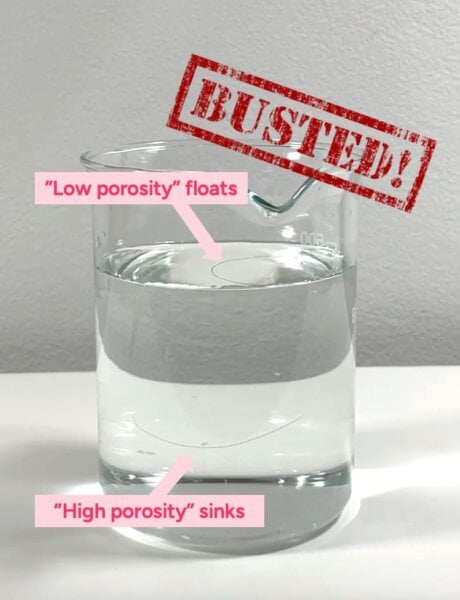
Central to this popular understanding are two primary home-based diagnostic methods: the Float Test and the Drop Test. The Float Test involves placing a single strand of hair into a glass of water. If the hair sinks quickly, it is labeled "high porosity"; if it floats, it’s deemed "low porosity." Proponents claim that sinking hair rapidly absorbs water due to its open cuticle structure, increasing its density and causing it to descend. The Drop Test, meanwhile, entails placing a drop of water onto a section of hair. If the water immediately spreads and is absorbed, the hair is categorized as "high porosity." If it beads up and sits on the surface, it is considered "low porosity." The explanation typically offered is that "high porosity" hair, full of "holes," readily soaks up the water, while "low porosity" hair repels it. These seemingly straightforward tests have provided a sense of control and understanding for consumers navigating a complex beauty landscape.
However, a closer examination of hair’s intrinsic properties and its interaction with water reveals that these tests fundamentally misinterpret the observed phenomena. The core misconception lies in the belief that healthy, undamaged hair is somehow "waterproof." Scientific literature, including seminal works such as C.R. Robbins’ Chemical and Physical Behavior of Human Hair, clearly demonstrates that human hair, regardless of its condition, is inherently hygroscopic—meaning it readily absorbs moisture from its environment. Undamaged hair can absorb approximately 30% of its own weight in water within minutes. This absorption capacity is not static but varies significantly with ambient humidity, underscoring hair’s natural affinity for water.
Data illustrating this point shows a direct correlation between relative humidity and the weight of water absorbed by hair:
| Relative humidity (%) | Weight of water absorbed (%) |
|---|---|
| 0 | 0 |
| 8 | 3.9 |
| 40 | 10.2 |
| 63 | 14.8 |
| 86 | 22.6 |
| 100 | 31.2 |
Source: Robbins CR. Chemical and Physical Behavior of Human Hair. Springer Berlin Heidelberg 2012.
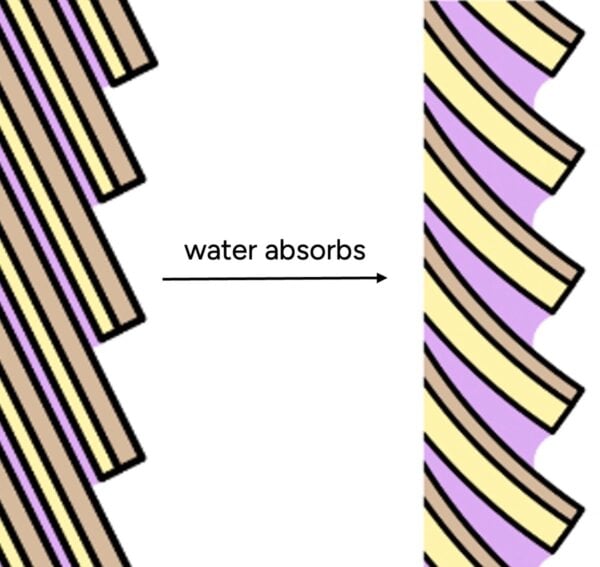
This table unequivocally shows that hair is far from waterproof; it is designed to interact with and absorb moisture from the atmosphere. The cuticle, often described as a sealed barrier, is actually composed of overlapping scales, akin to shingles on a roof or a pinecone. While the outermost layer of the cuticle possesses a natural, protective F-layer (a fatty acid layer that provides some hydrophobicity), it is not a continuous, impermeable seal. There are numerous microscopic gaps and edges where water molecules can penetrate.
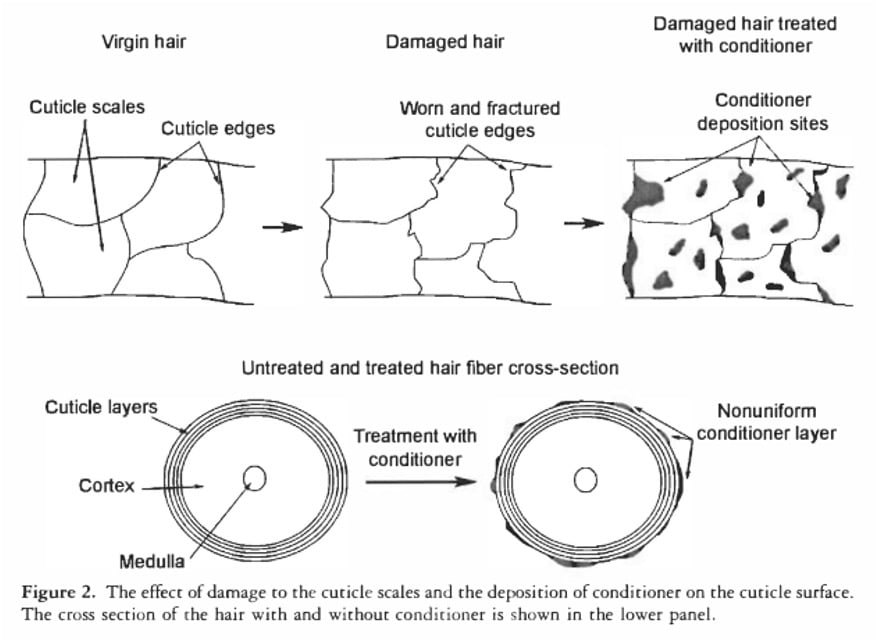
Furthermore, the notion that conditioners "seal" the hair cuticle, mimicking its natural barrier function, is also an oversimplification. Research, such as that by La Torre C and Bhushan B in J Cosmet Sci (2006), utilizing atomic force microscopy, has shown that conditioners deposit on the hair shaft not as a continuous, waterproof film, but rather in microscopic "blobs" or patches. While these deposits are effective in smoothing the hair’s surface, reducing friction, and improving feel, they are not designed to create an impenetrable barrier against individual water molecules, which are infinitesimally small. Therefore, neither healthy hair nor conditioned hair is truly waterproof.
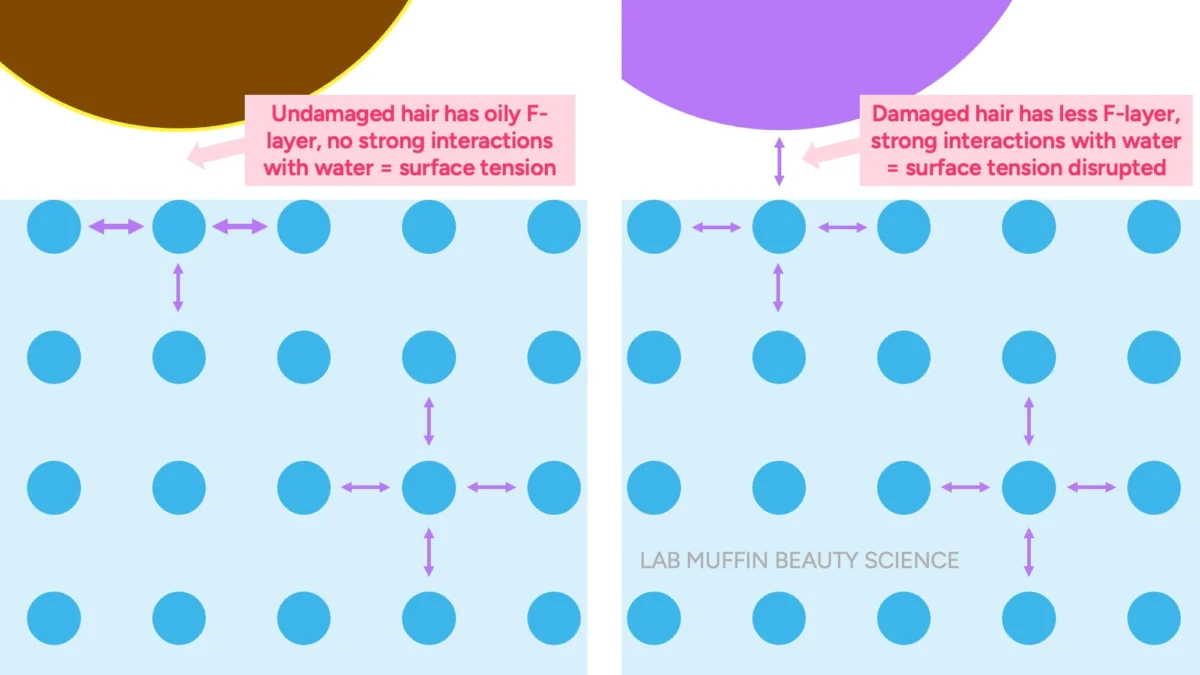
If undamaged hair is not waterproof and readily absorbs moisture, what then explains the observations made during the Float and Drop Tests? The answer lies in the fundamental principles of surface tension and how water interacts with different surfaces. Surface tension is a phenomenon where the cohesive forces between liquid molecules (in water, primarily hydrogen bonds) are stronger at the surface than within the bulk of the liquid. This creates a resilient, elastic "skin" on the water’s surface, capable of supporting objects denser than water, such as insects, paperclips, and indeed, hair strands.
In the Float Test, a strand of healthy, undamaged hair often floats due to this surface tension. The hair’s natural F-layer is hydrophobic, meaning it repels water. This repulsion prevents the hair from easily breaking through the water’s surface "skin." When the hair surface is damaged, however, this hydrophobic F-layer is compromised or removed, leaving a more hydrophilic (water-attracting) surface. This damaged, hydrophilic hair readily forms hydrogen bonds with the water molecules at the surface, disrupting the surface tension and allowing the hair strand to sink, not because it has instantly absorbed a significant amount of water to increase its density, but because the surface barrier has been breached.
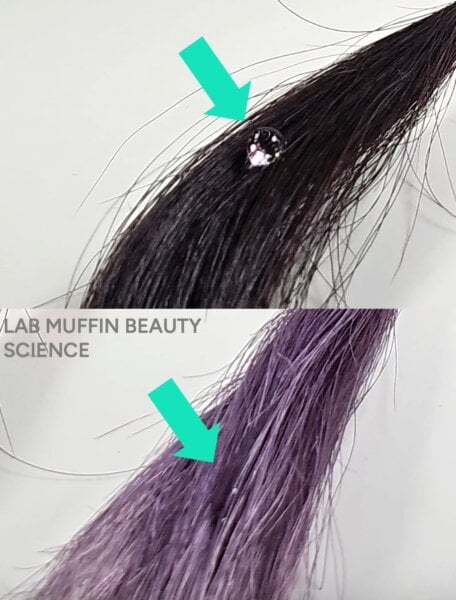
Similarly, the Drop Test is explained by surface interaction. On healthy hair with an intact F-layer, water droplets tend to bead up because the hydrophobic surface repels the water, maintaining the droplet’s spherical shape due to its internal cohesive forces. On damaged hair, the hydrophilic surface attracts the water molecules, causing the droplet to spread out and wet the surface. This spreading is a function of the water’s contact angle with the surface, not necessarily its rapid internal absorption. While damaged hair can absorb slightly more water internally (around 45% of its weight) compared to undamaged hair (30%), the immediate visual difference in the Drop Test is predominantly a surface phenomenon.
It is crucial to differentiate between hair’s absorption of liquid water and its absorption of water vapor. The substantial water absorption documented by Robbins and other researchers primarily refers to the uptake of water vapor from the atmosphere. In a gaseous state, individual water molecules are much smaller and less cohesive than in liquid form. They can easily "wiggle" their way between the overlapping cuticle scales and into the hair’s cortex without encountering the significant surface tension barriers posed by liquid water. The Float and Drop Tests, however, involve liquid water, and thus their results are dominated by surface tension dynamics rather than the internal absorption capacity for water vapor.
Despite the scientific inaccuracies in their interpretation, it is often observed that the advice derived from these "porosity" tests coincidentally leads to beneficial outcomes for hair. This apparent success stems from the fact that the tests, while not measuring porosity in the way popularly understood, do serve as a proxy for assessing surface damage. Hair that sinks quickly or causes water to spread (diagnosed as "high porosity") is often indeed damaged—its F-layer is compromised, and its cuticle scales may be lifted. Such hair genuinely benefits from products rich in emollients, proteins, and humectants that can smooth the cuticle, strengthen the hair shaft, and provide enhanced hydration and protection. Conversely, hair that floats or beads water (diagnosed as "low porosity") typically has a more intact F-layer and a smoother cuticle, which might indeed be prone to product buildup from heavy formulations, thus benefiting from lighter products. The correlation between test results and surface damage is what provides the illusion of porosity measurement.
The implications of this scientific clarification are significant for various stakeholders in the beauty industry. For professional hairdressers, relying on these tests to determine the duration or strength of chemical treatments (such as coloring, perming, or relaxing) can lead to detrimental results. Chemical processes depend on the precise penetration of active ingredients into the hair’s cortex, which is influenced by factors far more complex than simple surface interaction. An inaccurate "porosity" reading could lead to under-processing (poor results) or over-processing (severe damage). Experts strongly advise that the most reliable method for judging chemical treatment times remains a direct strand test, where the product is applied to a small, inconspicuous section of the client’s hair to observe its reaction in real-time.
For product developers and manufacturers, this insight calls for a shift towards more scientifically accurate messaging and formulation strategies. Instead of marketing products for "high" or "low porosity" hair based on flawed diagnostics, the focus should be on addressing specific hair concerns like damage, dryness, frizz, or oiliness, and explaining how ingredients effectively target these issues. This promotes transparency and builds greater consumer trust.
Finally, for consumers, understanding the true science behind hair-water interactions empowers them to make more informed decisions about their haircare. Instead of fixating on a misleading "porosity" label, individuals should focus on observing their hair’s actual behavior and condition: Is it dry? Prone to breakage? Does it feel rough? Does it hold styles well? These empirical observations, combined with an understanding of ingredient functions, provide a much more reliable guide to selecting products that genuinely improve hair health. A move towards scientific literacy in beauty encourages a more nuanced and effective approach to hair care, moving beyond simplistic tests to embrace the complex, yet fascinating, science of human hair.
