
Despite a recent historical emphasis on traditional protein sources within certain governmental dietary discussions, the U.S. Department of Defense is making a significant strategic investment in the future of alternative proteins. The agency has awarded a substantial grant to Biosphere, a Californian firm specializing in advanced biomanufacturing, to develop innovative methods for producing proteins from fundamental elements like "air, water, and energy." This initiative underscores a growing recognition within military strategy of the critical role novel food technologies can play in operational readiness and logistical resilience.
The $9 million grant, distributed over a period of three-and-a-half years, is specifically earmarked for the creation of portable, "field-deployable" bioreactors. These units are designed to enable on-demand protein production for U.S. Army personnel operating in remote and logistically challenging environments. The funding originates from the U.S. Army Combat Capabilities Development Command (DEVCOM) Soldier Center, a key component of the Department of Defense’s broader Manufacturing Science and Technology Program. Biomanufacturing has been identified as one of the Pentagon’s six critical technology focus areas, signaling its importance in enhancing operational resilience and mitigating logistical vulnerabilities in adverse conditions.
Nicole Favreau Farhadi, technical lead at the DEVCOM Soldier Center, emphasized the strategic alignment of this project. "This effort reflects the military’s focus on advancing resilient, forward-deployed capabilities that reduce logistical burden and enhance operational flexibility," she stated. "Technologies that enable on-site production of critical resources, beginning with nutrition, represent an important step toward more adaptive and distributed sustainment in future operating environments." This sentiment highlights a fundamental shift in military logistics, moving towards self-sufficiency and reduced reliance on vulnerable, long-distance supply chains.
Biosphere’s UV Bioreactors: A Leap Forward in Industrial Biotechnology
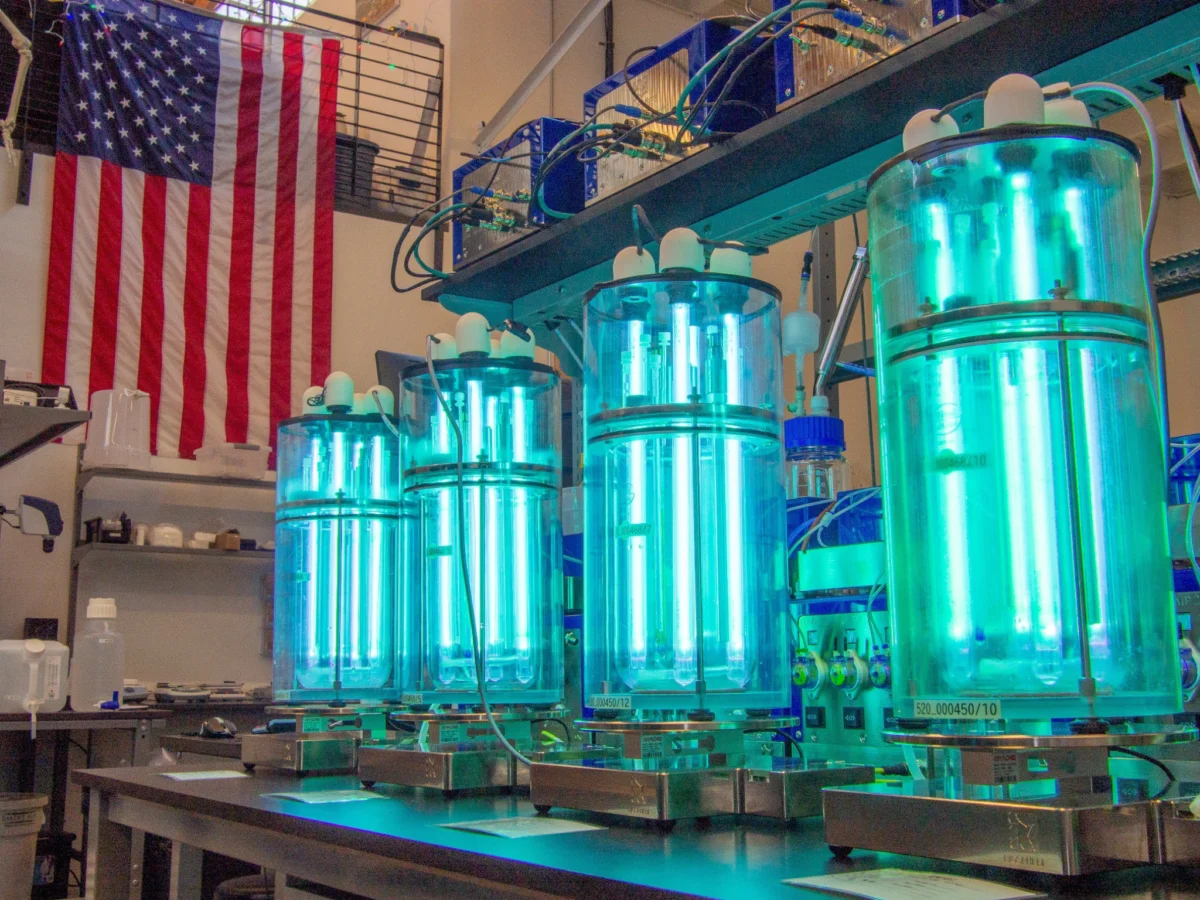
Biosphere, which officially emerged from stealth mode in early 2025, has introduced a novel UV-sterilized bioreactor technology that promises a "step-change reduction" in the capital intensity that has historically been a significant barrier to entry in the industrial biomanufacturing sector. For decades, the industry has largely relied on complex and costly steam-sterilized bioreactors, a technology dating back to the 1940s and originally developed for penicillin production. These conventional systems feature intricate designs with numerous valves and extensive piping, leading to substantial upfront costs and demanding maintenance requirements.
In contrast, Biosphere’s innovative approach leverages ultraviolet (UV) radiation and advanced materials to streamline hardware design. Their bioreactors achieve aseptic environments through a "sterilize-in-place" protocol powered by UV radiation. This technological advancement significantly expands the potential design parameters for bioreactors, leading to substantial cost efficiencies. The company reports a tenfold reduction in material costs and a sixfold increase in sterilization speeds, all while utilizing approximately one-third the number of valves and pipes compared to traditional systems.
"By leveraging our proprietary UV-sterilized bioreactor technology, we’re developing a system that can produce nutritious, shelf-stable food anywhere, eliminating traditional supply chain constraints and enhancing operational readiness for our military," explained Brian Heligman, co-founder and CEO of Biosphere. He further elaborated that the Department of Defense contract represents "a significant milestone in our mission to advance rapidly deployable biomanufacturing systems."
The project funded by the grant will commence with a comprehensive process selection and design phase. This will be followed by pilot-scale demonstrations, culminating in the development of a full-scale prototype capable of continuous operation. All research and development activities will be conducted at Biosphere’s facilities in California. The ultimate goal is to deliver final product samples to the Combat Feeding Division for rigorous evaluation and validation. Key innovations to be integrated into the bioreactors include advanced UV sterilization protocols to ensure contamination-free production, efficient water and media recycling systems, and sophisticated downstream processing techniques to create lightweight, nutrient-dense, and ready-to-eat food products.
Pentagon’s Biomanufacturing Focus Aligns with U.S. Army’s Alternative Protein Initiatives
The Pentagon’s strategic emphasis on biomanufacturing aligns directly with the U.S. Army’s ongoing efforts to develop and integrate alternative protein sources into soldier rations. This convergence of interests is expected to accelerate the adoption of advanced food technologies within military operations.
"This program will validate our platform’s ability to deliver autonomous, point-of-need biomanufacturing," stated Arye Lipman, co-founder and COO of Biosphere. "While nutrition is the initial application, the platform can produce fuels, chemicals, and advanced materials, with potential to expand distributed manufacturing in remote and resource-constrained environments." This statement underscores the versatility of Biosphere’s technology beyond food production, suggesting broader applications in military sustainment.

Gas fermentation, the core technology employed by Biosphere, involves feeding specialized microbes on gases such as carbon dioxide, water, and electricity, rather than traditional sugar-based substrates, to produce high-value compounds. While early applications of this technology were primarily focused on biofuels and industrial chemicals, a new wave of startups is now extending its utility to the food sector.
Globally, the field of gas fermentation for protein production is experiencing rapid innovation. Finnish company Solar Foods has already successfully commercialized its Solein protein, a product derived from air, in Singapore and is preparing for its market entry into the United States. Meanwhile, Danish firm Unibio is collaborating with the Saudi Industrial Investment Group to construct what is anticipated to be the world’s largest gas protein factory. Other notable players in this burgeoning sector include Air Protein, LanzaTech, Jooules, and Aerbio, all of whom are actively developing and refining gas fermentation technologies for various applications, including food and materials.
The 42-month contract with the U.S. Army represents a significant commitment to advancing these capabilities from the laboratory to practical, field-ready solutions. The project aims to equip troops on the front lines with autonomously produced, ready-to-eat meals, thereby reducing dependence on complex and often vulnerable traditional supply chains. Biosphere’s initial target is to enable the on-site production of 2,800 daily calories per person, sufficient for up to 18 soldiers, with plans to scale the capacity to support up to 250 personnel.
This initiative is deeply embedded within the Department of Defense’s broader strategic objectives concerning biomanufacturing and the challenges of operating in contested logistics environments. The DoD has signaled its intent to invest significantly in this domain, with a planned allocation of over $300 million for biomanufacturing initiatives in the fiscal year 2026. This financial commitment underscores the perceived strategic advantage and necessity of developing advanced domestic manufacturing capabilities.
Further reinforcing this strategic direction, the Pentagon has also entered into a Memorandum of Understanding (MoU) with the U.S. Department of Agriculture (USDA). This agreement elevates agriculture to the status of a national security priority, a move that is expected to catalyze the development of "novel technologies" within the agricultural sector. This initiative builds upon the farm security plan announced the previous year, which prioritizes USDA funding for American-made technology and research and development, with a particular focus on biotechnology and biomanufacturing.
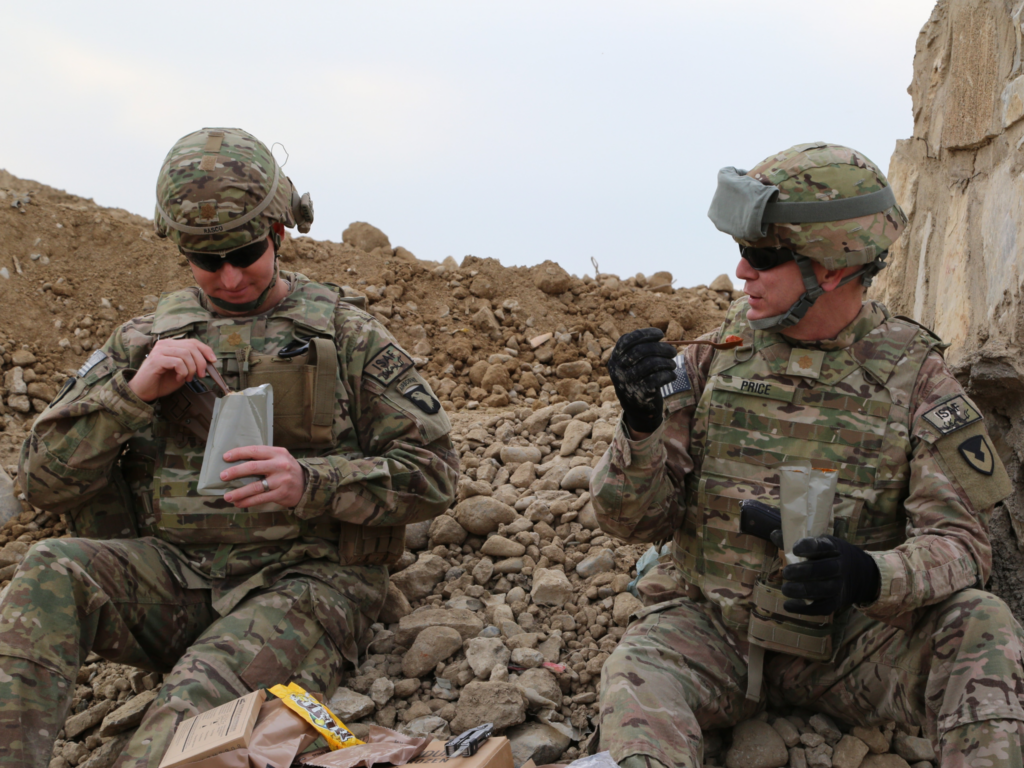
The recent $9 million grant to Biosphere follows a $1.5 million Department of Defense grant awarded to the startup in 2024. These successive funding awards come on the heels of a call issued by the DEVCOM Soldier Center for companies and researchers to develop technologies capable of producing alternative proteins for soldiers operating in combat zones. The objective is to enable the manufacturing of these proteins directly within combat theaters and their subsequent incorporation into Meals, Ready-to-Eat (MREs). MREs are the standardized dehydrated field rations provided to soldiers in situations where cooking facilities are unavailable or impractical. This move aligns with the U.S. Army’s confirmation last year that it would begin offering vegan MRE options to its personnel starting in 2027, reflecting an increasing awareness of diverse dietary needs and preferences within the force.
Implications for Military Logistics and Future Food Systems
The implications of this grant extend far beyond immediate nutritional support for soldiers. The development of portable, field-deployable bioreactors capable of producing protein from basic inputs has the potential to revolutionize military logistics. By enabling on-site production, the U.S. Army can significantly reduce its reliance on vast, vulnerable supply chains that are susceptible to disruption from weather, geopolitical instability, or enemy action. This enhanced self-sufficiency translates directly into increased operational flexibility and resilience, particularly in austere or contested environments.
Furthermore, the technology developed by Biosphere could have broader applications in disaster relief and humanitarian aid operations. In regions where traditional food supply lines are compromised, portable biomanufacturing units could provide a critical source of sustenance, ensuring that essential nutritional needs are met. The ability to produce food from local resources, even basic elements like air and water, offers a pathway to greater self-reliance in critical situations.
The strategic investment by the Department of Defense in biomanufacturing also positions the U.S. at the forefront of a rapidly evolving global food technology landscape. As companies worldwide explore innovative methods for protein production, this grant signifies a commitment to developing and fielding cutting-edge solutions for national security and potentially for broader societal benefits. The diversification of protein sources, moving beyond traditional agriculture, is seen by many as essential for global food security in the face of climate change and growing populations.
The timeline for this project suggests a phased approach, moving from initial design and development to rigorous testing and validation. The successful implementation of this technology could lead to a fundamental shift in how military forces are provisioned, with the potential for distributed, on-demand food production becoming a standard component of operational planning. This represents a significant departure from traditional models and highlights the military’s proactive engagement with emerging technologies to address future challenges. The collaboration between a nimble startup like Biosphere and a major governmental entity like the Department of Defense underscores a growing trend of public-private partnerships aimed at accelerating innovation for national strategic priorities.
