
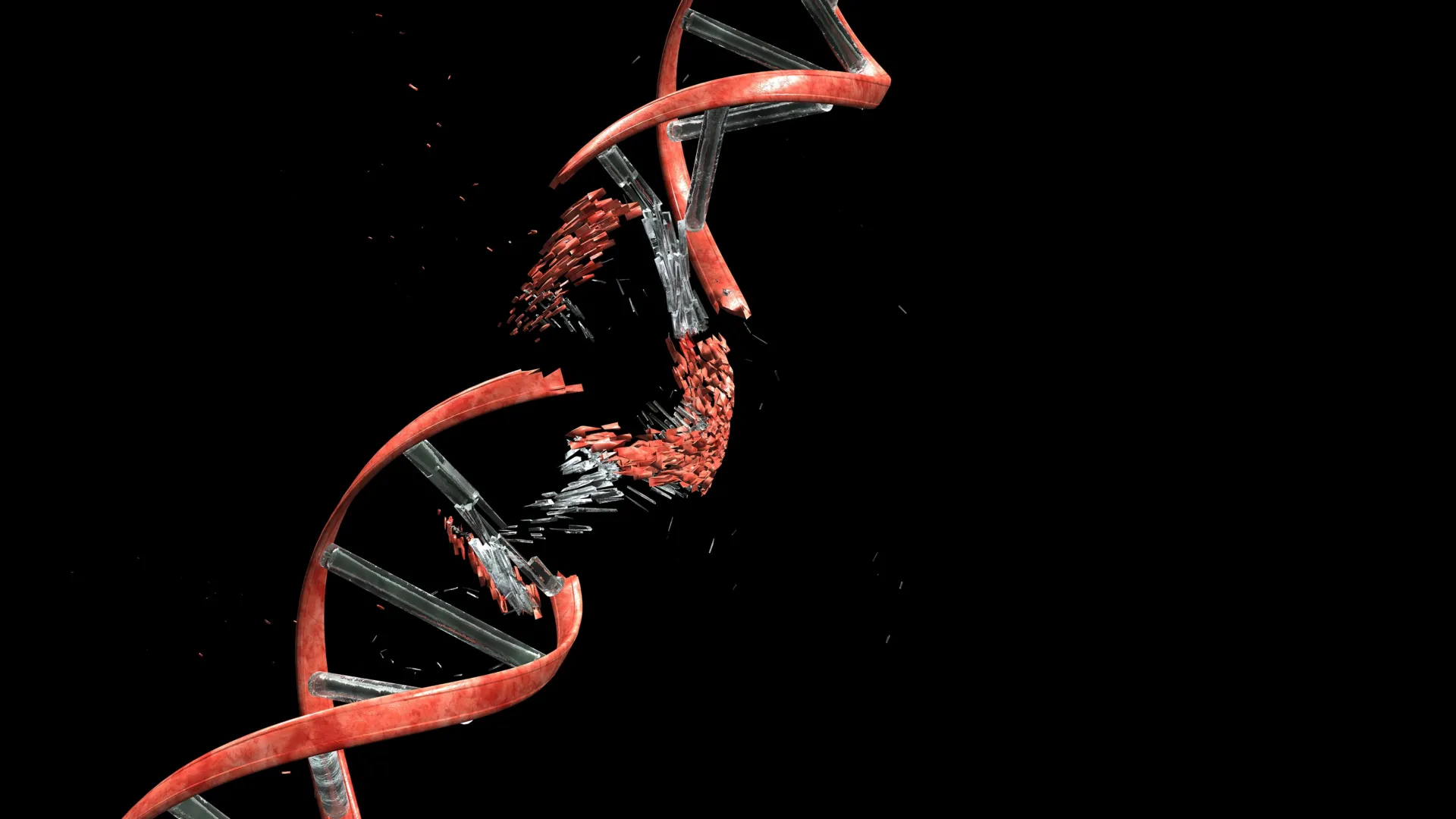
As the intricate architecture of the brain takes shape, a crucial and arduous process unfolds: the migration of newly formed neurons to their designated locations within the cerebral cortex. These nascent nerve cells, the fundamental building blocks of our cognitive abilities, must navigate a densely packed, three-dimensional environment. Their journey is fraught with physical challenges, forcing them to squeeze through narrow interstitial spaces between glial fibers and neighboring cells. This demanding commute, a cornerstone of neurodevelopment, has now been revealed to have a surprising consequence: significant DNA damage, specifically double-strand breaks, a severe form of DNA injury where both strands of the DNA helix are severed.
This groundbreaking discovery, published in the esteemed journal Nature, was made by a collaborative team of researchers from Kyoto University’s Institute for Integrated Cell-Material Sciences (WPI-iCeMS) and several other leading academic institutions. Their findings challenge the long-held assumption that such DNA damage is exclusively a harbinger of cellular dysfunction, mutations, and ultimately, cell death. Instead, the study demonstrates that in the context of healthy brain development, these double-strand breaks are a transient and remarkably well-managed phenomenon. The developing brain, it appears, has evolved a sophisticated and efficient repair system to mend this damage before it can precipitate lasting harm.
Professor Mineko Kengaku, the lead researcher from WPI-iCeMS, highlighted the significance of this evolutionary adaptation. "The developing brain appears to have evolved to tolerate and repair the neuronal damage efficiently," she stated. "But understanding the limits of that tolerance – and what happens when repair is incomplete – brings us closer to understanding a range of neurological conditions." This insight opens new avenues for investigating the molecular underpinnings of neurodevelopmental disorders and age-related neurological decline.
The Mechanical Stress of Neuronal Migration
To meticulously investigate the origins and resolution of this DNA damage, the research team ingeniously recreated the physical obstacles encountered by migrating neurons. They engineered microscopic channels, or microfluidic devices, precisely designed to mimic the confined and constrictive environments found within a developing brain. These channels, often just a few micrometers in diameter, served as a controlled experimental arena for observing neuronal behavior under duress.
Employing advanced microscopy techniques and fluorescently labeled DNA-binding agents, the researchers were able to visualize the DNA within the migrating neurons in real-time. Their observations confirmed that as neurons navigated these narrow microchannels, double-strand DNA breaks began to appear. Crucially, once the cells successfully emerged from the constricted spaces and entered a less confined environment, the observed DNA damage gradually subsided. The study meticulously documented that the vast majority of these double-strand breaks were repaired within a 24-hour period, allowing the neurons to continue their developmental trajectory and integrate into the neural network without apparent functional impairment.
Unraveling the Enzyme’s Role in DNA Breakage
The scientific inquiry then delved deeper to identify the precise molecular machinery responsible for inducing these breaks. The culprit, surprisingly, was identified as Topoisomerase IIα (TopoIIα), an enzyme that plays a vital role in cellular processes by managing DNA topology. Under normal circumstances, TopoIIα acts like a molecular surgeon, temporarily cutting DNA strands to relieve the torsional stress and tension that builds up during essential cellular activities, such as DNA replication and transcription. After relieving the stress, the enzyme is designed to swiftly re-ligate, or rejoin, the severed DNA strands, ensuring the integrity of the genome.
The researchers likened this process to untangling a knotted electrical cable by temporarily cutting it, untwisting, and then carefully rejoining the ends. However, the extreme mechanical forces exerted on neurons as they are squeezed through tight cellular passages can disrupt this delicate enzymatic dance. When a neuron experiences significant physical stress during migration, TopoIIα can become transiently trapped in its DNA-cutting state, leaving behind double-strand breaks. The cell’s primary defense mechanism against this type of damage is a pathway known as non-homologous end joining (NHEJ), which rapidly ligates the broken DNA ends, albeit with a slight potential for error.
Neuronal Resilience: A Unique Cellular Strategy
A critical aspect of the study involved comparing the DNA damage experienced by migrating neurons with that observed in other cell types, particularly cancer cells, which are known for their migratory and invasive capabilities. The research team found a stark contrast. While cancer cells migrating through similar microchannels also exhibited DNA damage, this damage tended to be more widespread and occurred in a less predictable manner. In cancer cells, such random DNA damage can readily disrupt essential gene functions, leading to cellular dysfunction or programmed cell death (apoptosis).
In contrast, the DNA breaks observed in developing neurons were found to be predominantly concentrated in specific regions of the genome that are not actively transcribed or involved in critical gene regulation. This genomic localization is a key factor in neuronal resilience. By avoiding damage to essential genes, the neurons can maintain their core functions and continue their developmental program, even in the presence of temporary DNA breaks. This selective vulnerability of non-coding or less actively transcribed genomic regions appears to be a critical evolutionary advantage for neuronal survival during migration.
The Consequences of Impaired DNA Repair
To further elucidate the functional significance of the observed DNA repair mechanisms, the researchers engineered a model system to investigate the repercussions of impaired DNA repair. They created genetically modified mice whose newly formed cerebellar neurons were deficient in Ligase 4 (LIG4), a crucial enzyme indispensable for the NHEJ repair pathway.
Intriguingly, these genetically altered mice exhibited normal development and showed no overt abnormalities in their early life stages. However, as they matured into adulthood, a subtle but progressive neurological deficit began to manifest. These mice started to experience mild, yet gradually worsening, balance problems. These motor coordination deficits bear a striking resemblance to the symptoms observed in certain human disorders characterized by genome instability, particularly those affecting the cerebellum, a brain region critical for motor control and coordination. This experimental observation provides compelling evidence that even seemingly minor or transient DNA damage, if not adequately repaired, can have significant long-term consequences on brain function and behavior.
Implications for Brain Health and Disease
The findings from this seminal study have profound implications for our understanding of brain biology, diversity, and the etiology of neurological diseases. They suggest that DNA breakage and repair are not merely incidental events but may play a more integral and dynamic role in shaping the developing brain than previously recognized.
Researchers are now keen to explore whether these early-life DNA alterations, even if transiently repaired, contribute to the subtle yet significant differences observed between individual neurons. The precise history of DNA damage and repair experienced by each neuron during its formative journey could potentially influence its unique functional properties and its long-term susceptibility to disease.
"It shifts how we think about the neuronal genome," Professor Kengaku remarked, emphasizing the novel perspective this research offers. "All neurons originate from the same DNA, but DNA damage and repair can introduce small genetic differences between individual neurons through a small mechanical journey. Some of that history may be written into the genome itself." This perspective suggests that the very genome of a neuron can carry a physical record of its developmental odyssey, potentially contributing to neuronal individuality and variability.
Furthermore, this research opens new avenues for investigating the intricate links between DNA integrity and neurodevelopmental disorders, such as autism spectrum disorder and schizophrenia, as well as neurodegenerative diseases, including Alzheimer’s and Parkinson’s disease. Understanding the precise mechanisms by which DNA damage and repair influence neuronal development and function could lead to the identification of novel therapeutic targets and diagnostic biomarkers for these debilitating conditions.
The collaborative effort behind this groundbreaking research involved a consortium of esteemed institutions, including Kyoto University, the University of Tokyo, the University of Osaka, the National University of Singapore, and the Tokyo Metropolitan Institute of Medical Science, underscoring the global scientific community’s commitment to unraveling the complexities of the human brain. This multidisciplinary approach was instrumental in bringing together diverse expertise and resources to tackle such a complex biological question. The long-term vision of this research is to bridge the gap between fundamental cellular processes and human neurological health, paving the way for a deeper understanding of what makes our brains unique and resilient, and what renders them vulnerable.
