
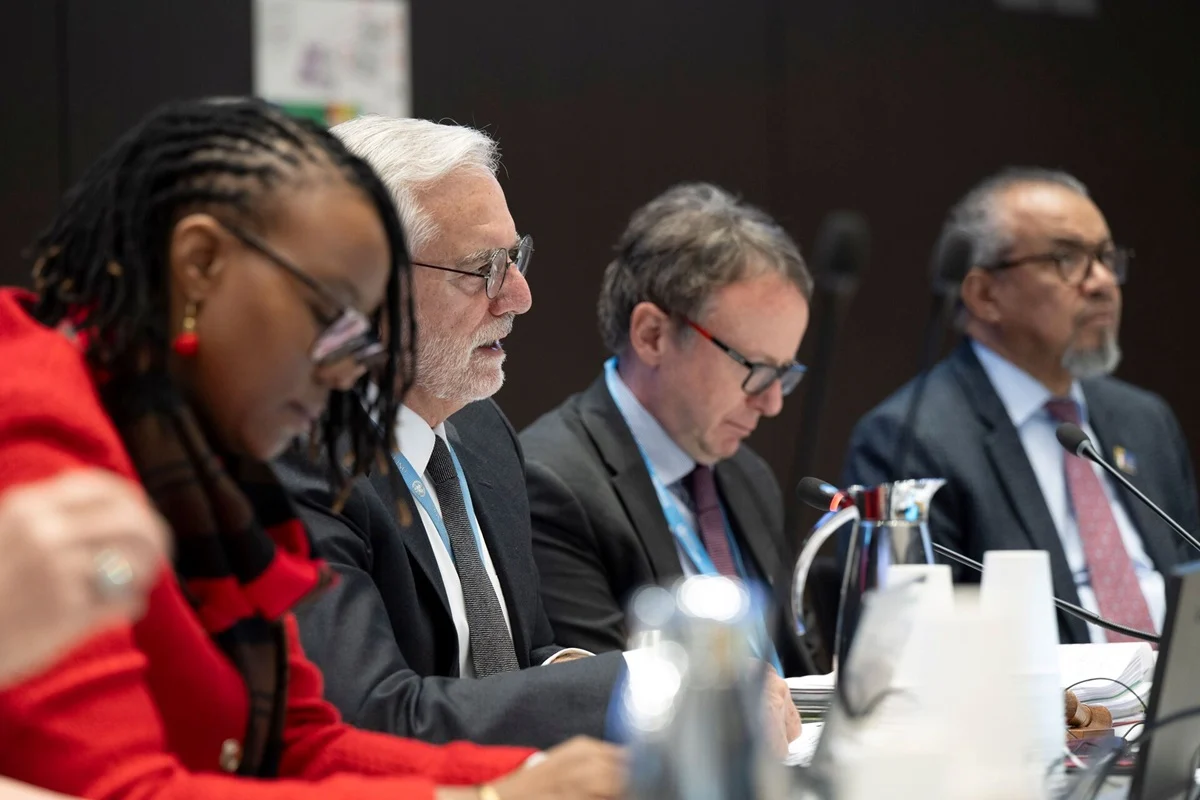
The member states of the World Health Organization (WHO) have concluded a pivotal resumed session of the sixth meeting of the Intergovernmental Working Group (IGWG), marking a significant step forward in the development of the Pathogen Access and Benefit Sharing (PABS) system. While negotiators reported substantial movement on the technical and legal frameworks of the PABS annex—a cornerstone of the broader WHO Pandemic Agreement—the consensus reached in Geneva indicates that further time is essential to bridge remaining gaps. Consequently, the member states have agreed to request an extension of their mandate, aiming to finalize the framework by 2026 or 2027 to ensure a more equitable and efficient global response to future health emergencies.
The PABS system is designed to rectify the systemic inequalities exposed during the COVID-19 pandemic, where the rapid sharing of viral data did not always translate into the equitable distribution of life-saving medical countermeasures. The outcome of these recent deliberations will be formally presented to the Seventy-ninth World Health Assembly (WHA) later this month. Under the proposed extension, the IGWG would continue its work as mandated by Resolution WHA78.1, with a final outcome expected either at a special session of the WHA in 2026 or at the standard Assembly in May 2027.
The PABS Framework: Addressing the "Equity Gap"
The Pathogen Access and Benefit Sharing system represents the most contentious and complex element of the WHO Pandemic Agreement. At its core, the system seeks to establish a dual-track mechanism: the rapid, unconditional sharing of pathogens with pandemic potential (such as novel influenza strains or coronaviruses) and the guaranteed, equitable sharing of the benefits derived from that sharing, including vaccines, diagnostics, and therapeutics.
During the COVID-19 pandemic, the "access" side of the equation functioned with relative speed as scientists globally shared genetic sequence data via public databases. However, the "benefit-sharing" side saw significant delays and disparities. Data from the World Health Organization and various global health monitors indicated that while high-income countries reached high vaccination rates within months of product rollout, low-income countries were often left waiting for over a year to receive significant supplies. The PABS annex aims to codify these obligations into a legally binding framework, ensuring that countries providing the "raw material" (the pathogen samples) are guaranteed a share of the "finished product" (the vaccines).
Negotiators have been working on specific percentages for product allocation. While figures remain subject to final agreement, discussions have frequently centered on a model where manufacturers utilizing the PABS system would reserve a specific portion of their production—often cited as 20% (10% as a donation and 10% at affordable prices)—for the WHO to distribute based on public health need rather than purchasing power.
Chronology of the Pandemic Agreement and PABS Negotiations
The journey toward a legally binding pandemic treaty began in the wake of the devastation caused by SARS-CoV-2. The timeline reflects the immense diplomatic effort required to align 194 member states with diverse economic and political interests.
- December 2021: During a rare Special Session of the World Health Assembly, member states agreed to establish an Intergovernmental Negotiating Body (INB) to draft and negotiate a WHO convention, agreement, or other international instrument on pandemic prevention, preparedness, and response.
- 2022–2023: Multiple rounds of negotiations took place, highlighting deep divisions between the Global North (focusing on surveillance and rapid data sharing) and the Global South (focusing on technology transfer and equity).
- May 2024: The 77th World Health Assembly saw the adoption of significant amendments to the International Health Regulations (IHR 2005). While the broader Pandemic Agreement was discussed, the PABS annex was identified as the primary bottleneck preventing a final signing.
- May 2025: The World Health Assembly formally adopted the main body of the WHO Pandemic Agreement, establishing the IGWG to specifically tackle the PABS system and other outstanding technical annexes.
- 2025–Present: The IGWG has held six major meetings. The most recent resumed session in Geneva focused exclusively on the legal language of the PABS annex, leading to the current consensus that an extension is required.
- Future Milestones: The seventh meeting of the IGWG is scheduled for July 6–17, 2026. A special session of the WHA could potentially finalize the document in 2026, otherwise, the deadline is set for May 2027.
Perspectives from Leadership: Urgency vs. Precision
Dr. Tedros Adhanom Ghebreyesus, the WHO Director-General, has been a vocal advocate for the "sense of urgency" required to finalize the PABS annex. Following the conclusion of the Geneva session, Dr. Tedros emphasized that the next pandemic is a biological certainty.
"Real progress was made on the PABS annex and I am confident through continued negotiations differences will be overcome," Dr. Tedros stated. "Member States should continue approaching the outstanding issues with a sense of urgency because the next pandemic is a matter of when, not if. The PABS annex is the last piece of the puzzle not only for the Pandemic Agreement but all initiatives that WHO and Member States have implemented as a result of lessons learned from the COVID-19 pandemic."
The leadership of the IGWG Bureau echoed this sentiment, balancing the need for speed with the necessity of legal rigor. Ambassador Tovar da Silva Nunes of Brazil, the Co-Chair of the IGWG Bureau, noted that the technical and legal complexity of the document requires a level of precision that cannot be rushed. He expressed confidence that the extension would provide the necessary breathing room to resolve the remaining "fine print" regarding intellectual property and sovereign rights over biological resources.
Mr. Matthew Harpur, the IGWG Co-Chair, highlighted the commitment of the member states, noting that the negotiations are moving in the "right direction." He framed the PABS annex as the framework needed to ensure that countries are not only prepared but "equitably protected" for the next global health crisis.
Technical Hurdles and Legal Complexities
The delay in finalizing the PABS annex is not merely a matter of political will; it involves reconciling several complex legal and economic systems.
One major hurdle is the interaction between the PABS system and the Nagoya Protocol on Access to Genetic Resources and the Fair and Equitable Sharing of Benefits Arising from their Utilization. Many developing nations argue that pathogens found within their borders are sovereign resources. They seek a system where "access" is strictly contingent upon "benefit sharing." Conversely, some developed nations and pharmaceutical industry stakeholders express concern that a restrictive or overly bureaucratic PABS system could slow down the scientific response during an outbreak, potentially delaying the development of vaccines.
Furthermore, the legal nature of the "benefits" remains a point of contention. While donations are a key component, LMICs (Low- and Middle-Income Countries) are also pushing for provisions related to "technology transfer." This would involve sharing the "know-how" to manufacture vaccines locally, reducing the reliance on a few global manufacturing hubs located primarily in the Global North.
Supporting Data: The Cost of Inaction
The economic and human data surrounding the COVID-19 pandemic serves as the primary driver for these negotiations. According to the International Monetary Fund (IMF), the pandemic was projected to cost the global economy over $12.5 trillion through 2024. From a public health perspective, the WHO estimates that the "excess mortality" associated with COVID-19 reached nearly 15 million deaths by the end of 2021, though some independent estimates place the figure higher.
Analysis by health equity organizations like the People’s Vaccine Alliance has shown that for every life saved by a vaccine in a high-income country, several more were lost in low-income regions due to lack of access. The PABS system is viewed as the institutional fix for this disparity. Proponents argue that a pre-negotiated, legally binding contract for benefit sharing is the only way to prevent the "vaccine nationalism" that characterized 2021 and 2022.
Broader Implications for Global Health Governance
The decision to extend the negotiations underscores a shift in global health governance. Rather than settling for a "weak" agreement that could be signed immediately, member states have opted to pursue a more robust, albeit delayed, framework. This suggests a recognition that a flawed PABS system could be as detrimental as no system at all, as it would fail to provide the legal certainty required by both governments and the private sector.
The outcome of the PABS negotiations will likely set a precedent for how the world handles other global commons, such as climate data or biodiversity. If the WHO succeeds in creating a functional, equitable system for pathogen sharing, it could provide a blueprint for "benefit sharing" in other sectors where resources from the Global South drive innovation in the Global North.
As the IGWG prepares for its seventh meeting in July 2026, the international community remains watchful. The extension of the mandate provides a critical window to resolve the "equity versus security" debate. For the WHO and its member states, the goal remains clear: ensuring that when the next "Disease X" emerges, the world is not caught in a scramble for resources, but is instead supported by a pre-established, fair, and rapid framework for protection.
