
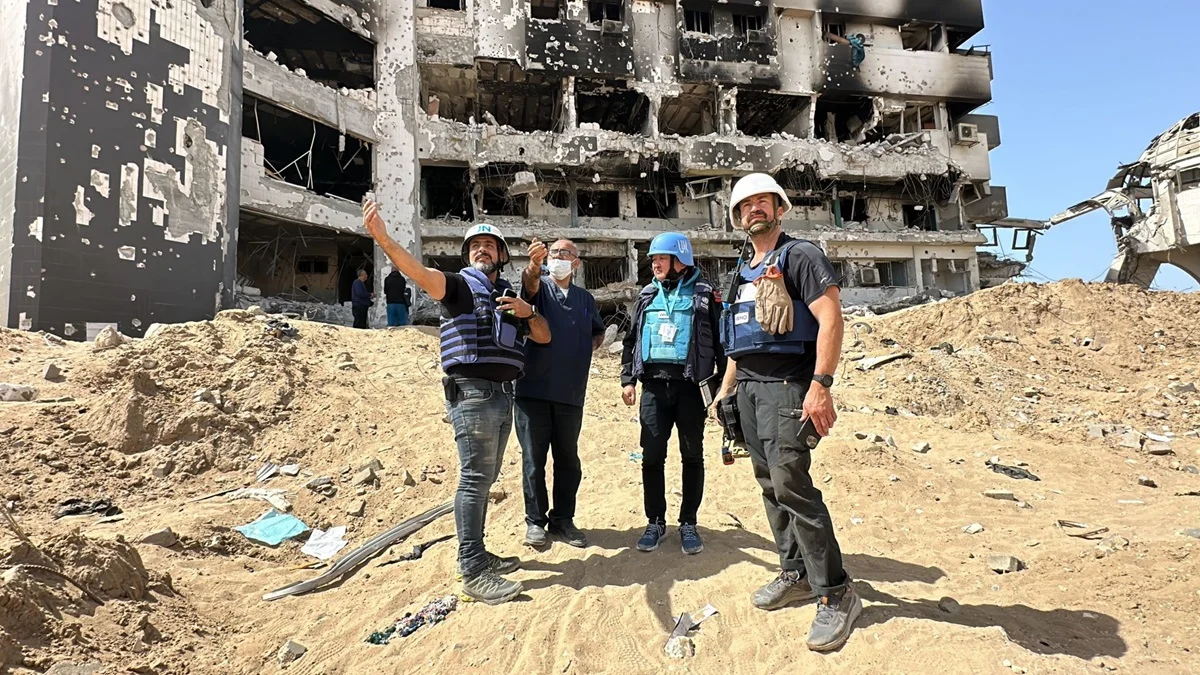
Ten years after the United Nations Security Council unanimously adopted Resolution 2286, a landmark commitment intended to protect medical facilities, personnel, and transport in armed conflicts, the global humanitarian landscape has reached a devastating tipping point. In a rare joint communiqué, the heads of the International Committee of the Red Cross (ICRC), the World Health Organization (WHO), and Médecins Sans Frontières (MSF) have declared the anniversary not as a milestone of progress, but as a stark marker of international failure. Mirjana Spoljaric, President of the ICRC, Dr. Tedros Adhanom Ghebreyesus, Director-General of the WHO, and Dr. Christos Christou, International President of MSF, issued an urgent plea to the international community, warning that the "sanctity of health care" is being systematically dismantled in the world’s most violent theaters of war.
The resolution, passed in 2016, was designed to provide a robust legal and political framework to ensure that the sick and wounded, as well as those who treat them, are shielded from the violence of war. However, the decade following its adoption has seen an intensification of attacks on medical infrastructure. From the total collapse of health systems in Gaza and Sudan to the targeted strikes on hospitals in Ukraine and Myanmar, the leaders argue that the rules of war are being ignored with impunity. When hospitals are reduced to rubble and ambulances are obstructed, they contend, it is the clearest sign that the norms intended to limit the suffering of civilians have broken down, resulting in what they describe as a "crisis of humanity."
Historical Context: The Genesis of Resolution 2286
To understand the gravity of the current situation, it is necessary to examine the climate in which Resolution 2286 was born. The resolution was adopted on May 3, 2016, following a series of high-profile, catastrophic attacks on medical facilities. Most notable was the October 2015 U.S. airstrike on the MSF trauma center in Kunduz, Afghanistan, which killed 42 people and destroyed a vital surgical hub. This was followed by a wave of strikes on hospitals in Aleppo, Syria, and across Yemen, where health facilities were frequently caught in the crossfire or intentionally targeted.
The international outcry following Kunduz and the Syrian hospital bombings forced the UN Security Council to act. Resolution 2286 was seen as a transformative moment; it reaffirmed that under International Humanitarian Law (IHL), specifically the Geneva Conventions of 1949 and their Additional Protocols, medical personnel and facilities must be respected and protected. It called for an end to impunity, demanding that states conduct independent and effective investigations into attacks and hold perpetrators accountable. However, critics and humanitarian leaders now point out that the resolution lacked the enforcement mechanisms necessary to compel states to change their military conduct on the ground.
A Chronology of Declining Norms (2014–2024)
The timeline of the last decade illustrates a disturbing trend where the protection of healthcare has shifted from a non-negotiable legal standard to a secondary concern, or in some cases, a deliberate target of military strategy.
- 2014-2016: The escalation of the Syrian Civil War saw the systematic "double-tap" strike tactic, where a secondary bombing would target first responders and medical teams arriving at the scene of an initial explosion.
- 2017-2019: In Yemen, the destruction of water and sanitation infrastructure, alongside hospitals, led to the world’s worst cholera outbreak, demonstrating how attacks on health-related infrastructure have cascading long-term effects.
- 2020-2021: During the Tigray conflict in Ethiopia, reports emerged of widespread looting and the intentional destruction of health centers, leaving millions without access to basic care during a global pandemic.
- 2022-Present: The invasion of Ukraine brought large-scale conventional warfare back to Europe, with the WHO verifying hundreds of attacks on health facilities within the first few months of the conflict, including the bombing of a maternity hospital in Mariupol.
- 2023-2024: The conflict in Gaza has seen an unprecedented level of damage to medical infrastructure. According to UN reports, the majority of hospitals in the strip have been rendered non-functional due to direct hits, lack of fuel, or military sieges, creating a public health catastrophe of historic proportions.
Statistical Evidence: The Quantifiable Toll of Violence
The joint statement by the ICRC, WHO, and MSF is supported by harrowing data collected through the WHO’s Surveillance System for Attacks on Health Care (SSA). This system, established following World Health Assembly Resolution 65.20 in 2012, provides a standardized method for documenting the scale of the problem.
In 2023 alone, the WHO recorded more than 1,500 attacks on health care across 21 countries and territories experiencing conflict or instability. These attacks resulted in the deaths of over 700 health workers and patients and injuries to more than 1,000 others. The data reveals that "attacks" are not limited to bombings; they include the abduction of medical staff, the forced closure of clinics, the obstruction of ambulances at checkpoints, and the militarization of hospital grounds.
Furthermore, the Safeguarding Health in Conflict Coalition (SHCC) reported that in 2022, there was a 45% increase in reported incidents of violence against or obstruction of healthcare compared to the previous year. This statistical trend underscores the "failure" cited by the humanitarian leaders: while the law remains on the books, the reality on the ground has become exponentially more dangerous for those wearing the Red Cross or Red Crescent emblems.
The Legal Imperative: Responsibility Beyond National Borders
A central pillar of the joint appeal is the reminder that states have a dual obligation under International Humanitarian Law. Article 1 of the Geneva Conventions requires states not only to "respect" the law but also to "ensure respect" for it. This means that even if a state is not directly involved in a conflict, it has a legal duty to use its diplomatic, financial, and political influence to ensure that its allies and other warring parties abide by the rules.
The humanitarian leaders argue that the current crisis is not a failure of the law itself, but a "failure of political will." The legal framework provided by Resolution 2286 and the Geneva Conventions is sufficient to protect healthcare; the issue lies in the lack of consequences for those who violate these laws. When powerful nations provide military aid or political cover to parties that strike hospitals, they are arguably in breach of their obligation to "ensure respect" for IHL.
Broader Implications: The "Crisis of Humanity"
The consequences of attacking healthcare extend far beyond the immediate casualties. When a hospital is destroyed, a community’s "safety net" vanishes. This leads to a phenomenon often referred to as the "indirect death toll" of war. For every person killed in a direct attack on a clinic, many more die from treatable conditions—diabetes, hypertension, or infections—because the facility is no longer there to serve them.
In many modern conflicts, the loss of healthcare has led to:
- Maternal and Neonatal Mortality: Women are forced to give birth in unsafe, unsanitary conditions without access to emergency obstetric care.
- Epidemic Outbreaks: The destruction of vaccination programs and public health monitoring leads to the resurgence of eradicated diseases like polio.
- Medical Brain Drain: Constant threats to their lives force doctors and nurses to flee conflict zones, leaving behind a vacuum of expertise that can take decades to rebuild.
The joint statement emphasizes that when healthcare is targeted, it serves as a "canary in the coal mine" for the total breakdown of civilized norms. If the international community accepts the bombing of a hospital as an inevitable byproduct of modern war, it signals a retreat into a more lawless and brutal era of human history.
A Roadmap for Action: The Humanitarian Call to States
To reverse this downward trajectory, the ICRC, WHO, and MSF have called on UN Member States to move beyond rhetoric and implement the "actionable roadmap" provided by the UN Secretary-General alongside Resolution 2286. This roadmap includes several critical measures:
- Domestic Legislation: States must integrate the protections of Resolution 2286 into their national laws and military manuals, ensuring that "proportionality" and "distinction" are strictly applied in combat operations.
- Independent Investigations: There must be a move away from "self-investigation" by militaries. States should support independent, international mechanisms to investigate attacks on healthcare and ensure that findings are made public.
- Conditionality of Support: Governments should make military and diplomatic support contingent on a partner’s adherence to IHL and the protection of medical missions.
- Enhanced Reporting: Strengthening the WHO’s SSA system to ensure transparent and consistent reporting of attacks, which can serve as an evidence base for future legal proceedings in international courts.
Conclusion: The Urgency of Political Leadership
The joint statement concludes with a poignant reminder that the "sanctity of health care" is one of the few remaining threads holding the fabric of international order together. The heads of the world’s leading humanitarian organizations have made it clear that they possess the medical expertise and the operational capacity to save lives, but they cannot do so if they are treated as targets.
The ten-year anniversary of Resolution 2286 serves as a somber indictment of the global political status quo. As violence continues unabated in Sudan, Gaza, Ukraine, and beyond, the message from the ICRC, WHO, and MSF is unequivocal: the international community has the tools to end this violence; what it lacks is the courage to enforce them. "Health care must never be a casualty of war," the leaders stated, urging world leaders to finally show the political leadership required to turn the promises of 2016 into a lived reality for those on the front lines. Without immediate action, the next decade risks being defined not by the protection of the vulnerable, but by the final erosion of the laws of war.
