
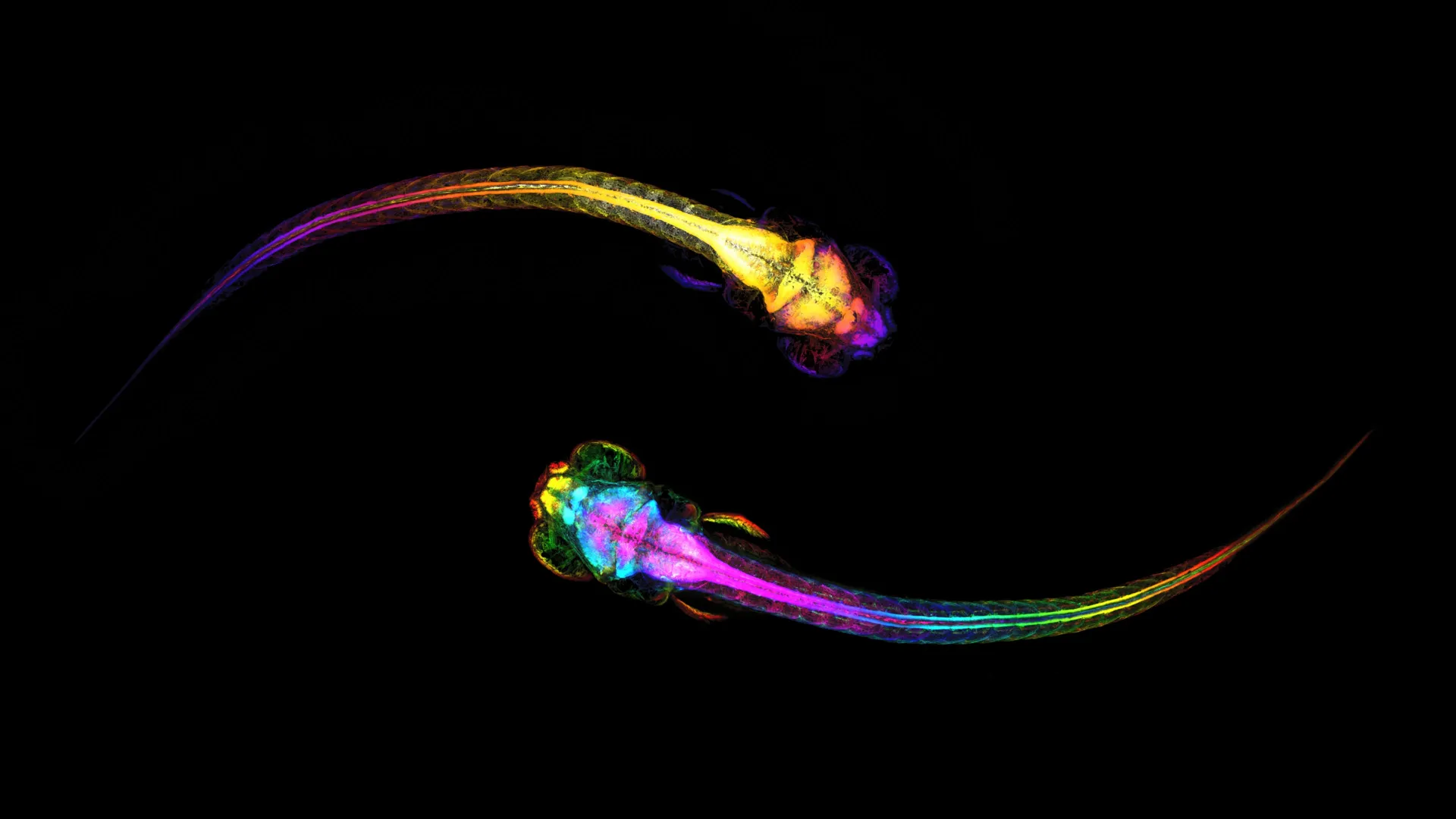
New research emerging from the esteemed Hebrew University of Jerusalem is shedding unprecedented light on the intricate neural processes that precede our decisions to approach others. For the first time, scientists have identified a distinctive, brain-wide pattern of neural activity that emerges several seconds before any physical movement occurs, signaling an impending social interaction. This groundbreaking discovery, led by Dr. Lilah Avitan and her team at the Edmond and Lily Safra Center for Brain Sciences (ELSC), not only unravels the temporal dynamics of social decision-making but also links the strength of this neural signature to an individual’s inherent social motivation. The findings, published in a leading scientific journal, hold significant implications for our understanding of social cognition and the neurological underpinnings of conditions affecting social behavior.
Unraveling the Neural Genesis of Social Engagement
The fundamental question of why we choose to engage with others has long fascinated psychologists and neuroscientists. While the observable act of approaching someone is readily apparent, the internal mental and neural preparations that lead to such a decision have remained largely elusive. This new study, by meticulously tracking brain activity in real-time, provides compelling evidence that the brain begins to orchestrate social engagement long before any outward action is initiated. The research leverages the unique advantages of zebrafish as a model organism, allowing for unparalleled precision in monitoring neural circuits at the cellular level.
The Experimental Design: A Window into Social Decisions
To investigate the neural cascade that transforms social cues into behavioral responses, the research team, including PhD student Imri Lifshitz, developed an innovative experimental paradigm. This setup involved one zebrafish observing and reacting to the movements of a conspecific swimming nearby. Crucially, during these interactions, researchers employed advanced imaging techniques to record the electrical activity across the observer fish’s entire brain in real-time. This meticulous approach enabled the team to capture the subtle, yet critical, neural events that precede and accompany a social decision, effectively creating a moment-by-moment chronicle of the brain’s internal processing.
The experimental setup was designed to mimic natural social encounters in a controlled environment. The observer fish was housed in a chamber where its visual field was dominated by the movement of another fish. This setup ensured that the primary stimulus was social in nature, allowing the researchers to isolate and study the neural responses specifically related to social approach. The ability to monitor the entire brain simultaneously was paramount, as it allowed for the identification of distributed neural networks rather than focusing on isolated brain regions. This holistic approach is central to understanding complex behaviors like social interaction, which are unlikely to be governed by a single, localized neural center.
The Emergence of a Brain-Wide "Pre-Decision State"
The results of the study were striking. As a zebrafish prepared to swim towards another fish, the researchers observed a discernible shift in brain activity that commenced several seconds prior to the motor execution of the movement. This neural precursor was not confined to a single brain area but rather manifested as a coordinated pattern of changes that spread across multiple, interconnected regions of the brain.
Specifically, the study identified increased activity in the pallium, a brain region analogous to the mammalian cortex and known to be involved in higher-order cognitive functions and complex behaviors. Concurrently, activity decreased in other, presumably less relevant, brain areas. This dynamic interplay of excitation and inhibition across the brain sculpted what the researchers have termed a neural "pre-decision state." This state acts as a sophisticated internal signal, indicating that a social action is imminent and providing a predictive marker for subsequent behavior. The strength and nature of this brain-wide pattern could, in fact, be used to forecast the social action before it even occurred.
This finding challenges the traditional view of discrete neural pathways for specific behaviors. Instead, it suggests a more integrated and dynamic neural architecture where a complex behavior like social approach is the result of widespread neural coordination. The timing of these changes – occurring seconds before movement – is particularly significant, implying that the brain engages in a preparatory phase, weighing potential social responses and initiating the necessary neural circuitry before committing to action.
Quantifying Social Drive: Neural Signatures and Individual Differences
Beyond identifying the general neural signature of social approach, the research made a crucial discovery: the intensity of this brain-wide neural pattern varied significantly among individual zebrafish. Fish that exhibited a stronger and more pronounced neural "pre-decision state" also displayed a greater tendency to engage in social behaviors overall. This correlation strongly suggests that the observed neural signature is not merely a generic indicator of impending action, but rather a reflection of an individual’s underlying social drive or motivation.
The findings further underscore the pivotal role of the pallium in orchestrating social engagement. The results indicate that this brain region is instrumental in generating the impetus to approach others and participate in social interactions. This suggests that the pallium may be a critical hub for integrating social information with motivational states, ultimately driving the decision to engage.
Dr. Lilah Avitan, the lead researcher, elaborated on the significance of their findings: "This study identifies a brain-wide neural signature of social approach that emerges before movement begins. This signature predicts not only whether an upcoming action will be social, but also how strongly socially driven the individual is." This statement highlights the dual predictive power of the identified neural pattern, offering insights into both the nature of the behavior and the inherent predisposition of the individual.
Broader Implications: From Fish to Humans
The implications of this research extend far beyond the realm of zebrafish behavior. The fundamental brain structures and mechanisms underlying social behavior are remarkably conserved across species, including humans. Therefore, understanding how the zebrafish brain prepares for social interaction could offer profound insights into human social cognition.
Potential Applications in Understanding Social Deficits
The ability to identify and quantify neural signatures associated with social drive could have significant clinical applications. For individuals who exhibit altered or disrupted social behavior, such as those diagnosed with autism spectrum disorder or social anxiety, understanding the neural basis of these differences is paramount. This research provides a potential avenue for identifying neural markers that could inform diagnosis and guide the development of targeted interventions.
For instance, if a similar brain-wide pre-decision state can be identified in humans, its strength or characteristics might correlate with the severity of social deficits. This could lead to objective, neural-based assessments of social functioning. Furthermore, by understanding the neural mechanisms that promote social engagement, researchers might be able to develop therapeutic strategies aimed at enhancing social motivation and facilitating positive social interactions in individuals who struggle with them.
Future Research Directions and the Complexity of Social Behavior
While this study represents a significant leap forward, it also opens new avenues for future research. Scientists may now investigate the specific neural pathways involved in generating this pre-decision state, exploring how different brain regions communicate and contribute to the overall pattern. Further research could also delve into the genetic and environmental factors that influence an individual’s social drive and, consequently, the strength of their neural signature.
The complexity of social behavior means that while this research provides a foundational understanding, it is unlikely to be the sole explanation. Factors such as past social experiences, individual learning, and the specific context of social encounters undoubtedly play a role in shaping our decisions to approach others. Future studies might explore how these variables interact with the identified neural mechanisms.
The research also prompts questions about the evolutionary advantage of such a preparatory neural state. The ability to anticipate and prepare for social interactions could offer significant benefits, such as allowing for more nuanced responses, conserving energy by avoiding unnecessary approaches, or facilitating more effective social navigation.
A Paradigm Shift in Social Neuroscience
The findings from the Hebrew University of Jerusalem represent a paradigm shift in social neuroscience. By demonstrating that the brain actively prepares for social interaction seconds before any physical movement, and by linking this preparation to an individual’s social drive, this research provides a crucial piece of the puzzle in understanding the intricate mechanisms that govern our social lives. The identification of a brain-wide neural signature offers a powerful new tool for studying social behavior and may ultimately pave the way for a deeper understanding and more effective treatment of conditions that affect social functioning. This work underscores the dynamic and predictive nature of neural processes, even in the seemingly spontaneous realm of social engagement.
