
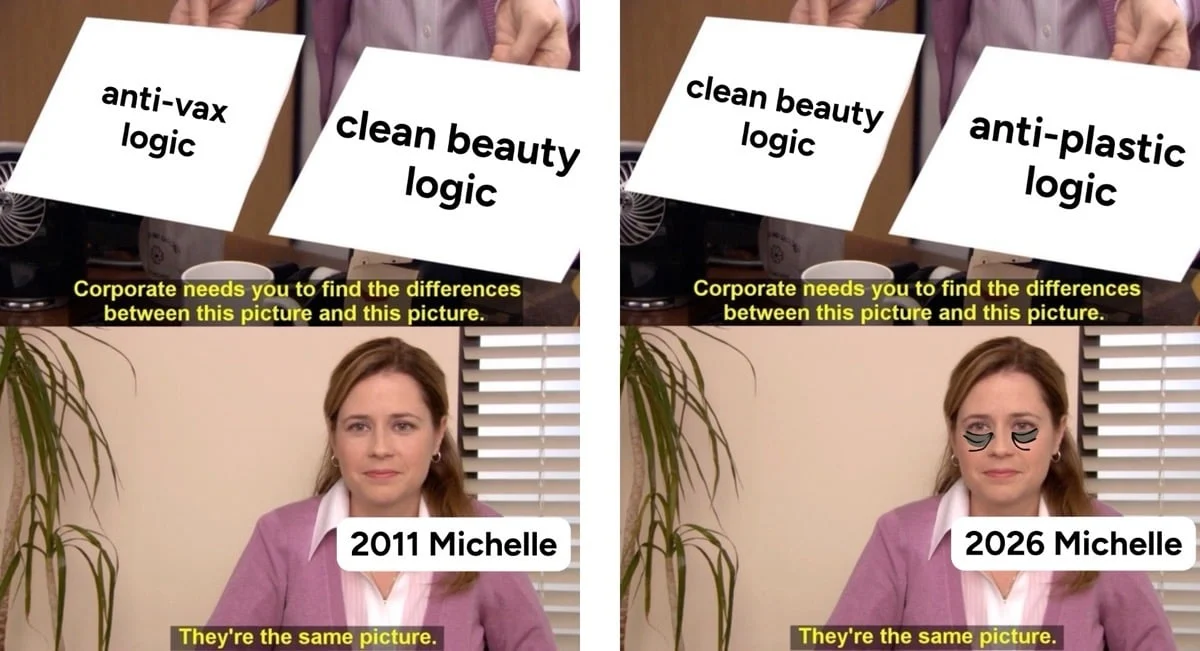
The burgeoning "plastic-free" movement, increasingly prevalent in consumer goods and particularly in the beauty industry, is exhibiting striking parallels with the "clean beauty" phenomenon that has reshaped consumer perceptions over the past decade. This observation, initially sparked by a social media post highlighting a potential "right-wing pipeline" in anti-polyester sentiment, suggests a concerning replication of pseudoscientific logic and misinformation that could undermine genuine efforts towards environmental and public health. Experts in scientific communication, who previously identified "non-toxic" clean beauty as a gateway to broader anti-science beliefs like anti-vaccination, are now sounding alarms about the similar rhetorical patterns emerging in the discourse around plastics.
The Precedent: Unpacking the "Clean Beauty" Movement
For over a decade, the "clean beauty" movement has advocated for products free from a growing list of "toxic" or "dirty" ingredients, often including common substances like parabens, phthalates, sulfates, and formaldehyde. Driven by consumer anxiety and a desire for perceived safety, this trend has significantly influenced product formulations and marketing strategies across the cosmetics industry. However, from a scientific communication perspective, the movement has been heavily criticized for its reliance on the appeal to nature fallacy, where "natural" is equated with "good" and synthetic with "bad," regardless of scientific evidence.
Dr. Michelle Wong, a prominent science communicator behind Lab Muffin Beauty Science, began her scicomm journey in 2011 partly due to concerns that the "non-toxic" narrative of clean beauty could serve as a "pipeline to anti-vax beliefs." She noted that the logical fallacies underpinning both movements were eerily similar, often demonizing the same substances (e.g., aluminum, formaldehyde) without regard for dosage or exposure levels – fundamental principles of toxicology. This approach, characterized by blanket prohibitions rather than nuanced risk assessment, has frequently led to the removal of safe and effective ingredients, sometimes replaced by less stable or more allergenic alternatives, ultimately compromising product efficacy and consumer safety.
The Rise of the "Plastic-Free" Imperative
Today, the "plastic-free" trend is gaining similar momentum. Consumers, brands, and influencers are increasingly championing products devoid of plastic packaging or components, driven by a growing awareness of plastic pollution, landfill issues, and concerns about microplastics. While the imperative to reduce plastic waste is a legitimate environmental goal, the manner in which this narrative is often framed – with blanket "plastic-free" claims and fearmongering about the health impacts of microplastics – mirrors the problematic communication tactics seen in clean beauty.
This new wave of environmental advocacy, while well-intentioned, frequently overlooks the complex scientific realities of sustainability and material science. The emphasis is almost exclusively on the "end-of-life" stage of plastics – the visual pollution of oceans, the slow degradation in landfills, and the proliferation of microplastic particles – often to the detriment of a holistic understanding of a product’s entire lifecycle impact. This narrow focus can lead to misinformed consumer choices and ineffective, or even counterproductive, environmental strategies.
Shared Logical Flaws: A Comparative Analysis
The parallels between the "plastic-free" and "clean beauty" narratives extend beyond superficial trends, delving into fundamental flaws in reasoning and scientific interpretation.
1. The Appeal to Nature Fallacy:
Both movements heavily rely on the appeal to nature fallacy. In clean beauty, this manifests as the belief that anything "natural" is inherently superior or safer than "chemicals" or synthetic compounds. For the "plastic-free" movement, it translates into the blanket assertion that "plastic equals bad, natural materials equal good." This often extends to bioplastics, which, despite being derived from natural starting materials, are not automatically environmentally superior and can even contribute to their own set of environmental challenges. The inherent flaw is that a material’s origin does not dictate its impact on health or the environment; many natural substances are toxic, and many synthetic ones are benign or even beneficial.
2. Ignoring the Basics of Relevant Science:
A significant critique of clean beauty is its disregard for fundamental toxicology, particularly the principle that "the dose makes the poison." Ingredients are often demonized based on hazard identification (what they can do at high doses) rather than risk assessment (what they actually do at typical exposure levels in products).
Similarly, the "plastic-free equals better for the environment" mantra often ignores the fundamentals of sustainability science, specifically Life Cycle Assessment (LCA). LCA is the internationally recognized scientific standard for quantitatively measuring a product’s total environmental impact, evaluating all stages from raw material extraction, manufacturing, transport, use, and finally, end-of-life. Public discourse around plastics, however, is almost entirely dominated by end-of-life concerns (microplastics, recycling, landfills, marine debris), neglecting other crucial impacts like carbon emissions, water usage, and resource depletion during production and transport.
Scientific studies employing LCA frequently demonstrate that plastic packaging, due to its lightweight and efficient nature, often results in lower overall environmental impacts, especially regarding greenhouse gas emissions, compared to heavier alternatives like glass, aluminum, or paper. For instance, one analysis cited by the original article indicated that switching from plastic to glass, paper, or aluminum could, on average, require 3.6 times more material, 2.2 times more energy, and lead to 2.7 times more carbon emissions. Plastic’s benefits often include:
- Reduced Transport Emissions: Lighter packaging means less fuel consumption during shipping.
- Material Efficiency: Often requires less material to provide equivalent protection.
- Preservation and Waste Reduction: Effective barrier properties extend product shelf life, reducing food and product waste.
While these are not blanket statements, and each case requires specific LCA, the general pattern highlights the oversimplification inherent in broad anti-plastic claims. The emphasis on "consuming less" remains the most environmentally sustainable option, but merely switching materials without a holistic assessment often leads to unintended environmental consequences.
3. Citing Studies with Serious Methodological Issues:
Both movements have a history of selectively citing, or misinterpreting, studies that suffer from methodological flaws, leading to exaggerated or false conclusions. In clean beauty, this often involves taking in vitro (test tube) studies or animal studies conducted with high doses and extrapolating them directly to human exposure from cosmetic products, ignoring vast differences in context and concentration.
For microplastics research, a nascent and rapidly evolving field, methodological challenges are substantial. Measuring minute quantities of ubiquitous substances accurately is inherently difficult. Common issues include:
- Contamination: Microplastics are pervasive in the environment, making it challenging to prevent contamination from laboratory equipment, clothing, and even air, leading to false positives or inflated counts.
- Analytical Challenges: Techniques like pyrolysis-GCMS (Py-GCMS), used to quantify microplastics, can misidentify other substances (e.g., fats) as polyethylene unless meticulous corrections are applied. This can result in overreporting the presence of microplastics, as seen in some studies claiming high levels in human tissues.
These issues create fertile ground for misinformation, as sensational headlines often emerge from preliminary or flawed studies, generating public alarm without robust scientific consensus.
4. Assuming Presence Means Harm (Correlation vs. Causation):
A critical error common to both narratives is the assumption that the mere presence of a substance in the body or environment automatically equates to harm. The clean beauty movement notoriously latched onto studies finding parabens in breast tumor tissue, implying a causal link without measuring paraben levels in healthy tissue or accounting for other confounding factors. The scientific consensus remains that parabens, at levels used in cosmetics, are safe.
Similarly, recent findings of microplastics in human artery plaque, brain tissue, or other organs are often presented as definitive evidence of disease causation. However, as with parabens, correlation does not prove causation. Such findings could be explained by:
- Ubiquity: Microplastics are everywhere; finding them in diseased tissue might simply reflect their widespread presence in the environment and human bodies, not a causal role in the disease.
- Confounding Factors: Individuals with certain diseases might have lifestyles or exposures that also increase their microplastic burden, making it difficult to isolate cause and effect.
- Reverse Causation: The disease itself might alter tissues in a way that makes them more likely to accumulate microplastics, rather than microplastics causing the disease.
Rigorous epidemiological and toxicological studies are required to establish causality, a process that is often lengthy and complex.
5. Ignoring Other Reasons for Using the Material:
Both movements frequently overlook the functional benefits of the materials or ingredients they demonize. Clean beauty’s rejection of parabens, for example, often ignores their effectiveness as broad-spectrum preservatives, crucial for preventing microbial contamination in water-based products. Removing parabens without a suitable replacement can lead to products that spoil quickly or harbor harmful bacteria, posing a greater risk to consumer health than the preservatives themselves.
Likewise, the anti-plastic narrative often ignores the multifaceted benefits of plastics beyond just their environmental footprint (as discussed in LCA):
- Product Protection and Hygiene: Plastics provide excellent barriers against contamination, moisture, and light, preserving product integrity and safety, especially for sensitive formulations.
- Safety Features: Plastics are essential for child-resistant closures, tamper-evident seals, and shatter-proof packaging, enhancing consumer safety.
- Accessibility: Plastic packaging is often lighter and cheaper to produce, making products more accessible and affordable for a wider demographic.
- Reduced Waste (beyond product preservation): Durable plastic packaging can prevent breakage and spoilage during transport and storage, reducing overall product waste.
Ignoring these practical considerations leads to a one-dimensional critique that fails to acknowledge the complex trade-offs involved in material selection.
6. Science-Washing and Convenient Experts:
A particularly insidious parallel is the prevalence of "science-washing" in both sectors. Brands and influencers often claim to be "science-backed" or "evidence-based" while promoting narratives built on cherry-picked data, misleading interpretations, or the endorsements of "convenient experts" who lack genuine expertise in the relevant scientific fields.
In clean beauty, this often involves dermatologists or estheticians speaking definitively on toxicology, or influencers leveraging their platforms to disseminate fear-based ingredient lists. For the "plastic-free" movement, it might involve environmental advocates or beauty brand founders making sweeping sustainability claims without consulting certified sustainability experts or conducting robust LCAs. Regulators in major regions, including the US FTC, UK CMA, and Australian ACCC, have begun issuing guidelines and cracking down on unsubstantiated "eco-friendly" or "green" claims, highlighting the widespread nature of this problem. Genuine sustainability requires rigorous assessment, often by interdisciplinary teams of scientists and engineers, not just marketing departments.
7. Motivated Reasoning and Confirmation Bias:
Underpinning many of these parallels is the psychological phenomenon of motivated reasoning and confirmation bias. Individuals, and even organizations, tend to interpret evidence in a way that aligns with their pre-existing beliefs, political leanings, or group identity. This tribalism can lead to the outright dismissal of valid scientific information if it comes from a perceived "opponent" or challenges a cherished narrative.
A recent example cited by Dr. Wong illustrates this clearly: when a mainstream media outlet like The Guardian published an article discussing methodological issues in microplastic measurement and correcting previous misinformation about microplastics in the brain, it faced accusations of being "bought by Big Plastic." This reaction occurred despite the article quoting multiple independent scientists from public institutions alongside a former industry chemist, and referencing a letter from nine European scientists. This demonstrates a dangerous trend: instead of critically evaluating the arguments presented, the source’s perceived affiliation becomes the sole criterion for acceptance or rejection, stifling objective discourse. As cosmetic scientist Jen Novakovich notes, "Discounting something solely based on funding source or affiliation is actually the opposite of critical thinking."
Towards Genuine Sustainability: Implications and the Way Forward
The striking parallels between the "clean beauty" and "plastic-free" movements underscore a broader challenge in public understanding of science and environmental issues. While the desire for healthier products and a healthier planet is commendable, an approach driven by fear, oversimplification, and scientific misrepresentation ultimately proves counterproductive.
The implications are far-reaching:
- Consumer Confusion: The constant barrage of conflicting information makes it difficult for consumers to make truly informed choices, leading to decision fatigue and distrust.
- Industry Greenwashing: Brands capitalize on consumer anxieties, leading to performative "green" initiatives that prioritize marketing over genuine environmental impact.
- Misdirected Resources: Efforts and investments are diverted towards addressing perceived harms (e.g., specific "toxic" ingredients, plastic packaging) that may not be the most significant environmental or health concerns, while more impactful issues are neglected.
- Undermining Science: The erosion of trust in scientific expertise and methodologies can have detrimental effects on public discourse and policy-making across various critical domains.
To navigate towards genuine sustainability and improved public health, a shift towards evidence-based decision-making is imperative. This requires:
- Promoting Scientific Literacy: Educating the public on fundamental scientific principles like toxicology, life cycle assessment, and critical evaluation of research.
- Demanding Transparency: Encouraging brands to back their sustainability claims with robust, independently verified data (e.g., comprehensive LCAs).
- Supporting Expert Voices: Amplifying the voices of qualified scientists and experts in fields like environmental engineering, material science, and toxicology, rather than relying on influencers or self-proclaimed gurus.
- Holistic Problem Solving: Moving beyond single-issue campaigns (e.g., "plastic-free") to consider the entire environmental and social footprint of products and systems.
While reducing plastic waste and addressing microplastic contamination are important goals, achieving them effectively necessitates a nuanced, scientifically informed approach. Blanket demonization, without proper evidence and a holistic understanding of impacts, risks repeating the mistakes of the "clean beauty" movement, ultimately leading to misplaced conservation efforts and outcomes that are worse for both human and environmental health. The insights from science communicators like Dr. Michelle Wong and Jen Novakovich (The Eco Well), who are actively engaged in combating environmental misinformation, are crucial in guiding this transition towards more responsible and effective practices.
