
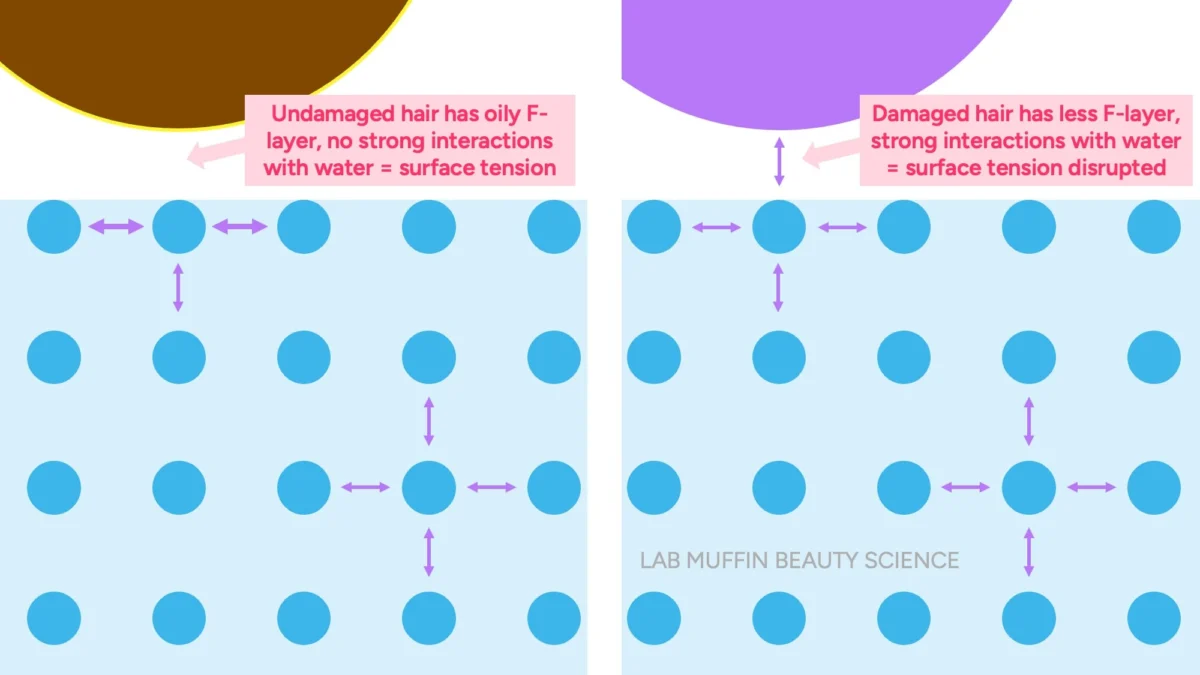
The widespread concept of "hair porosity" and the popular at-home tests used to determine it are fundamentally flawed, relying on scientific misconceptions that can lead consumers to misguided haircare choices. While the advice derived from these tests sometimes coincidentally aligns with suitable products for individual hair types, the underlying scientific explanations are largely inaccurate, according to leading cosmetic chemists and scientific research. The issue stems from a misunderstanding of how hair interacts with water, particularly the role of surface tension versus actual absorption.
The Rise of the Porosity Myth in Haircare
The concept of hair porosity gained significant traction over the past decade, particularly within online beauty communities and among individuals with textured hair seeking tailored solutions. It posits that hair can be categorized into "low," "medium," or "high" porosity based on how easily moisture penetrates and is retained. Low porosity hair is often described as having tightly bound cuticles that resist moisture absorption but retain it well once inside. High porosity hair, conversely, is said to have open, damaged cuticles that readily absorb moisture but lose it just as quickly. Medium porosity falls in between. This categorization has led to an entire segment of the haircare market, with products specifically marketed for each porosity type, promising to address unique hydration and conditioning needs.
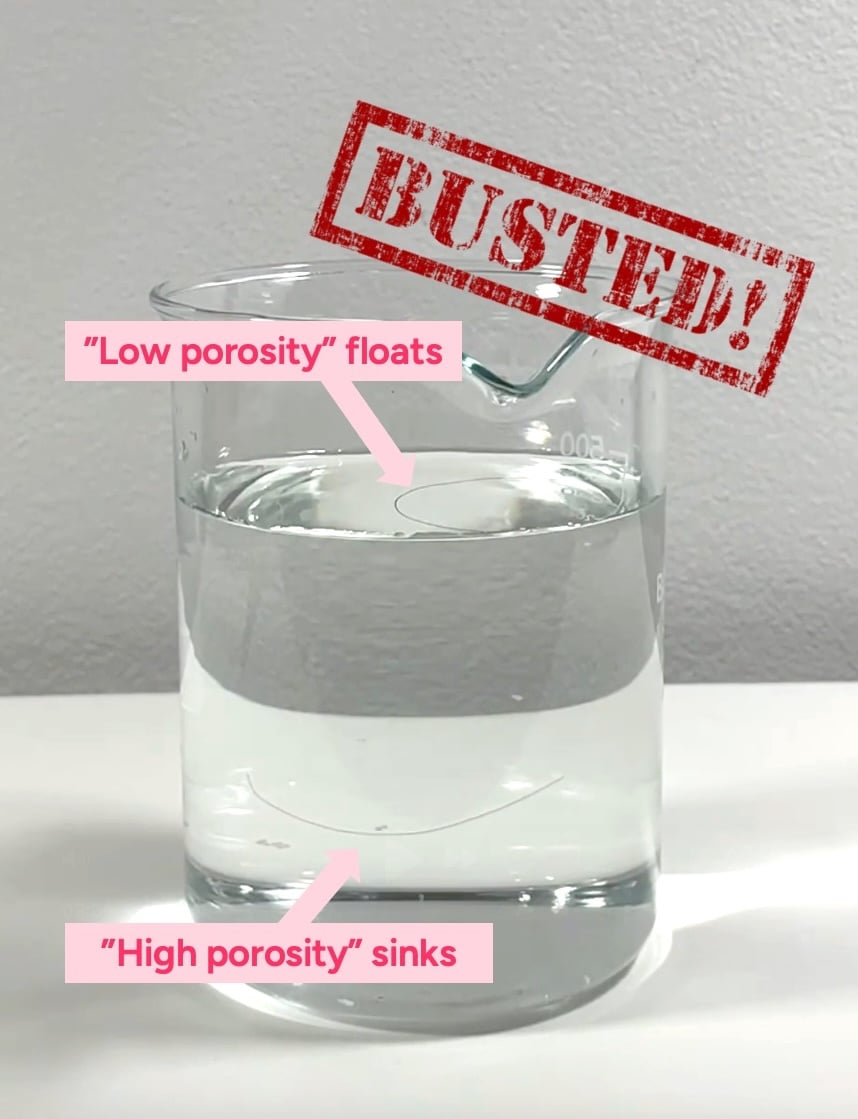
Consumers have widely adopted simple, at-home diagnostic methods, such as the "Float Test" and the "Drop Test," to determine their hair’s porosity. These tests, frequently shared on social media and beauty blogs, purport to offer quick insights into hair health and guide product selection. The narrative surrounding these tests suggests that hair’s ability to float or sink in water, or how a water droplet behaves on its surface, directly correlates with its cuticle structure and moisture absorption capacity. However, scientific evidence indicates that these observations are primarily governed by surface phenomena, not the internal structure of the hair or its intrinsic ability to absorb water.
The Scientific Reality: Hair’s Interaction with Water
Contrary to popular belief, undamaged and conditioned hair is not "waterproof." The notion that the hair cuticle forms an impermeable barrier, especially when healthy, is a pervasive myth. Scientific studies, including extensive research detailed in sources like Robbins’ "Chemical and Physical Behavior of Human Hair," unequivocally demonstrate that human hair readily absorbs a significant amount of water.
In fact, undamaged hair can absorb approximately 30% of its own weight in water within minutes. This absorption is not a slow process; the water content of even healthy, conditioned hair changes rapidly in response to ambient humidity. Data illustrates this dynamic interaction:
| Relative humidity (%) | Weight of water absorbed (%) |
|---|---|
| 0 | 0 |
| 8 | 3.9 |
| 40 | 10.2 |
| 63 | 14.8 |
| 86 | 22.6 |
| 100 | 31.2 |
Source: Robbins CR. Chemical and Physical Behavior of Human Hair. Springer Berlin Heidelberg 2012.
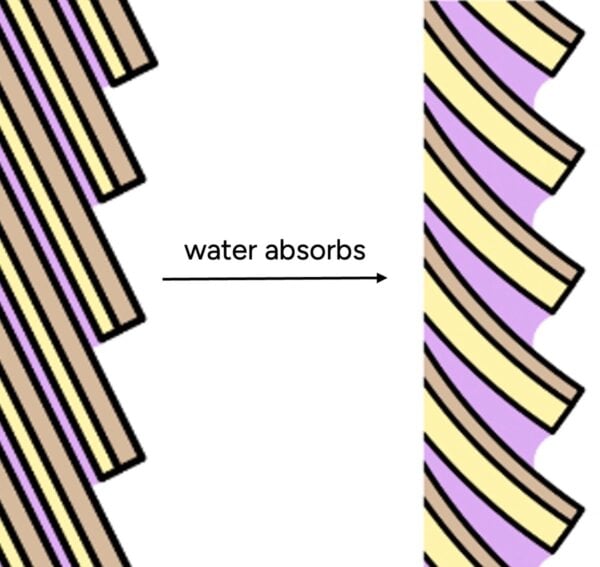
This table highlights that hair continuously exchanges moisture with its environment. At 100% relative humidity, hair can hold nearly a third of its weight in water, even if it is considered "undamaged." This phenomenon occurs because the hair’s natural conditioning F-layer, an oily, hydrophobic layer of 18-methyl eicosanoic acid (18-MEA), is not a continuous, impermeable seal. Instead, it resides on the surface of each individual cuticle scale, leaving numerous microscopic gaps. The structure of hair cuticles is often compared to overlapping shingles on a roof or scales on a pinecone, allowing for pathways through which water molecules, particularly in their gaseous state (humidity), can penetrate the hair shaft.
Debunking the "Waterproof" Myth and Conditioner Function
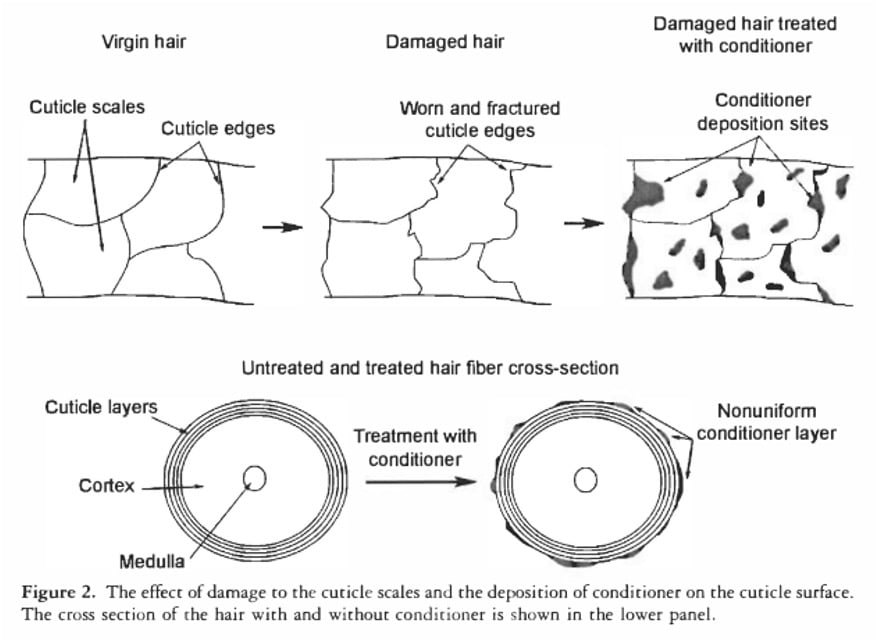
Further challenging the "waterproof" hair myth is the actual mechanism by which conditioners work. Conditioners are designed to smooth the hair’s surface, reduce friction, and improve manageability. They achieve this by depositing conditioning agents, often silicones or cationic surfactants, onto the hair shaft. However, these deposits do not form a continuous, hermetic layer that seals out water. Instead, electron microscopy reveals that conditioners adhere to the hair surface in microscopic "blobs" or patches.
While these conditioner deposits are effective at making hair feel smoother to the touch by reducing surface irregularities and friction, they are not a barrier to water molecules. Water molecules are incredibly tiny, far smaller than the gaps between these conditioner deposits or the natural openings in the cuticle layer. Therefore, even conditioned hair remains permeable to water. The primary function of conditioners is to enhance the hair’s feel, appearance, and ease of styling, not to render it waterproof. The misconception that conditioners "seal" the hair against water loss or absorption misrepresents their chemical and physical action.
Anatomy of Misconception: The Float Test and Drop Test
The widespread "Float Test" and "Drop Test" are prime examples of observations being misinterpreted. In the Float Test, a strand of hair is placed in a glass of water, with the hypothesis that "high porosity" (damaged) hair will sink due to rapid water absorption, while "low porosity" (undamaged) hair will float. Similarly, the Drop Test involves placing a water droplet on a lock of hair; "undamaged" hair is said to cause the droplet to bead up, while on "damaged" hair, it flattens out and spreads.
The conventional explanations for these phenomena attribute them to the hair’s internal porosity – how many "holes" it has and how quickly it absorbs liquid water. However, this interpretation overlooks a fundamental principle of physics: surface tension.
Understanding Surface Tension: The Real Culprit
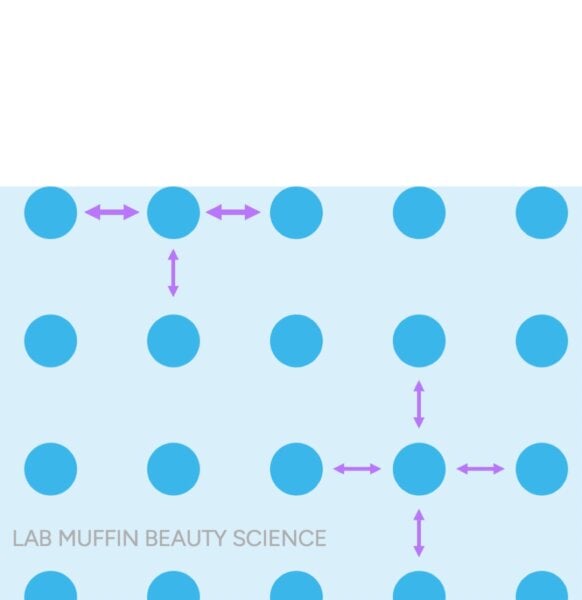
Surface tension is a property of liquids that results from the cohesive forces between molecules at the liquid’s surface. In water, individual water molecules are strongly attracted to each other through hydrogen bonds. Molecules within the bulk of the liquid are surrounded by other water molecules in all directions, creating a balanced network of attractions. However, water molecules at the surface lack neighboring molecules above them. This imbalance causes them to pull more strongly on their lateral and downward neighbors, resulting in a net inward force. This inward force manifests as a "skin" or tension at the liquid’s surface, allowing it to resist external forces and support objects denser than itself, such as insects, paperclips, or even human hair.
Consider a steel paperclip, which is approximately eight times denser than water. It can float on water due to surface tension. If this surface tension is disrupted – for instance, by poking the paperclip or adding a drop of detergent (a surfactant) – the paperclip will immediately sink, not because it has absorbed water, but because the cohesive forces at the water’s surface have been weakened.
This same principle applies to hair in the Float Test. Undamaged hair, with its intact, oily F-layer, is hydrophobic (water-repelling) on its surface. When placed on water, this hydrophobic surface does not readily form hydrogen bonds with the water molecules at the surface. Consequently, the water’s surface tension remains largely undisturbed, allowing the hair strand, despite being denser than water, to "float" on this tension.
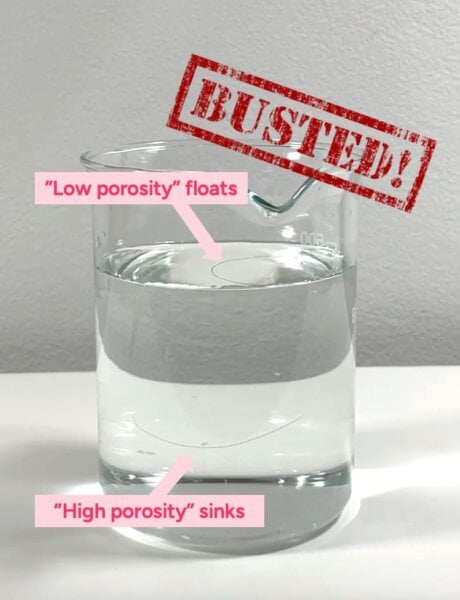
Conversely, damaged hair has a compromised F-layer, exposing a more hydrophilic (water-attracting) protein surface. When this damaged hair contacts water, it readily forms hydrogen bonds with the water molecules at the surface. This interaction disrupts the cohesive network of water molecules, weakening the surface tension. With the surface tension compromised, the hair strand, which is intrinsically denser than water, sinks. The sinking is not due to rapid internal water absorption, but rather the disruption of the surface forces holding it aloft.
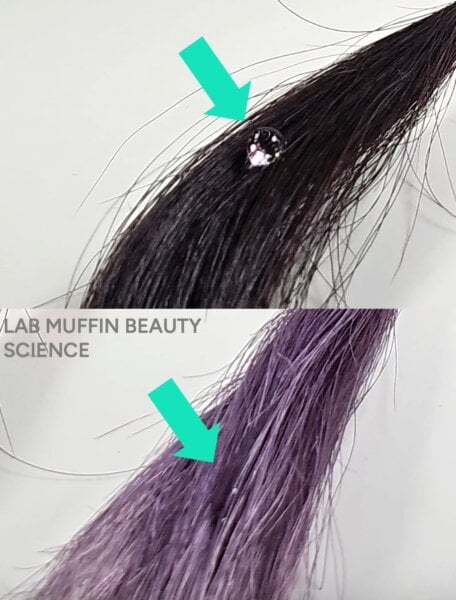
Similarly, the Drop Test is explained by surface tension and wettability. On undamaged, hydrophobic hair, water forms a high contact angle, resulting in a spherical bead that minimizes contact with the hair surface. This is because the water molecules prefer to "hold hands" with each other rather than with the hair’s oily surface. On damaged, hydrophilic hair, the water’s adhesion to the hair surface is stronger than its internal cohesion, causing the droplet to spread out and flatten, exhibiting a low contact angle. This spreading is a function of the hair’s surface chemistry and its wettability, not its internal "porosity" or the speed at which it absorbs liquid water.
Why "Porosity" Advice Sometimes Works: An Indirect Correlation
Despite the scientific inaccuracies of the tests, some of the haircare advice based on "porosity" categorizations can coincidentally lead to better results. This is because the tests, though misdiagnosing porosity, do provide an indirect indicator of hair surface damage.
- "High porosity" diagnosis: Hair that sinks in the float test or causes water droplets to spread is typically hair with a compromised F-layer and damaged cuticles. This surface damage makes the hair more hydrophilic. Such hair often benefits from products designed to smooth the cuticle, provide extra conditioning, and reduce further damage. These products might contain ingredients like heavier oils, silicones, and protein treatments, which are indeed beneficial for damaged hair.
- "Low porosity" diagnosis: Hair that floats or beads water droplets likely has a relatively intact F-layer and less surface damage, making it more hydrophobic. This hair might be prone to product buildup and can feel greasy with heavy products. Advice for "low porosity" hair often includes using lighter conditioners, clarifying shampoos, and heat to encourage product penetration, which can be appropriate for less damaged hair or hair prone to buildup.
Thus, the correlation is not direct porosity measurement, but rather a proxy for surface health. The advice works not because the hair has "holes" that quickly absorb water, but because its surface properties indicate a need for specific types of conditioning or cleansing.
Implications for Hairdressers and Consumers
The reliance on flawed porosity tests carries significant implications for both haircare professionals and consumers. For hairdressers, particularly when performing chemical treatments like coloring, perming, or straightening, accurately assessing hair’s internal state is crucial for determining processing times and product concentrations. Relying on a float test or drop test, which only reflects surface characteristics, can lead to inaccurate judgments about how quickly chemical agents will penetrate the hair shaft. As cosmetic chemists and trichologists advocate, the most reliable method for professionals remains a direct strand test with the actual product to observe its interaction and processing speed.
For consumers, the "porosity" myth can lead to unnecessary complexity and expenditure. Misinterpreting their hair’s needs based on these tests might lead them to purchase products that are either too heavy or too light for their hair’s actual condition, potentially causing buildup, dryness, or a lack of desired results. It can also foster a sense of confusion and frustration when products recommended for their "porosity type" do not perform as expected.
Expert Perspectives and the Path Forward
Leading voices in cosmetic science, such as Dr. Michelle Wong of Lab Muffin Beauty Science, have been vocal in debunking these myths, emphasizing the importance of understanding actual hair science. Dermatologists and trichologists largely concur, stressing that effective haircare should focus on factors like overall hair health, degree of damage, texture (fine, medium, coarse), density, and scalp condition, rather than a simplistic porosity categorization based on flawed tests.
The haircare industry is slowly beginning to adapt, with some brands shifting their messaging from "porosity-specific" to "hair condition-specific" or "texture-specific" recommendations. This reflects a growing push for science-backed claims and more transparent communication with consumers.
Ultimately, navigating haircare effectively requires a move beyond popular but unscientific tests. Instead, consumers and professionals should focus on observable characteristics of hair:
- Hair Damage: Is the hair dry, brittle, prone to breakage, or split ends? This indicates a need for strengthening, moisturizing, and protective ingredients.
- Hair Texture: Is it fine, medium, or coarse? This affects how heavy or light products should be.
- Hair Density: How much hair is on the scalp? This influences product quantity.
- Scalp Health: Is the scalp oily, dry, sensitive, or flaky? Scalp condition is foundational to healthy hair growth.
- Product Performance: Does the hair respond well to certain types of ingredients or formulations? This remains the most practical guide.
By understanding that hair is a dynamic, absorbent material and that its interaction with water is complex and governed by both internal structure and surface chemistry, individuals can make more informed decisions about their haircare routines. The journey to healthy hair is best guided by genuine scientific understanding, not by simplistic tests that misinterpret fundamental physical phenomena.
References
Robbins CR. Chemical and Physical Behavior of Human Hair. 5th ed. Springer Berlin Heidelberg 2012.
La Torre C, Bhushan B. Nanotribological effects of silicone type, silicone deposition level, and surfactant type on human hair using atomic force microscopy. J Cosmet Sci. 2006;57(1):37-56.
