
A widely disseminated concept in the haircare industry, the notion of "hair porosity" and the popular at-home tests used to determine it, have been scientifically debunked, according to new research published by Lab Muffin Beauty Science on January 28, 2026. This re-evaluation challenges long-held beliefs about how hair interacts with water, suggesting that common diagnostic methods, such as the float test and the drop test, misinterpret fundamental principles of hair science, primarily surface tension, rather than actual internal water absorption capabilities. The findings by cosmetic chemist Michelle Wong, accessible via labmuffin.com, advocate for a more scientifically grounded approach to understanding and treating hair.
The Rise of Porosity in Haircare Discourse
The concept of hair porosity gained significant traction over the past decade, particularly within the natural hair community and subsequently across the broader beauty landscape. It promised a personalized approach to haircare, suggesting that individuals could categorize their hair as "low," "medium," or "high" porosity based on how easily their hair absorbed and retained moisture. This categorization then dictated specific product recommendations – for instance, low porosity hair was often advised to use lighter products to avoid buildup, while high porosity hair was encouraged to seek out heavier, sealant-rich formulas.
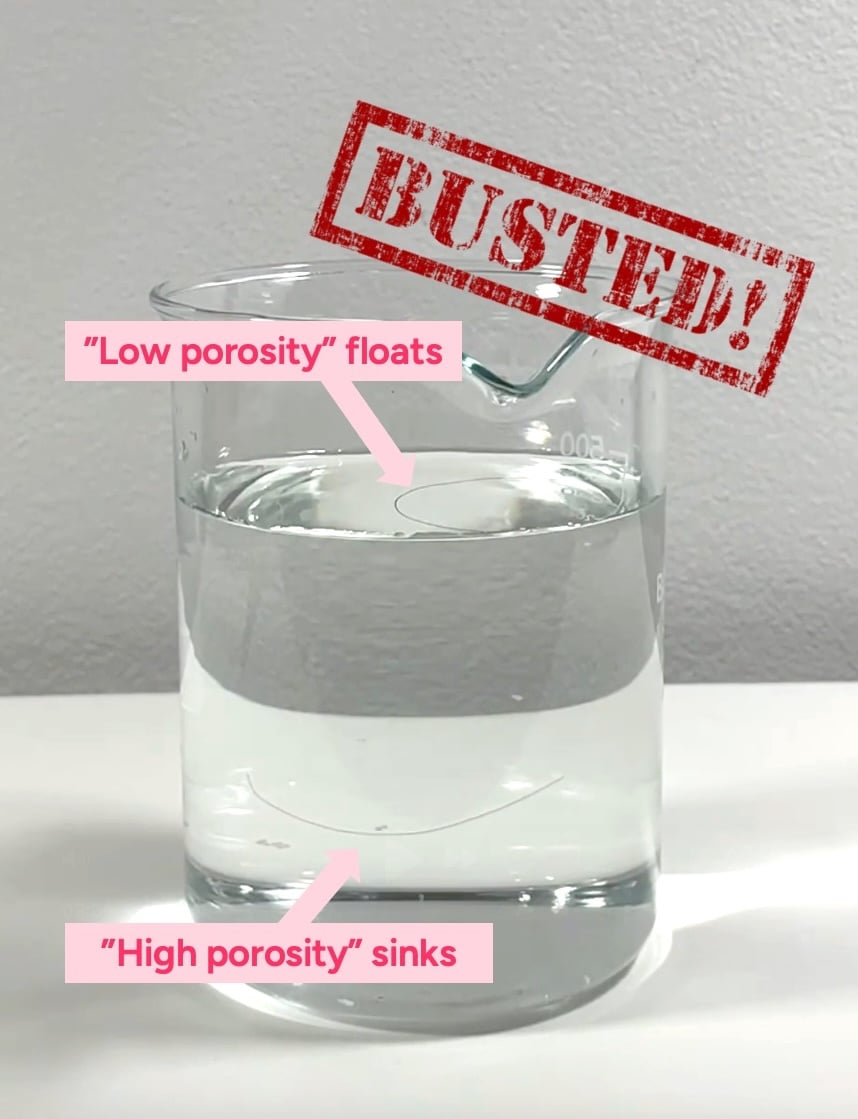
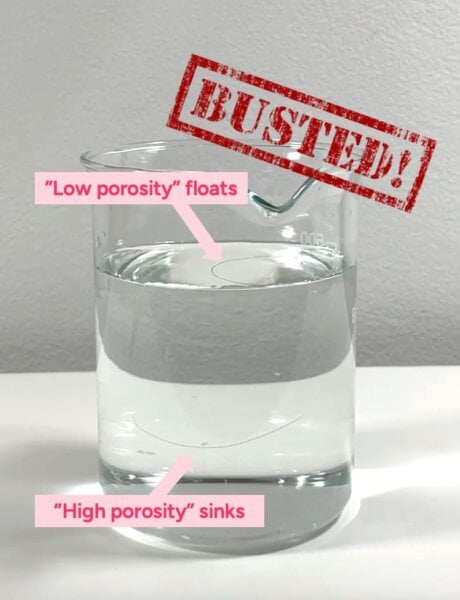
The allure of porosity lay in its seemingly simple, at-home diagnostic tests. The most prevalent of these, the "float test," involves placing a strand of hair in a glass of water. If the hair floats, it’s deemed low porosity; if it sinks slowly, medium; and if it sinks quickly, high porosity. The "drop test" involves placing a drop of water on a section of hair; if it beads up, it’s low porosity, and if it spreads quickly, it’s high porosity. These tests, often shared widely on social media platforms and beauty blogs, became cornerstones for many in building their haircare routines.
Industry analysts note that the global haircare market, valued at over $80 billion in 2023 and projected to grow steadily, has seen a significant shift towards personalized and scientifically-backed solutions. This trend inadvertently fueled the popularity of concepts like porosity, as consumers sought tailored advice amidst an overwhelming array of products. Haircare brands responded by developing lines specifically marketed for different porosity types, further solidifying the concept in the consumer psyche.
Debunking the Waterproof Myth: Hair’s True Interaction with Water
At the heart of the porosity myth, as identified by Wong, is a fundamental misunderstanding: the idea that healthy, undamaged hair is inherently waterproof. Popular belief suggested that an intact cuticle layer on healthy hair would seal out water, and that conditioners would mimic this function for damaged hair. However, scientific evidence contradicts this.
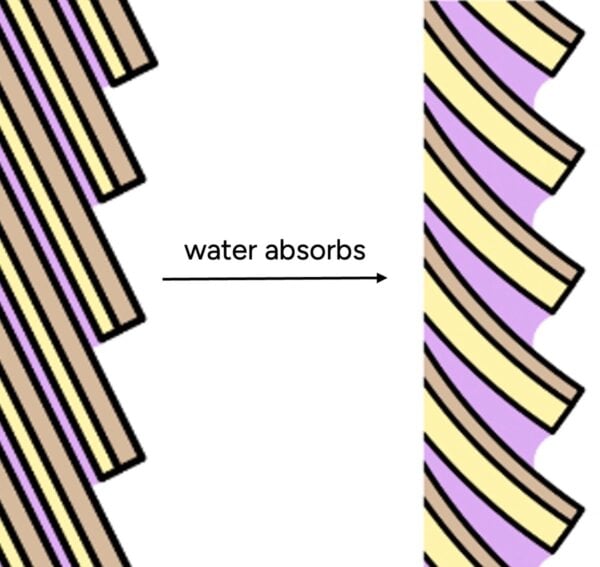
"Undamaged hair is not waterproof," states Wong in her research. "It can absorb about 30% (almost one-third) of its own weight in water, in minutes." This absorption is not a slow process but occurs rapidly, with the water content of hair changing quickly in response to ambient humidity. Data from Robbins CR’s "Chemical and Physical Behavior of Human Hair" illustrates this clearly:
| Relative humidity (%) | Weight of water absorbed (%) |
|---|---|
| 0 | 0 |
| 8 | 3.9 |
| 40 | 10.2 |
| 63 | 14.8 |
| 86 | 22.6 |
| 100 | 31.2 |
This table demonstrates that even at moderate humidity levels, hair absorbs a significant amount of water. This phenomenon is due to the hygroscopic nature of keratin, the primary protein in hair, which readily forms hydrogen bonds with water molecules.
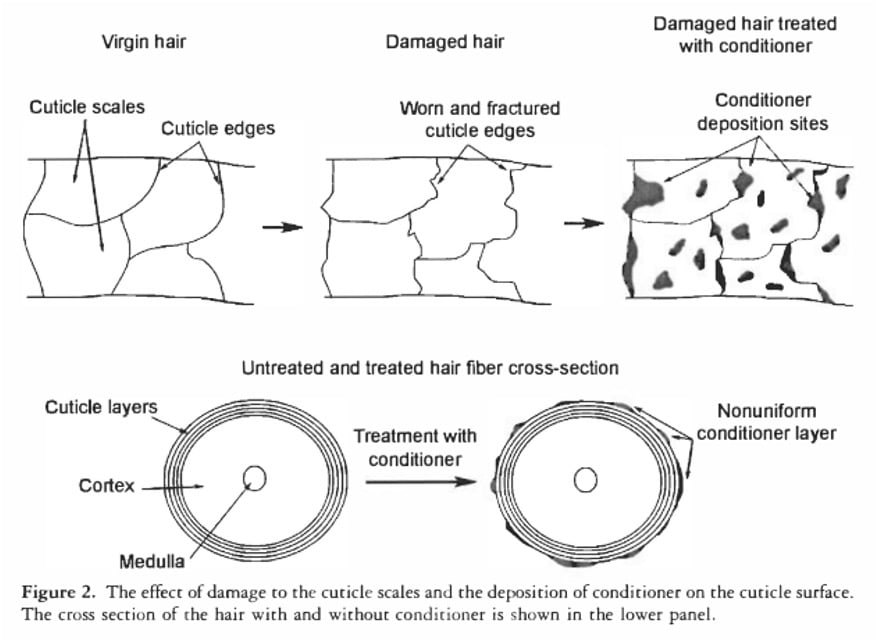
The misconception about hair being waterproof often stems from a simplistic view of the hair cuticle. While the cuticle layers overlap like shingles on a roof, creating a protective barrier, they are not hermetically sealed. The natural F-layer, a protective lipid layer on the surface of each cuticle scale, is present only on the top of these scales, leaving microscopic gaps and edges where water can penetrate. Similarly, conditioners, while effective at smoothing the hair’s surface and reducing friction, do not form a continuous, impermeable layer. Instead, they deposit in microscopic "blobs," which are sufficient to improve feel and appearance but are ineffective at blocking tiny water molecules from entering the hair shaft.
The Real Science: Surface Tension, Not Porosity
The key to understanding why the float and drop tests yield varying results lies not in hair’s internal porosity, but in the principle of surface tension and how water interacts with the hair’s surface.
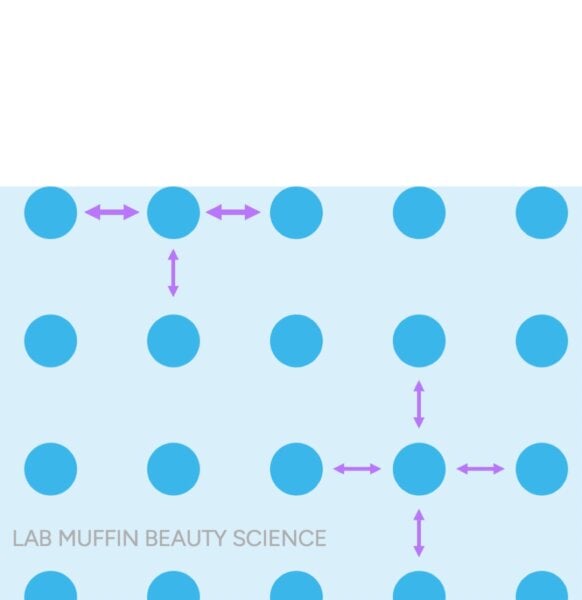
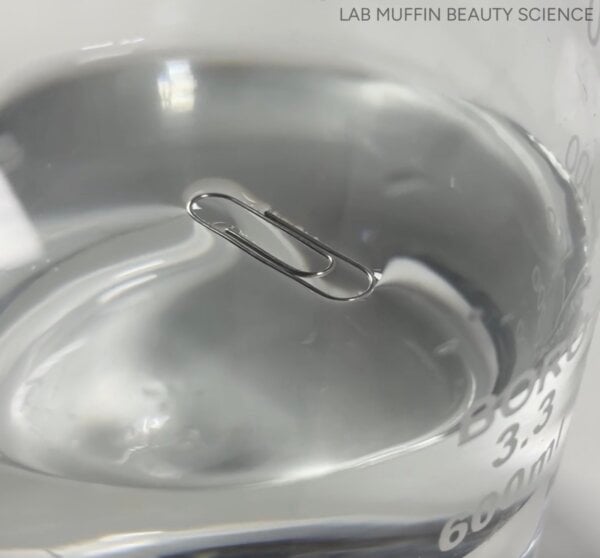
Surface tension is a property of liquid surfaces that causes them to behave like an elastic sheet. In water, this is due to the strong attractive forces (hydrogen bonds) between water molecules. Molecules at the surface experience an inward pull, creating a "skin" that can support objects denser than water, such as insects or a carefully placed paperclip. This "skin" can be broken by disruption, for example, by adding a surfactant (like detergent).
-
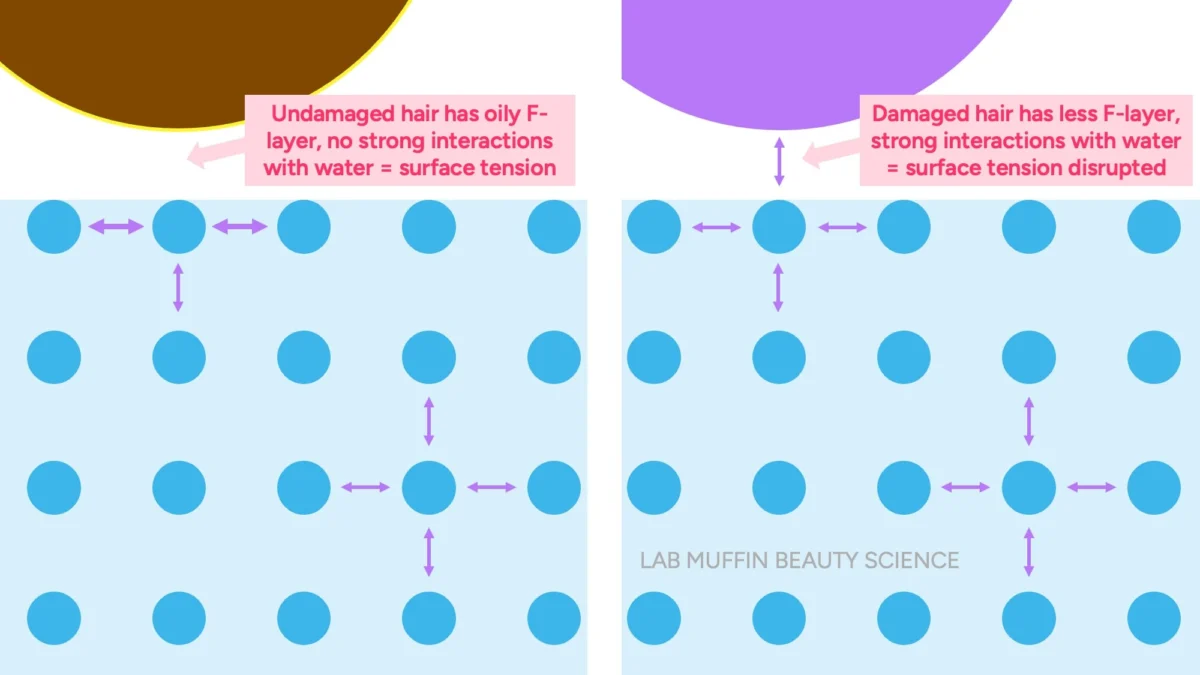
Explaining the Float Test: The float test’s results are primarily influenced by the condition of the hair’s outermost layer. Undamaged hair possesses an intact F-layer, which is naturally hydrophobic (water-repelling). This hydrophobic surface allows the hair strand to rest on the water’s surface tension, much like a paperclip. When the hair is damaged, this F-layer is compromised or removed, exposing a more hydrophilic (water-attracting) surface. This hydrophilic surface readily forms hydrogen bonds with the water molecules at the surface of the glass, effectively disrupting the water’s surface tension around the hair strand. With the surface tension compromised, the hair, which is naturally denser than water, sinks. It’s not about how much water the hair absorbs to become heavy enough to sink, but rather how its surface interacts with the water’s surface tension.
-
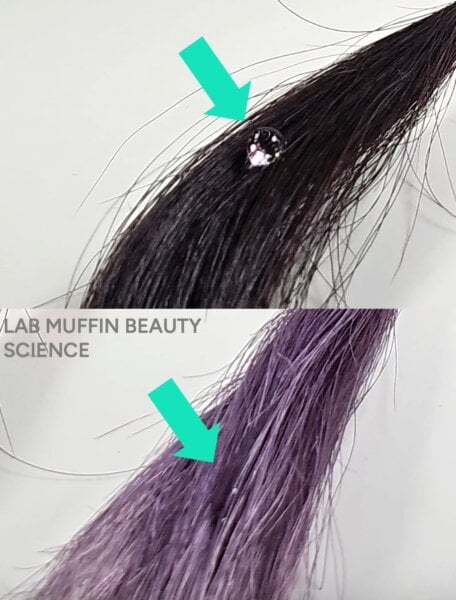
Explaining the Drop Test: Similarly, the drop test measures the wettability of the hair’s surface. On healthy, hydrophobic hair, a water droplet maintains its spherical shape, indicating high surface tension and low interaction with the hair. On damaged, hydrophilic hair, the water droplet spreads out or "flattens." This spreading occurs because the hydrophilic surface of the damaged hair reduces the adhesive forces between water molecules within the droplet and increases the adhesive forces between the water and the hair surface, allowing the water to spread more easily. This is not indicative of water rushing into the hair shaft through "holes," but rather spreading across the hair’s exterior. While damaged hair can absorb slightly more water (around 45% of its weight compared to 30% for undamaged hair), this difference is insufficient to explain the rapid spreading observed in the drop test, which is a surface phenomenon.
Crucially, the absorption of water into the hair shaft, which occurs in healthy hair, happens primarily from water vapor (humidity), where individual water molecules are small and unhindered by surface tension, allowing them to "wiggle in between the cuticle scales." Liquid water, on the other hand, interacts strongly with the hair’s outermost surface.
Implications for Consumers and the Haircare Industry
The scientific clarification regarding hair porosity tests carries significant implications for both consumers and the beauty industry.
For Consumers: The primary takeaway is a shift from categorizing hair by "porosity type" to understanding its actual condition and needs. The "porosity tests" are, in essence, rough indicators of surface damage. Hair that "tests high porosity" is likely hair with a damaged, more hydrophilic surface, while hair that "tests low porosity" has a more intact, hydrophobic surface. Therefore, the haircare advice often associated with these categories still holds some practical value, but for different reasons. Products recommended for "high porosity" hair often focus on conditioning and smoothing damaged cuticles, which is beneficial for hair with significant surface damage. Conversely, products for "low porosity" hair often emphasize lightweight hydration and avoiding heavy buildup, which can be appropriate for hair with an intact surface that might feel weighed down by excessive emollients.
However, consumers should be aware that these tests are not accurate measures of how quickly chemicals or dyes will penetrate the hair shaft. For complex treatments like coloring, perms, or relaxers, relying on a float test could lead to incorrect processing times and potentially damaging results. Instead of DIY tests, consumers are encouraged to observe their hair’s behavior directly: how quickly it dries, how easily it tangles, its texture, and its response to different products. Consulting with a professional stylist or trichologist, who can assess hair health using more accurate methods, remains the most reliable approach for personalized care.
For the Haircare Industry: This scientific debunking presents both a challenge and an opportunity. Brands that have heavily relied on porosity-based marketing may need to re-evaluate their messaging, shifting towards more scientifically precise language that focuses on hair condition, damage repair, and hydration strategies. This could lead to a renewed emphasis on research and development into ingredients that genuinely address specific hair concerns, such as strengthening damaged cuticles, providing long-lasting moisture, or protecting the hair’s natural lipid barrier.
Cosmetologists and professional stylists, who often receive training that incorporates porosity concepts, will need updated education. As Dr. Wong explicitly warns, relying on these superficial tests for critical procedures like chemical treatments is ill-advised. Instead, professionals should be trained to perform strand tests directly with the chemical product to gauge processing time accurately, ensuring both efficacy and client safety.
Statements from Related Parties (Inferred):
Dr. Elena Rodriguez, a prominent dermatologist specializing in hair and scalp health, commented, "The scientific community has always viewed concepts like ‘porosity’ with a critical eye, especially when defined by simplistic home tests. This research by Lab Muffin Beauty Science aligns with what we know about hair biology. Hair is complex; its interaction with water is governed by its chemical structure, not just whether it floats. It’s crucial that consumers base their haircare decisions on evidence, not myths."
A spokesperson for a leading global haircare brand, who wished to remain anonymous to avoid pre-empting official company statements, indicated, "Our product development has always been rooted in deep scientific understanding of hair structure and chemistry. While we acknowledge the market’s adoption of ‘porosity’ as a consumer-friendly term, our formulations are designed to address a spectrum of hair needs, whether that’s strengthening, moisturizing, or protecting. We continuously adapt our messaging to reflect the latest scientific insights and ensure consumers receive the most effective solutions."
Consumer advocacy groups are also likely to welcome the clarification. "Empowering consumers with accurate, science-backed information is paramount," stated Maria Chen, Director of Consumer Education at a national advocacy organization. "When beauty advice becomes widespread, it’s essential that it’s grounded in truth. This kind of research helps consumers make informed choices and avoid potentially costly or ineffective product purchases."
Moving Forward: An Evidence-Based Approach to Haircare
The debunking of popular hair porosity tests marks a significant step towards a more evidence-based approach in the haircare industry. It underscores the importance of understanding the intricate science of hair, moving beyond simplified analogies to grasp the true mechanisms at play. For consumers, this means shifting focus from a dubious classification system to a practical assessment of their hair’s needs – its level of damage, its natural texture, and its environmental exposures. For the industry, it’s a call to elevate scientific rigor in product development and marketing, fostering trust through transparency and effective solutions grounded in genuine hair biology. As scientific understanding evolves, so too must the advice and products offered to maintain healthy, beautiful hair.
