
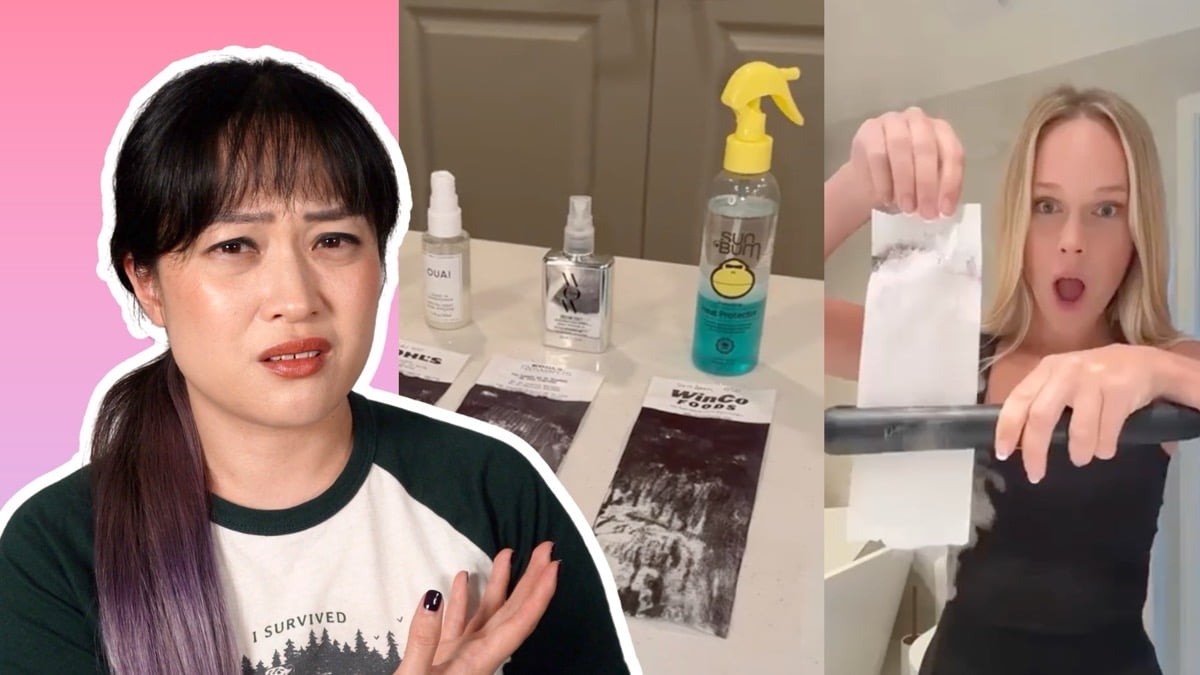
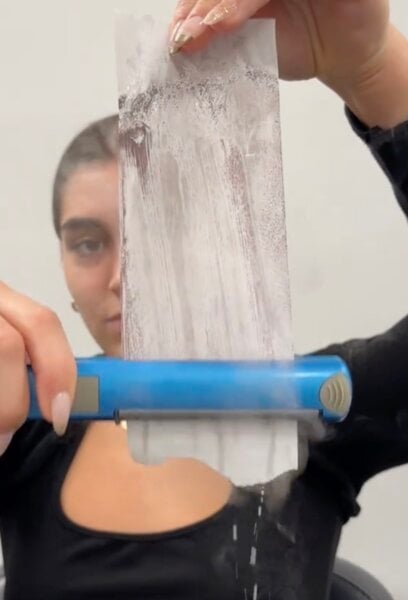
The proliferation of beauty hacks on social media platforms has brought into question the scientific validity of many at-home product evaluations. Among these, a widely circulated "heat protectant test" involving thermal receipt paper and a hair straightener gained significant traction, promising a simple visual indicator of product efficacy. The premise was straightforward: spray a heat protectant onto a thermal paper receipt, apply a flat iron, and observe the paper. Receipts that remained white were purportedly treated with superior heat protectants, while those that blackened indicated ineffective protection. This seemingly intuitive method suggested a direct correlation between the paper’s heat-induced discoloration and a product’s ability to shield hair from thermal damage. However, a rigorous investigation by Dr. Michelle Wong of Lab Muffin Beauty Science has delved into the intricacies of this viral phenomenon, revealing a far more complex reality than initially perceived, ultimately debunking the test’s utility as a reliable measure of heat protectant performance on hair.
The Genesis and Spread of a Viral Beauty Trend
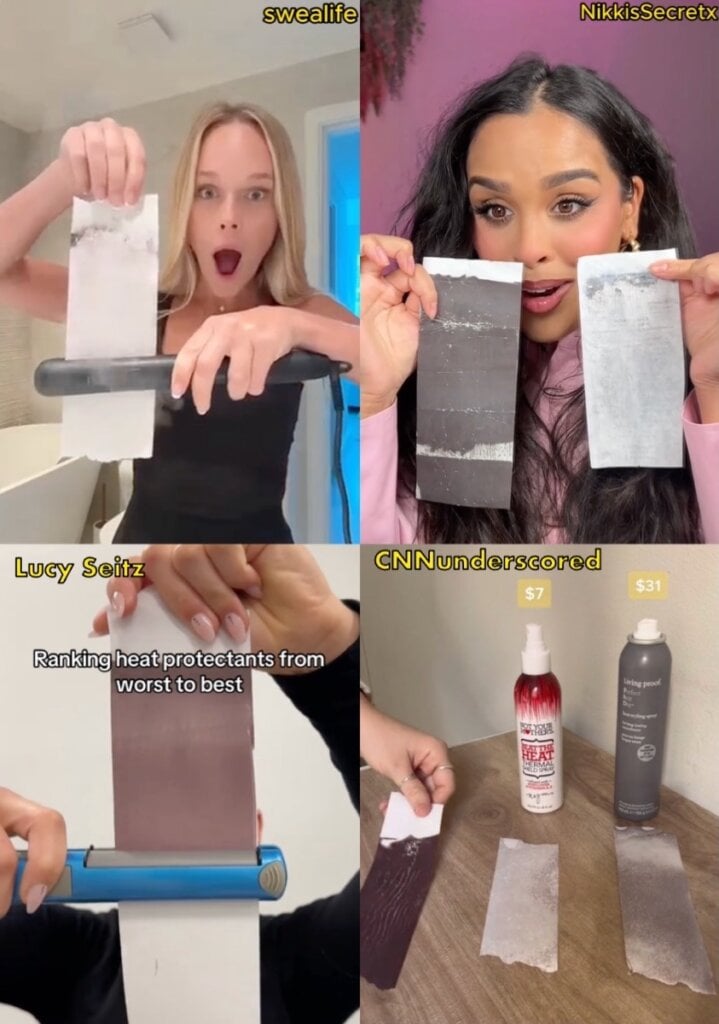
The receipt test rapidly ascended to viral status, primarily disseminated through short-form video content on platforms like TikTok. Content creators, often cosmetologists such as Lucy Seitz, demonstrated the experiment to millions, contributing to its widespread adoption by eager consumers seeking quick, accessible product validation. The appeal lay in its apparent logic and visual clarity: thermal paper is known to darken with heat, and hair is damaged by excessive heat, suggesting the paper could serve as a convenient model for hair. In scientific methodology, models are frequently employed to simplify complex systems and provide useful insights; for instance, mice are used in pharmaceutical research, and reconstituted human skin models like EpiSkin are utilized in skincare development. The critical question, however, is whether thermal receipt paper possesses "similar enough characteristics" to human hair to render meaningful data regarding heat protection.
Initial observations of these viral tests, including those by Seitz, revealed inconsistencies. Many videos showed receipts still visibly wet during the flat iron application, leading to speculation that residual moisture might be influencing the results. Water, known for its high specific heat capacity and latent heat of vaporization, acts as a potent cooling agent. If present in sufficient quantities, it could absorb significant thermal energy from the straightener, preventing the receipt from reaching its discoloration temperature. This potential confounding factor immediately cast doubt on the test’s purported objectivity.
Initial Scientific Scrutiny: The Lab Muffin Investigation Begins
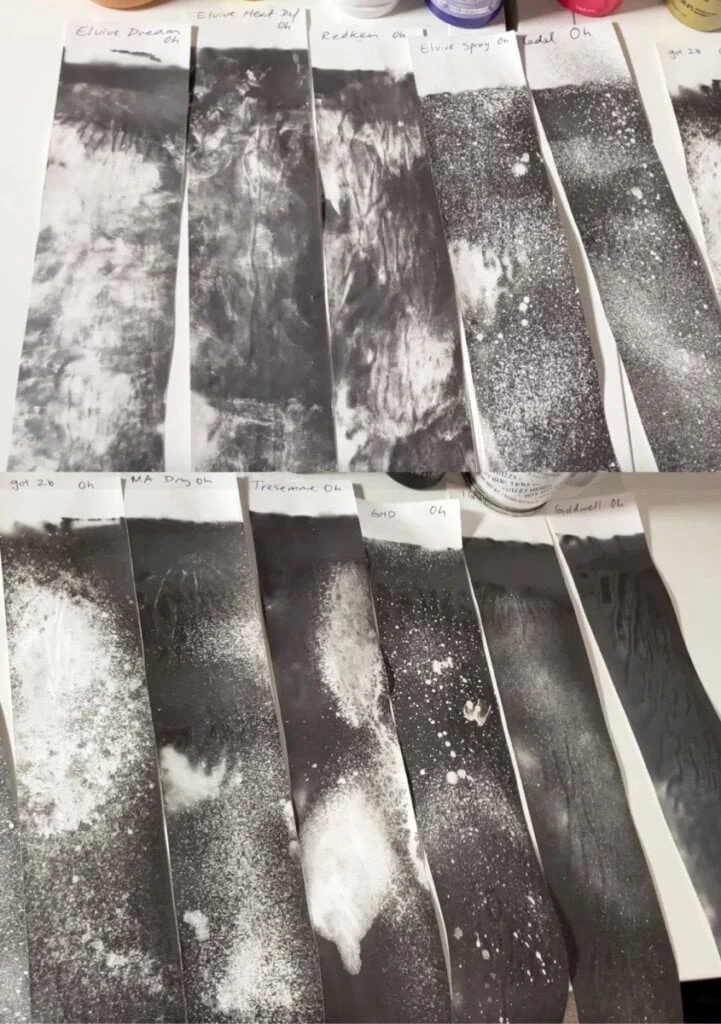
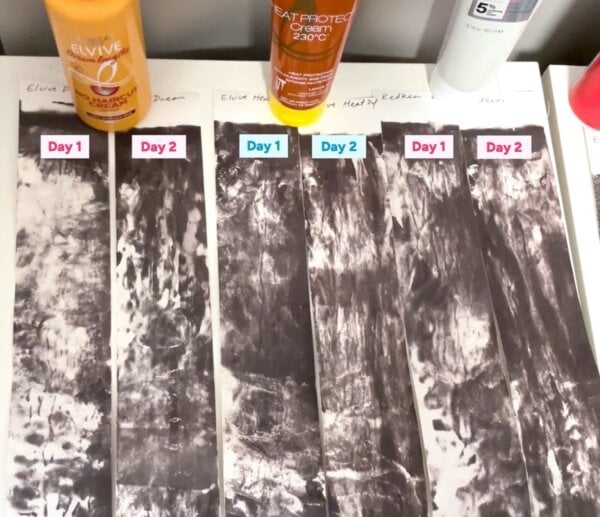
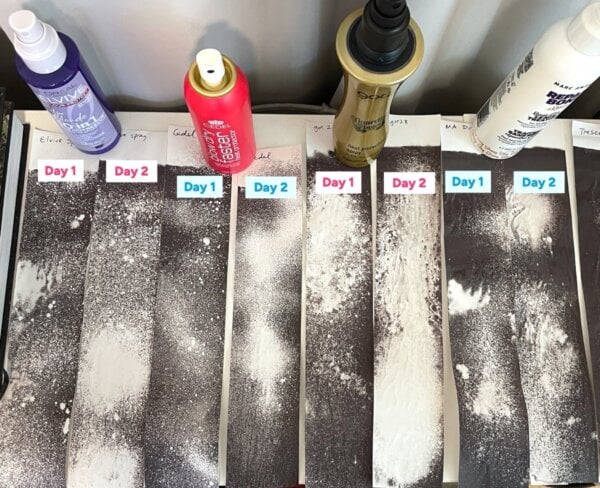
Driven by these observations and the test’s widespread popularity, Dr. Wong initiated a systematic investigation to replicate and analyze the viral claims. Her methodology aimed to mirror the viral demonstrations while introducing controlled variables to understand the underlying mechanisms. The first phase involved testing 11 products with heat protection claims, encompassing a variety of formulations: seven pump sprays, one propellant spray, and three cream products. To replicate real-world application, the amount of product was not strictly controlled initially, though drying time was introduced as a key variable.
The very first attempt to replicate the test using the Marc Anthony spray on a wet receipt at 170°C (338°F) resulted in crackling and smoking, confirming the vigorous interaction between heat, moisture, and product. This immediate feedback necessitated a revised approach for the bulk of the initial tests: products were applied to receipts and allowed to dry for approximately 15 minutes before heat application.
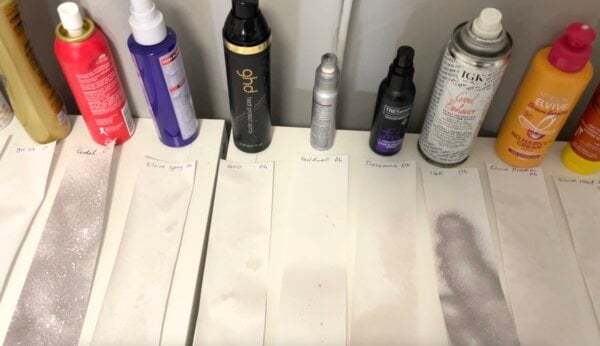
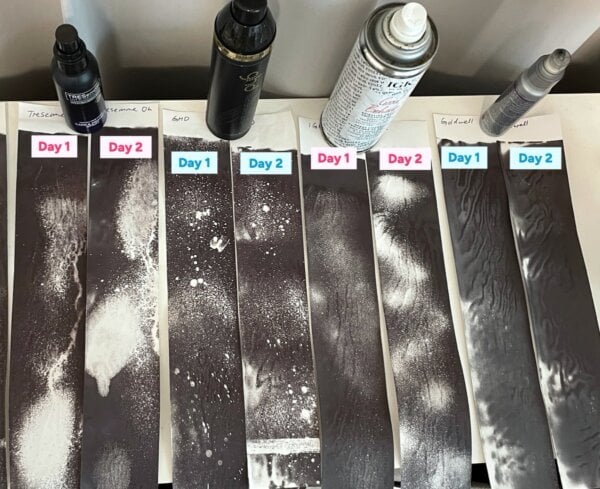
The results from Day 1 provided intriguing patterns:
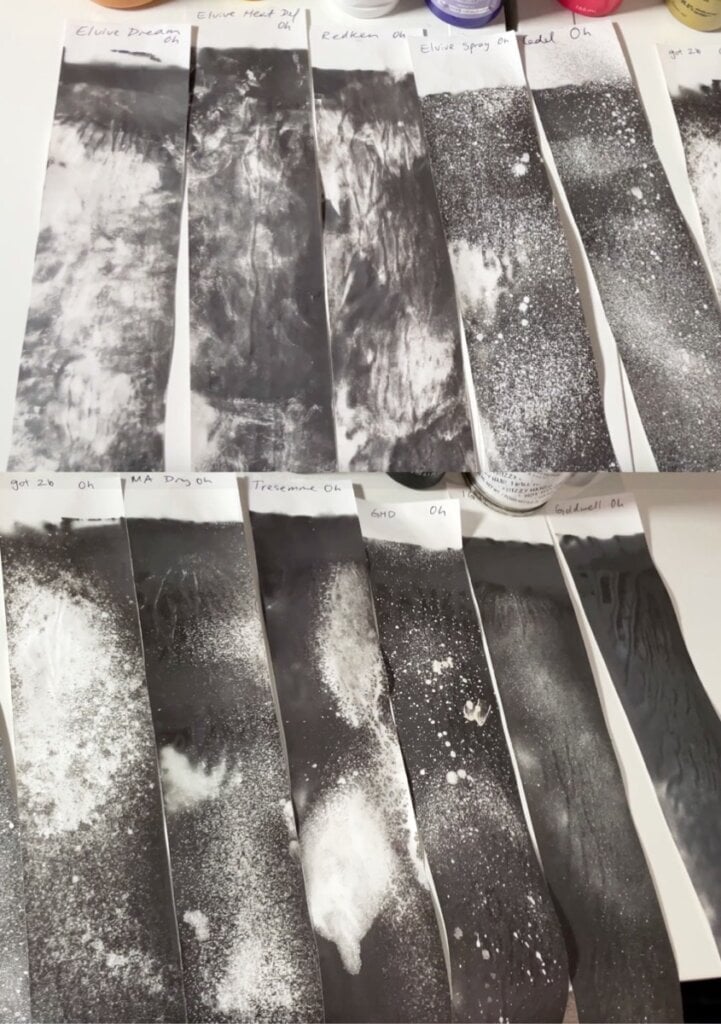
- Impact of Drying: A direct comparison between a freshly applied product and one allowed to dry for 15 minutes showed a dramatic difference, with the dried receipt appearing significantly darker. This strongly suggested that the presence of moisture was indeed a primary factor in preventing discoloration.
- Cream vs. Spray Formulations: Cream products consistently yielded the lightest receipts. This was attributed to their thicker application, providing a more substantial insulating layer, and their slower drying times, implying more residual water.
- Ingredient Correlations: The darkest receipts were observed with Goldwell and IGK sprays, which notably had water lower down on their ingredient lists, indicating a higher concentration of other, less cooling, components.
- Uncontrolled Variables: The lack of precise control over product quantity and drying variations between individual applications made definitive conclusions challenging, highlighting the inherent flaws in uncontrolled "at-home" testing.
Beyond the color changes, other observations emerged: some products caused the receipts to become immediately grey upon application, even before heat was applied. Additionally, certain sprays emitted steam during heating, further supporting the presence of residual water. Crucially, some receipts also curled or warped, indicating significant interaction beyond simple heat transfer.
The Role of Water: A Key Variable
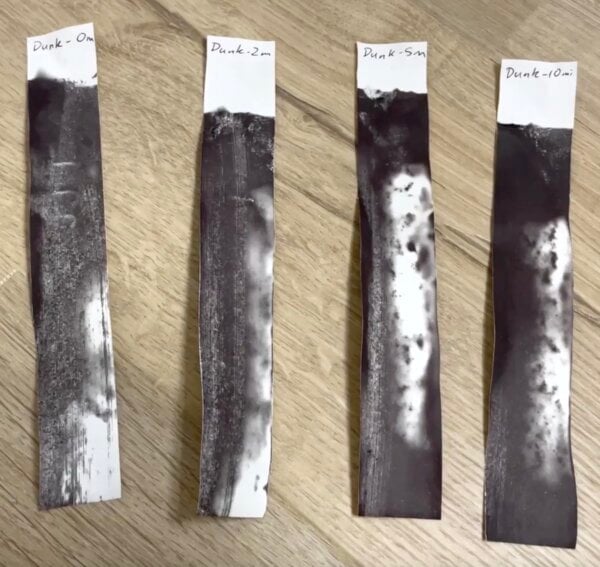
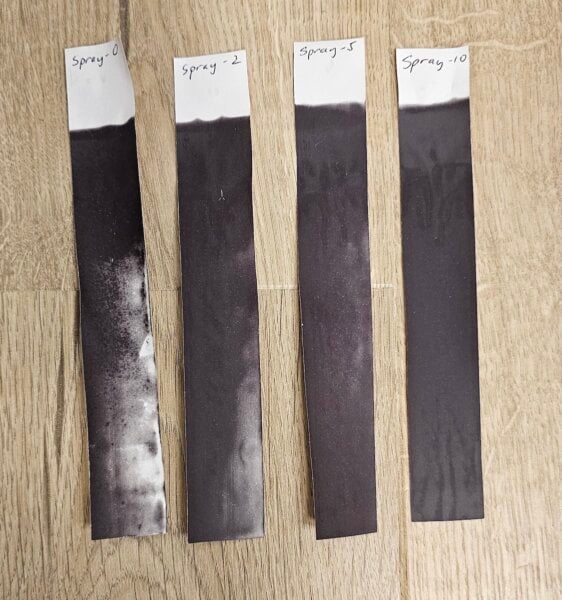
To isolate the effect of water, a dedicated series of experiments was conducted. Receipts were either "dunked" in water or "sprayed" with water, then subjected to the flat iron immediately, or after 2, 5, or 10 minutes of drying.
The "dunking" test showed that heavily saturated receipts remained largely white even after heating, regardless of drying time, although the immediate test was paradoxically slightly darker, possibly due to insufficient time for water to fully penetrate the paper’s core.
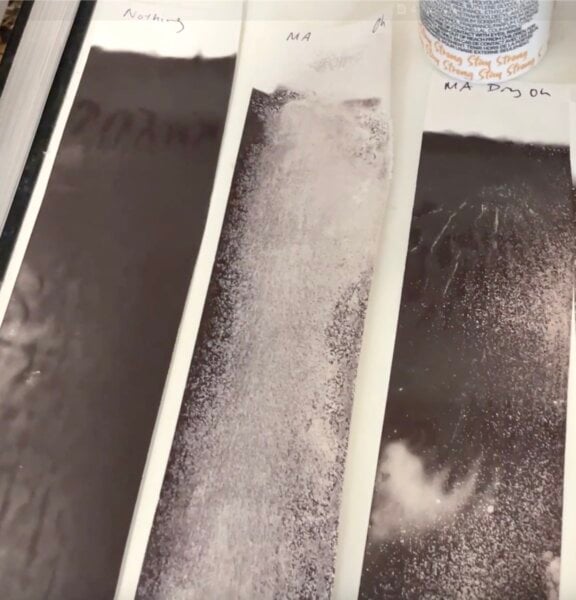
The "spraying" test, which mimicked the lighter application of a spray heat protectant, yielded more nuanced results:
- 0 Minutes: Some white bits were visible, indicating partial cooling.
- 2 Minutes: The receipt appeared grey, suggesting reduced cooling.
- 5 Minutes: The receipt turned black, indicating minimal to no cooling effect from water.
These water tests unequivocally demonstrated that water significantly contributes to the cooling effect observed in the viral test. Water’s ability to absorb heat through evaporation means that products with a higher water content, or those applied more generously and not thoroughly dried, would appear more "protective" on thermal paper. This is a critical distinction, as applying heat tools to wet hair can lead to "bubble hair" – explosive evaporation of water within the hair shaft, causing severe damage. Therefore, a test that rewards water content is fundamentally misleading for assessing hair heat protection.
Unforeseen Complexity: Thermal Paper’s True Nature
A significant turning point in the investigation came from researching the fundamental properties of thermal paper. Initial searches for "thermal paper temperature" yielded results suggesting activation temperatures similar to hair straighteners (150-185°C). However, a deeper dive, including consulting a German Wikipedia article and scientific papers, revealed a startling discrepancy: thermal paper typically begins to develop color at a much lower range, between 60 to 100°C (140-212°F), reaching applicable density between 70 and 120°C (158-248°F). The specific melting points of its components can be as low as 40 to 80°C.
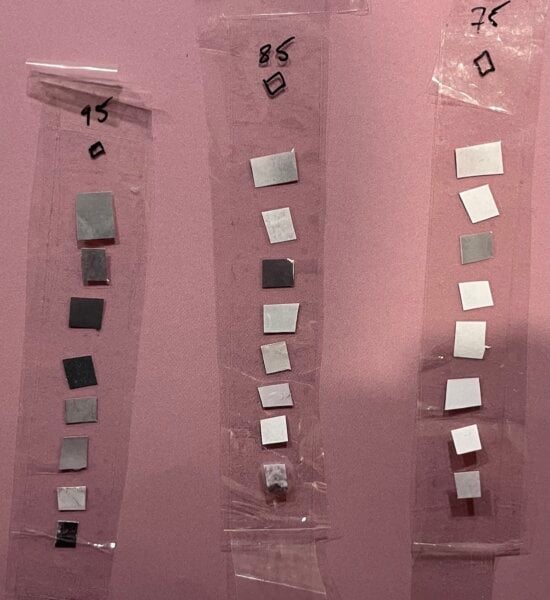
This discovery was a "huge spanner in the works." Hair damage generally commences at temperatures around 100°C. If receipts activate at significantly lower temperatures, the test would be irrelevant to hair protection. To verify this, Dr. Wong conducted controlled temperature tests by dipping various receipts into beakers of water cooled to specific temperatures. After overcoming experimental challenges with paper adhesion, the results were clear: most receipts turned black around 95°C. This finding, while aligning with the lower end of hair damage temperatures, still meant the thermal paper was reacting to heat levels that might not yet be critically damaging to hair, especially considering the rapid and localized heat transfer from a flat iron.
Unraveling the Mechanism: A New Hypothesis Emerges
Even with the understanding of water’s cooling effect and the thermal paper’s activation temperature, several anomalies remained unexplained:
- Why did some products appear lighter after 24 hours of drying (Day 2 tests), when all water should have evaporated?
- Why did some sprays cause immediate greying of the receipt before heat application?
- Why did some products with high silicone content, known for heat protection, appear "ineffective" in the receipt test?
- Why did creams consistently perform "better" than many sprays, even when thoroughly dry?
The key insight arrived when Dr. Wong re-examined the initial greying phenomenon observed with certain sprays. It was discovered that the products were not merely preventing discoloration; they were actively erasing or disrupting the thermal ink. Lucy Seitz’s videos, upon closer inspection, also showed subtle greying that coincided with areas that remained white after heating. This led to a new, central hypothesis: Heat protectants that "work" in this test are dissolving or disrupting the ink layer on the receipt.
Thermal receipt paper contains an invisible ink layer composed of multiple components (a dye precursor and a developer) dispersed in a binder, often a wax-like solvent. When heated, this binder melts, allowing the components to mix and react, forming the visible black ink. However, this ink layer is delicate. Solvents can disrupt this delicate balance. Alcohol, a common ingredient in many sprays, is a powerful solvent. When applied, it can partially dissolve the ink layer, causing a faint greying. If applied in higher concentrations or allowed to dwell, it can disperse the ink components too widely, preventing them from reacting properly to form a dark image when heated.
Confirmatory Experiments and Chemical Insights
To validate this "solvent hypothesis," Dr. Wong conducted a series of confirmatory tests using substances known for their solvent or emulsifying properties:
Alcohol, Water, and Glycerin
- Methylated Spirits (Alcohol): Drops of pure alcohol, alcohol with water, and alcohol with water and glycerin all kept receipts light after 30 minutes of drying and subsequent heating.
- Diluted Alcohol: Interestingly, diluted alcohol made receipts whiter than pure alcohol. This was explained by alcohol’s rapid evaporation; water and glycerin, as humectants, can hydrogen bond with alcohol, slowing its evaporation and allowing it more time to disrupt the ink layer. This also explained why some spray products appeared even lighter on Day 2: the prolonged presence of humectant-bound alcohol continued to affect the ink.
- Water and Glycerin Alone: These had minimal impact on the ink, as receipt inks are typically oily and not readily dissolved by water or glycerin.
Other Products with Alcohol
- Perfume: Known for its high alcohol content, perfume immediately turned receipts grey and then kept them white upon heating, strongly supporting the solvent theory.
- Dry Shampoo: Also alcohol-rich, dry shampoo caused immediate greying. However, it did not keep the receipts as white after heating, likely because dry shampoos contain fewer humectants, allowing the alcohol to evaporate more quickly and thus have less sustained disruptive effect on the ink.
Surfactants
Many heat protectants that lack alcohol still contain surfactants (emulsifiers), which are excellent at dissolving oily substances.
- Micellar Water and Detergent: Drops of micellar water and detergent solution kept receipts white after approximately 30 minutes of drying and heating.
- Moisturizers and Cream Sprays: Products like CeraVe Moisturising Cream and Laneige Cream Skin (a cream spray), both rich in emulsifiers, also kept receipts white. The physical act of rubbing creams onto the receipt further enhanced the disruption of the ink layer.
- Sunscreens: Many sunscreens contain both alcohol and surfactants. Tested sunscreens (La Roche-Posay Anthelios UVMune 400 Fluid and Naked Sundays sunscreen spray) similarly kept receipts white.
These results clarified why creams often performed "better" than sprays (higher concentration of emulsifiers, better physical application) and explained the varied performance of sprays based on their alcohol and humectant content.
Volatile Silicones and Propellants
- Cyclopentasiloxane: The top silicone layer of a two-phase eye makeup remover, primarily cyclopentasiloxane, had minimal impact on the receipt. This is because volatile silicones are too oily to effectively dissolve the ink layer and evaporate too quickly, explaining why some silicone-based heat protectants "failed" the receipt test.
- Propellant (HFC-152a): Testing compressed air, which primarily consists of propellants like HFC-152a, showed no effect on the receipt, ruling out propellants as a primary disruptive agent.
Erasing Receipt Ink
A final confirmation involved applying the identified disruptive substances (alcohol, perfume, sunscreen, micellar water, moisturizer) directly to already-darkened thermal paper. These substances largely succeeded in erasing the black ink, demonstrating their ability to dismantle the formed ink structure, further solidifying the solvent-based hypothesis.
The Illusion of Protection: Dissolving, Not Shielding
The comprehensive investigation unequivocally concluded that the viral heat protectant receipt test does not accurately reflect a product’s ability to protect hair from heat damage. Instead, the "results" observed are predominantly due to two mechanisms:
- Residual Water: Products with high water content, or those not thoroughly dried, provide a transient cooling effect through evaporation, preventing the receipt from reaching its discoloration temperature. This is counterproductive for hair, where trapped moisture can cause severe "bubble hair" damage.
- Solvent Action: Ingredients like alcohol and surfactants, common in many beauty products (not just heat protectants), dissolve or disrupt the delicate ink layer of thermal paper. This prevents the dye precursor and developer from reacting to form the black image, creating the illusion of heat protection.
Therefore, a product that appears "effective" on a receipt might simply be a good solvent or contain significant amounts of water, neither of which is the primary mechanism of true hair heat protection.
Hair Science vs. Paper Science: Why the Test Fails
The fundamental flaw of the receipt test lies in its choice of model. Hair and thermal paper are vastly different materials with distinct responses to heat and chemical interactions.
- Hair Structure and Damage: Hair damage from heat involves protein denaturation, cuticle lifting, and lipid degradation. Heat protectants work by forming a protective barrier (often with silicones and polymers) that spreads heat more evenly, reduces friction, and provides a thermal buffer, allowing hair to be styled without reaching damaging temperatures. They aim to allow heat to penetrate controlledly to facilitate styling, not to block it entirely.
- Thermal Paper Chemistry: Thermal paper’s reaction is a chemical color-forming reaction triggered by specific heat-sensitive components, which are susceptible to dissolution by common solvents found in many beauty products. The mechanism of "protection" on a receipt is chemical interference, not thermal insulation relevant to hair.
Indeed, reducing heat entirely is not the goal of a heat protectant. A meter of air would "protect" hair from a straightener, but hair would not style. The purpose is to enable styling while minimizing damage, which involves complex interactions with the hair fiber itself.
Industry Standards and Consumer Guidance
In stark contrast to the simplistic receipt test, reputable beauty brands employ rigorous, scientifically validated methods to test their heat protectants. For instance, Amika, a brand whose product "failed" the receipt test, publicly shared footage of their actual testing procedures. These involve instrumental tests on human hair strands, often using devices that simulate repeated combing and heating, followed by microscopic analysis to assess cuticle damage, protein loss, and mechanical strength. Such tests are designed to directly measure the product’s impact on hair integrity under controlled conditions, providing genuine data on efficacy.
For consumers, discerning effective heat protectants requires looking beyond viral trends. Key indicators of a well-formulated product include:
- Specific Claims: Packaging should feature clear claims regarding temperature protection (e.g., "protects up to 230°C"), often supported by phrases like "instrumental test" or "vs. non-conditioning shampoo alone."
- Effective Ingredients: Look for ingredients known for their heat-protective properties, such as silicones (e.g., dimethicone, amodimethicone), polymers (e.g., PVP/VA copolymer), and hydrolyzed proteins.
- Proper Application: If a product contains water, it is crucial to allow hair to dry thoroughly before using hot tools to prevent steam damage.
Broader Implications: Combating Misinformation in Beauty
The widespread acceptance and subsequent debunking of the viral heat protectant receipt test serve as a powerful case study in the challenges of science communication in the digital age. While "at-home" experiments can be engaging and seemingly empower consumers, they often lack the scientific rigor necessary to yield accurate or generalizable results. The allure of quick, visual proof can easily overshadow the complex scientific principles at play.

This investigation by Lab Muffin Beauty Science underscores the importance of critical thinking and seeking information from credible, scientifically-minded sources. It highlights the responsibility of content creators to verify information before sharing it and the ongoing need for science communicators to demystify complex topics in an accessible yet accurate manner. Ultimately, protecting consumer trust and ensuring informed purchasing decisions requires a commitment to factual, evidence-based analysis over captivating, but misleading, viral trends.
