

Employment opportunities within the burgeoning future food sector experienced a significant downturn in 2025, a stark contrast to the growth observed in preceding years. This decline, attributed to a recalibration of investment strategies and evolving business models, saw global job postings shrink, with only North America bucking the trend by reporting an increase. Funding for alternative protein companies fell below the $1 billion mark for the first time in seven years in 2025, a development that directly contributed to the closure of several prominent players in the space and subsequently impacted the availability of roles across the industry.
A Global Downturn: Investment Plummets and Layoffs Ensue
The financial landscape for alternative protein companies shifted dramatically in 2025. Venture capital and private equity investments, which had fueled rapid expansion in prior years, contracted sharply. According to data compiled by AltProtein.Jobs, total funding for the sector dipped below the $1 billion threshold, a significant decrease from the substantial capital injections seen in 2021 and 2022. This financial tightening led to a wave of consolidations and outright closures. Companies that had once been lauded as pioneers in plant-based, fermentation-derived, and cultivated meat technologies found themselves unable to secure further funding, forcing difficult decisions regarding workforce reduction and operational scaling back.
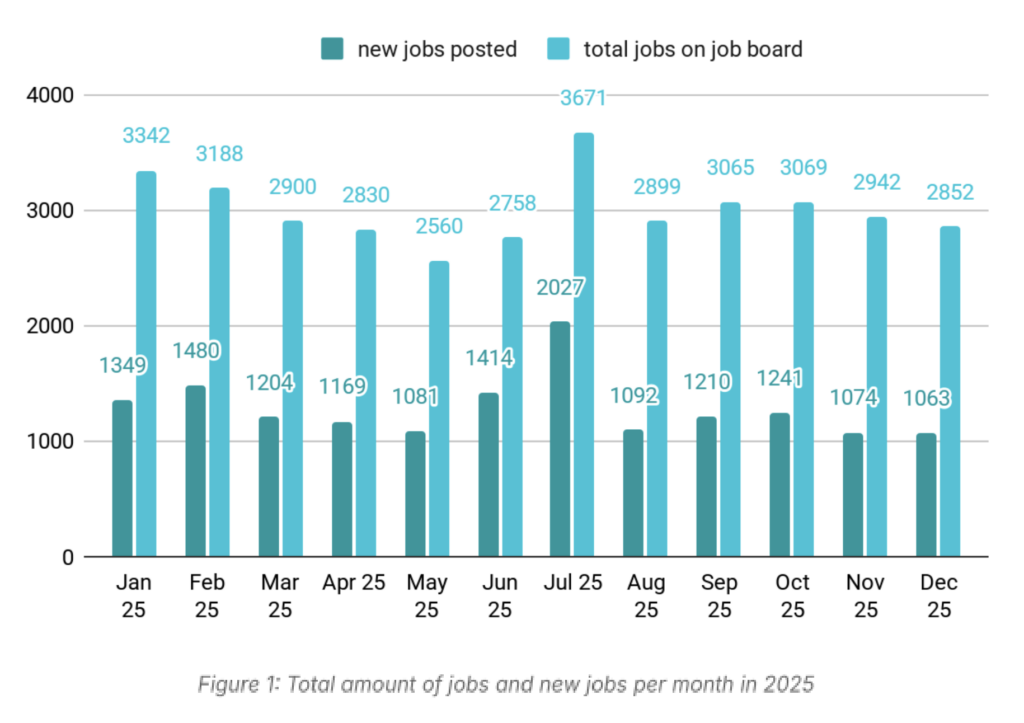
The impact on job availability was immediate and widespread. AltProtein.Jobs, a leading platform for tracking employment trends in the future food sector, reported a noticeable decrease in new positions posted. Between October 2023 and October 2024, the platform recorded 16,010 job openings. However, for the equivalent period in 2025, this figure dropped to 15,404. While a decrease of 606 roles might seem modest in isolation, it represents a significant shift in momentum for an industry that had previously been characterized by exponential growth in employment.

"The period of 2021-2022 marked a significant expansion in interest and funding for the alternative protein sector, a surge partly driven by the advancements in cultivated meat," stated a recent report by AltProtein.Jobs. "This boom was followed by a phase of steady development, but also by the depletion of existing resources. With a decline in investments, 2025 saw a number of companies and branches closing, and others reevaluating their positions in response to the present economic pressures."
This recalibration by businesses reflects a broader economic climate marked by rising interest rates and a general caution among investors towards high-growth, but not yet profitable, sectors. The initial speculative fervor that characterized the early stages of the alternative protein market appears to have given way to a more pragmatic assessment of market viability and profitability timelines.
North America’s Unexpected Surge: A Beacon of Resilience
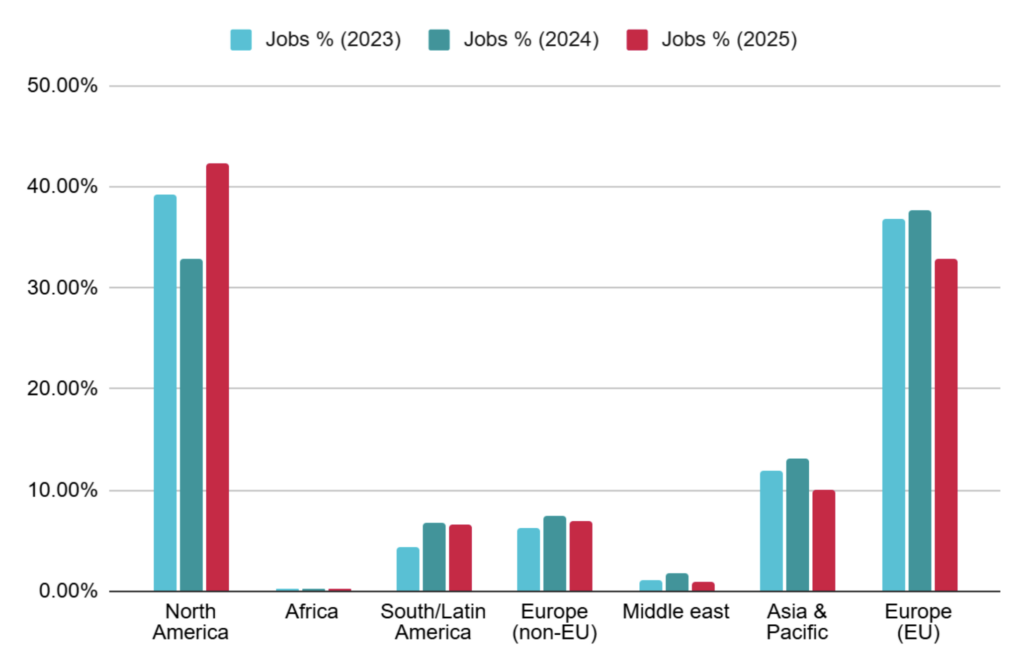
In stark contrast to the global trend, North America emerged as a surprising outlier, demonstrating a robust increase in alternative protein job numbers. The region witnessed a 9.3% year-on-year rise in available roles in 2025, with the total number of postings even surpassing that of 2023. This resilience suggests a more mature and stable investment environment or a stronger consumer demand base that continues to support growth.
The United States, in particular, led the charge. The country posted the highest number of vacancies globally in 2025, accounting for nearly 40% of the total with 6,103 roles. This strong performance not only reflects the established presence of the alternative protein industry in the US but also indicates continued investment and expansion within its key players. Germany followed as the second-highest country for job openings with 1,863 positions, indicating a strong European presence, albeit one that experienced a broader regional decline. Other European nations like France, the UK, and the Netherlands also contributed significantly, each posting between 800 and 1,000 roles.
Beyond these established hubs, emerging markets are showing promising signs of growth. Brazil and India each posted between 500 and 600 jobs, reflecting an upward trend from the previous year. This suggests that these regions are developing their own domestic markets and attracting investment, potentially becoming increasingly important players in the global future food landscape in the coming years. Canada, Mexico, Israel, Thailand, and Singapore each saw over 100 roles made available, indicating a growing, albeit smaller, presence in the sector.
The report from AltProtein.Jobs highlighted this regional divergence: "The only region with recorded growth in job openings in 2025, North America, actually experienced a decrease the year before (2023 to 2024). While in other regions the growth phase seems to have ended, North America’s recovery may indicate the beginning of a stabilisation period ahead. As the world’s leading economy, political and economic trends of the US have a global influence, and other regions could experience a similar bounce-back in the coming years."
This observation suggests that North America may be entering a more consolidated and sustainable growth phase, where market forces are more aligned with investment realities. The US’s economic influence could indeed serve as a catalyst for similar recovery patterns in other regions as investor confidence gradually returns.
Diversification of Roles: A Silver Lining in a Tightening Market
Despite the overall decline in the sheer volume of job postings, the data from AltProtein.Jobs revealed a notable increase in the diversity of job functions within the future food sector. This indicates that as the industry matures, it is demanding a broader range of specialized skills. Roles related to technical services, equipment manufacturing, and ingredient production saw a significant uptick.
The top three most in-demand job functions across all postings in 2025 were manufacturing, agricultural science, and project management. These roles are crucial for scaling production, optimizing supply chains, and ensuring the efficient development and deployment of new food technologies. On the other hand, policy and advocacy emerged as the most competitive area, with a staggering 3.4 times more applicants than available positions. This intense competition underscores a growing interest among professionals to influence regulatory frameworks and shape the public discourse surrounding alternative proteins.
The demand for specific technical skills remains strong. Cell biology, software development, automation, and legal expertise were consistently sought after. As more companies move from research and development to commercialization, there is a projected increase in opportunities for sales and marketing professionals. "This shift marks a promising area for career growth or switch as companies emphasize market presence and customer engagement," the report noted, signaling a strategic pivot towards consumer adoption and market penetration.
Sectoral Trends: Plant-Based Holds Steady, Precision Fermentation and Cultivated Meat Face Competition
Within the alternative protein landscape, plant-based protein positions demonstrated remarkable resilience, indicating that this most established and widely accepted segment of the industry continues to be a significant source of employment. Plant-based technologies accounted for over 60% of all job vacancies in 2025, solidifying their dominant position.
Fermentation-related roles constituted 12.2% of the postings, with precision fermentation alone making up 9.1%. Cultivated protein, while still a nascent but high-potential area, represented 6.3% of the total job openings.
However, the most significant growth in job posting categories was observed in "other technologies." This broad category, encompassing plant molecular farming, hybrid technologies, production-related services, and various non-technical roles, saw its share surge from less than 1% in 2024 to an impressive 19.3% in 2025. This expansion highlights the increasing diversification of innovation within the future food sector, moving beyond the core plant-based and cultivated meat paradigms.
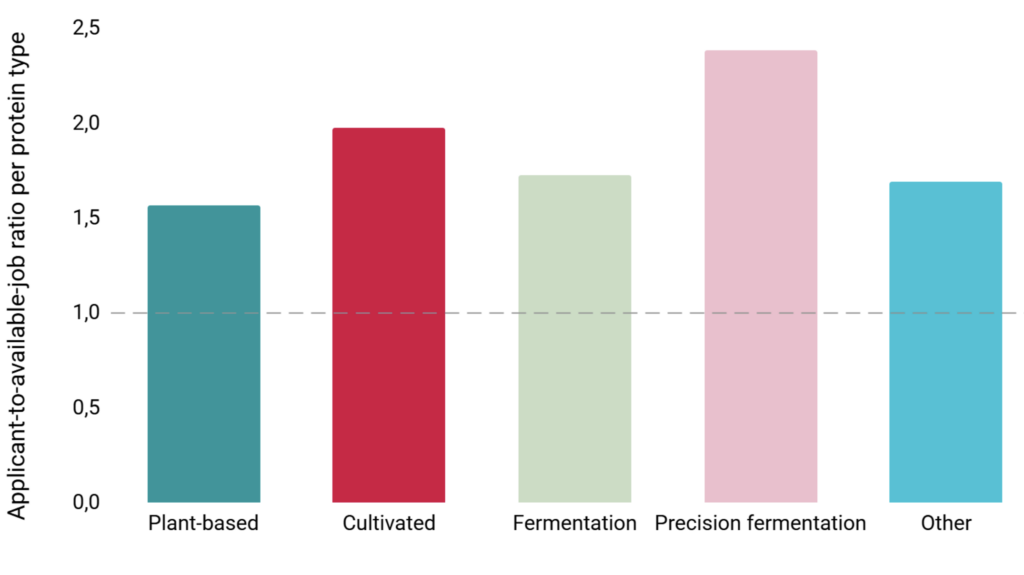
Interestingly, while job availability shifted, applicant interest painted a different picture. Positions in precision fermentation were among the most sought after, with approximately 2.4 times more applicants than roles. Cultivated meat also attracted significant attention, with twice as many applicants as positions. Other sectors saw more balanced application rates, ranging from 1.5 to 1.7 applicants per role. "This indicates that the competition for positions in the cultivated meat and precision fermentation sectors is higher, while other sectors offer more opportunities, both in terms of candidate preference and role numbers," the report explained. This suggests that despite a general slowdown in overall job growth, highly innovative and potentially disruptive fields continue to draw significant talent.
The Rise of AI in Recruitment and Future Outlook
The data also pointed to an increasing integration of artificial intelligence (AI) in the recruitment process within the food tech and alternative protein industries. "AI technology is continuing to find more uses in food tech and alternative protein industries; we have recorded a global uptick in AI-related vacancies," stated AltProtein.Jobs. The platform itself has transitioned to a non-profit model, reflecting a commitment to supporting the sector’s development. The report emphasized the need for workforce development and educational programs to prioritize skills training in AI and related fields.
Looking ahead to 2026, AltProtein.Jobs does not anticipate a substantial increase in overall job availability. However, the trend of role diversification is expected to continue as companies mature and new startups enter the market, bringing with them novel approaches and specialized needs. The report concluded with a forward-looking statement: "We expect alternative proteins to keep being used as political instruments, but we also anticipate a backlash from the industry. In line with our data, we predict that roles in policy and advocacy are going to continue enjoying high application rates, as professionals seek to make a difference through political action." This suggests that while the economic climate may remain challenging, the mission-driven nature of the alternative protein sector will continue to attract passionate individuals eager to shape its future through both innovation and advocacy.
