
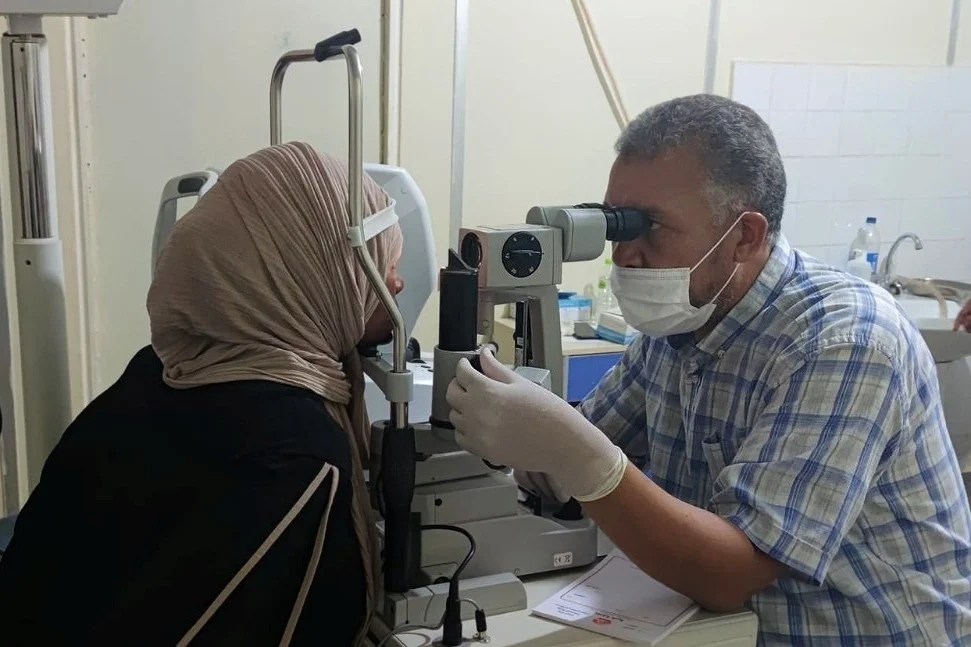
The World Health Organization (WHO) has officially validated Libya for having eliminated trachoma as a public health problem, representing a historic triumph for the nation’s healthcare system and a significant advancement for the Eastern Mediterranean Region. This achievement, announced following a rigorous validation process, positions Libya as a global leader in the fight against neglected tropical diseases (NTDs), proving that even in the face of protracted political instability and humanitarian challenges, sustained public health initiatives can yield transformative results. By reaching this milestone, Libya becomes the 28th country globally and the 8th within its WHO region to successfully eradicate the threat of this preventable cause of blindness, ensuring that future generations are protected from a disease that has plagued the North African nation for over a century.
The elimination of trachoma is not merely a clinical victory but a testament to the resilience of Libya’s health infrastructure and the dedication of its frontline workers. For decades, the disease remained a persistent threat, particularly in the country’s more remote and arid southern regions. The WHO’s validation serves as a powerful reminder that evidence-based programming, integrated surveillance, and international cooperation can overcome the most entrenched public health hurdles. As Libya joins the growing ranks of nations free from trachoma, the global health community looks to its success as a blueprint for other countries operating under complex humanitarian and migration dynamics.
Understanding the Burden of Trachoma
Trachoma is an infectious eye disease caused by the bacterium Chlamydia trachomatis. It is primarily transmitted through direct or indirect contact with discharge from the eyes or nose of an infected person, often carried by hands, shared clothing, or eye-seeking flies (particularly Musca sorbens). The disease is inextricably linked to poverty, thriving in areas with overcrowding and inadequate access to clean water and sanitation services. While the initial infection—often referred to as active trachoma—is common among children, the long-term consequences are devastating.
Repeated infections over many years lead to the scarring of the inner eyelid. This scarring causes the eyelid to turn inward, a condition known as trichiasis, which results in the eyelashes scratching the surface of the cornea. This process is excruciatingly painful and, if left untreated, leads to irreversible corneal opacification and total blindness. Globally, trachoma remains the leading infectious cause of blindness, yet it is entirely preventable through the WHO-recommended SAFE strategy: Surgery for trichiasis, Antibiotics to clear infection, Facial cleanliness, and Environmental improvement to reduce transmission.
A Century-Long Battle: The Chronology of Elimination in Libya
The history of trachoma in Libya is long and complex. Throughout the 20th century, the disease was documented as a major public health concern, with surveys consistently showing high prevalence rates of active inflammatory trachoma. These clusters were most heavily concentrated in the southern districts, where geographic isolation and limited infrastructure made health interventions difficult.
The first significant push toward control began in the 1970s and 1980s when the Libyan Ministry of Health launched targeted efforts to combat infectious eye diseases. These early programs focused on expanding clinical services and improving general hygiene. By the turn of the millennium, these efforts, coupled with a general strengthening of the national health system, led to a dramatic decline in transmission. However, the disease persisted in pockets of the country, necessitating a more focused and modern approach to reach the final goal of elimination.
In 2017, the Ministry of Health formally prioritized the elimination of trachoma as a cornerstone of its National Prevention of Blindness Programme. This revitalized effort was designed to align with the WHO Alliance for the Global Elimination of Trachoma by 2020 (GET2020). Despite the political fragmentation and civil unrest that characterized much of the last decade in Libya, health authorities remained committed to the mission.
The final phase of the journey began in 2022. With technical support from the WHO, Sightsavers, the International Trachoma Initiative (ITI), and Tropical Data, Libya conducted comprehensive surveys across six southern districts where the disease was suspected to linger. The data revealed that active trachoma levels had fallen well below the WHO’s elimination thresholds. However, one specific region—Wadi Al Hayaa/Ghat—still showed a prevalence of trichiasis that required intervention. A targeted surgical campaign was launched to address these remaining cases. By 2025, follow-up surveys confirmed that trichiasis prevalence had finally dropped below the required threshold of less than 0.2% in adults aged 15 and older, clearing the path for official WHO validation.
Overcoming Adversity through Resilience and Partnership
Libya’s success is particularly remarkable when viewed through the lens of the country’s recent history. Since 2011, Libya has faced significant political volatility, which has at times divided the country’s administration and strained its public services. The health sector, in particular, has had to manage the dual burden of treating war-related injuries while maintaining essential primary care. Furthermore, Libya’s position as a major transit point for migration has introduced complex demographic shifts that can often complicate disease surveillance and treatment.
Despite these pressures, the national trachoma elimination programme succeeded by integrating its efforts into the broader health system. This integration ensured that eye care was not a "siloed" service but part of a comprehensive approach to community health. The program focused on three critical pillars:
- Surveillance and Data: Utilizing modern tools like Tropical Data to ensure that every survey was accurate and met international standards.
- Capacity Building: Training local doctors, nurses, and community health workers to identify symptoms and perform necessary surgeries even in remote areas.
- International Solidarity: Leveraging partnerships with the WHO and non-governmental organizations to secure the necessary resources and technical expertise.
Dr. Mohamed Al-Ghoj, Libya’s Acting Minister of Health, emphasized that this victory belongs to the frontline workers. He noted that even during the most difficult years of instability, the commitment to "leaving no one behind" remained the guiding principle. The ability of health teams to reach every district, regardless of the political climate, was the deciding factor in the program’s success.
Official Responses and Global Significance
The international health community has hailed Libya’s validation as an "inspiring achievement." Dr. Tedros Adhanom Ghebreyesus, WHO Director-General, remarked that this milestone reinforces the conviction that progress against neglected tropical diseases is possible anywhere, provided there is political will and community determination.
Dr. Hanan Balkhy, WHO Regional Director for the Eastern Mediterranean, highlighted the importance of regional coordination. Libya’s success adds to the momentum in the Eastern Mediterranean, a region that has seen several countries—including Morocco, Oman, and Saudi Arabia—successfully eliminate trachoma in recent years. This regional trend is a crucial component of the WHO’s broader Road Map for Neglected Tropical Diseases 2021–2030, which aims to eliminate at least one NTD in 100 countries by the end of the decade.
Dr. Ahmed Zouiten, the WHO Representative in Libya, described the achievement as a "collective public health triumph." He pointed out that the synergy between the Ministry of Health and WHO teams demonstrated the power of "delivering as one," showing that science and national mobilization can overcome even the most daunting environmental and social barriers.
Broader Implications and the Road Ahead
The elimination of trachoma in Libya has implications that extend far beyond eye health. Trachoma is a disease of inequity; its removal is a sign of improving living standards, better access to water, and a more robust public health surveillance system. By eliminating the disease, Libya has removed a significant economic burden. Blindness and visual impairment often trap individuals and their families in a cycle of poverty, as affected persons are unable to work or attend school, and their family members must often leave their own occupations to provide care.
Furthermore, Libya’s achievement contributes to the global database of knowledge on how to manage disease elimination in "fragile" or "conflict-affected" states. It challenges the assumption that elimination programs must wait for total political stability. Instead, it suggests that health initiatives can serve as a bridge, fostering cooperation and providing a sense of national purpose during times of division.
However, the work does not end with validation. The WHO emphasizes that "elimination as a public health problem" requires ongoing vigilance. Libya must now maintain a post-validation surveillance system to ensure that the disease does not re-emerge. This involves continued monitoring of eye health, maintaining the capacity to perform trichiasis surgeries, and continuing to promote facial cleanliness and environmental hygiene.
As of 2025, Libya stands as the 59th country globally to have eliminated at least one neglected tropical disease. This broader category of 21 conditions, which includes leprosy, rabies, and lymphatic filariasis, affects more than one billion people worldwide, mostly in impoverished and tropical areas. Libya’s success with trachoma provides renewed energy for the country to tackle other NTDs that may still persist within its borders.
The elimination of trachoma in Libya is a beacon of hope for the remaining endemic countries. It proves that with a combination of scientific rigor, international support, and an unwavering commitment to the health of the most vulnerable populations, the goal of a world free from preventable blindness is within reach. Libya has not only cleared its own path toward a healthier future but has also illuminated the way for others to follow.
