
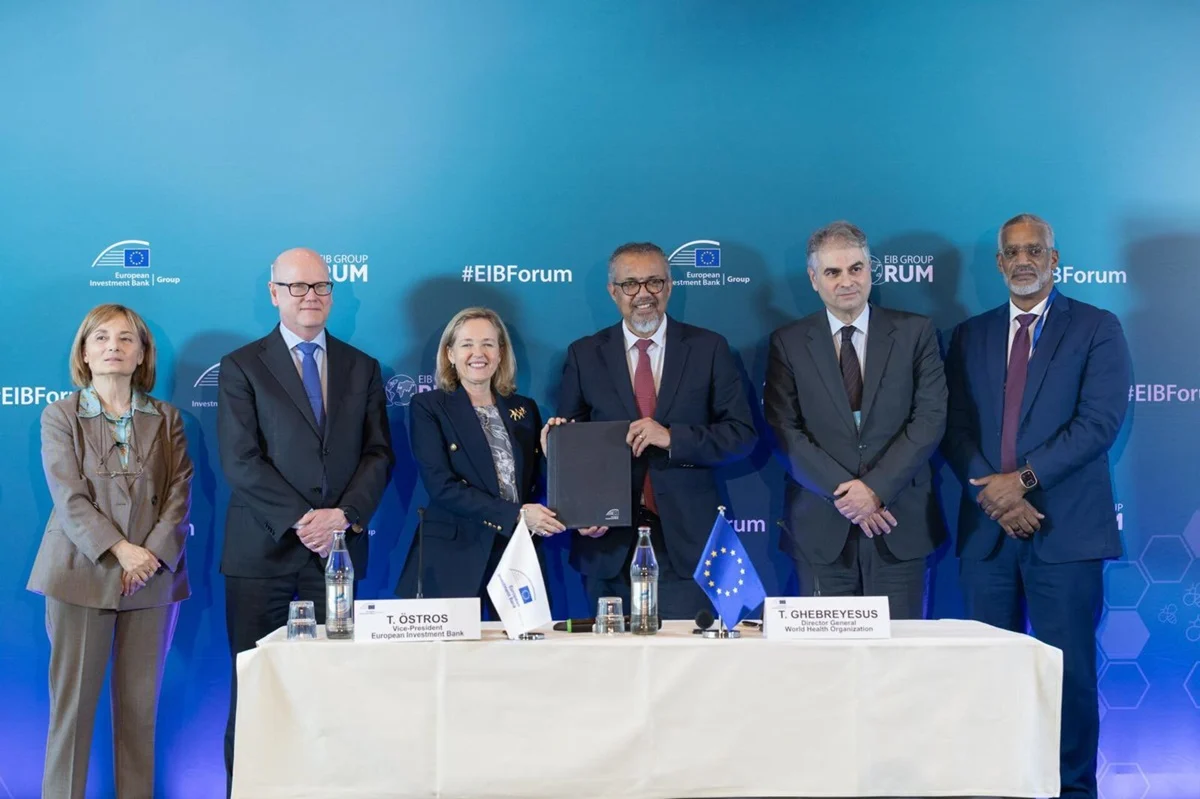
On 6 March 2025, at the EIB Group Forum in Luxembourg, Dr. Tedros Adhanom Ghebreyesus, Director-General of the World Health Organization (WHO), and Thomas Östros, Vice-President of the European Investment Bank (EIB Global), formalized a strategic partnership aimed at stabilizing and fortifying Lebanon’s deteriorating healthcare sector. The signing of this agreement, which provides a 10 million euro grant, marks a critical intervention in a country currently grappling with the cumulative effects of economic collapse, regional instability, and a strained public health apparatus.
The core objective of this initiative is twofold: the comprehensive re-establishment of Lebanon’s Central Public Health Laboratory (CPHL) and the expansion of life-saving medication access for over 50,000 vulnerable individuals suffering from chronic conditions, including diabetes, cardiovascular diseases, and various forms of cancer. This partnership represents a shift toward long-term resilience, moving beyond immediate emergency response to address the systemic vulnerabilities that have plagued the Lebanese health sector for the better part of the last five years.
A Chronology of Crisis and Response
Lebanon’s public health system has been in a state of precipitous decline since 2019, triggered by a severe financial crisis that saw the Lebanese Lira lose over 98% of its value against the US dollar. The subsequent inflation, compounded by the catastrophic August 2020 Beirut Port explosion, left the country’s medical infrastructure in tatters.
The chronology of this decline is stark:
- Late 2019: The onset of the financial crisis began restricting the government’s ability to import essential medical supplies and subsidize medication.
- August 2020: The Beirut Port explosion destroyed major pharmaceutical warehouses and rendered the Central Public Health Laboratory largely non-functional, stripping the country of its ability to conduct essential disease surveillance and diagnostic testing.
- 2021–2023: A "brain drain" of medical professionals—with estimates suggesting thousands of doctors and nurses emigrated—further hollowed out the health system. During this period, the WHO and EIB began preliminary discussions regarding the structural needs of the Ministry of Public Health (MoPH).
- Early 2024: Heightened regional tensions further destabilized the national budget, making external financing from multilateral institutions the only viable pathway for maintaining core public health functions.
- March 2025: The signing of the current agreement provides the capital injection necessary to restart the CPHL and secure supply chains for chronic disease medications.
The Central Public Health Laboratory: A Pillar of Sovereignty
The Central Public Health Laboratory is not merely a diagnostic facility; it is the cornerstone of national health security. Prior to its degradation, the CPHL served as the primary institution for epidemiological surveillance, water quality testing, food safety regulation, and vaccine potency verification. Its inability to function at capacity over the last several years has left the Lebanese population vulnerable to outbreaks of communicable diseases and has hindered the Ministry of Public Health’s ability to make data-driven policy decisions.
By financing the rehabilitation of the CPHL, the EIB and WHO are investing in the "early warning system" of the nation. Modernizing the lab will allow for real-time monitoring of health threats, ensuring that the Lebanese government can identify and respond to future pandemics or health emergencies without relying exclusively on external international aid.
Addressing the Chronic Disease Burden
While laboratory infrastructure provides the foundation, the immediate humanitarian component of the agreement focuses on the 50,000 patients suffering from non-communicable diseases (NCDs). In Lebanon, the cost of NCD treatments—such as insulin for diabetics or chemotherapy for cancer patients—has become prohibitive for the average household.
The WHO’s role in this initiative involves coordinating the procurement and distribution of high-quality, affordable medications. By bypassing the fragmented and often overpriced private market, the initiative ensures that these life-saving drugs reach primary healthcare centers (PHCs) throughout the country. This ensures that the most vulnerable segments of the population—particularly those displaced or living below the poverty line—do not face an interruption in treatment, which could otherwise lead to preventable mortality.
Official Perspectives and Institutional Strategy
During the signing ceremony in Luxembourg, representatives from both the EIB and the WHO emphasized that this grant is part of a broader commitment to the European Union’s Global Gateway strategy. This strategy seeks to foster sustainable investments in infrastructure, climate change mitigation, and health security in partner countries.
Thomas Östros, Vice-President of the EIB, noted that the bank’s involvement is a testament to the importance of supporting social stability through health access. "Economic stability is impossible without a healthy population," a sentiment echoed by the delegation. The EIB’s involvement is significant, as it marks a transition from commercial or private-sector lending toward targeted development grants that address the social determinants of health.
Dr. Tedros Adhanom Ghebreyesus, speaking on behalf of the WHO, highlighted the necessity of integrating vertical programs—such as specialized disease control—into a horizontal, resilient primary healthcare system. The WHO’s strategic alignment with the EIB provides the technical expertise necessary to ensure that the funds are not merely spent on supplies, but are used to build sustainable workflows, training programs, and digital health records that will outlast the current funding cycle.
Economic and Social Implications
The implications of this agreement extend far beyond the direct health benefits. In the Lebanese context, public trust in state institutions has been severely eroded. By successfully revitalizing the CPHL and restoring the flow of essential medicines, the Ministry of Public Health, with the support of the WHO and EIB, can begin to restore a degree of public confidence in the state’s capacity to provide for its citizens.
Furthermore, the economic burden of chronic disease in an aging population is significant. By keeping individuals with diabetes and cardiovascular issues stable, the initiative reduces the pressure on hospital emergency rooms and critical care wards, which are currently operating at near-capacity with limited resources. This "preventative economic" approach serves to stabilize the national health budget, allowing for a more efficient allocation of existing state resources.
Challenges and Future Considerations
While 10 million euros provides a necessary lifeline, analysts caution that it is a stop-gap measure rather than a panacea. The sustainability of this project will depend on the Lebanese government’s ability to maintain the rehabilitated facilities once the initial grant is exhausted.
There are several systemic hurdles that remain:
- Energy Stability: The CPHL requires consistent electricity to maintain temperature-controlled storage for vaccines and reagents. With the national grid providing only intermittent power, the project must include robust renewable energy components, such as solar arrays, to remain viable.
- Professional Retention: Even with a modern laboratory, the facility requires trained microbiologists, chemists, and lab technicians. The initiative will likely need to include incentives or training programs to stem the tide of emigration among health professionals.
- Regulatory Environment: The pharmaceutical sector in Lebanon has been plagued by issues of supply chain transparency. The WHO’s oversight will be crucial in ensuring that medications provided under this grant are protected from the black market and reach the intended patients.
Conclusion: A Model for Multilateral Cooperation
The 6 March agreement between the EIB and the WHO serves as a template for how international financial institutions can collaborate with humanitarian agencies to address complex, multifaceted crises. By combining the EIB’s financial power and infrastructure focus with the WHO’s technical, scientific, and global health expertise, the initiative addresses both the hardware (the laboratory) and the software (the medication supply chain) of public health.
As Lebanon navigates its path toward economic recovery, the health of its population remains the most critical asset. This investment is an acknowledgement that without a functional, secure, and modern health system, the prospects for long-term national recovery remain limited. The progress of the Central Public Health Laboratory and the delivery of medications to those 50,000 patients will serve as a bellwether for the effectiveness of international aid in the region in the coming years.
