
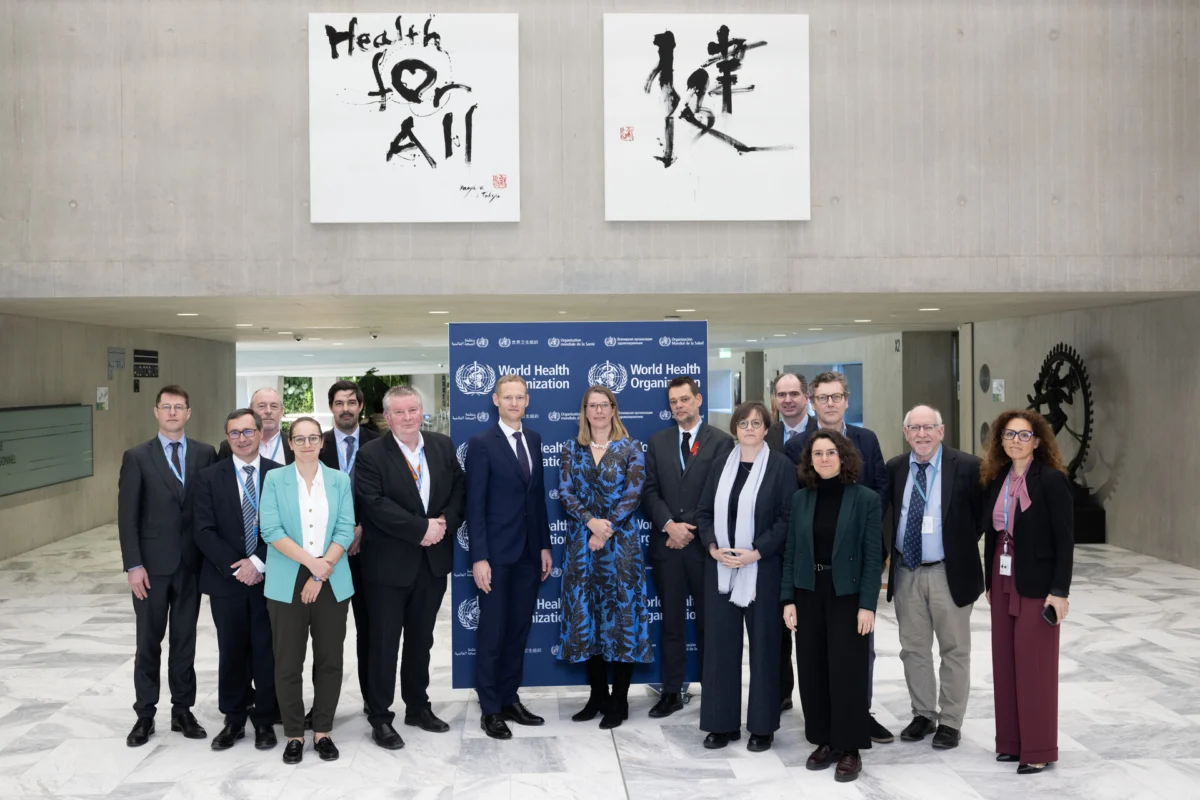
In a significant reinforcement of international health cooperation, Belgium and the World Health Organization (WHO) have concluded a three-day strategic dialogue in Geneva, signaling a deepened commitment to addressing the world’s most pressing medical and humanitarian challenges. The high-level meetings, held from March 2 to March 5, 2025, brought together senior officials from the Belgian federal government, the Flemish and Walloon regional governments, and WHO leadership to harmonize their long-term development cooperation priorities with the evolving global health landscape.
This partnership, which has historically focused on health system resilience and equitable access, comes at a critical juncture for the international community. As the world navigates the post-pandemic era and addresses the rising threats of biological risks and climate-related health crises, the dialogue served as a platform to align the Belgian development agenda with the WHO’s 14th General Programme of Work (GPW14).
A Chronology of Collaboration and Strategic Alignment
The partnership between Belgium and the WHO is rooted in decades of consistent multilateral support. However, the 2025 dialogue represents a shift toward more formalized, multi-year strategic frameworks. The roots of this specific engagement can be traced back to the Belgian presidency of the Council of the European Union in 2024, during which Belgium prioritized the sustainability of global health architectures and the necessity of regionalizing vaccine production.
The three-day event was structured to address both immediate operational concerns and long-term systemic goals:
- Day 1: Evaluation and Reflection: The opening sessions focused on reviewing the outcomes of the 2021–2024 cooperation cycle. This period was marked by the UHC-Partnership, an initiative designed to provide countries with the technical expertise required to build sustainable health systems.
- Day 2: Technical Deep Dives: The second day shifted to granular, field-based discussions. Delegations analyzed the successes and setbacks of the "Access to Medicines" programme, using Senegal as a primary case study for local production and regulatory strengthening. Simultaneously, experts from the WHO Regional Offices for Africa and Europe presented data on the impact of Belgian-funded initiatives in the Democratic Republic of Congo.
- Day 3: Future-Proofing and Governance: The final day was dedicated to the future, specifically the negotiation of a renewed Country Cooperation Strategy (CCS) and the integration of the "One Health" approach into Belgium’s bilateral funding mechanisms.
Accelerating Equitable Access to Health Technologies
A central pillar of the dialogue was the "Access to Medicines" programme, a flagship initiative supported by Belgian funding. In an era where pharmaceutical innovation is often siloed in high-income markets, the partners discussed the technical barriers to local production in the Global South.
Data presented during the dialogue highlighted that while global vaccine distribution has improved since the COVID-19 pandemic, the disparity in access to essential, non-pandemic medicines remains a major hurdle for low- and middle-income countries. The WHO provided evidence that market shaping—using predictable, long-term procurement commitments—is essential to incentivize local manufacturing.
"Market shaping is not merely an economic strategy; it is a fundamental human rights necessity," remarked a technical advisor involved in the discussions. The delegation examined how the transition from donor-dependent supply chains to sustainable, locally owned production models could mitigate the risks of global supply chain disruptions, such as those witnessed during the 2020–2022 period.
Addressing Health Emergencies and the One Health Paradigm
The conversation surrounding pandemic prevention, preparedness, and response (PPR) was underscored by the current instability in conflict-affected regions. By presenting specific operational data from the WHO’s health emergency response in Gaza, the participants confronted the reality of providing care in high-risk zones.
The discussion expanded into the "One Health" approach—a multidisciplinary strategy that recognizes the interconnection between human, animal, and environmental health. With biological risks, such as zoonotic spillover events, rising due to climate change and urbanization, the Belgian delegation emphasized the need for better surveillance.
The WHO highlighted that the ongoing pandemic agreement negotiations are critical for establishing a legally binding framework that ensures equitable sharing of pathogens and benefits. Belgium, as a long-standing proponent of strong multilateralism, reaffirmed its position that global health security cannot be achieved through national-level isolationism but requires a robust, well-funded WHO.

Strengthening Universal Health Coverage (UHC)
Universal Health Coverage remains the primary metric by which both parties measure the success of their collaboration. The review of the 2021–2024 UHC-Partnership cycle revealed that while progress has been made in strengthening primary health care, there remains a significant "implementation gap" at the country level.
In the Democratic Republic of Congo, for example, the collaboration has focused on building the foundational layers of health systems: training community health workers, digitizing patient records, and ensuring the availability of basic diagnostics. Participants analyzed these results, noting that the integration of mental health services into primary care represents a vital evolution in the UHC strategy. The inclusion of mental health reflects a broader shift toward viewing health not just as the absence of disease, but as a state of complete physical and psychological well-being.
Official Statements and Institutional Commitment
The level of representation at the dialogue underscored the depth of Belgium’s commitment. The presence of the Flemish and Walloon governments alongside federal representatives demonstrated a "whole-of-Belgium" approach to global health.
H.E. Christophe Payot, Ambassador of Belgium to the United Nations and other international organizations in Geneva, emphasized the necessity of these dialogues to ensure that Belgian development priorities remain responsive to the WHO’s technical expertise. Mr. Koen Van Acoleyen, Minister Counselor at the Permanent Representation of Belgium, noted that understanding the navigation of these "challenging times" is essential for effective diplomacy.
Dr. Catharina Boehme, Assistant Director-General for External Relations and Governing Bodies at the WHO, lauded the partnership, stating, "We thank you for your support, honesty, and strong engagement for global health. Your efforts in supporting our work in Mozambique and Senegal are clear examples of the crucial work we accomplish together."
The sentiment was echoed by Mr. Dirk Brems, Director of Thematic and Multilateral Cooperation, who affirmed the strategic value of the WHO as a "trustworthy partner." His comments underscored a broader geopolitical reality: in an era of fractured international cooperation, maintaining strong, transparent partnerships between donor nations and technical agencies like the WHO is vital for the stability of the global order.
Implications and Future Outlook
The implications of this strategic dialogue extend well beyond the immediate funding agreements. By focusing on the 14th General Programme of Work (GPW14), Belgium and the WHO are signaling a shift toward more integrated health systems. The goal is to move away from vertical programs (which focus on single diseases) toward horizontal systems (which focus on overall health system capacity).
Fact-based analysis suggests that this approach is more resilient. When health systems are strengthened broadly, they are better equipped to handle both routine health needs and unexpected surges in demand, such as those caused by climate-related disasters or outbreaks.
Furthermore, the commitment to "uncharted territories"—a phrase used by the Belgian delegation—acknowledges that the future of global health will be defined by rapid technological change, such as the use of AI in medical diagnostics, and the persistent threat of anti-microbial resistance (AMR).
As the parties move toward finalizing the renewed Country Cooperation Strategy, the focus will likely remain on three core areas:
- Sustainability: Moving from short-term aid to long-term investment in local infrastructure.
- Accountability: Strengthening the metrics used to track the progress of health interventions.
- Multilateralism: Reinforcing the central role of the WHO as the normative authority in global health.
The dialogue has successfully set the stage for a period of intensified cooperation. With the clear alignment of Belgium’s diplomatic influence and the WHO’s technical mandate, the partnership stands as a vital mechanism for fostering global health security. As the world faces a decade that promises both immense medical breakthroughs and significant systemic threats, the consensus reached in Geneva provides a necessary roadmap for a more equitable and resilient health future.
