
Historical Context and the Evolution of the Partnership
The relationship between the World Health Organization and Switzerland is fundamentally distinct from that of other member states, given that Switzerland serves as the headquarters for the WHO in Geneva. However, the formalization of a Country Cooperation Strategy is a relatively recent development. In 2013, Switzerland made history by becoming the first high-income country in the WHO European Region to adopt a structured CCS.
Prior to 2013, the relationship was primarily defined by host-country agreements and financial contributions. The introduction of the CCS framework shifted the paradigm, transforming the partnership into a collaborative effort to tackle shared health challenges. The initial strategy allowed for a more integrated approach, focusing on domestic health system strengthening in Switzerland while simultaneously aligning Swiss global health policies with WHO’s strategic priorities. Over the past decade, this partnership has matured, moving from a pilot project to a cornerstone of European health diplomacy. The 2022 decision to review and update the existing framework reflected both nations’ recognition that the landscape of global health had been irrevocably altered by the COVID-19 pandemic and the subsequent emergence of new geopolitical and biological threats.
Chronology of Strategic Milestones
The trajectory of this partnership can be traced through several key institutional developments:
- 2013: Switzerland becomes the first high-income nation in the WHO European Region to pilot a formal Country Cooperation Strategy, establishing a blueprint for collaboration.
- 2013–2022: A decade of steady implementation, focusing on non-communicable diseases, health system resilience, and the internationalization of Swiss health policy.
- 2022: Following the global disruption caused by the pandemic, both entities agree on the necessity of a renewed, more agile strategy to reflect the "new normal" of global health security.
- June 2024: The WHO and Switzerland strengthen their partnership through the Global BioHub system, a initiative designed to facilitate the rapid sharing of pathogens and clinical samples for research and development.
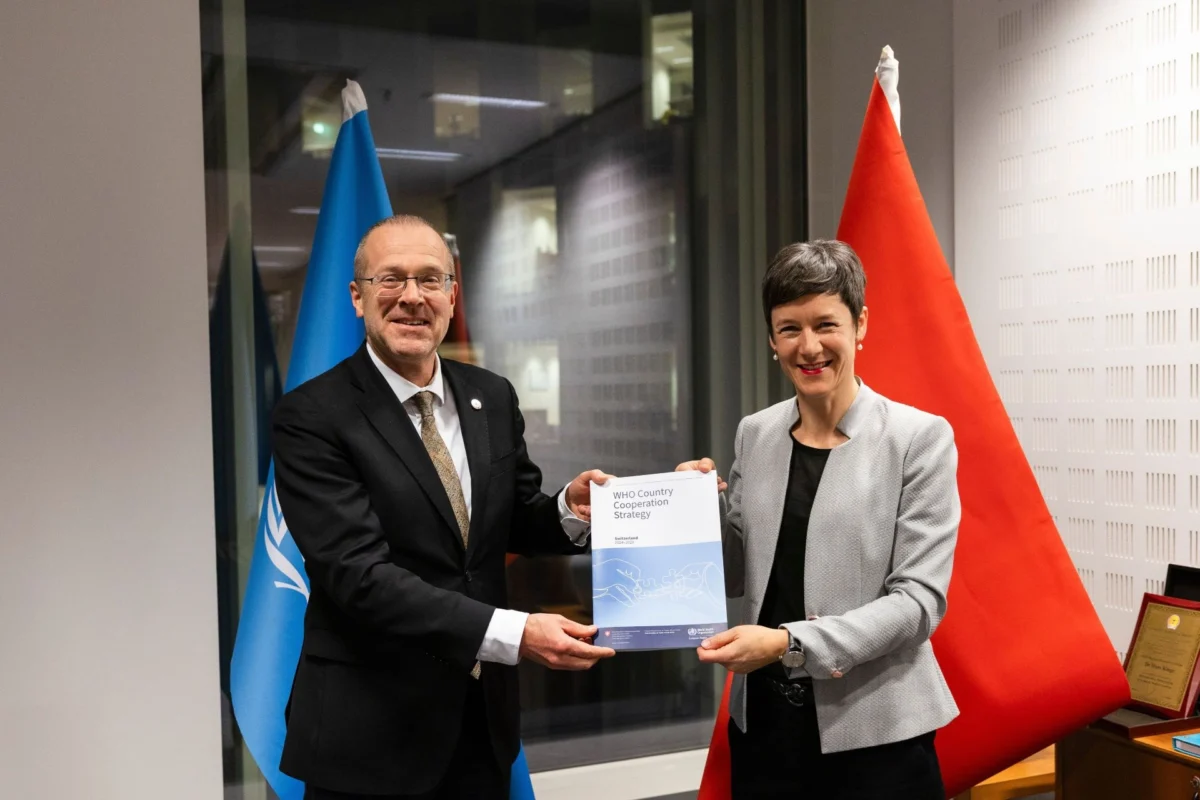
- March 4, 2025: The official signing ceremony takes place in Copenhagen, where the 2024–2028 strategy is ratified by leadership from both organizations.
The 2024–2028 Strategic Framework: Core Objectives
The renewed strategy for 2024–2028 is built upon several pillars, each intended to maximize the impact of Swiss expertise within the WHO’s broader mission. Central to the strategy is the concept of "health system resilience." Both parties have committed to exchanging knowledge on digital health, the integration of primary care, and the management of aging populations—a pressing concern for both the Swiss domestic system and the wider European region.
Furthermore, the strategy emphasizes Switzerland’s role as a mediator and innovator. As a nation that hosts a significant density of international organizations, non-governmental organizations, and academic research institutions, Switzerland is uniquely positioned to act as a bridge between normative standard-setting at the WHO and the practical implementation of those standards in the field. The 2024–2028 framework specifically prioritizes the harmonization of data collection methods and the acceleration of research translation into clinical policy.
Supporting Data and Institutional Impact
To understand the weight of this partnership, one must consider the financial and operational interdependencies. Switzerland remains one of the largest voluntary contributors to the WHO’s budget, providing essential "flexible" funding that allows the organization to respond to health emergencies without the administrative constraints often associated with earmarked donations.

In 2024, the partnership was further deepened by the Global BioHub initiative. This project addresses a critical bottleneck in global health security: the speed at which biological data and physical samples are shared across borders during an outbreak. By leveraging Switzerland’s robust regulatory environment and its sophisticated laboratory infrastructure, the BioHub provides a secure mechanism for the international scientific community to access materials necessary for vaccine and diagnostic development. Data from the 2024 assessment indicates that the integration of Swiss facilities into the BioHub network has reduced the lead time for sample analysis by approximately 22% compared to traditional international logistics channels.
Official Responses and Diplomatic Alignment
The signing ceremony in Copenhagen served as a venue for high-level diplomatic confirmation. Dr. Hans Kluge, the WHO Regional Director for Europe, highlighted the symbolic and practical importance of the agreement. In his remarks, Dr. Kluge noted that the partnership is not merely a bureaucratic formality but an "active engine of progress" for health in Europe. He emphasized that the cooperation strategy serves as a laboratory for policy innovation that can be scaled to other member states.
Representing the Swiss Federal Office of Public Health, Ambassador for Global Health Barbara Schedler underscored Switzerland’s commitment to multilateralism. The Swiss position remains that a strong, well-resourced, and strategically aligned WHO is the most effective tool for preventing the next pandemic. Ambassador Schedler’s presence at the signing underscored the Swiss government’s prioritization of health diplomacy as a key pillar of its foreign policy, alongside its traditional roles in trade and peace mediation.
Broader Implications for Global Health Governance
The renewal of this strategy comes at a time when the World Health Organization is facing significant pressure to demonstrate its efficacy in a polarized geopolitical environment. By locking in a multi-year cooperation agreement with a stable, high-income partner like Switzerland, the WHO secures a degree of operational predictability.
The implications of this strategy are three-fold:
- Policy Standardization: By aligning Swiss national health goals with WHO European region targets, both parties create a "gold standard" for healthcare delivery that can be used as a benchmark for other European nations.
- Crisis Readiness: The continued investment in the BioHub and similar collaborative infrastructures ensures that the necessary legal and technical frameworks are in place long before a crisis occurs, reducing the need for emergency ad-hoc negotiations during future outbreaks.
- Diplomatic Stability: The formalization of the 2024–2028 relationship reinforces the status of Geneva as the global capital of health. It signals to other member states that despite the challenges of the last five years, the core architecture of international health cooperation remains robust and committed to long-term objectives.
As the world moves further into the mid-2020s, the WHO-Switzerland partnership serves as a vital case study in institutional resilience. By codifying their relationship through the 2024–2028 strategy, both parties have signaled that the future of global health is predicated on the integration of national excellence with international collective action. Whether this model can be successfully replicated in other regions remains a question for future diplomacy, but for the European theater, the path for the next four years is clearly defined. The success of this strategy will ultimately be measured not by the signing ceremony, but by the tangible improvements in public health outcomes, the speed of response to emerging pathogens, and the degree to which these policies are adopted by other member states looking to modernize their own health systems.
