
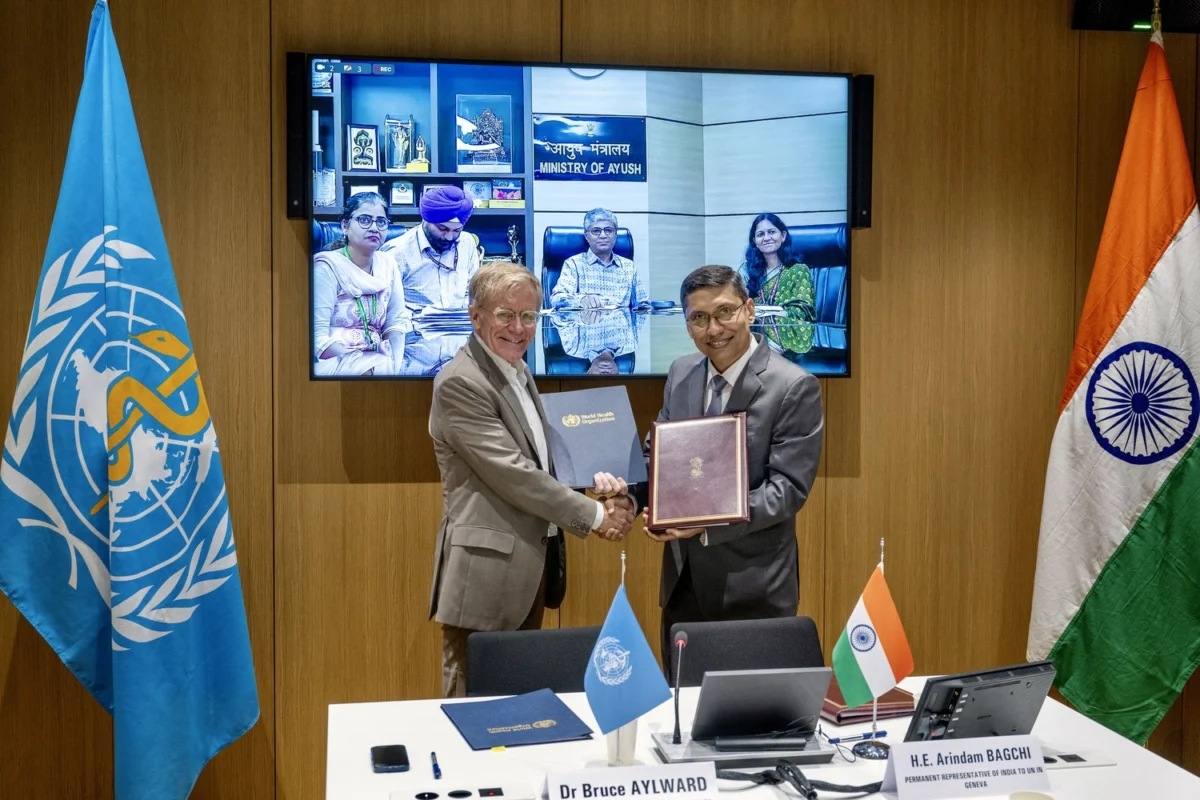
In a significant move to formalize and scientifically validate ancient healing practices on the global stage, the Government of India has pledged US$ 85 million over the next decade to support the operational mandate of the World Health Organization (WHO) Global Traditional Medicine Centre. The agreement, signed at a high-level ceremony in Geneva, underscores a decadal commitment—spanning 2022 to 2032—aimed at bridging the gap between traditional wisdom and modern medical data. This financial injection is designed to build a robust evidence base, enabling policymakers worldwide to integrate traditional, complementary, and integrative medicine (TCIM) into national health systems safely and effectively.
The Financial Scope and Strategic Context
The US$ 85 million commitment is part of a larger, overarching investment by the Government of India totaling US$ 250 million dedicated to the WHO Global Centre of Traditional Medicine. This broader funding covers the initial establishment of the centre in Jamnagar, Gujarat, including the provision of interim facilities and the construction of a permanent, state-of-the-art global headquarters.
Beyond its immediate operational functions, a portion of this funding has been strategically earmarked for the WHO’s upcoming Investment Round (2025–2028). By aligning these funds with the WHO’s core resource mobilization efforts, India is ensuring that traditional medicine is not treated as a peripheral interest but as an integral pillar of the organization’s broader mission to achieve Universal Health Coverage (UHC). This multisectoral approach aims to strengthen WHO’s internal capacities across its various regional and technical divisions, fostering a "One WHO" approach to global health governance.
Chronology of a Global Initiative
The trajectory of this partnership reflects a systematic effort by international health authorities to acknowledge the role of traditional medicine in the lives of billions.
- 2022: The WHO Global Centre for Traditional Medicine is officially established in Jamnagar, India, following a vision shared by Indian Prime Minister Narendra Modi and WHO Director-General Dr. Tedros Adhanom Ghebreyesus.
- August 2023: The inaugural WHO Traditional Medicine Global Summit takes place in Gandhinagar, Gujarat. The summit concludes with the adoption of the "Gujarat Declaration," a landmark document outlining a multi-stakeholder action agenda for integrating traditional medicine into primary health care.
- 2023: India signs a separate five-year agreement to provide technical support to the WHO’s Traditional, Complementary, and Integrative Medicine (TCI) unit.
- May 2025: The 78th World Health Assembly is expected to witness the official launch of the WHO Global Strategy for Traditional Medicine (2025–2034).
- November 2025: The next WHO Global Traditional Medicine Summit is scheduled to convene, serving as a follow-up to the implementation of the new decade-long strategy.
The Five Pillars of Knowledge
The WHO Global Traditional Medicine Centre, currently led by Director a.i. Dr. Shyama Kuruvilla, operates as a specialized knowledge hub. Its mandate is structured around five interconnected workstreams that aim to harmonize traditional practices with rigorous scientific scrutiny:
- Research and Evidence: Developing standardized methodologies to evaluate the efficacy and safety of traditional treatments.
- Primary Health Care and UHC: Creating pathways for traditional practitioners to be incorporated into formal, state-funded health delivery systems.
- Indigenous Knowledge and Biodiversity: Protecting the cultural heritage of traditional healing while ensuring the sustainable use of medicinal plants and natural resources.
- Digital Health Applications: Leveraging Artificial Intelligence and big data to map trends in traditional medicine usage and clinical outcomes.
- Global Collaboration: Coordinating the biennial Global Summits and fostering partnerships between Member States to share best practices.
Official Perspectives on Integration
The partnership has been met with optimism by senior leadership at the WHO and the Indian government. Dr. Bruce Aylward, Assistant Director-General of the Universal Health Coverage and Life Course division at the WHO, emphasized the timeliness of this funding. "India’s commitment and leadership in expanding the evidence-based contribution of traditional medicine to the health and well-being of all people and the planet comes at an opportune moment," Dr. Aylward stated. He noted that for many populations, particularly those in marginalized or rural areas, traditional medicine is often the only accessible form of health care. Integrating these practices into national systems is, therefore, a moral and logistical imperative for achieving health for all.
Vaidya Rajesh Kotecha, Secretary of the Ministry of Ayush, highlighted that the agreement is the culmination of a shared vision to elevate traditional systems through a global lens. "The signing of this donor agreement is a major milestone towards achieving the shared vision of Prime Minister Shri Narendra Modi and WHO Director-General Tedros," Kotecha remarked.

Representing India’s diplomatic interests, Ambassador Arindam Bagchi, Permanent Representative of India to the UN in Geneva, underscored the country’s enduring commitment. "India remains committed to supporting WHO in its work to strengthen traditional medicine systems globally for achieving universal health coverage and serving the entire humanity," he stated, noting that the Jamnagar centre acts as a catalyst for benefiting all WHO Member States.
Implications for Global Health Policy
The integration of traditional medicine into modern healthcare is not merely a cultural initiative; it is a pragmatic response to the evolving needs of global populations. As chronic diseases—such as diabetes, cardiovascular conditions, and mental health disorders—continue to rise, the limitations of conventional medicine are increasingly apparent. Traditional systems, which often prioritize holistic, patient-centered care and prevention, offer valuable insights into long-term wellness.
However, the path to integration is fraught with challenges, primarily the lack of standardized data and regulatory hurdles. By funding the WHO’s TCI unit and the Global Centre, India is directly financing the production of benchmark documents, standardized terminologies, and safety guidelines. These technical outputs are critical for regulatory bodies in individual countries to draft legislation that protects patients while allowing for the legitimate use of traditional therapies.
Furthermore, the collaboration between the Global Centre and the TCI unit ensures that the "One WHO" approach is maintained. Through regular meetings of the WHO Technical Expert Network, the organization is creating a unified, data-driven methodology that transcends geographic boundaries. This prevents the fragmentation of traditional medicine research and ensures that scientific rigor is applied consistently, whether in Southeast Asia, Africa, or the Americas.
Future Outlook: The 2025–2034 Strategy
Looking ahead, the next decade is set to be a transformative period for traditional medicine. The upcoming launch of the 2025–2034 Global Strategy at the 78th World Health Assembly represents a definitive shift toward institutionalizing these practices within the global health architecture.
The focus will likely move toward the development of digital health tools that monitor the safety of herbal and traditional products, alongside a deeper emphasis on the intersection of biodiversity and public health. As climate change threatens the natural habitats of medicinal plants, the work being done in Jamnagar will become increasingly vital in ensuring that traditional knowledge is preserved alongside the biodiversity that sustains it.
In conclusion, India’s US$ 85 million contribution is more than just a financial transaction; it is a statement of intent. By providing the resources necessary to generate high-quality evidence, the partnership is setting the stage for a new era of healthcare—one that is inclusive, scientifically grounded, and respectful of the diverse healing traditions that have served humanity for millennia. The success of these efforts will ultimately be measured by the ability of countries to seamlessly integrate these practices, ensuring that patients have access to the full spectrum of available medical knowledge.
