
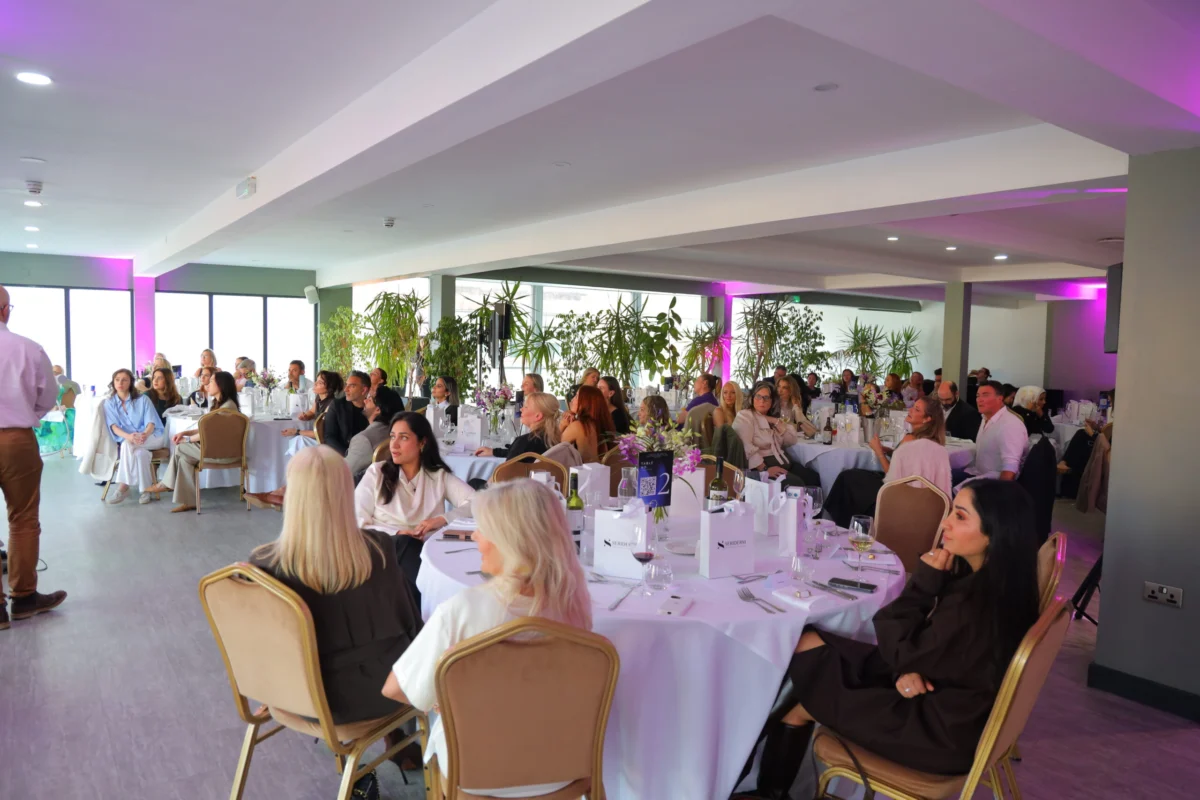
Laser device manufacturer Seriderm UK recently convened industry leaders, clinic owners, and specialized practitioners from across the Midlands, Northern England, and Scotland for its flagship educational symposium, the Seriderm360 event. Hosted at the prestigious Manchester Hall Rooftop Terrace, the full-day conference provided a dynamic platform for advancing clinical knowledge, discussing emerging trends in aesthetic medicine, and debuting next-generation medical-grade devices to a captivated audience of medical professionals.
The meticulously curated program emphasized advanced education, peer-to-peer discussion, and evidence-based practice surrounding contemporary aesthetic laser technology. As the aesthetic medicine sector continues to experience rapid technological evolution and heightened consumer demand for non-invasive procedures, educational symposia of this scale have become critical for maintaining high standards of clinical governance, safety, and efficacy across regional practices.
Clinical Perspectives and Expert Presentations
The core of the Seriderm360 itinerary featured a series of high-level academic presentations and clinical case studies delivered by prominent figures in the field of dermatology and aesthetic medicine. These keynotes offered attendees deep dives into specialized device applications, patient selection criteria, and management strategies to optimize clinical outcomes.
Renowned aesthetic practitioner Dr Cormac Convery opened a vital segment of the clinical agenda with a comprehensive presentation on the DermaV system. Dr Convery explored the intricacies of vascular and pigmentary treatments, detailing how advanced dual-wavelength laser systems allow practitioners to address complex dermatological conditions with unprecedented precision. His clinical insights underscored the importance of understanding tissue interaction parameters when tackling stubborn vascular lesions and hyperpigmentation.
Following this, Dr Yusra Ahmed addressed one of the most critical and fast-growing areas in modern dermatology: the safe and effective treatment of skin of colour. Utilizing the LaseMD Ultra platform as her primary case study, Dr Ahmed discussed the physiological nuances of melanosome-rich skin types. She highlighted how non-ablative fractional thulium laser technology can be safely deployed to rejuvenate darker skin tones without triggering post-inflammatory hyperpigmentation—a historically significant risk factor in aesthetic interventions.
The educational depth continued with Professor Jonny Herron, who provided an exhaustive analysis of the eCO2 fractional resurfacing system in the context of surgical scarring and complex dermal remodeling. Professor Herron shared empirical data and longitudinal patient case studies demonstrating how targeted ablative resurfacing can significantly improve the textural and structural integrity of compromised skin, offering renewed hope to patients dealing with traumatic or surgical scars.
Adding a new dimension to the clinical discourse, Dr Magdalena Bejma took the stage to introduce and dissect the mechanics of XERF, a cutting-edge skin-tightening treatment. Dr Bejma illustrated the science behind advanced radiofrequency energy delivery, explaining how controlled thermal stimulation deep within the dermal matrix induces neocollagenesis and elastin production, leading to measurable improvements in skin laxity without the downtime associated with surgical facelifts.
Event Chronology and Engagement
The day’s proceedings were expertly steered by prominent television presenter Jenny Powell, who served as the master of ceremonies. Powell’s role extended beyond mere announcements; she actively facilitated interactive audience discussions, Q&A sessions, and panels that allowed practitioners to voice common clinical challenges and debate best practices in real-time.
The chronological flow of the event was designed to transition attendees from foundational physics and device mechanics in the morning sessions to practical application, live demonstrations, and business strategy discussions in the afternoon. Registration and morning networking commenced at 9:00 AM, allowing delegates from Scotland, the North, and the Midlands to connect before the academic lectures began at 10:00 AM.
Following the morning blocks led by Dr Convery and Dr Ahmed, attendees enjoyed a networking lunch on the Manchester Hall Rooftop Terrace, taking advantage of panoramic views of the city skyline to discuss the morning’s clinical findings. The afternoon session resumed at 1:30 PM with Professor Herron and Dr Bejma’s presentations, culminating in an open panel discussion moderated by Powell. The formal event concluded with an evening networking reception, fostering regional collaboration among clinics striving to remain at the cutting edge of the industry.
Spotlight on Innovation: The Seriderm Portfolio and XERF
A major highlight of the Seriderm360 event was the comprehensive showcase of Seriderm UK’s expansive technological portfolio. While established devices such as the DermaV, LaseMD Ultra, and eCO2 drew significant attention for their proven clinical track records, the undisputed focal point of the exhibition was the official introduction of XERF.
Radiofrequency (RF) technologies have occupied a dominant space in the non-surgical aesthetic market for over a decade. However, the introduction of XERF represents a notable leap forward in energy-based device engineering. Designed to deliver targeted thermal energy precisely into the subcutaneous layers while safeguarding the epidermis, XERF addresses the growing consumer demand for procedures that offer immediate tightening effects coupled with long-term structural remodeling.
Jo Harlick, Senior Business Manager North for Seriderm UK, emphasized the strategic significance of the event and the reception of the company’s latest technology. "Hosted by Powell, the event featured specialty-leading speakers, showcased the full Seriderm portfolio and introduced XERF, our latest radiofrequency technology, with phenomenal research, insights and results," Harlick stated. "We’re already looking forward to bringing Seriderm 360 back next year!"
The inclusion of exhaustive research data alongside the hardware launch reflected a broader industry shift toward evidence-based aesthetic medicine. Clinics are increasingly required by regulatory bodies and discerning consumers to substantiate claims made by device manufacturers with rigorous clinical trials and peer-reviewed data.
Broader Impact and Industry Implications
The success of the Seriderm360 event in Manchester carries broader implications for the UK aesthetic sector, particularly outside of the traditional London-centric hub. By bringing world-class educational programming directly to practitioners in the North, Midlands, and Scotland, Seriderm UK has demonstrated a commitment to decentralizing professional development and ensuring regional clinics have equal access to top-tier technological training.
The aesthetic medicine market in the United Kingdom has experienced exponential expansion over the past decade. According to recent market analysis reports, the UK non-surgical aesthetic treatment market is valued at several billion pounds, driven by an aging demographic, destigmatization of cosmetic procedures, and continuous advancements in device safety and efficacy.
However, this growth occurs against a backdrop of increasing regulatory scrutiny. Industry watchdogs, government agencies, and professional associations have repeatedly called for higher standards of training, stricter credentialing, and robust clinical governance within aesthetic practices. Events like Seriderm360 play a crucial role in self-regulation by equipping medical practitioners with the rigorous scientific knowledge required to operate sophisticated energy-based devices safely and effectively.
Furthermore, the focus on treating skin of colour, as highlighted by Dr Yusra Ahmed’s presentation on the LaseMD Ultra, addresses a long-standing deficit in aesthetic education. Historically, many laser and light-based devices were engineered and tested primarily on lighter Fitzpatrick skin types, leading to higher complication rates among patients of colour. By centering inclusive clinical education at major regional symposia, manufacturers and practitioners alike are taking tangible steps toward more equitable, universally accessible dermatological care.
Conclusion and Future Outlook
As the medical aesthetic landscape continues to evolve at a breakneck pace, the intersection of advanced technology, rigorous clinical education, and peer collaboration will remain the cornerstone of successful clinical practice. The Seriderm360 event successfully bridged the gap between theoretical device engineering and practical clinical application, providing hundreds of regional practitioners with the tools, insights, and confidence needed to elevate their patient offerings.
With the overwhelmingly positive reception of the XERF radiofrequency technology and the enthusiastic feedback from attending clinicians, Seriderm UK has firmly established Seriderm360 as a premier fixture on the annual aesthetic calendar. Plans are already underway for the next iteration of the symposium, promising even greater technological revelations, expanded clinical programming, and continued support for the burgeoning aesthetic medical community across the UK.
