
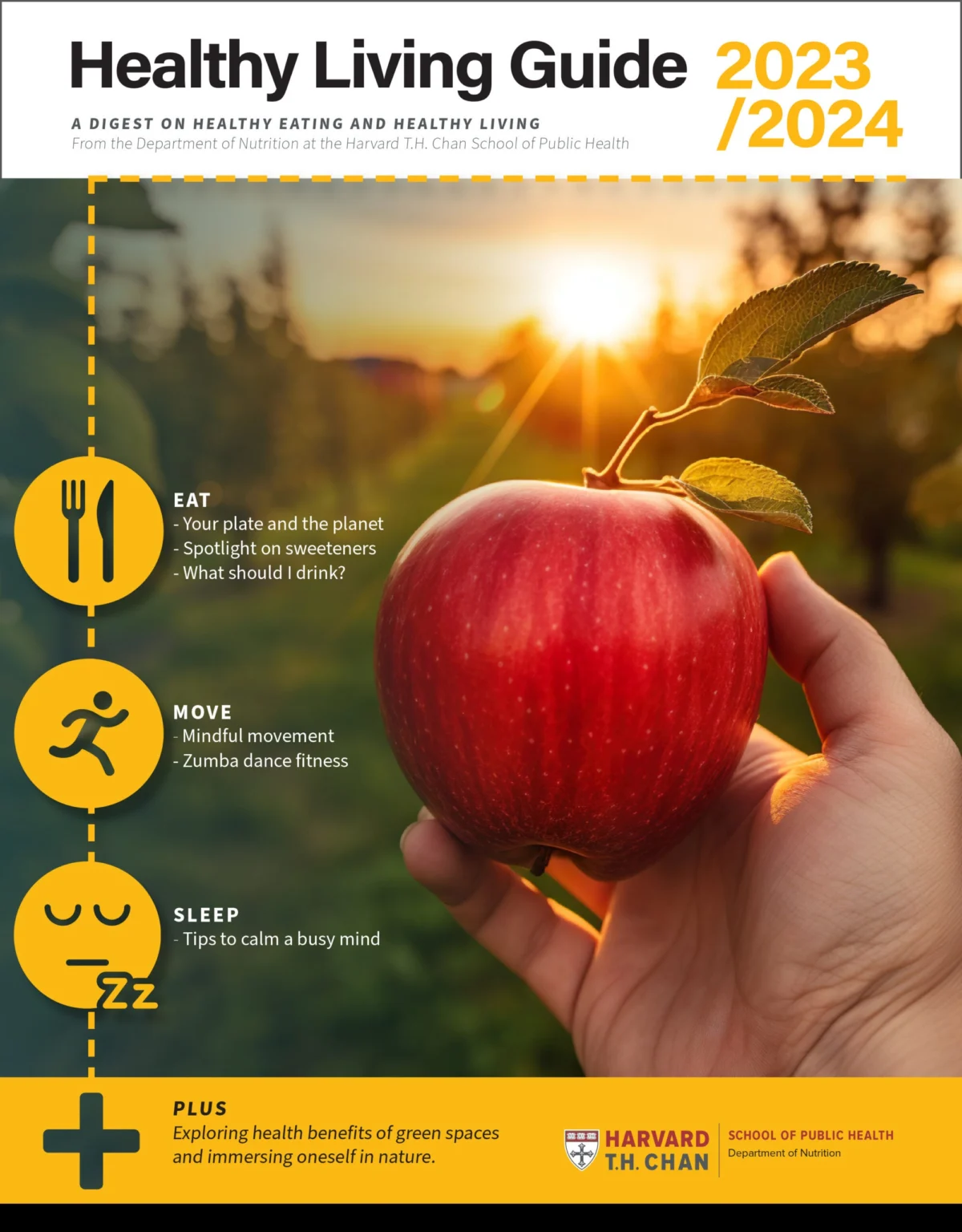
The Harvard T.H. Chan School of Public Health has officially released its fourth annual Healthy Living Guide, a comprehensive publication designed to synthesize complex nutritional research into actionable public health strategies. This year’s edition marks a significant shift in the institution’s approach to wellness, placing a primary focus on the intersection of mindfulness and systemic public health. The launch coincides with the recent establishment of the Thich Nhat Hanh Center for Mindfulness in Public Health, a department-led initiative aimed at integrating contemplative practices into the broader framework of preventative medicine.
The release of the 2023-2024 guide serves as a central resource for individuals seeking evidence-based guidance on nutrition, physical activity, and sleep hygiene. By consolidating findings from the previous calendar year, the Department of Nutrition provides a roadmap for addressing some of the most pressing health challenges in modern society, including the rise of sedentary lifestyles, the ubiquity of ultra-processed food consumption, and the global crisis of sleep deprivation.
The Evolution of the Healthy Living Guide
The Harvard Healthy Living Guide series began as a pilot initiative intended to bridge the gap between academic research and public accessibility. Since its inception, the publication has evolved from a simple newsletter format into a multi-dimensional digital resource featuring printable tip sheets, interactive assessments, and deep-dive analyses of peer-reviewed literature.
The 2023 iteration is particularly notable for its alignment with the mission of the newly inaugurated Thich Nhat Hanh Center for Mindfulness in Public Health. The Center, which derives its name from the renowned Zen master and peace activist, aims to elevate mindfulness from an individual wellness practice to a public health strategy. Researchers at the center are currently investigating how mindful consumption habits—awareness of the origins, preparation, and consumption of food—can influence both individual health outcomes and environmental sustainability.
Research Highlights: Ultra-Processed Foods and Mental Health
A critical component of this year’s guide involves a thorough examination of ultra-processed foods (UPFs). Current nutritional science has increasingly identified a correlation between the consumption of highly industrial, calorie-dense, and nutrient-poor foods and an uptick in non-communicable diseases. The guide synthesizes recent longitudinal studies suggesting that diets high in UPFs may contribute to systemic inflammation, which is increasingly linked to mental health disorders, including depression and anxiety.
According to data presented by the Harvard School of Public Health, the shift toward a "Western diet" characterized by high levels of additives, stabilizers, and sugar-sweetened beverages has outpaced the human body’s evolutionary capacity to process such inputs. The guide provides clear, data-driven alternatives, advocating for the adoption of whole-food-based diets that emphasize fiber, plant-based proteins, and healthy fats. By contextualizing these findings, the report offers a public health rationale for policy changes, such as improved food labeling and the regulation of marketing practices targeted at vulnerable populations.
Physical Activity and the Rhythm of Life
In addition to dietary guidelines, the 2023-2024 publication expands upon the physiological benefits of consistent physical activity. The editorial team emphasizes that exercise should not be viewed merely as a weight-management tool, but as a fundamental pillar of cognitive and emotional health.
The guide highlights the efficacy of diverse movement modalities, ranging from high-intensity interval training to accessible, rhythm-based activities like Zumba. By citing recent meta-analyses on the impact of music and synchronized movement on mood regulation, the publication underscores the importance of "joyful movement." The implication for public health is clear: by lowering the barrier to entry for exercise through fun, community-oriented programs, municipalities and health organizations can effectively increase population-wide activity levels, thereby reducing the incidence of cardiovascular disease and metabolic syndrome.
Chronobiology: The Science of Sleep
Perhaps the most technical, yet accessible, addition to this year’s guide is the analysis of "chronotypes"—the biological classification of an individual’s internal circadian rhythm. The guide provides a scientific breakdown of why "night owls" and "early birds" experience different health outcomes when subjected to standard 9-to-5 societal structures.
The research presented suggests that chronic misalignment between one’s natural chronotype and their daily schedule can lead to "social jetlag," a condition that has been linked to increased risks of hypertension, obesity, and cognitive impairment. By providing actionable tips for optimizing sleep hygiene—such as controlling light exposure and establishing consistent wake-up times—the guide offers a nuanced approach to recovery and rest that acknowledges biological individuality.
Institutional Perspective and Global Implications
The leadership at the Harvard Department of Nutrition has framed the 2023-2024 Healthy Living Guide as a necessary intervention in an era of information overload. In a public statement, researchers emphasized that the goal is not to dictate rigid lifestyle rules, but to empower individuals with the literacy required to make informed choices.
"The apple in your hand is the body of the cosmos," the guide notes, quoting Thich Nhat Hanh to illustrate the interconnectedness of food systems. This philosophical grounding is not merely aesthetic; it serves as a bridge to the concept of planetary health. The research highlights that the choices made at the individual level—specifically regarding meat consumption and sustainable sourcing—carry significant weight in the context of global climate change. By promoting diets that are both healthy and sustainable, the Harvard team is advocating for a shift in consumption patterns that could, if scaled globally, alleviate some of the environmental pressures currently straining the food supply chain.
Data-Driven Public Health Strategies
The guide utilizes a variety of data points to validate its recommendations. For instance, the section on sleep hygiene cites recent cohort studies showing a 20% reduction in mortality risk for individuals who maintain consistent sleep cycles. Similarly, the section on nutrition references large-scale epidemiological data that demonstrates the protective effects of a Mediterranean-style diet against cognitive decline.
These data points serve as a cornerstone for the guide’s broader objective: to provide a standardized, scientific baseline for wellness. In an environment saturated with wellness trends and unsubstantiated health claims, the publication acts as a reliable filter. It provides the public with a rubric for evaluating new health fads, encouraging skepticism of miracle cures and promoting a long-term view of health maintenance.
Future Outlook: A Mindful Approach to Public Policy
The implications of the research contained within the 2023-2024 Healthy Living Guide extend beyond the individual. The editors argue that a more mindful approach to public health could revolutionize how urban environments are designed and how food policies are implemented. If the public sector adopts a stance that prioritizes mental health, adequate sleep, and nutritious food access, the long-term economic burden on healthcare systems could be significantly mitigated.
The guide invites readers to participate in its annual knowledge-testing assessment, a practice that encourages active engagement with the material rather than passive consumption. By reviewing the archives of previous years, readers can observe the progress made in nutrition science and how the discourse has shifted from a focus on calories to a focus on nutrient quality, systemic health, and the psychological aspects of eating.
As the Department of Nutrition moves into 2024, the focus will remain on the dissemination of these findings to a global audience. The guide is available as a downloadable PDF, ensuring that its contents are accessible to educators, healthcare providers, and the general public, regardless of geographic location. This commitment to accessibility is a hallmark of the department’s public health mission, reinforcing the belief that the knowledge required for a healthy life should be a universal right rather than a privilege.
In summary, the 2023-2024 Healthy Living Guide is an essential resource for those seeking to navigate the complexities of modern wellness. Through its blend of rigorous research, practical advice, and a commitment to the philosophy of mindful living, it provides a comprehensive framework for personal and societal improvement. As researchers continue to explore the intricate links between our biological rhythms, our dietary choices, and our collective mental state, the guide will undoubtedly remain a vital instrument in the ongoing effort to improve the human condition.
