
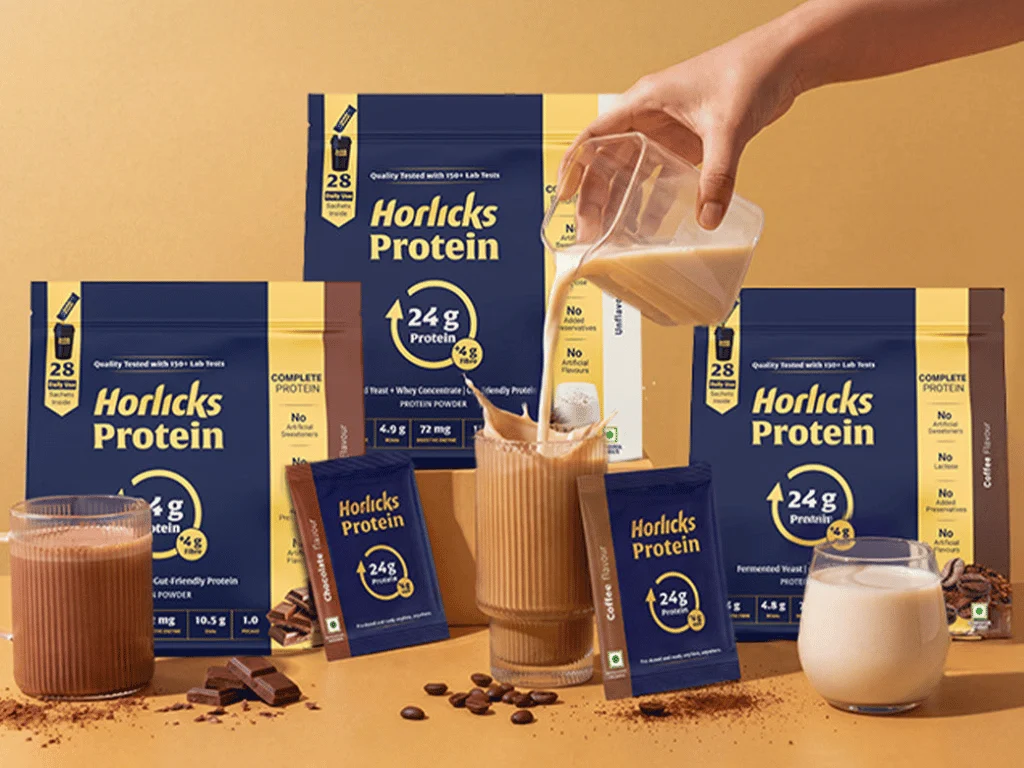
Hindustan Unilever Limited (HUL), the Indian subsidiary of global consumer goods giant Unilever, has officially entered India’s rapidly expanding alternative protein sector. The company has introduced a new product line under its heritage Horlicks brand: Horlicks Protein, a range of fermentation-derived yeast protein powders. This strategic move recontextualizes the century-old brand’s traditional nutritional positioning to address modern consumer demands for sustainable, high-quality, and everyday protein sources in a rapidly evolving market.
The launch represents a significant commercial pivot for Horlicks, a household name historically recognized for its malted milk beverages and long-standing marketing tagline, “Taller, stronger, sharper.” By formulating its new protein powders with microbial-derived yeast protein, HUL is capitalizing on a major shift in Indian dietary habits, driven by growing health consciousness, changing demographics, and environmental necessity.
Market Dynamics and the Rising Demand for Protein
India is currently undergoing a fundamental transformation in its nutritional profile. According to data from the Federation of Indian Chambers of Commerce and Industry (FICCI) and Asia Research & Engagement (ARE), India’s per capita protein consumption is projected to triple, rising from 9.5 kilograms in 2025 to 30 kilograms by 2070.
While this growth is indicative of rising living standards and improved nutritional awareness, it poses severe environmental and infrastructural challenges. Projections indicate that unchecked reliance on traditional livestock and agricultural protein sources could drive greenhouse gas emissions to nearly eight times the estimated climate-safe threshold. Consequently, alternative protein solutions—ranging from plant-based ingredients to microbial fermentation—are becoming critical to national food security and ecological sustainability.
Market data underscores a strong consumer appetite for these solutions. Polling reveals that approximately 37% of Indian consumers actively seek to incorporate more plant and alternative proteins into their diets, often favoring plant-based sources over animal-derived alternatives. This shift is led heavily by Generation Z, a demographic that accounts for 27% of India’s population and commands 35% of overall consumer spending. An Ipsos survey highlights that 82% of Indian Gen Z consumers consider protein consumption essential, with 91% expressing openness to adopting plant-based and alternative protein foods primarily to meet their nutritional goals.
At the same time, the domestic market is responding to the rapid expansion of GLP-1 receptor agonists and weight-management medications. Use of these treatments in India has surged, growing from $16 million in 2021 to nearly $100 million, with dozens of branded semaglutide medications expected to enter the market. This pharmaceutical trend has amplified consumer focus on muscle preservation, metabolic health, and adequate daily protein intake.
Formulation, Science, and Product Architecture
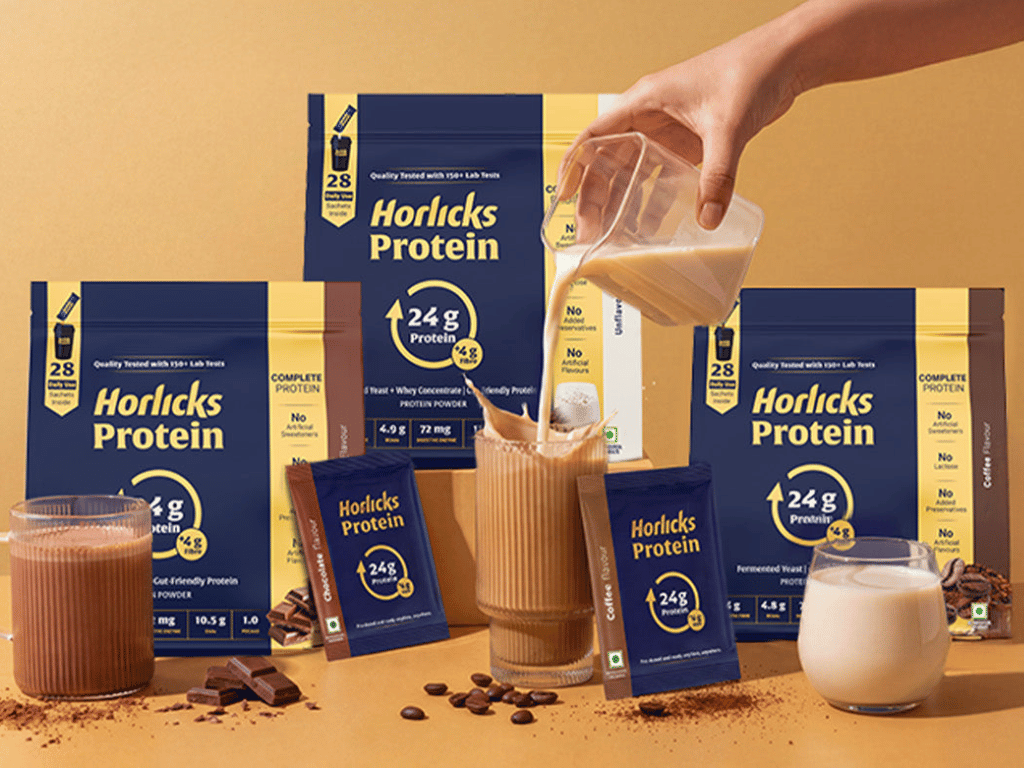
The newly launched Horlicks Protein lineup is designed for everyday integration rather than exclusively catering to elite athletes or heavy gym-goers. Available in unflavoured, chocolate, and coffee variants, the formulations are engineered to meet strict nutritional standards while addressing common issues related to digestion and gut health.
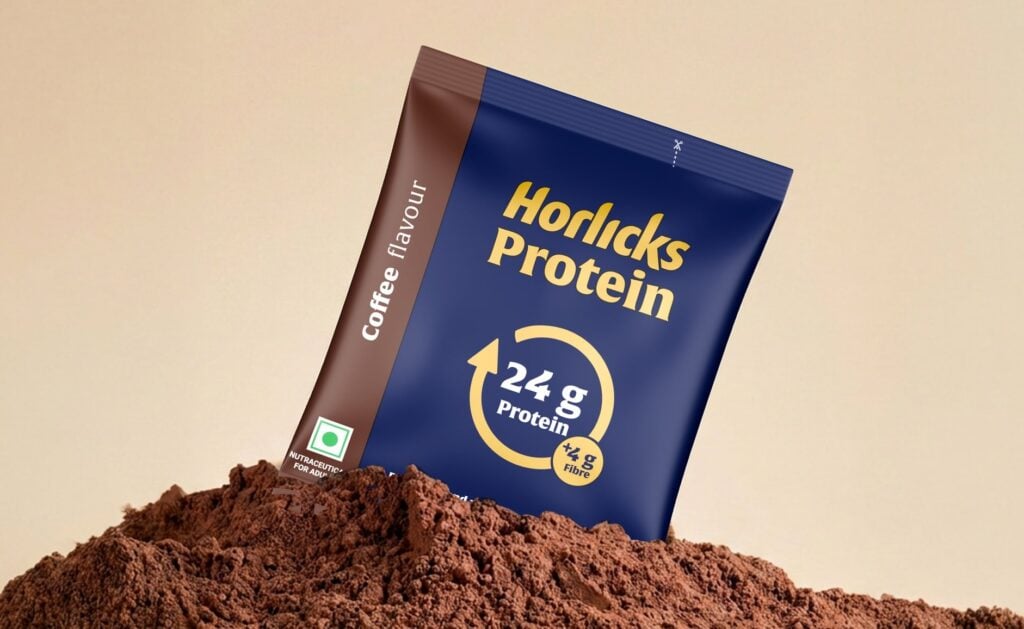
The unflavoured variant consists of a proprietary blend containing 79% yeast protein and 10% whey protein. In contrast, the chocolate and coffee variants are entirely vegan-friendly, utilizing purely yeast-derived protein bases. The coffee variant combines 89% yeast protein with real coffee powder, while the chocolate version features 86% protein blended with cocoa powder. Across all flavored options, the secondary ingredients are standardized to include chicory root, natural flavorings, monk fruit powder for sweetening, papain (a digestive enzyme), and salt.
From a nutritional standpoint, a standard 36-gram serving delivers 24 grams of protein and 4 grams of dietary fiber. Utilizing yeast protein ensures that the formulation contains all essential amino acids, achieving a Protein Digestibility-Corrected Amino Acid Score (PDCAAS) of 1.0—the highest possible rating for protein quality and completeness.
Hindustan Unilever executives emphasize that the formulation goes beyond sheer protein volume to prioritize bioavailability and digestive comfort. Sujatha Jayaraman, Vice President and Head of Food R&D and Regulatory Affairs at Hindustan Unilever, noted that consumer awareness is shifting toward the quality of protein consumed.
"The result is a science-led formulation that brings together high-quality complete protein with ingredients selected to support protein digestion and gut-friendly nutrition in one product," Jayaraman stated, pointing to the inclusion of inulin (a prebiotic fiber derived from chicory root) and papain to assist proteolytic breakdown and overall gut health.
Packaging Innovation and the "Life is a Gym" Consumer Insight
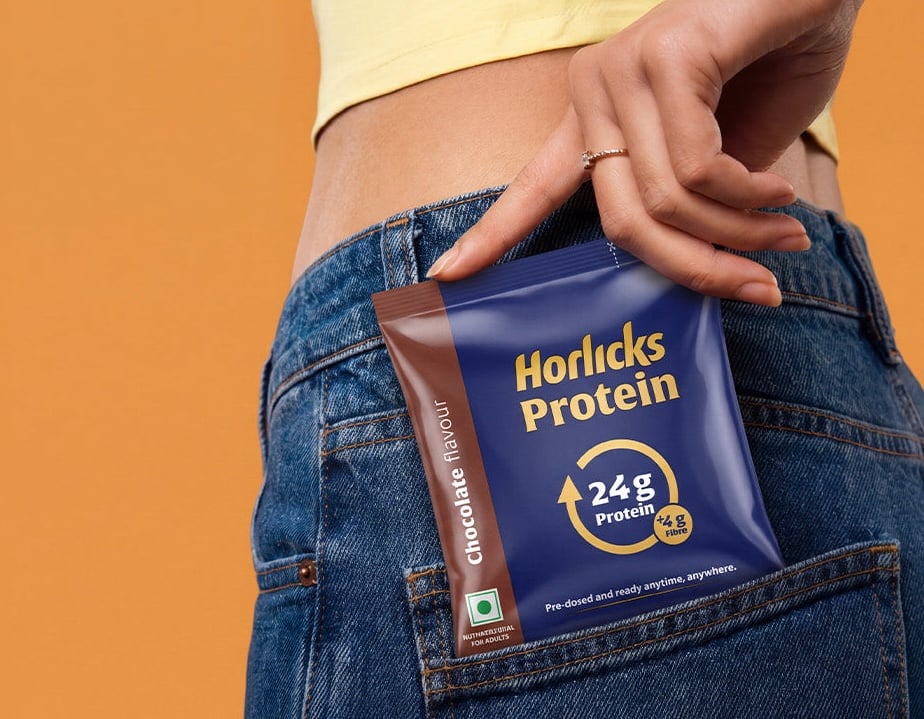
To maximize convenience for urban consumers balancing demanding schedules, HUL has departed from traditional bulky tubs and loose scoops. Each 1-kilogram package of Horlicks Protein contains 28 single-serve sachets. This packaging format is designed to eliminate the need for measuring scoops, offering portability for professionals navigating long commutes or busy workdays. While this format enhances consumer convenience, it introduces additional packaging considerations for the brand.
Rajneet Kohli, Executive Director of Foods at Hindustan Unilever, explained that consumer research heavily influenced the product’s positioning. "When we spoke to consumers, one insight that really stood out was that ‘life is a gym,’ whether it is rushing through a busy workday, navigating a long commute, carrying groceries, or simply keeping up with everything the day demands," Kohli said.
"This insight led to our larger thought: ‘Your day is the real workout.’ With Horlicks Protein Powder, our ambition is to make quality protein easier to incorporate into the everyday lifestyles of millions of Indians."
The Surge of Yeast Protein in India’s Food Landscape
Hindustan Unilever’s entry into the yeast protein category reflects a broader commercial trend across India’s food and beverage sector. While plant-based proteins have gained traction through innovations by established players like Orkla-owned MTR Foods and fast-food chains such as McDonald’s India, microbial and yeast-derived proteins have rapidly emerged as a dominant force in functional nutrition.
A growing ecosystem of domestic brands—including Cosmix, Sugarfit, Yoga Bar, and SuperYou—has integrated yeast protein into powders, snacks, and functional beverages. Notably, SuperYou’s fermented yeast protein forms the base of specialized protein cold foams introduced at Starbucks locations across India.
The rapid commercial scaling of yeast protein in India is heavily supported by ingredient suppliers such as Arboreal Bioinnovations. Arboreal secured $24.2 million in Series A funding, underscoring strong institutional investor confidence in fermentation technology as a viable pathway to meet India’s escalating protein demands sustainably.
Strategic Implications for Food Security and Sustainability
Industry analysts and researchers suggest that corporate investments in microbial and alternative proteins will play a vital role in shaping India’s agricultural and economic landscape over the coming decades.
According to modeling by Asia Research & Engagement and FICCI, transitioning toward a climate-safe protein supply requires alternative proteins to expand significantly. Researchers estimate that raising the share of alternative proteins in India’s total supply from 10% in 2035 to 35% by 2070 will be essential to prevent severe strains on land, water, and agricultural infrastructure. This transition relies heavily on market maturity, technological advancement, and consumer willingness to adopt novel protein sources like yeast.
By introducing a legacy brand like Horlicks into the microbial protein space, Hindustan Unilever is lending mainstream credibility to an emerging ingredient category. As major multinational subsidiaries and domestic startups alike invest in fermentation technology, the Indian market is positioning itself as a global focal point for the commercialization of sustainable, science-led nutrition.
