
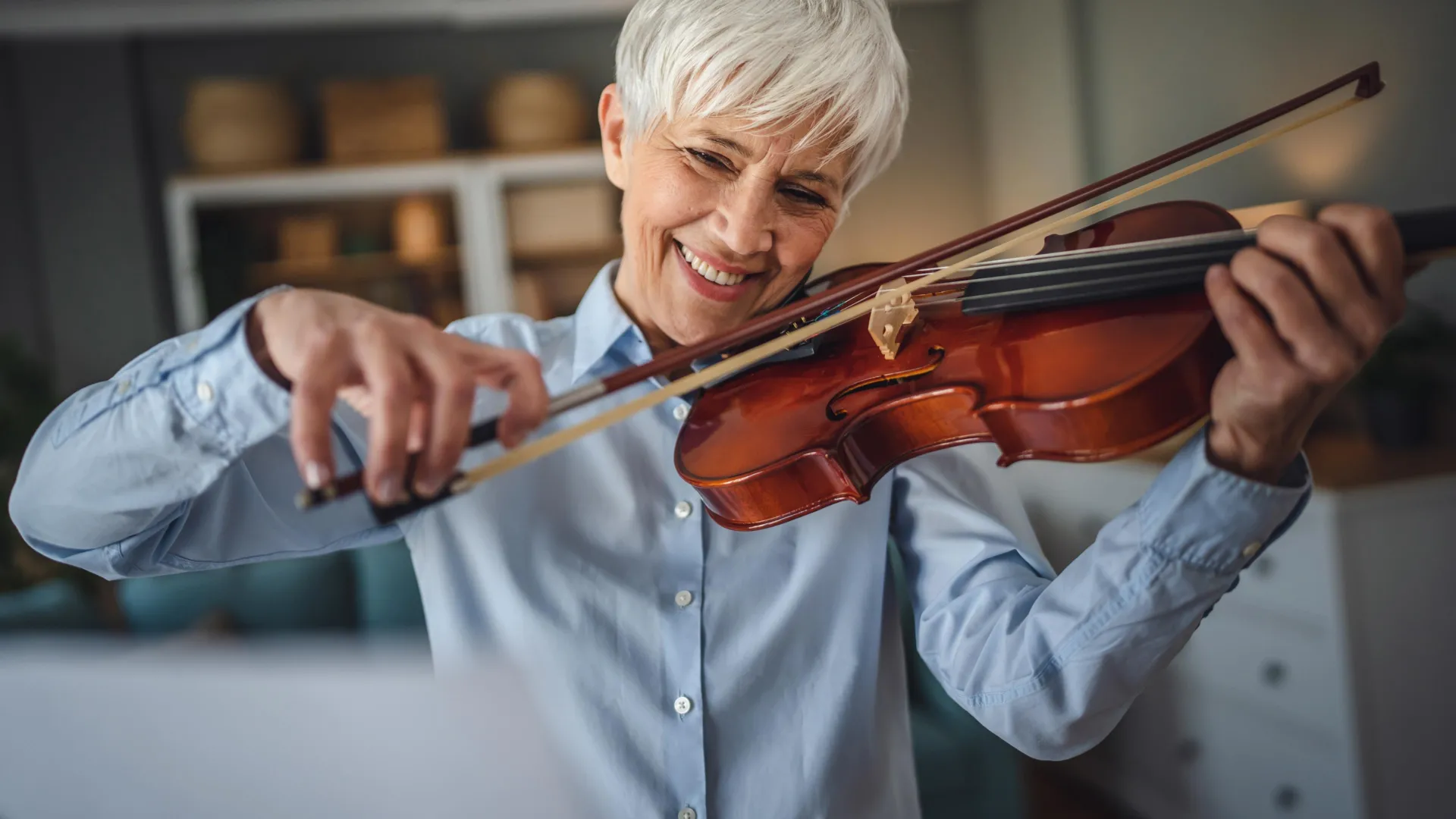
The journey of aging often brings about a spectrum of changes in cognitive function, with working memory frequently identified as one of the mental faculties most susceptible to age-related decline. For decades, the scientific community has explored avenues to bolster brain health in older adults, with both physical exercise and intellectually engaging activities consistently emerging as promising strategies. A groundbreaking longitudinal study conducted by researchers at Kyoto University has now provided compelling evidence that embracing a new skill – learning to play a musical instrument – can offer significant and enduring protective effects on the aging brain, even when initiated later in life.
Unveiling the Brain’s Musical Connection: Putamen and Cerebellum Under Scrutiny
At the forefront of understanding age-related cognitive shifts are two brain regions that have been observed to undergo shrinkage and reduced activity as individuals age: the putamen and the cerebellum. These areas are not merely passive recipients of the aging process; they are also remarkably responsive to specific forms of cognitive engagement. Neuroscience research has long pinpointed the putamen and cerebellum as key players in motor control, learning, and even emotional processing. Crucially, these same regions have been identified as particularly receptive to the demands of learning to play a musical instrument. However, much of the prior research in this domain has concentrated on younger populations or individuals who began their musical journeys during their formative childhood years, leaving a significant gap in our understanding of the potential benefits for older adults.
The Long-Term Impact of Late-Life Musical Training: A Four-Year Investigation
Driven by the desire to ascertain whether older adults could indeed reap similar cognitive rewards from musical engagement, a dedicated team at Kyoto University embarked on a comprehensive investigation. Their objective was to meticulously examine the long-term effects of taking up a musical instrument for the first time in advanced age. This inquiry built upon earlier findings by the same research group, which had reported in 2020 that older adults who participated in a four-month musical instrument training program demonstrated measurable improvements in memory performance and enhanced putamen function. These initial positive outcomes served as a powerful impetus for the researchers to delve deeper and determine the longevity of these cognitive enhancements.
The design of the new study was elegantly longitudinal, following the very same cohort of participants from the initial 2020 project. At the commencement of the original study, the average age of these participants was 73 years. Following the completion of the initial four-month intensive training period, a crucial divergence occurred within the group. Approximately half of the participants made the decision to continue their musical practice for an extended duration, exceeding three years. The other half, however, opted to discontinue their instrument training and instead pursued different leisure activities. This deliberate separation into a sustained musical engagement group and a control group that ceased musical activity provided the researchers with a robust framework for comparing long-term outcomes.
MRI Scans Illuminate Lasting Brain Differences After Four Years
Four years after the initial study period, the researchers invited the participants back to the university for a comprehensive evaluation. This re-assessment included sophisticated magnetic resonance imaging (MRI) scans specifically tailored to capture detailed structural and functional data from the putamen and cerebellum. In addition to these neuroimaging techniques, participants underwent a battery of cognitive assessments designed to measure various aspects of mental acuity. A key component of these assessments was a verbal working memory test, a critical indicator of the brain’s ability to hold and manipulate information in the short term.
Upon the initial examination at the commencement of the study, the researchers found no statistically significant differences between the two emerging groups – those who would continue music and those who would stop – in terms of either their brain structure or their baseline cognitive performance. This initial parity was essential for ensuring that any subsequent differences observed could be more confidently attributed to the intervention (continued musical practice).
However, after the passage of four years, a striking divergence became apparent. The MRI scans and cognitive assessments revealed clear and significant differences between the participants who had continued their musical practice and those who had ceased.
Key Findings from the Four-Year Follow-Up:
- Cognitive Decline in Non-Musicians: Participants who discontinued their music practice exhibited a notable decline in their verbal working memory scores. This decline was accompanied by a measurable reduction in gray matter volume specifically within the right putamen. Gray matter, which is rich in neuronal cell bodies, is crucial for cognitive processing. A reduction in its volume is often indicative of neuronal loss or decreased neural density.
- Preservation of Cognitive Function in Musicians: In stark contrast, individuals who persevered with playing their musical instruments did not demonstrate the same degree of decline in memory performance. Furthermore, they did not experience the same extent of putamen shrinkage that was observed in the group that stopped practicing. This suggests a protective effect of sustained musical engagement on both cognitive function and brain structure.
- Enhanced Cerebellar Activity: Beyond the putamen, the researchers also observed a significant difference in cerebellar activity. Participants who continued to practice their instruments displayed greater neural activity across broader areas of both cerebellums when compared to those who had ceased their musical endeavors. The cerebellum, traditionally associated with motor coordination, is increasingly recognized for its roles in cognitive functions, including learning, attention, and language processing.
Expert Commentary: Music as a Potent Tool for Healthy Brain Aging
The findings from this longitudinal study have resonated strongly within the neuroscience community. Corresponding author Kaoru Sekiyama expressed the researchers’ surprise and excitement at the robustness of their observations. "We were surprised to find that the effects on the brains of elderly people who start and continue practicing an instrument were also concentrated in these two areas of the brain, and that this was an effective way to prevent age-related decline," Sekiyama stated, underscoring the targeted and potent nature of musical training.
These results strongly suggest that the act of learning and, crucially, continuing to play a musical instrument can serve as a powerful intervention to delay or mitigate some of the cognitive changes that are considered a normal part of the aging process. The study’s implications are particularly significant in that they indicate that individuals can derive substantial benefits from musical engagement, even if they embark on this learning journey later in life. This challenges the notion that the window for significant cognitive plasticity is closed in older age.
"It’s never too late to start playing an instrument, and starting in old age may have major benefits," Sekiyama emphasized, offering a message of hope and empowerment to older adults.
Music as an Accessible Alternative for Physical Limitations
Sekiyama also highlighted the particular value of music for individuals who face challenges in participating in traditional forms of physical exercise. For many older adults, pre-existing conditions such as chronic pain, mobility issues, or other physical limitations can make strenuous physical activity difficult or even impossible. In such cases, engaging with a musical instrument can offer a highly beneficial and enjoyable alternative.
"For those who struggle to engage in physical activity due to body pain or other problems, playing musical instruments can be a great alternative. How fortunate that practicing music has such a positive impact on the brain and cognitive function!" Sekiyama remarked, drawing attention to the dual benefits of mental stimulation and potential stress reduction that musical practice can provide.
Broader Implications and Future Directions
The Kyoto University study contributes to a growing body of evidence that underscores the multifaceted benefits of lifelong learning and engagement. By demonstrating that sustained musical practice can preserve cognitive function and brain structure in older adults, the research opens up new avenues for developing targeted interventions to support healthy brain aging.
Implications for Public Health and Gerontology:
- Preventive Strategies: The findings suggest that incorporating musical training into community programs for seniors could be a proactive strategy to combat age-related cognitive decline and potentially delay the onset of dementia-related conditions.
- Rehabilitation and Therapy: Music therapy has long been recognized for its therapeutic potential. This study provides further scientific backing for its use in enhancing cognitive function and well-being in older populations.
- Accessible Interventions: Unlike some intensive cognitive training programs, learning a musical instrument offers a more holistic and enjoyable engagement that can foster social interaction and a sense of accomplishment, addressing both cognitive and psychosocial needs.
Background Context:
The concept of brain plasticity – the brain’s ability to reorganize itself by forming new neural connections throughout life – has revolutionized our understanding of aging. Historically, it was widely believed that the brain’s structure and function were largely fixed after early adulthood. However, research over the past few decades has demonstrated that the brain remains remarkably adaptable, capable of significant change in response to experience, learning, and environmental stimuli, even in later life. This study directly leverages this understanding, showing that a challenging and rewarding learning experience like mastering a musical instrument can harness this plasticity for sustained cognitive benefit.
Chronology of the Study:
- Pre-2020: Prior neuroscience research identifies the putamen and cerebellum as areas responsive to musical training. Existing studies primarily focus on younger individuals.
- 2020: Kyoto University researchers conduct an initial four-month study on older adults (average age 73) learning a musical instrument for the first time. They observe improvements in memory and putamen function.
- Post-2020: Approximately half of the original participants continue practicing their instruments for over three years, while the other half pursue different hobbies.
- Four Years Later: Participants are invited back for follow-up MRI scans and cognitive assessments.
- Present Findings: Analysis reveals significant differences in cognitive function and brain structure between the sustained music practice group and the group that ceased musical activity, highlighting the long-term protective effects of continued engagement.
Potential for Further Research:
While this study provides compelling evidence, future research could explore the specific musical activities that yield the most significant benefits, the optimal duration and intensity of practice required, and whether combining musical training with other forms of cognitive or physical exercise leads to synergistic effects. Investigating the underlying neural mechanisms in greater detail, such as the role of neurotransmitters and specific gene expression patterns, could further elucidate how music exerts its protective influence on the aging brain.
In conclusion, the Kyoto University study offers a powerful testament to the enduring capacity of the human brain to adapt and benefit from challenging, engaging activities. By demonstrating that learning and continuing to play a musical instrument can preserve cognitive function and brain structure in older adults, the research not only provides valuable insights into healthy brain aging but also offers a practical, enjoyable, and accessible pathway for individuals to enhance their cognitive well-being throughout their later years. The message is clear: it is indeed never too late to pick up an instrument and unlock a world of cognitive benefits.
