
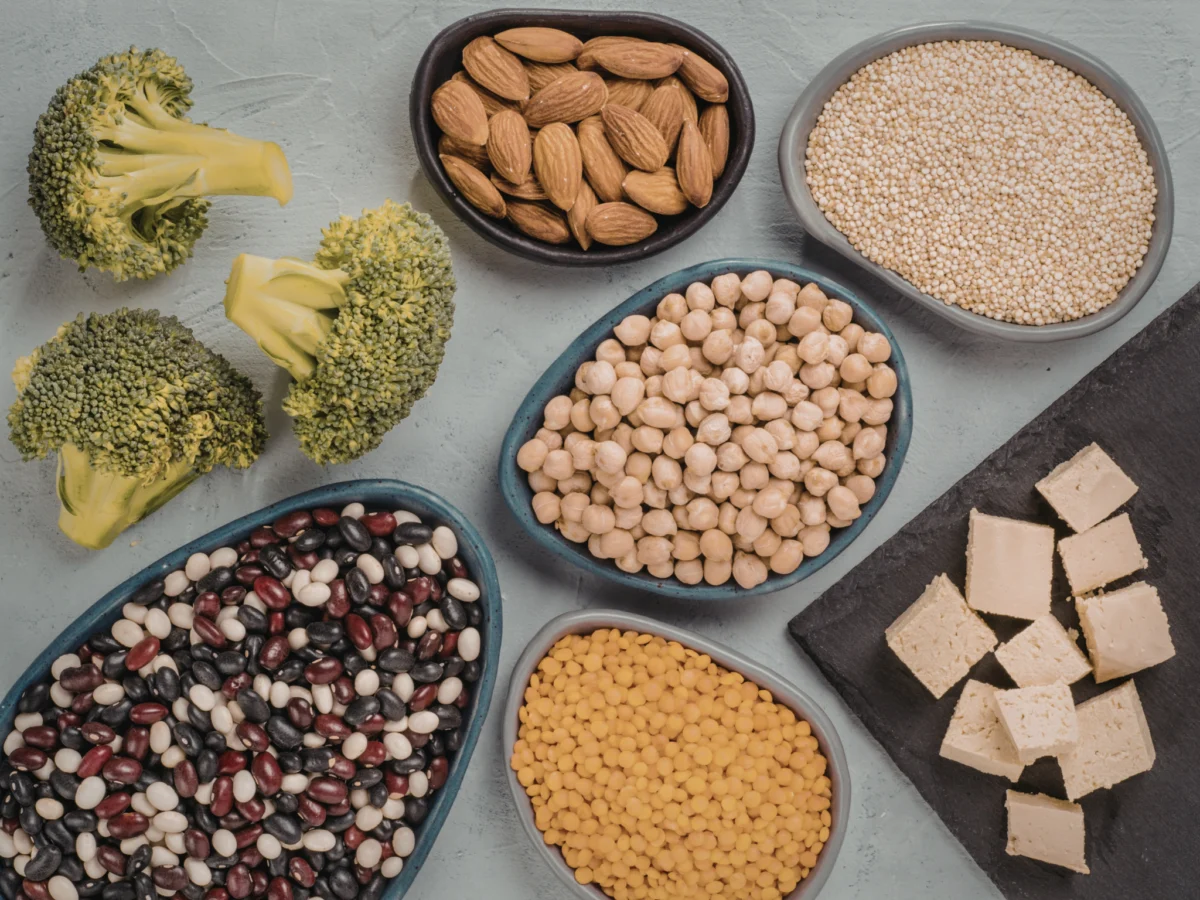
For decades, the mainstream nutritional paradigm has relied on a reductionist approach to evaluating human diets: measuring what goes into the mouth and assuming a direct, static translation to what the body absorbs and utilizes. Under this traditional framework, plant-based diets rich in whole foods, legumes, and grains have often been penalized. Critics and conventional dietary guidelines have frequently flagged them as nutritionally inferior to omnivorous diets, citing lower bioavailability of non-heme iron, the absence of pre-formed muscle compounds like creatine and carnosine, and concerns regarding complete protein metabolism.
However, a groundbreaking study recently published in the peer-reviewed journal Biology shatters these long-held assumptions. The research demonstrates that the human body is not a passive pipe that merely processes inputs on a linear scale. Instead, the study reveals that human physiology possesses sophisticated homeostatic and adaptive mechanisms. When individuals transition to sustained dietary changes, such as adopting a plant-based lifestyle, natural metabolic processes kick in to optimize nutrient absorption, improve amino acid recycling, and upregulate internal synthesis pathways. This comprehensive review challenges the foundational models of nutritional science, suggesting that clinical assessments and dietary guidelines must evolve to account for long-term biological adaptation rather than relying solely on immediate snapshot evaluations.
Dismantling the Reductionist View of Nutrient Bioavailability
To understand the magnitude of the new findings, it is necessary to examine how nutrition science has historically evaluated dietary components. Standard nutritional checklists typically look at the absolute quantity of a nutrient present in a food item and couple that with a fixed absorption coefficient. For instance, non-heme iron found in plants is known to have a lower fractional absorption rate compared to the heme iron found in animal flesh. Similarly, vital amino acids and nutrient-like compounds such as creatine and carnosine are found in significantly lower concentrations—or are entirely absent—in unsupplemented vegetarian and vegan diets.
For years, these disparities served as the primary ammunition for critics warning against the widespread adoption of plant-based eating patterns. Yet, the authors of the Biology study argue that these concerns overlook the remarkable plasticity of human metabolic pathways. Eating less of a specific compound does not automatically mean the body suffers from a functional deficit of it.
Through a rigorous synthesis of existing human intervention trials and observational studies, the research team mapped out how the body recalibrates its internal environment over extended periods. Rather than failing in the face of altered dietary profiles, human physiology adapts across five primary nutritional domains: iron homeostasis, endogenous biosynthesis, protein metabolism, gut microbiota fermentation, and the biotransformation of plant polyphenols.
The Five Pillars of Metabolic Adaptation
The review details specific physiological shifts that occur when individuals maintain a plant-based diet over the long term, offering a mechanistic explanation for how vegetarians and vegans successfully maintain vibrant health without nutrient deficiencies.

Iron Homeostasis and Hepcidin Regulation
One of the most persistent criticisms of plant-based diets centers on iron absorption. While plant foods like lentils, beans, and fortified grains are often iron-dense—frequently resulting in total iron intakes among vegans that equal or exceed those of meat-eaters—the non-heme nature of this iron presents a absorption challenge.
The new study highlights that the human gut actively compensates for this lower fractional absorption. Over time, the body downregulates the production of hepcidin, a key regulatory peptide hormone synthesized by the liver that acts as the primary gatekeeper of iron absorption. By lowering circulating concentrations of hepcidin, the gastrointestinal tract increases its capacity to absorb available iron, bridging the gap between intake and systemic utilization.
Endogenous Biosynthesis of Creatine and Carnosine
Compounds like creatine and carnosine are predominantly found in animal tissue and play essential roles in muscle energy metabolism and buffering capacity. Vegetarians typically exhibit lower baseline muscle stores of these compounds.
However, the study clarifies that lower baseline saturation does not equate to a pathological deficiency. The human body is fully capable of endogenous biosynthesis—manufacturing its own creatine and carnosine from amino acid precursors like methionine, arginine, and glycine. Furthermore, controlled studies cited in the review show that when vegetarians are given creatine supplements, they often respond more robustly than omnivores, reflecting a highly receptive physiological state rather than a compromised system.
Protein Homeostasis and Amino Acid Efficiency
Skeptics have long questioned whether plant proteins can support optimal muscle mass, pointing to the incomplete amino acid profiles of individual plant foods. However, the review notes that well-planned plant-based diets meeting overall daily protein recommendations preserve lean body mass and strength just as effectively as meat-rich diets in controlled experimental settings.
This success is driven by the body’s sophisticated protein homeostasis network. During sustained reductions in specific amino acid availability, or when shifting to plant-based sources, the body improves the efficiency of amino acid utilization and enhances nitrogen recycling. These complementary adaptive mechanisms preserve whole-body protein homeostasis across a broad spectrum of adequate protein intakes.
Microbiota Shift and Fiber Tolerance
A common barrier for individuals attempting to increase their consumption of plant-based foods is the onset of gastrointestinal discomfort, including bloating and flatulence. These symptoms arise from the rapid introduction of complex carbohydrates and high levels of dietary fibre that the existing gut microbiome may struggle to process immediately.
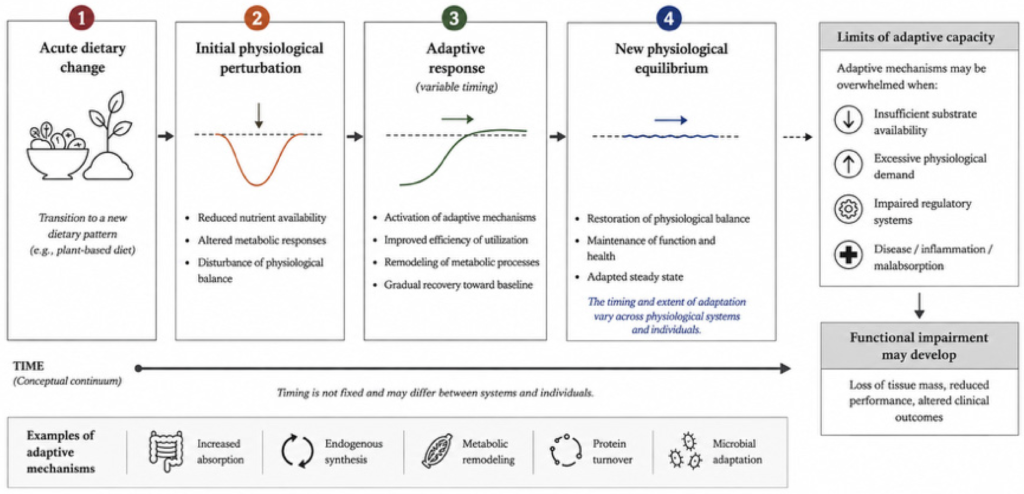
The review demonstrates that this is a transitional hurdle rather than a permanent limitation. Over a matter of weeks, the gut microbiota shifts dynamically. Microbial populations adapt and diversify, fostering bacterial strains that ferment complex carbohydrates with greater efficiency. This structural shift in the microbiome not only alleviates initial digestive distress but also improves overall digestive resilience.
Polyphenol Biotransformation
Plant foods are rich in bioactive phytochemicals, including soy isoflavones and walnut ellagitannins. The study points out that gut bacteria play an active role in transforming these plant compounds into potent metabolites that the human body can readily utilize. Long-term vegans exhibit markedly higher concentrations of these beneficial microbial byproducts compared to their omnivorous counterparts, demonstrating an enhanced capacity to extract therapeutic value from plant chemistry.
Clinical Perspectives: Moving Beyond Snapshots
The implications of this research extend far beyond academic journals, offering a direct critique of how clinicians, dietitians, and public health officials formulate dietary guidelines.
"For years, nutrition science has treated dietary intake as if it were a straight line to physiological status — eat less iron, absorb less iron; eat less creatine, have less creatine. That’s not how human physiology works. The body is not a passive pipe," stated study co-author Dr. Hana Kahleova, director of clinical research at the Physicians Committee for Responsible Medicine.
Dr. Kahleova emphasized that regulatory systems, such as the hepcidin-ferroportin axis in the gut and the enzymatic pathways responsible for internal biosynthesis, actively adjust when dietary shifts become sustained. She noted that clinicians frequently misinterpret short-term transitional symptoms—such as initial digestive adjustments during the first week of a plant-based diet—as permanent metabolic incompatibilities, failing to account for how the body looks at month three or beyond.
Despite championing human adaptability, the study’s authors issue an important caveat: metabolic compensation has physiological limits. In vulnerable populations—such as pregnant individuals, patients with chronic inflammatory diseases, individuals with pre-existing gastrointestinal disorders, or those experiencing acute malabsorption—the body’s capacity to upregulate compensatory mechanisms may be compromised. In these specific scenarios, dietary planning, targeted supplementation, and individualized clinical counseling remain critical.
"This isn’t an argument that nutrient composition doesn’t matter; it clearly does, especially for patients whose adaptive capacity is already stretched thin," Dr. Kahleova explained. "It’s an argument for asking a better clinical question: not just what is this person eating, but how long have they been eating this way, and does their physiology show signs of having adapted?"
Implications for Future Dietary Guidelines and Nutritional Research
The publication of this study arrives at a crucial juncture in global public health. As governments and international health organizations increasingly look toward sustainable food systems to mitigate climate change while addressing chronic metabolic diseases, the debate over plant-based nutrition has intensified.
Traditional dietary guidelines have often been criticized for viewing nutritional requirements through a static lens, frequently intimidating consumers with rigid checklists of "nutrients of concern." By incorporating the framework of homeostatic adaptation, the scientific community can begin to modernize these recommendations.
The authors advocate for a paradigm shift in nutritional assessment. Rather than treating dietary intake as the sole determinant of physiological function, future guidelines and clinical evaluations must recognize that long-term biological outcomes emerge from the continuous, dynamic interaction between dietary exposure and adaptive metabolic regulation.
By grounding dietary recommendations in the true, flexible nature of human physiology, researchers hope to improve the interpretation of dietary interventions, alleviate unwarranted public anxiety regarding plant-based eating, and pave the way for a more sophisticated, biologically accurate understanding of human health and nutrition.
