
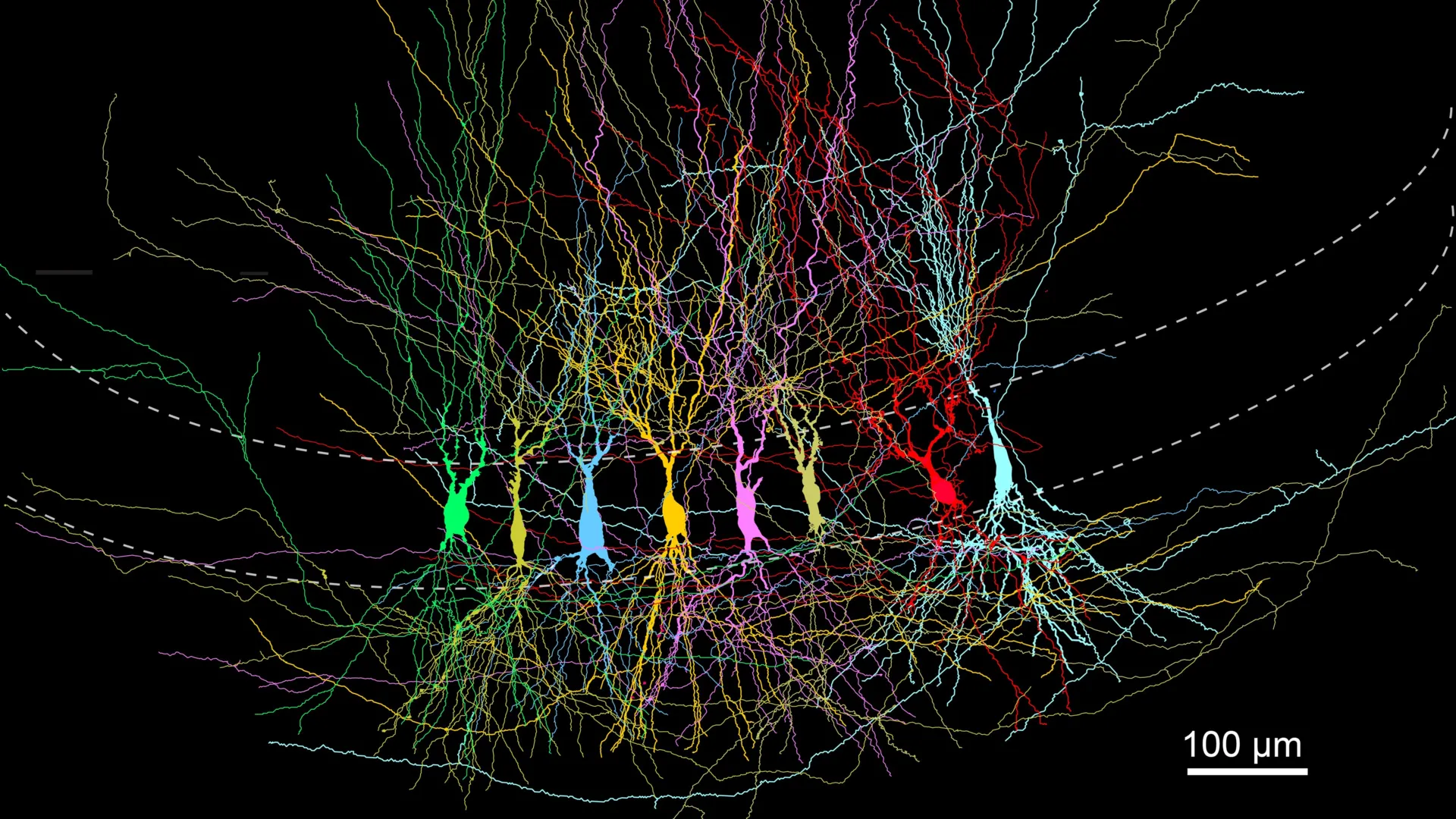
The intricate architecture of the hippocampus, a brain region fundamental to memory formation and spatial navigation, is undergoing a profound re-examination thanks to groundbreaking research from the Institute of Science and Technology Austria (ISTA). Led by Magdalena Walz Professor for Life Sciences Peter Jonas, a team of scientists has published pivotal findings in Nature Communications that shed new light on how one of the hippocampus’s primary neural networks develops after birth, challenging long-held assumptions about early brain plasticity. Their work suggests that instead of a "blank slate" upon which experience writes, the developing hippocampus begins as a richly interconnected, albeit initially unrefined, network that undergoes a process of streamlining and optimization.
A Paradigm Shift in Understanding Neural Development
For centuries, the concept of tabula rasa, or the "blank slate," has permeated philosophical and scientific discourse, suggesting that individuals are born without innate mental content and that all knowledge and personality are acquired through experience. In the realm of neurobiology, this translates to the enduring debate surrounding the balance between genetic predisposition and environmental influences in shaping brain development. The ISTA research team has applied this conceptual framework to the hippocampus, specifically investigating the developmental trajectory of its CA3 pyramidal neurons – cells critically involved in memory storage and retrieval.
The prevailing intuition might suggest that neural networks expand and become more complex as an organism matures, mirroring the acquisition of new information and skills. However, the ISTA findings reveal a counterintuitive pattern: the CA3 network in the developing mouse hippocampus initially exhibits a high degree of connectivity, characterized by connections that appear largely random. As the brain matures, this dense and somewhat chaotic network undergoes a remarkable transformation, becoming less crowded but significantly more organized and efficient. This process, described by Professor Jonas as a "pruning model," implies that the brain starts with an "exuberant" connectivity that is subsequently refined through the selective elimination of unnecessary connections.
The Science Behind the Discovery: A Detailed Chronology of Investigation
The research, spanning several years of meticulous experimentation, focused on understanding the functional maturation of the CA3 hippocampal circuit. The investigation commenced with the careful selection of animal models and developmental stages. Victor Vargas-Barroso, an ISTA alumnus and a key researcher on the project, meticulously studied the brains of mice at three distinct developmental periods: early postnatal (days 7-8), adolescence (days 18-25), and early adulthood (days 45-50). These stages were chosen to capture critical transitions in hippocampal development and functional maturation.
The team employed a sophisticated arsenal of neuroscientific techniques to probe the neural circuitry. The patch-clamp technique, a gold standard in electrophysiology, was instrumental in measuring the minute electrical signals generated within specific neuronal compartments, including presynaptic terminals and dendrites. This allowed researchers to assess the strength and efficacy of synaptic transmission. Complementing these electrophysiological measurements were advanced imaging techniques, including two-photon microscopy, which provided high-resolution visualization of neuronal structure and activity within living brain tissue. Furthermore, laser-based optogenetic methods were utilized to precisely activate individual neural connections, enabling the researchers to study the functional consequences of specific synaptic interactions and to map the emergent network properties.
The data collected through these methods painted a vivid picture of neural development. Early in postnatal life, the CA3 network was characterized by a multitude of synaptic connections, many of which were transient and less specific in their targets. As the mice progressed through adolescence and into adulthood, a significant refinement occurred. The density of connections decreased, but the remaining synapses became more robust, precise, and functionally integrated into coherent circuits. This streamlining process was not indicative of a loss of function, but rather an optimization of neural communication, akin to an experienced architect carefully curating a blueprint to maximize efficiency and elegance.
The "Full Slate" Hypothesis: Why the Brain Starts Richly Connected
The revelation that the hippocampus begins as a densely connected, almost "full slate" network raises crucial questions about the evolutionary and developmental advantages of such an architecture. Professor Jonas posits that this initial exuberance of connectivity may be a crucial evolutionary adaptation that facilitates rapid and efficient initial wiring of the hippocampus. This region’s primary function is to integrate diverse sensory inputs – sights, sounds, smells, and contextual information – into cohesive and lasting memories. This is an exceptionally complex computational task that requires a high degree of neural convergence and divergence.
"An initially exuberant connectivity, followed by selective pruning, might be exactly what enables this integration," Professor Jonas explained in a statement. He elaborated on the potential drawbacks of a true tabula rasa approach for the developing hippocampus. If neurons began with no pre-existing connections, they would first need to engage in an arduous and potentially inefficient process of locating and establishing contact with appropriate partners. This could lead to delays in communication and a significant reduction in processing efficiency, thereby hindering the rapid formation of essential memories during critical developmental periods. The "full slate" model, with its subsequent refinement, offers a compelling explanation for how the brain can achieve such sophisticated memory encoding and recall.
The implications of this research extend beyond the specific mechanisms of hippocampal development. It prompts a broader re-evaluation of how genetic instructions and environmental experiences interact. While experience undoubtedly plays a crucial role in shaping neural circuits and refining their function, the ISTA study suggests that the foundational architecture may be far more pre-programmed and interconnected than previously assumed. This perspective aligns with emerging theories in developmental biology that emphasize the importance of intrinsic cellular programs and early interactions in establishing robust neural circuits.
Broader Impact and Future Directions
The findings from the ISTA research team have significant implications for our understanding of learning, memory, and potentially, neurological disorders. If the brain’s foundational architecture is established through a process of initial over-connectivity followed by refinement, then disruptions to this pruning process could have profound consequences. Conditions such as autism spectrum disorder, which are characterized by altered social cognition and communication, and schizophrenia, which involves significant cognitive and perceptual disturbances, have been hypothesized to involve aberrant synaptic pruning. Understanding the precise mechanisms and developmental timeline of normal pruning in regions like the hippocampus could provide critical insights into the pathophysiology of these disorders and pave the way for novel therapeutic interventions.
Furthermore, this research could influence educational strategies and rehabilitation approaches. If the brain is not a passive recipient of information but rather an actively refining system, then interventions that leverage this inherent plasticity and guide the refinement process could be particularly effective. For instance, early childhood education that emphasizes rich sensory experiences and structured learning environments might be particularly beneficial in optimizing the developing hippocampal network.
The ISTA team’s work opens up several avenues for future research. Further investigations could focus on identifying the specific molecular and cellular signals that drive synaptic pruning in the CA3 region. Understanding these signals could lead to the development of targeted pharmacological or genetic interventions to promote healthy neural development. Additionally, exploring whether this "full slate" pruning model is conserved across different brain regions and species would be a valuable undertaking.
The publication of this research in Nature Communications, a highly reputable peer-reviewed journal, underscores the significance of these findings within the scientific community. The study’s meticulous methodology, rigorous analysis, and the compelling nature of its conclusions have positioned it as a landmark contribution to the field of neuroscience. As scientists continue to unravel the complexities of the brain, the work of Peter Jonas and his team provides a powerful testament to the fact that development is not merely a process of filling an empty space, but rather a dynamic interplay of intrinsic programming and experience, orchestrating the emergence of our most fundamental cognitive abilities. The hippocampus, a cornerstone of our mental landscape, is proving to be a far more complex and pre-organized entity than the simple "blank slate" model would ever allow.
