
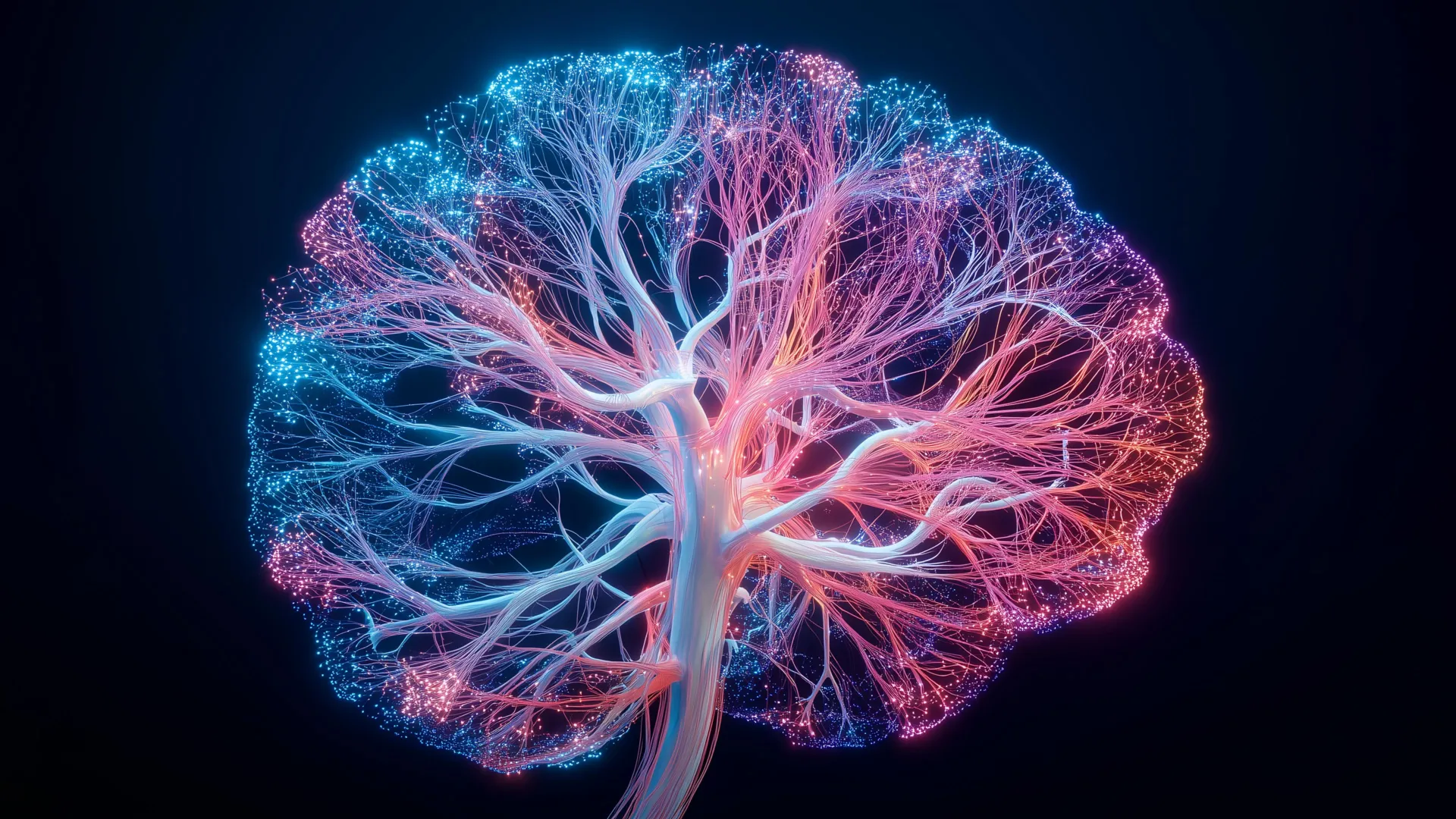
Scientists at the University of Illinois Urbana-Champaign have uncovered compelling evidence that could fundamentally alter our understanding of both biological and artificial intelligence. Their groundbreaking research suggests that the intricate process of decision-making within the brain commences much earlier than previously theorized, offering a paradigm shift that could inspire the development of more capable and significantly more energy-efficient artificial intelligence systems. This discovery challenges long-held assumptions about hierarchical information processing in the brain and opens new avenues for mimicking nature’s unparalleled efficiency.
Challenging Hierarchical Models of Brain Function
For decades, a prevailing model in neuroscience and artificial intelligence posited that information processing in the brain follows a strict, upward trajectory. Sensory input, according to this traditional view, would ascend through progressively complex neural pathways, culminating in higher-order brain regions like the frontal cortex, where the ultimate decision is made. This linear, feed-forward system has served as a foundational inspiration for many artificial intelligence architectures, including convolutional neural networks, which have achieved remarkable successes in areas like image recognition and pattern detection.
However, this research, spearheaded by Yurii Vlasov, a professor of electrical and computer engineering at The Grainger College of Engineering, published in the esteemed journal Proceedings of the National Academy of Science (PNAS), introduces a significant revision to this established narrative. The study highlights an unexpected and crucial role for the brain’s early sensory processing regions in the decision-making process. This finding directly contradicts the notion that decisions are solely the purview of the brain’s most advanced computational centers, suggesting a more dynamic and interconnected system at play.
The Evolutionary Advantage of Natural Intelligence
The human brain, with its estimated 86 billion neurons and trillions of connections, remains one of science’s most profound mysteries and a grand challenge for 21st-century engineering, as identified by the National Academy of Engineering in 2008. Its ability to perform complex tasks with astonishing speed and remarkable energy efficiency—consuming approximately 20 watts, equivalent to a dim light bulb—stands in stark contrast to the power demands of even the most sophisticated AI systems, which can require megawatts of energy. This stark disparity underscores the value of understanding the underlying architectural principles of biological intelligence.
Professor Vlasov and his team are actively exploring a framework inspired by "natural intelligence," a system honed and optimized by hundreds of millions of years of evolution. In this natural intelligence model, information processing is not confined to a rigid, step-by-step flow. Instead, it relies heavily on interconnected feedback loops, enabling bidirectional communication between different brain regions. This iterative and recursive processing allows for a continuous refinement of information and a more agile response to stimuli.
"We want to learn from a billion years of evolution," Vlasov stated in a university press release. "How is that biological intelligence organized architecturally? Can we learn from the architectural side of the brain and emulate that to make AI more effective, less power hungry, and more intelligent than it currently is? In the level of decision-making, that’s where current AI is lacking."
Empirical Evidence from Neural Activity
To investigate the early stages of sensory processing and decision-making, the research team designed an experiment involving mice navigating a virtual reality corridor. This meticulously controlled environment allowed for precise recording of neural activity as the animals made perceptual judgments. The scientists focused on the primary somatosensory cortex (S1), a region traditionally understood as one of the brain’s initial points of sensory input and processing.
The findings were striking. Instead of merely acting as a passive relay station for sensory data, S1 exhibited activity directly related to decision-making. Crucially, this activity was not solely driven by incoming sensory information. The researchers observed evidence of top-down regulation, indicating that S1 was being influenced by higher brain regions through these intricate feedback loops. This suggests a continuous dialogue across multiple neural areas, rather than a singular, one-directional march of information toward a final decision point.
"The neural code of the brain is still mostly an unknown language," Vlasov remarked. "But this systems-level understanding can be viewed as a potential impact on how more efficient artificial neural networks can be built—how the next generation of AI can be thought through. Maybe with these analogies that we learn from real brains, we can improve AI further."
Implications for the Future of Artificial Intelligence
While the University of Illinois Urbana-Champaign study does not present a ready-made blueprint for constructing superior AI systems, it offers invaluable insights into the brain’s sophisticated decision-making architecture. These insights could serve as a powerful inspiration for designing future AI that is more nuanced, adaptable, and energetically efficient.
The implications for artificial intelligence are profound. Current AI systems, while powerful, often struggle with tasks requiring genuine understanding, contextual reasoning, and efficient resource management. By emulating the brain’s ability to integrate sensory information with ongoing cognitive processes and feedback mechanisms from its earliest stages, AI could move beyond pattern recognition towards more sophisticated forms of cognition. This could lead to AI that can learn more effectively from limited data, adapt to novel situations with greater agility, and operate with significantly reduced power consumption, a critical factor for large-scale AI deployments and for sustainable technological development.
The concept of early decision-making activity in sensory regions challenges the very foundations of how we currently build AI. It suggests that instead of layering complex processing on top of raw data, future AI architectures might benefit from integrating decision-making capabilities at much lower levels of the processing hierarchy. This could involve creating AI modules that can both perceive and make preliminary judgments simultaneously, mimicking the brain’s remarkable ability to process information in parallel and with constant refinement.
Future Research Directions and Technological Advancements
Professor Vlasov and his team are not resting on their laurels. Their immediate next steps involve a deeper investigation into the precise timing and dynamics of these neural signals. Understanding the temporal interplay of feedback loops is crucial for deciphering how they are engaged in the decision-making process.
To achieve this, the researchers plan to develop and employ novel technologies for measuring neural activity with unprecedented precision. The ability to capture the fast temporal dynamics of neural communication will be key to uncovering the underlying mechanisms of these feedback loops. The hope is that by understanding how these loops are dynamically organized and how they shape different levels of processing, they can then translate these principles into new architectures for AI.
"By looking at the fast temporal dynamics of neural activity, maybe we can understand better how these feedback loops are engaged in making decisions," Vlasov elaborated. "Maybe that’s the approach that potentially uncovers these currently unknown mechanisms—how these feedback loops are organized dynamically and how they form and shape different levels of processing. Maybe that can be implemented in new architectures for AI."
This ongoing research has the potential to contribute significantly to the broader field of neuroscience by providing a more comprehensive understanding of brain function. Simultaneously, it offers a tantalizing glimpse into a future where artificial intelligence more closely mirrors the elegance, efficiency, and intelligence of the biological systems it seeks to emulate. The journey to truly reverse-engineer the brain is long and complex, but discoveries like these represent significant strides forward, promising a future where AI is not only more powerful but also more sustainable and deeply integrated with our understanding of natural intelligence. The implications extend beyond mere computational power, potentially leading to AI systems that are more intuitive, more context-aware, and ultimately, more beneficial to humanity.
