

The United States government, through the Food and Drug Administration (FDA) and in collaboration with other federal agencies like the US Department of Agriculture, is encountering significant hurdles in establishing a standardized definition for "ultra-processed foods" (UPFs). This ongoing challenge is central to the Trump administration’s evolving food policy landscape, which has increasingly focused on the health implications of these widely consumed products. While the urgency to address the potential health risks associated with UPFs is evident, the very definition of what constitutes an ultra-processed food remains elusive, creating a complex environment for policy-making and consumer understanding.
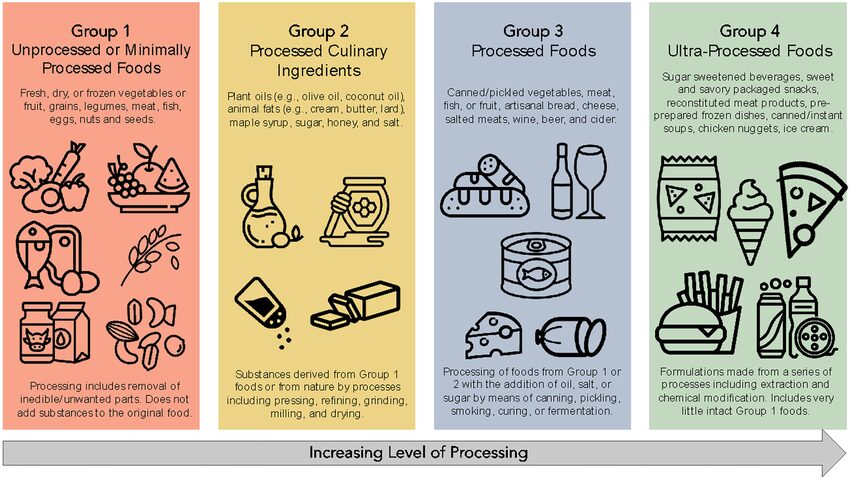
The difficulty in pinpointing a precise definition stems from the diverse nature of food processing itself. The concept of ultra-processed foods gained prominence through the Nova classification system, which categorizes foods into four distinct groups: unprocessed or minimally processed foods (such as fresh fruits and vegetables), processed culinary ingredients (like oils, butter, sugar, and salt), processed foods (items like canned vegetables, simple breads, and cheeses), and finally, ultra-processed foods. The latter are characterized by industrial formulations, advanced processing techniques, and the inclusion of cosmetic additives that often have little to no culinary role in home cooking. Essentially, these are products that cannot be replicated in a typical kitchen.
However, the broadness of the Nova classification has led to widespread debate and confusion. Under this system, a vast array of products, from seemingly indulgent items like ice cream and cookies to everyday staples such as flavored yogurts, certain breakfast cereals, and even some plant-based milk alternatives, are lumped together as ultra-processed. This indiscriminate categorization raises concerns among nutritionists and health experts who caution against conflating the act of processing with inherent unhealthiness. Many argue that the adverse health effects are more strongly linked to the nutritional profile of the food—specifically, its low content of essential nutrients and high levels of added sugars, unhealthy fats, and sodium—rather than the mere fact of processing.
For instance, whole-grain cereals, while processed, can be a valuable source of fiber and micronutrients. Similarly, many plant-based meat and dairy alternatives, despite undergoing industrial processing, can offer substantial protein and fiber with less saturated fat compared to their animal-derived counterparts. Lumping these items in the same category as highly sugary snacks or artificially flavored beverages can be misleading and hinder informed dietary choices. This is precisely the conundrum the FDA is facing: how to create a definition that accurately reflects the potential health risks without unfairly demonizing foods that may offer nutritional benefits or serve important roles in modern diets.

A Contentious Food Policy Focus
The Trump administration has placed UPFs at the forefront of its food policy agenda, spurred by mounting scientific evidence linking their consumption to a range of adverse health outcomes. Numerous studies have suggested associations between high UPF intake and an increased risk of chronic diseases, including cardiovascular disease, type 2 diabetes, obesity, and even premature mortality. These findings have amplified public concern, with a significant portion of the American population actively seeking to reduce their consumption of these products. Data indicates that UPFs constitute a substantial percentage of daily caloric intake in the United States, accounting for approximately 55% of calories consumed by adults and rising to an alarming 67% among children. This prevalence underscores the public health imperative to address the issue.
The administration’s focus on UPFs has manifested in various initiatives and public statements. Earlier this year, Health Secretary Robert F. Kennedy Jr. reiterated the agency’s commitment to addressing UPFs, aligning with broader calls for dietary reform. These efforts are also reflected in proposed legislative actions, such as a bill currently being considered by Congress that aims to prohibit the marketing of UPFs to children and mandate front-of-pack warning labels on these products. This legislative push highlights a growing consensus among some policymakers about the need for clearer consumer information and protection regarding UPFs.
The administration’s stance has also been influenced by significant advocacy campaigns. A MAHA-aligned non-profit, for example, sponsored a highly publicized Super Bowl advertisement that drew parallels between UPFs and cigarettes, a move that sparked considerable controversy due to the ad’s star, boxer Mike Tyson, and its aggressive tone. This campaign, along with pronouncements from figures like RFK Jr. who has referred to UPFs as "poison" and advocated for their removal from school lunches, has intensified the public discourse surrounding these foods.
The Challenge of Standardization: FDA’s Perspective
Donald Prater, the FDA’s acting deputy commissioner for food, recently articulated the significant challenges the agency faces in developing a standardized definition. Speaking at the IFT First trade show in Chicago, Prater acknowledged that the agency has found it "quite challenging" to establish a singular, universally accepted definition due to the proliferation of various classification systems and interpretations currently in use. He indicated that the FDA is actively evaluating different proposals and scientific research to "try to find something that makes sense," recognizing that the scientific understanding of UPFs is still evolving.
Prater also clarified the FDA’s role in this complex arena, stating unequivocally that the agency does not intend to ban ultra-processed foods. He emphasized that the FDA’s mandate is to ensure the safety of the food supply, promote truthful and non-misleading labeling, and empower consumers with the information necessary to make informed dietary decisions. This stance aligns with previous statements made by Secretary Kennedy Jr., underscoring a regulatory approach focused on transparency and consumer education rather than outright prohibition.
Despite the complexities, Prater affirmed that the development of a definition remains a priority for the agency. He stated, "Just because it’s a tough challenge, it doesn’t mean it’s something that we should shy away from." This commitment suggests that the FDA will continue its efforts to navigate the scientific and practical intricacies of defining UPFs.
The Nova Classification and Its Limitations
The widespread discussion around UPFs is largely indebted to the Nova classification system, developed by researchers at the University of São Paulo in Brazil. This system, while influential in bringing the concept of UPFs to the forefront, has also been a source of contention due to its broad scope. As previously mentioned, the Nova system places foods like Kellogg’s All-Bran cereal, Chobani’s flavored yogurt, and Oatly’s barista oat milk into the ultra-processed category, alongside products like Oreos and Campbell’s soup.
This broad classification has led many health professionals to express reservations about its utility as a sole indicator of unhealthy eating. They point out that while some UPFs are undoubtedly high in unhealthy components, others, like fortified cereals or plant-based alternatives, can contribute positively to a balanced diet. The lack of nuance in the Nova system risks oversimplifying complex nutritional landscapes and potentially leading to misinformed dietary choices. For example, studies have indicated that products like whole-grain cereals and certain plant-based alternatives do not necessarily carry the same health risks associated with highly processed junk foods like candy bars or sugary sodas. Bundling them together under the "ultra-processed" umbrella can therefore be misleading.
Industry and Research Responses to UPF Definition Challenges
The ambiguity surrounding UPF definitions has spurred innovative efforts from both the private sector and research institutions to provide clearer guidance. U.S. startup Wisecode, for instance, has developed its own classification system, categorizing foods into five tiers: minimal, light, moderate, ultra, and super-ultra-processed. Their system highlights products with numerous additives, industrial formulations, emulsifiers, and flavor enhancers through a verification label called the UPF Standard.
Furthermore, organizations like the Non-UPF Program and the Non-UPF Project have introduced their own certification marks and verification standards in recent years. These initiatives aim to help consumers identify products that meet specific criteria for being considered "non-ultra-processed," offering an alternative framework for understanding food composition.
The FDA’s current struggle to define UPFs is not an isolated incident. Similar definitional challenges have arisen in other areas of food science and regulation. For example, the concept of "natural" flavors or the categorization of genetically modified organisms have also required extensive scientific consensus and regulatory deliberation. The ongoing debate over UPFs reflects a broader trend in food policy, where a deeper understanding of food science and its impact on public health is driving a re-evaluation of traditional food classifications.
Broader Implications and Future Outlook
The lack of a standardized definition for ultra-processed foods has significant implications for public health, regulatory policy, and the food industry. For consumers, it creates confusion and makes it difficult to make informed choices about the foods they purchase and consume. For policymakers, it complicates the development of effective regulations and public health campaigns. For the food industry, it introduces uncertainty regarding product development, labeling, and marketing strategies.
The FDA’s commitment to developing a definition, despite the acknowledged challenges, signals a recognition of the growing public health concerns surrounding UPFs. The agency’s stated role of ensuring food safety, truthful labeling, and informed consumer choice suggests a path forward that prioritizes transparency and education. However, the timeline for the release of an official definition and the specific criteria it will encompass remain unclear.
The path forward will likely involve continued collaboration between regulatory bodies, scientific researchers, and industry stakeholders. As the science on UPFs continues to evolve, so too will the understanding of their complex relationship with human health. Ultimately, a well-defined and scientifically grounded definition of ultra-processed foods will be crucial for guiding future food policy, fostering healthier dietary patterns, and ensuring a more transparent food system for all Americans. The current impasse highlights the intricate nature of food science and the critical importance of achieving clarity in a landscape increasingly shaped by processed ingredients and complex food technologies.
