
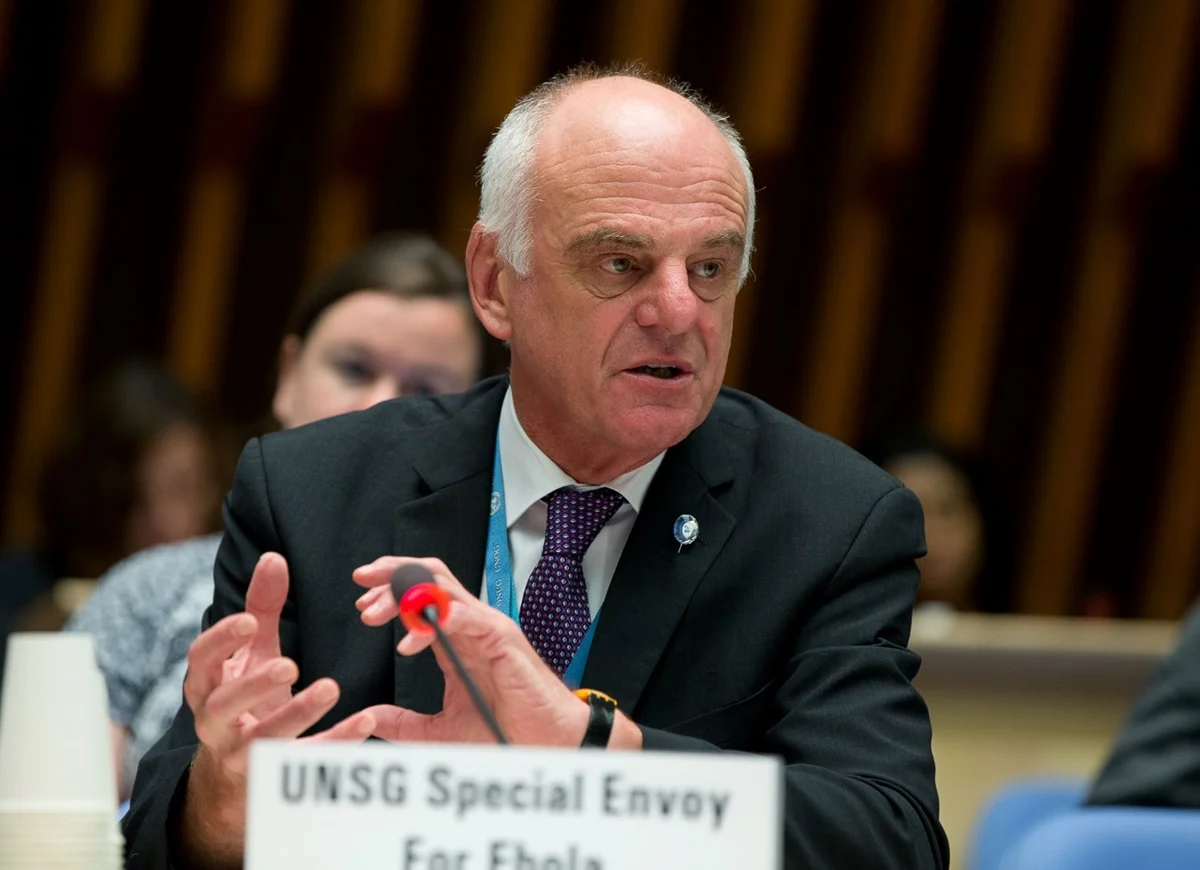
The international community is reeling from the loss of Sir David Nabarro, a towering figure in global health, nutrition, and sustainable development, who passed away at his home on July 25, 2025, at the age of 75. His death marks the conclusion of a career that spanned over four decades, during which he served as a central architect in the world’s response to some of the most daunting public health and humanitarian crises of the modern era. From the frontlines of malaria control to the complexities of coordinating global pandemic responses, Dr. Nabarro’s influence was profound, leaving an indelible mark on institutional policy and the lives of the vulnerable populations he dedicated his life to serving.
A Legacy of Service and Strategic Leadership
Sir David Nabarro’s career was defined by a unique ability to bridge the gap between high-level policy and on-the-ground implementation. Whether navigating the complexities of the United Nations system or working directly with community leaders to improve food security, he operated with a blend of scientific rigor and profound human compassion.
His journey within the World Health Organization (WHO) began in earnest during the late 1990s. Between 1999 and 2005, he held pivotal leadership roles, including Executive Director for the Roll Back Malaria Project. During this period, he was instrumental in shifting the paradigm of malaria control, advocating for increased resource allocation and the integration of sustainable health delivery systems in sub-Saharan Africa. This role set the tone for his later work as the Director-General’s Special Representative for Health Action in Crises, where he oversaw the WHO’s interventions in regions destabilized by conflict and natural disaster.
Chronology of a Global Career
Dr. Nabarro’s professional trajectory was characterized by a rapid succession of high-stakes responsibilities, reflecting the trust placed in him by the international community:
- 1999–2005: Senior leadership roles at the WHO, focusing on the Roll Back Malaria Project and humanitarian crises.
- 2005–2014: UN System Senior Coordinator for Avian and Pandemic Influenza. During this tenure, he pioneered early-warning protocols that remain the standard for modern pandemic preparedness.
- 2008–2014: UN Secretary-General’s Special Representative for Food Security and Nutrition, where he bridged the gap between agriculture and public health.
- 2011–2014: Assistant Secretary-General and Coordinator of the Scaling Up Nutrition (SUN) Movement.
- 2014–2015: UN Special Envoy for the West Africa Ebola Outbreak Response. His strategic coordination was credited with mobilizing the international community to contain a virus that threatened to spiral out of control.
- 2016–2017: Under-Secretary-General and Special Adviser for the 2030 Agenda for Sustainable Development and Climate Change.
- 2018–2025: Strategic Director of the 4SD Foundation and Co-Director of the Institute of Global Health Innovation at Imperial College, London.
- 2020–2025: WHO Special Envoy on COVID-19, serving as a primary advisor to the Director-General throughout the duration of the global pandemic.
Impact on Global Health Policy and Food Systems
One of Dr. Nabarro’s most enduring contributions was his insistence that health cannot be treated in a vacuum. He was a vocal proponent of the "One Health" approach, arguing that the health of humans is intrinsically linked to the health of animals and the environment. This philosophy informed his extensive work on food systems transformation.
In October 2018, his leadership in the realm of nutrition was formally recognized when he was awarded the World Food Prize. The committee cited his role in unifying disparate sectors—ranging from government ministries to private industry and civil society—to tackle the multifaceted issue of malnutrition. His curation of the "Food Systems Dialogues" between 2018 and 2025 provided the intellectual and operational scaffolding for the 2021 UN Food Systems Summit, an event that reshaped how nations approach food security in an era of climate volatility.
His work during the early stages of the Ukraine war further underscored his pragmatic approach to crisis management. As a member of the UN Secretary-General’s Food, Energy and Finance crisis response group, he worked to maintain global supply chains, preventing localized conflicts from escalating into widespread food insecurity.
Official Responses and Professional Tributes
The announcement of his passing prompted an immediate and widespread outpouring of grief from the highest echelons of international governance. WHO Director-General Dr. Tedros Adhanom Ghebreyesus issued a poignant statement expressing his profound shock and sorrow. "David was a great champion of global health and health equity, and a wise, generous mentor to countless individuals," Dr. Tedros remarked. He emphasized that Nabarro’s influence extended beyond policy, describing him as a "dear friend" whose expertise and kindness served as a steadying force during the turbulent years of the COVID-19 pandemic.
In 2023, the recognition of his service reached its zenith when King Charles III bestowed upon him a knighthood, honoring his monumental contributions to global public health. This acknowledgment served as a capstone to a career that had already garnered respect across every continent.
The 4SD Foundation, the organization Dr. Nabarro co-founded to train the next generation of development leaders, released a statement reflecting on his character: "David’s generosity and unwavering commitment to improve the lives of others will be sorely missed." His family, in a statement released on July 30, noted that they found comfort in the tributes flooding in from across the globe, specifically highlighting the pride they felt in seeing how his "legacy will continue through so many compassionate leaders working to shift systems from within."
Fact-Based Analysis: The Nabarro Effect on Modern Diplomacy
Analysts observing Dr. Nabarro’s career point to his unique methodology—often referred to as "systemic facilitation"—as his most significant contribution to international diplomacy. Rather than imposing top-down solutions, Nabarro excelled at convening stakeholders who often held opposing views, forcing them to find common ground in the face of existential threats.
His work during the 2014–2015 Ebola outbreak is frequently cited as a case study in effective crisis management. By coordinating resources between national governments, non-governmental organizations, and international bodies, he managed to streamline logistics and accelerate the deployment of medical personnel to the most affected areas in West Africa. This ability to act as a "connective tissue" between disconnected bureaucratic entities became his hallmark.
However, his influence was not limited to crisis response. By focusing on the 2030 Agenda for Sustainable Development, he helped institutionalize the idea that poverty reduction, climate resilience, and public health are interdependent variables. The emergence of a network of National Convenors of Food Systems transformation, which persists today, stands as a tangible testament to his long-term planning and institutional foresight.
Looking Ahead: Memorials and Legacy
As the global health community begins the process of memorializing Sir David Nabarro, discussions have turned to how his various initiatives—particularly the 4SD Foundation’s training programs and the global food systems network—will be sustained. The transition of leadership at these organizations is expected to be a primary focus in the coming months, as colleagues seek to preserve the methodologies he developed.
A private funeral is scheduled for Monday, August 4, 2025, to be attended by his wife, Flo, and his six children, Tom, Ollie, Polly, Josie, and Lucas, alongside his seven grandchildren. Following the private service, several larger memorial events are being planned to accommodate the vast number of international colleagues, diplomats, and health professionals who wish to pay their final respects.
For those who worked with him, the challenge moving forward is clear: to maintain the momentum of the systems-level changes he initiated. Whether it is the ongoing fight against endemic diseases or the effort to stabilize global food security amidst a changing climate, the void left by Dr. Nabarro is significant. Yet, as noted by his family, his legacy is not just in the policies he wrote, but in the cadre of compassionate, skilled leaders he mentored, all of whom are now tasked with continuing his mission to foster a more equitable and resilient world.
The 4SD Foundation has established a memorial web page where colleagues and members of the public can share their messages, memories, and mementos. As the international community reflects on the life of a man who moved comfortably between the halls of power in Geneva and the remote field stations of the developing world, the consensus remains that global health has lost one of its most steadfast and capable champions. His work, characterized by patience, skill, and an unwavering belief in the dignity of all people, remains a blueprint for future generations of humanitarian actors.
